

Manitoba Museum reveals astounding Barbie trove as important social history marker
Advertisement
Read this article for free:
or
Already have an account? Log in here »
To continue reading, please subscribe:

Digital Subscription
One year of digital access for only $205*
- Enjoy unlimited reading on winnipegfreepress.com
- Read the E-Edition, our digital replica newspaper
- Access News Break, our award-winning app
- Play interactive puzzles
*First annual payment billed as $205.00 + GST for one year. This annual subscription will automatically renew at $233.00 + GST every 52 weeks (10% off the regular annual price of $259.35). Offer available to new and qualified returning subscribers only. Cancel any time.
To continue reading, please subscribe:
Add Free Press access to your Brandon Sun subscription for only an additional
$1 for the first 4 weeks*
- Enjoy unlimited reading on winnipegfreepress.com
- Read the E-Edition, our digital replica newspaper
- Access News Break, our award-winning app
- Play interactive puzzles
*Your next Brandon Sun subscription payment will increase by $1.00 and you will be charged $17.95 plus GST for four weeks. After four weeks, your payment will increase to $24.95 plus GST every four weeks.
Read unlimited articles for free today:
or
Already have an account? Log in here »
Hey there, time traveller!
This article was published 23/08/2023 (1144 days ago), so information in it may no longer be current.
As Barbie fever took Winnipeg movie theatre-goers by storm in July, collections summer student Rylee DeJong stumbled upon the Manitoba Museum’s own Dreamhouse.
Through a video shared on social media Tuesday morning, viewers got a glimpse of the museum’s vast collection of dolls, from Swan Lake Barbie to an early edition wearing handmade Ukrainian garb.
“She’s been an astronaut, she’s been a firefighter, she’s been a doctor,” DeJong said in the video. “She’s been everything.”
RUTH BONNEVILLE / WINNIPEG FREE PRESS To Rylee DeJong, the Barbies reveal more than life in plastic; they’re artifacts of social history.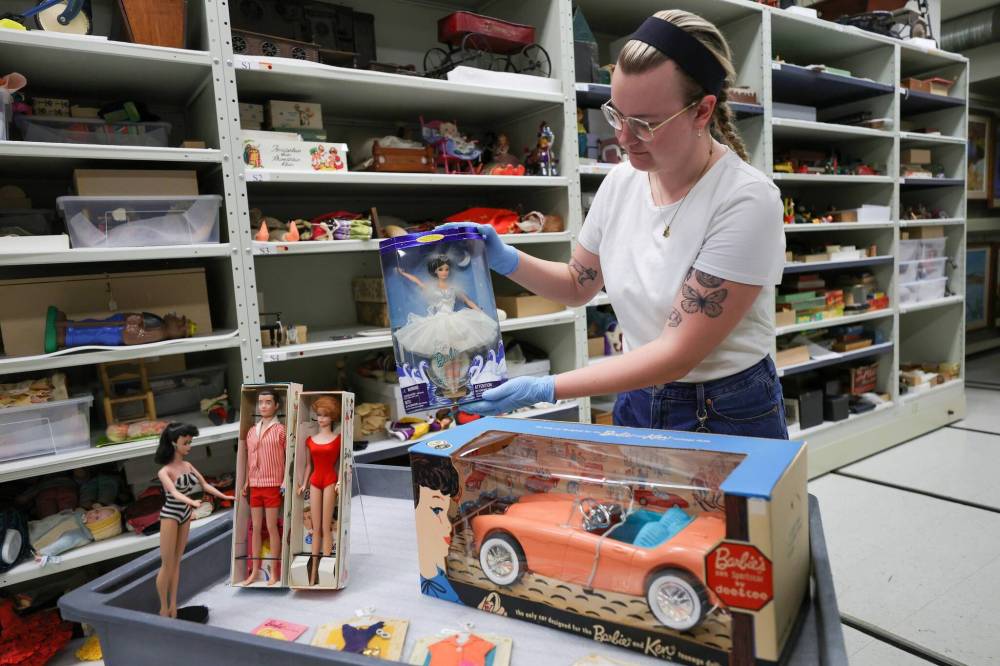
Two decades ago, a generous collector donated more than 100 Barbies to the museum dating as far back as the 1960s. Since then, the little-known collection has found a home in the museum’s human history department.
To DeJong, the Barbies reveal more than life in plastic; they’re artifacts of social history.
“(Before Barbie) all they had was baby dolls, so girls could only ever have that role of playing a mother,” DeJong told the Free Press Tuesday. “At that time, it was actually quite radical to have this doll that was a representation of a teenager. You could give her more adult or more grownup roles.”
A lot has changed since the first Barbie landed on department store shelves in 1959. The museum’s oldest Barbie, which DeJong said dates back to 1960, was one of two models at the time.
RUTH BONNEVILLE / WINNIPEG FREE PRESS Two decades ago, a generous collector donated more than 100 Barbies to the Manitoba Museum dating as far back as the 1960s.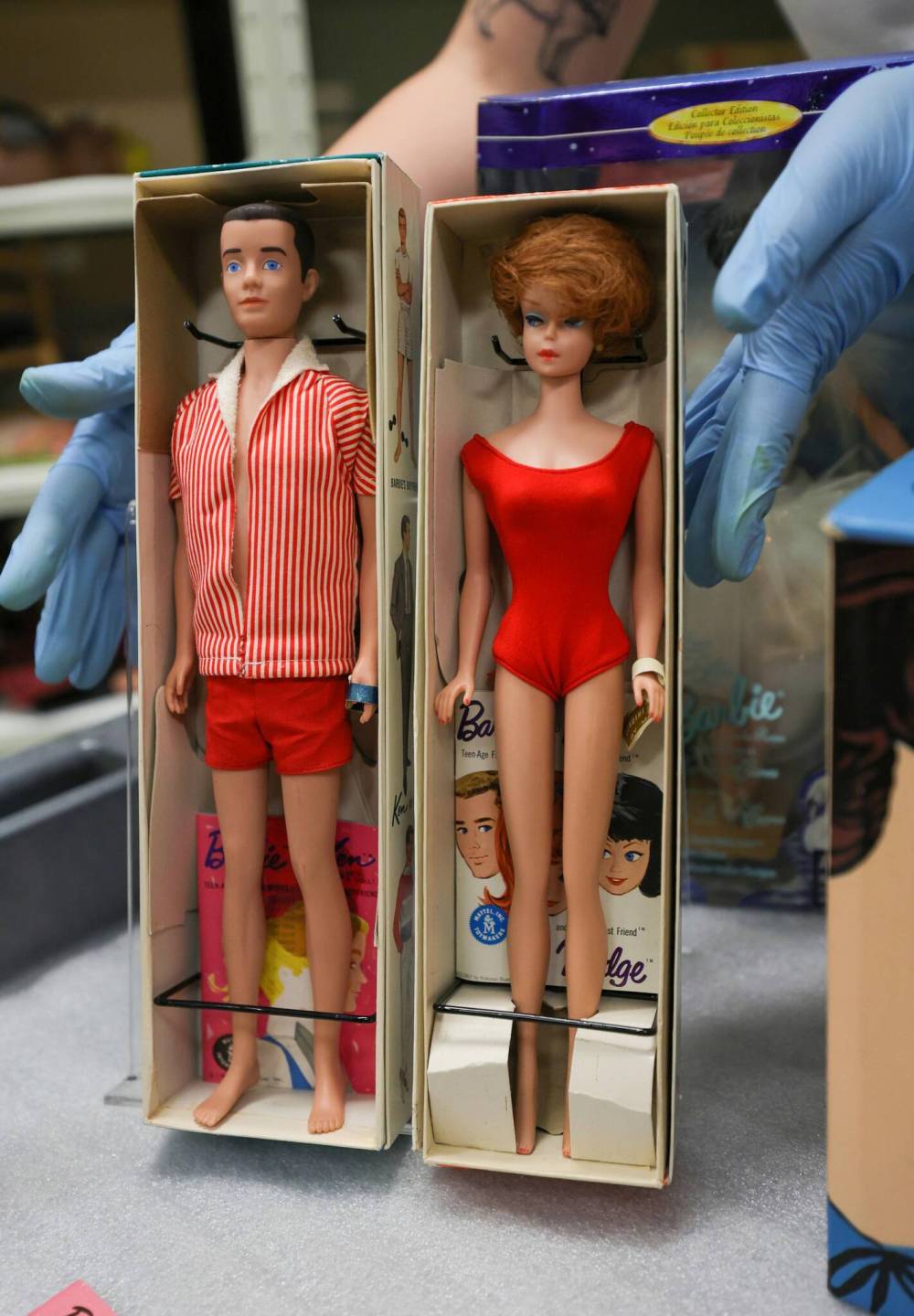
“You could get her in the brunette, which we have, or the blond,” DeJong said. “Now, when you go to a toy store, you see that there’s a way wider range of different skin tones, abilities and body types.”
The museum’s human history department collects all sorts of contemporary objects for future research, interest and exhibitions.
As the museum’s curator of history, Roland Sawatsky said knowing which objects will be historically relevant is no easy task. When Barbie debuted in 1959, few could’ve imagined that she’d be the subject of a film grossing $1 billion at the box office more than 60 years later.
“You don’t always know what’s going to be important for future collecting,” Sawatsky said, adding there is nothing from the 1918 influenza pandemic in the collection.
Learning from past mistakes, the museum has collected objects to memorialize the COVID-19 pandemic over the past few years.
While some objects may appear mundane on the surface, many carry a deeper historical connection, Sawatsky said. Right now, for example, a suitcase of Singer sewing machine textiles used by a travelling salesman in 1937, sits on his desk.
“Singer sewing machines are very common. This kind of item, this travelling salesman suitcase, is extremely rare,” he said. “So, you sort of have to know the collection when you are deciding on something, but also, different ways that it could be studied or interpreted.”
In the past several years, Sawatsky said social media has helped the museum boost engagement and connect its historical artifacts to pop culture and current events. To entice younger crowds, the museum set up a TikTok.
“Thinking of younger me, pre-teen or teenage me, if I had access to TikTok to be able to see what is back there… it would’ve been the coolest thing,” DeJong said.
After wrapping up a summer working in the museum’s collections department, DeJong will begin her master of science studies in archeology at Oxford University. With a keen interest in material culture, she’s learned a lot from Barbie.
“Something that really piqued my interest was seeing how that diversity came about over time,” DeJong said. “Representation can be really important, even going down to the things that we play with.”
cierra.bettens@freepress.mb.ca