

Sponsored Content
Pushed or Pulled? A Qualitative Study of the Landscape of Gig Work for People Living with Disabilities and Future Recommendations for Best Practices

Advertisement
Read this article for free:
or
Already have an account? Log in here »
To continue reading, please subscribe:

Digital Subscription
One year of digital access for only $205*
- Enjoy unlimited reading on winnipegfreepress.com
- Read the E-Edition, our digital replica newspaper
- Access News Break, our award-winning app
- Play interactive puzzles
*First annual payment billed as $205.00 + GST for one year. This annual subscription will automatically renew at $233.00 + GST every 52 weeks (10% off the regular annual price of $259.35). Offer available to new and qualified returning subscribers only. Cancel any time.
To continue reading, please subscribe:
Add Free Press access to your Brandon Sun subscription for only an additional
$1 for the first 4 weeks*
- Enjoy unlimited reading on winnipegfreepress.com
- Read the E-Edition, our digital replica newspaper
- Access News Break, our award-winning app
- Play interactive puzzles
*Your next Brandon Sun subscription payment will increase by $1.00 and you will be charged $17.95 plus GST for four weeks. After four weeks, your payment will increase to $24.95 plus GST every four weeks.
Read unlimited articles for free today:
or
Already have an account? Log in here »
Hey there, time traveller!
This article was published 08/09/2023 (1097 days ago), so information in it may no longer be current.
Work Wellness Institute
The Work Wellness Institute leads evidence-informed change through continued collaborative work with partners across academia, industry, government, and the community. Founded in Canada in 1985, the Work Wellness Institute is committed to a core vision of turning research into practice, conducting and supporting global research, and mobilizing knowledge that positively impacts workplace health practices.
An Overview
The gig economy has gained popularity as an employment option, offering flexible work arrangements and opportunities for individuals seeking alternative employment. While its potential benefits are a hot topic in the media recently, limited research exists on how suitable gig work is for people with disabilities.
THE AIM OF THIS QUALITATIVE STUDY WAS TO EXPLORE AND UNDERSTAND THE EXPERIENCES OF INDIVIDUALS WITH
DISABILITIES WHO ENGAGE IN GIG WORK
The Push and Pull of the Gig Economy
The gig economy offers both opportunities and challenges for people with disabilities. On the positive side, gig workers benefit from increased autonomy, flexible working hours, and the ability to leverage their unique skills and strengths.
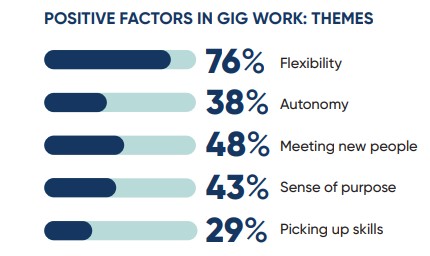
However, participants also reported encountering barriers such as income insecurity, discrimination, and a lack of benefits.
“I’m always in constant fear about my financial insecurity because of working in the gig economy. I constantly think about the next job, especially during these times when life is kind of hard.”
– RESEARCH STUDY PARTICIPANT 12
While participants in the study expressed positive experiences and advantages associated with gig work, many also disclosed that they had been left to work in the gig economy due to employment lay offs, discrimination in the workplace, and a lack of disability-friendly opportunities in the job market.
What’s Next
The findings of this study contribute to a deeper understanding of the gig economy as a potential employment sector for people with disabilities and inform policy and practice recommendations to enhance inclusivity, accessibility, and support mechanisms within this emerging work paradigm.
Future research can build upon these findings to develop interventions and strategies that promote equitable opportunities and address the specific needs of individuals with disabilities working in the gig economy.
To learn more about the Gig Economy
Become a member and watch our Lectures-on-Demand ‘The Gig Economy: Recommendations for Practice’ by Emily D. Campion, PhD and ‘Worker Wellbeing and the Gig Economy’ by Dr. Arif Jetha and Deborah Stienstra.
Read the full research article.
This article is produced by the Advertising Department of the Winnipeg Free Press, in collaboration with Work Wellness Institute