Arlington Bridge troubles span nearly a century First structural repairs needed in 1931 when acrid smoke ate away at bridge deck
Read this article for free:
or
Already have an account? Log in here »
To continue reading, please subscribe:

Digital Subscription
One year of digital access for only $205*
- Enjoy unlimited reading on winnipegfreepress.com
- Read the E-Edition, our digital replica newspaper
- Access News Break, our award-winning app
- Play interactive puzzles
*First annual payment billed as $205.00 + GST for one year. This annual subscription will automatically renew at $233.00 + GST every 52 weeks (10% off the regular annual price of $259.35). Offer available to new and qualified returning subscribers only. Cancel any time.
To continue reading, please subscribe:
Add Free Press access to your Brandon Sun subscription for only an additional
$1 for the first 4 weeks*
- Enjoy unlimited reading on winnipegfreepress.com
- Read the E-Edition, our digital replica newspaper
- Access News Break, our award-winning app
- Play interactive puzzles
*Your next Brandon Sun subscription payment will increase by $1.00 and you will be charged $17.95 plus GST for four weeks. After four weeks, your payment will increase to $24.95 plus GST every four weeks.
Read unlimited articles for free today:
or
Already have an account? Log in here »
Hey there, time traveller!
This article was published 01/12/2023 (1008 days ago), so information in it may no longer be current.
The Arlington Bridge finds itself in a familiar situation after its sudden closure due to its deteriorating condition. Throughout its history, the bridge has been counted out many times but has managed to survive for more than a century.
Winnipeg was a booming prairie metropolis in the early 1900s divided by one of the country’s busiest rail yards. As its population grew, getting to and from the North End by streetcar, the main form of transport for most citizens, was difficult, as the only streetcar crossing was Main Street.
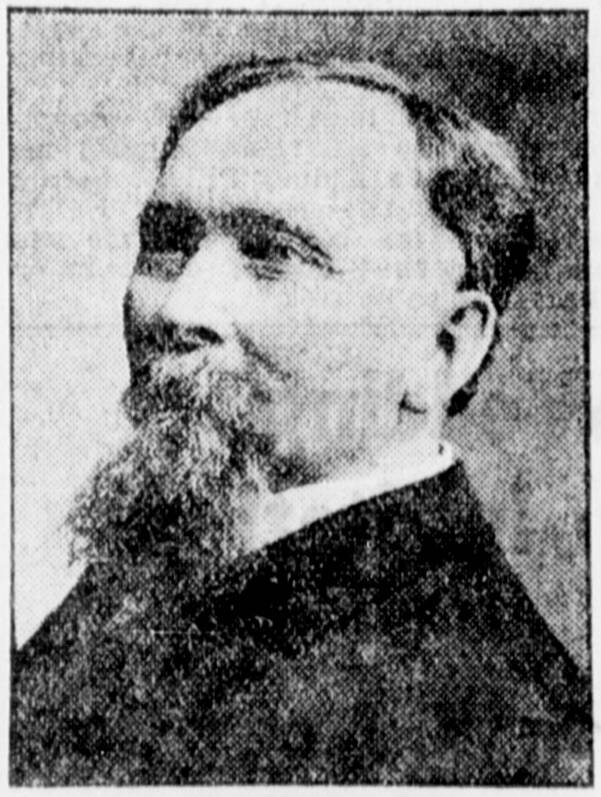
Alderman Archibald McArthur, a Logan Avenue grocer, pushed for the construction of a new bridge that would span the rail yards between what was then called Brown Street in the North End and Brant Street to the south. Many of his city council colleagues were cool on the idea as there were many infrastructure projects competing for dollars in the young city.
To make the bridge more palatable, McArthur convinced his colleagues to approve the construction of the Central Belt Line in 1906. This would have been a second Main Street that that would stretch from the city’s northern limits, down Brown, Brant and Arlington streets, and eventually cross the Assiniboine River via a second span that would connect Wolseley to Crescentwood.
The Central Belt Line was a short-lived idea. Between the time it was approved in 1906 and the end of the decade, the West End and Wolseley had transformed from semi-rural enclaves at the edge of the city to middle-class neighbourhoods and there was little political will to drive a highway through them.
The only remnant of that failed project is that Arlington, Brown and Brant streets were renamed Arlington Street during the planning phase.
Taxpayers weren’t fond of the idea for McArthur’s new bridge either. A money referendum to approve the borrowing of funds to build it was rejected in 1907 and 1908. It was third time lucky in January 1909 after McArthur had it bundled into an omnibus bylaw with other, more popular projects.
A Winnipeg Free Press editorial noted that victory at the ballot box did not mean bridge would materialize: “McArthur is likely to have trouble of his own in bringing about the speedy materialization of this overhead bridge project for there is a strong element in the council, which, while acquiescing to the mandate of the ratepayers as expressed by the recent vote sees no need for haste in expending the $232,000 required to erect the structure.”
As traffic woes on Main Street reached the point of near-constant gridlock, city council was forced to decide on a second streetcar crossing. McArthur, always one step ahead of his colleagues, had already approached the CPR and received preliminary approval from the railway to build over their yards at Arlington Street.
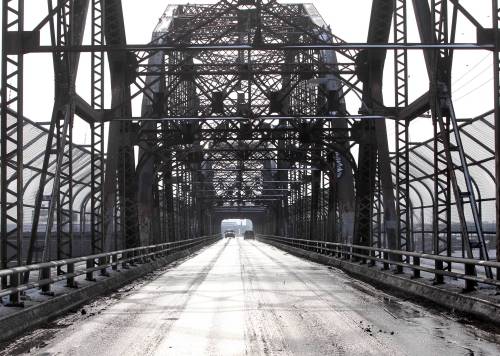
Ruth Bonneville / Winnipeg Free Press A view of Arlington Street Bridge facing south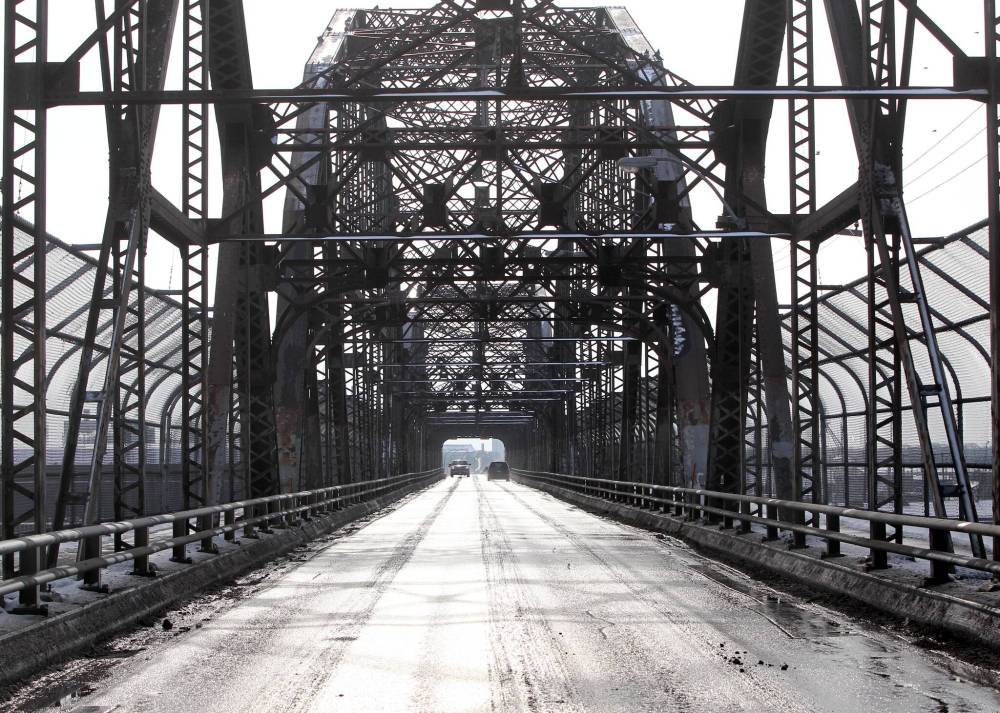
McArthur’s move saved the city months of negotiations and though a bridge at Arlington Street may not have been the first choice of many on city council, it was the quickest option to get a second streetcar connection to the North End built.
The city called for tenders for the Arlington Street Bridge in May 1910. The William Newman Company won the $55,000 bid to build the piers and the Cleveland Bridge and Engineering Company of Darlingford, England was awarded $205,160 for the superstructure.
Construction soon got underway, but quickly fell behind schedule. Slated to be completed in June 1911, the first cars did not travel over the bridge until February 5, 1912.
The purpose of the Arlington Street Bridge was to be the second streetcar connection to and from the North End, yet no streetcar ever ran over it due to the steep grade of its approaches. Streetcar operators called running a car, particularly down the northern approach to busy Logan Avenue, “suicide.”
Related Articles
In pictures: Winnipeg's Arlington Bridge through the years




For years, the city, the privately owned streetcar company, and the streetcar employee’s union tried to resolve the issue. The city offered to post a full-time crossing guard at Logan Avenue to stop traffic and signal that it was safe to descend. The streetcar company bought some lighter cars fitted with disc brakes for easier stopping. The issue was never resolved, and the streetcar tracks were removed from the bridge in 1928.
The Arlington Bridge was, in the minds of many, a white elephant and its problems just got worse.
The first structural repairs to the bridge were needed in 1931 and another round took place in 1943. The cause of these repairs was the acrid smoke from the rail yards below that ate away at the bridge deck.
In the summer of 1946, the bridge was again closed after failing its annual inspection. The $50,000 repair bill included the installation of blast shields to protect the bridge deck from further corrosion. An exasperated Alderman John Blumberg was quoted by Free Press saying, “The Arlington Street Bridge will always be a bugbear. The sooner the bridge comes down and a modern one goes up, the sooner will the city maintain expenses.”
MIKE DEAL / WINNIPEG FREE PRESS The Arlington Street Bridge passes over the CPR’s Arlington Yards. 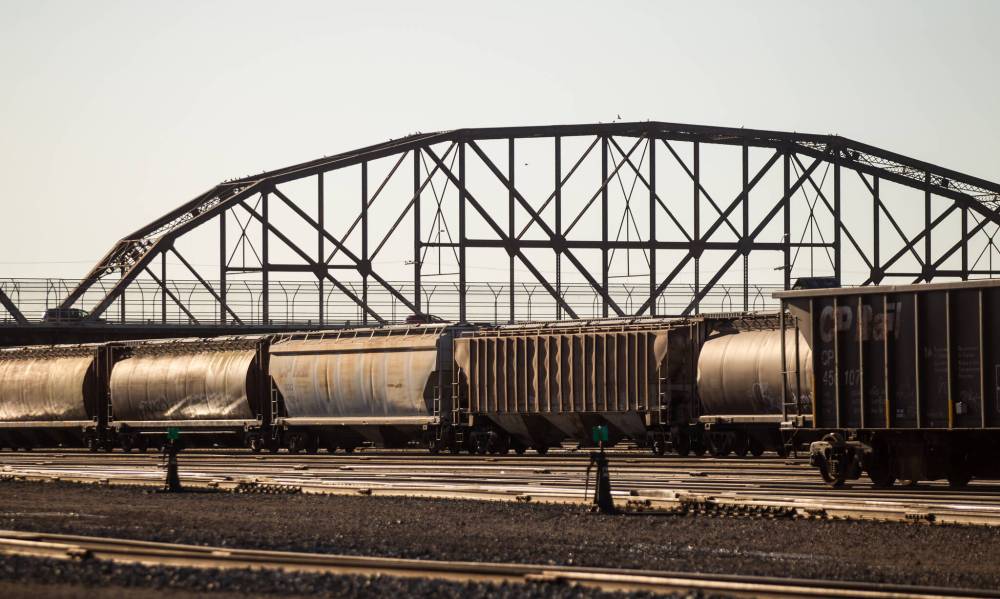
In 1967, D. I. McDonald, Metro Winnipeg’s streets director, informed city council the bridge was near the end of its functional life and could be closed at any moment. New weight restrictions imposed on the bridge rerouted trucks and buses and a 15 mile-per-hour speed limit was imposed. North End city councillor Joe Zuken called the span a “crippled bridge with weight restrictions,” adding, “such a bridge is a disgrace to a modern urban centre.”
Fortunately for the city, a new bridge project was on the horizon.
The Sherbrook-McGregor Overpass would connect those two streets and do away with the need for both the Arlington Street and Salter Street bridges. The high cost of construction and opposition from community members who did not want its highway-style approaches running through their neighbourhood delayed the project. By the late 1970s, the overpass project was dead.
As approval of the Sherbrook-McGregor Overpass bogged down, the city had to decide about the future of the Arlington Bridge. It chose to close it for two months in 1972 for extensive renovations. When it reopened, the truck and bus restrictions remained in place.
Another 1970s-era project that could have had a great impact on the future of the Arlington Bridge was the relocation of the CPR yards to the outskirts of Winnipeg.
MIKE DEAL / WINNIPEG FREE PRESS The Arlington Bridge crosses over the CP Arlington Yards in this aerial image. 160628 - Tuesday, June 28, 2016
Rail yard relocation was first mentioned in a 1972 federal government report on the changing nature of the railway industry in urban centres. Two years later, the federal urban affairs minister toured the area and said the federal government could cover up to half the cost of the project. He told the Free Press, “The relocation could change the whole social fabric of the city by getting rid of the expression ‘wrong side of the tracks.’”
The city did not act quickly enough to take the federal government up on its offer and preliminary talks about moving the rail yards came to an end in 1975. Fifty years later, the possibility of relocating the rail yards is still talked about as an alternative to a new Arlington Bridge.
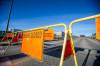
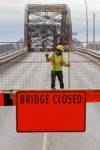
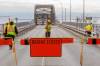
In 2018, the City of Winnipeg began public consultations about the replacement of the Arlington Bridge. Project advisory committee members were informed by the city that the bridge was again coming to the end of its functional life and would be decommissioned in 2024. It made it to within six weeks of that target before being unceremoniously and indefinitely closed on November 21, 2023.
A design for the new Arlington Bridge was approved by city council in 2019 but there is no timeline or funding in place for its construction, putting its fate in limbo once again.
What does the future hold for the current Arlington Bridge? If history is any indication, it might not be surprising to see it still standing a decade from now. It is a survivor that has managed to outlive generations of critics to become one of the oldest bridges in the city.