

‘Welcome home’: Manitoba man who was switched at birth receives Métis citizenship
Advertisement
Read this article for free:
or
Already have an account? Log in here »
To continue reading, please subscribe:

Digital Subscription
One year of digital access for only $205*
- Enjoy unlimited reading on winnipegfreepress.com
- Read the E-Edition, our digital replica newspaper
- Access News Break, our award-winning app
- Play interactive puzzles
*First annual payment billed as $205.00 + GST for one year. This annual subscription will automatically renew at $233.00 + GST every 52 weeks (10% off the regular annual price of $259.35). Offer available to new and qualified returning subscribers only. Cancel any time.
To continue reading, please subscribe:
Add Free Press access to your Brandon Sun subscription for only an additional
$1 for the first 4 weeks*
- Enjoy unlimited reading on winnipegfreepress.com
- Read the E-Edition, our digital replica newspaper
- Access News Break, our award-winning app
- Play interactive puzzles
*Your next Brandon Sun subscription payment will increase by $1.00 and you will be charged $17.95 plus GST for four weeks. After four weeks, your payment will increase to $24.95 plus GST every four weeks.
Read unlimited articles for free today:
or
Already have an account? Log in here »
Hey there, time traveller!
This article was published 14/02/2024 (959 days ago), so information in it may no longer be current.
WINNIPEG – A Manitoba man who was switched at birth and raised without being aware of his Indigenous heritage for more than 60 years says he feels a sense of belonging after receiving his Métis citizenship.
“It was a very special day to know that this where I belong, this is who I am,” Edward Ambrose, 68, said in an interview Wednesday.
Ambrose said tears rolled down his cheeks as he received his Manitoba Métis Federation citizenship card Tuesday,
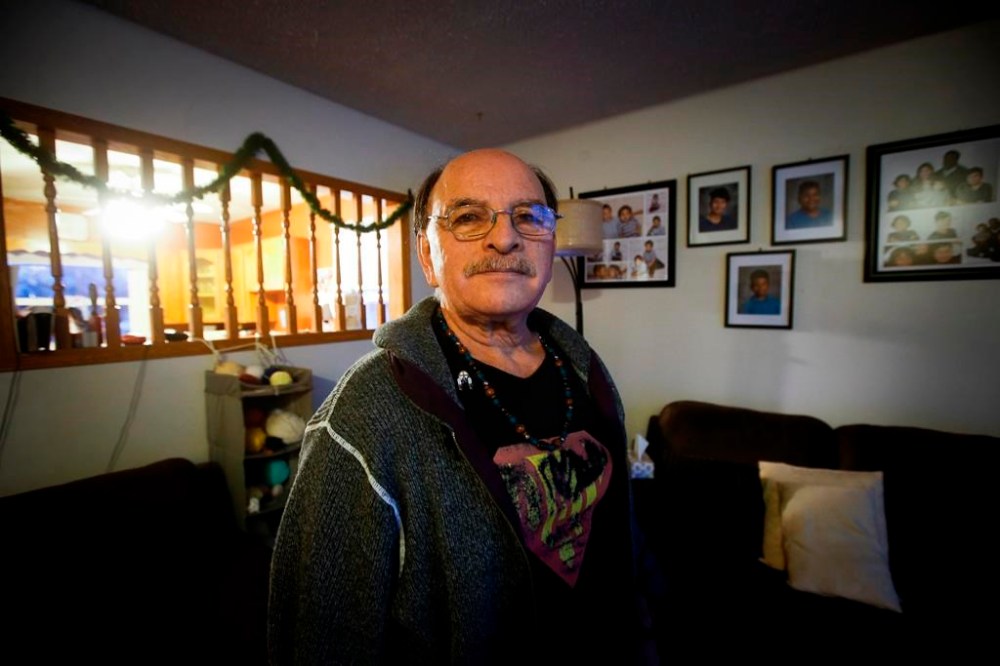
He was accompanied by his daughter, Eileen, and his biological sister Leona and said it was emotional to share that moment with both.
“I am proud to be with my family, and it feels so powerful and meaningful to receive my card,” Ambrose said.
“I will always love my other family too, but I feel like this is where I belong – where I have always belonged.”
David Chartrand, president of the Manitoba Métis Federation, said the citizenship card doesn’t change what happened but will allow Ambrose to look forward to a future with his people.
Chartrand placed a Métis sash on Ambrose when he handed him the card and said: “Welcome home.”
“I know he will be embraced by our community, and we will help Edward and his daughter Eileen make up for the time they lost. We will introduce them to our values, our culture, our music and our people,” Chartrand said in a news release.
“There is so much love and acceptance waiting for Edward and his daughter, and I look forward to seeing them thrive.”
Ambrose was born in 1955 in a hospital in the community of Arborg, north of Winnipeg, on the same day as another baby named Richard Beauvais. Somehow the babies were sent home with the wrong families.
The babies became children, who became men, who were married and had children of their own. For decades they were unaware of each other or the puzzle piece that inextricably linked them.
Ambrose was raised in a Ukrainian family and has said he has good memories of growing up in Rembrandt, a farming community south of Arborg. He speaks of immense love in his family, but both his mother and father died by the time he was 12. Ambrose was shuffled between relatives then placed with a foster family who adopted him.
The other man, Beauvais, has said his father died young and his mother struggled to raise him and his siblings in Saint Laurent, a historically Métis community on the shores of Lake Manitoba. He was sent to a residential day school, was picked on for being Indigenous and was taken from his family and placed in foster homes.
Eventually he became a commercial fisherman and moved to British Columbia.
The truth that the two had been sent home with the wrong families was only discovered a few years ago through at-home ancestry kits. It upended both men’s lives as they tried to navigate the past and what it meant for their futures.
Ambrose said it is still difficult to deal with the reality of what happened but said reconnecting with his biological family and exploring his Indigenous identity has helped him cope.

There is no instruction manual for the process, Ambrose said. It will still take time. He hopes that one day he will hear an apology for what happened.
“It’s not going to be something you can just turn the page and say, ‘Let’s just forget about it’,” Ambrose said.
“There’s a lot there we lost that we aren’t going to get back … but to go forward, that’s the whole thing.”
This report by The Canadian Press was first published Feb. 14, 2024.
— By Kelly Geraldine Malone in Saskatoon
Related Articles
Two men learn they were switched at birth
Advertisement Advertise With Us
Advertisement Advertise With Us