Time capsules Prized clocks on display at Manitoba Museum

The Mennonite wall clock has marked — with metronomic tick-tock precision — political and societal upheaval throughout the centuries.

Read this article for free:


or

Already have an account? Log in here »

To continue reading, please subscribe:

Subscribe and receive a limited-edition Free Press branded hat or tote.

Digital Subscription

One year of digital access for only $205*

  • Enjoy unlimited reading on winnipegfreepress.com
  • Read the E-Edition, our digital replica newspaper
  • Access News Break, our award-winning app
  • Play interactive puzzles

*First annual payment billed as $205.00 + GST for one year. This annual subscription will automatically renew at $233.00 + GST every 52 weeks (10% off the regular annual price of $259.35). Offer available to new and qualified returning subscribers only. Cancel any time.

To continue reading, please subscribe:

Add Free Press access to your Brandon Sun subscription for only an additional

$1 for the first 4 weeks*

  • Enjoy unlimited reading on winnipegfreepress.com
  • Read the E-Edition, our digital replica newspaper
  • Access News Break, our award-winning app
  • Play interactive puzzles
Start now

*Your next Brandon Sun subscription payment will increase by $1.00 and you will be charged $17.95 plus GST for four weeks. After four weeks, your payment will increase to $24.95 plus GST every four weeks.

Hey there, time traveller!
This article was published 15/02/2024 (929 days ago), so information in it may no longer be current.

The Mennonite wall clock has marked — with metronomic tick-tock precision — political and societal upheaval throughout the centuries.

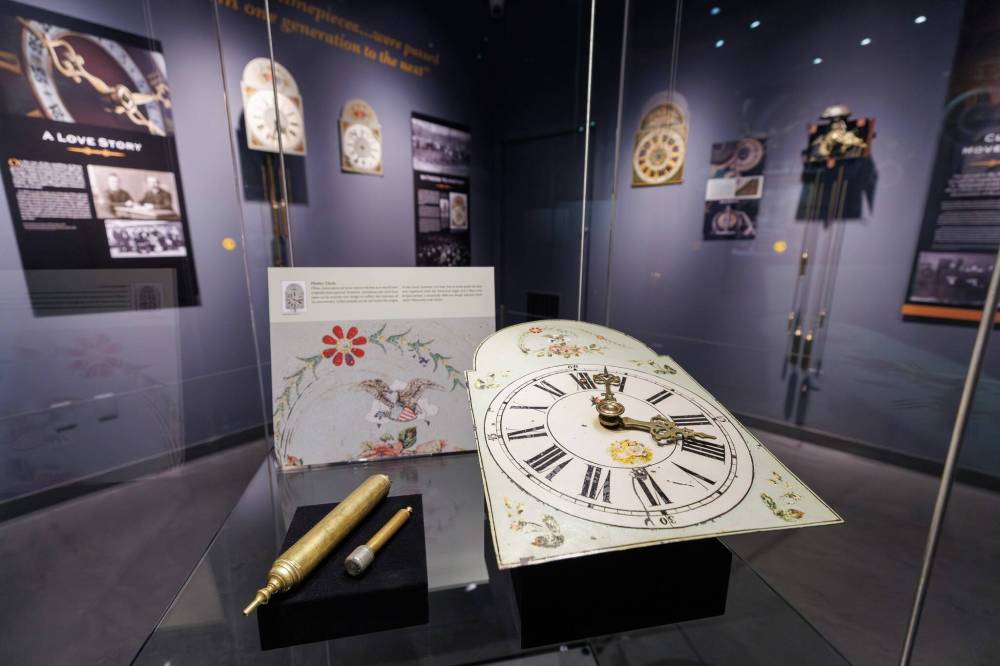
Fifteen are on temporary display at the Manitoba Museum in an exhibition developed by the Kroeger Clocks Heritage Foundation, in partnership with the Mennonite Heritage Village museum.

The timepieces were made between the late 1700s and early 1900s in Mennonite workshops in Ukraine, as meticulous clock builders passed the craft down through generations.
MIKE DEAL / WINNIPEG FREE PRESS
                                The ‘Mielitz’ clock was made by Abraham Kroeger (1791–1872) in Rosenthal, Russian Empire (now Ukraine), ca. 1835.

MIKE DEAL / WINNIPEG FREE PRESS

The ‘Mielitz’ clock was made by Abraham Kroeger (1791–1872) in Rosenthal, Russian Empire (now Ukraine), ca. 1835.

The clocks were prized possessions and were carefully transported to Manitoba by the Mennonite diaspora. Beyond providing rhythmic structure to the day, they represent Mennonite stories of migration, ingenuity, art and life.

The exhibit, which opened last October, is set to close Feb. 25.
MIKE DEAL / WINNIPEG FREE PRESS
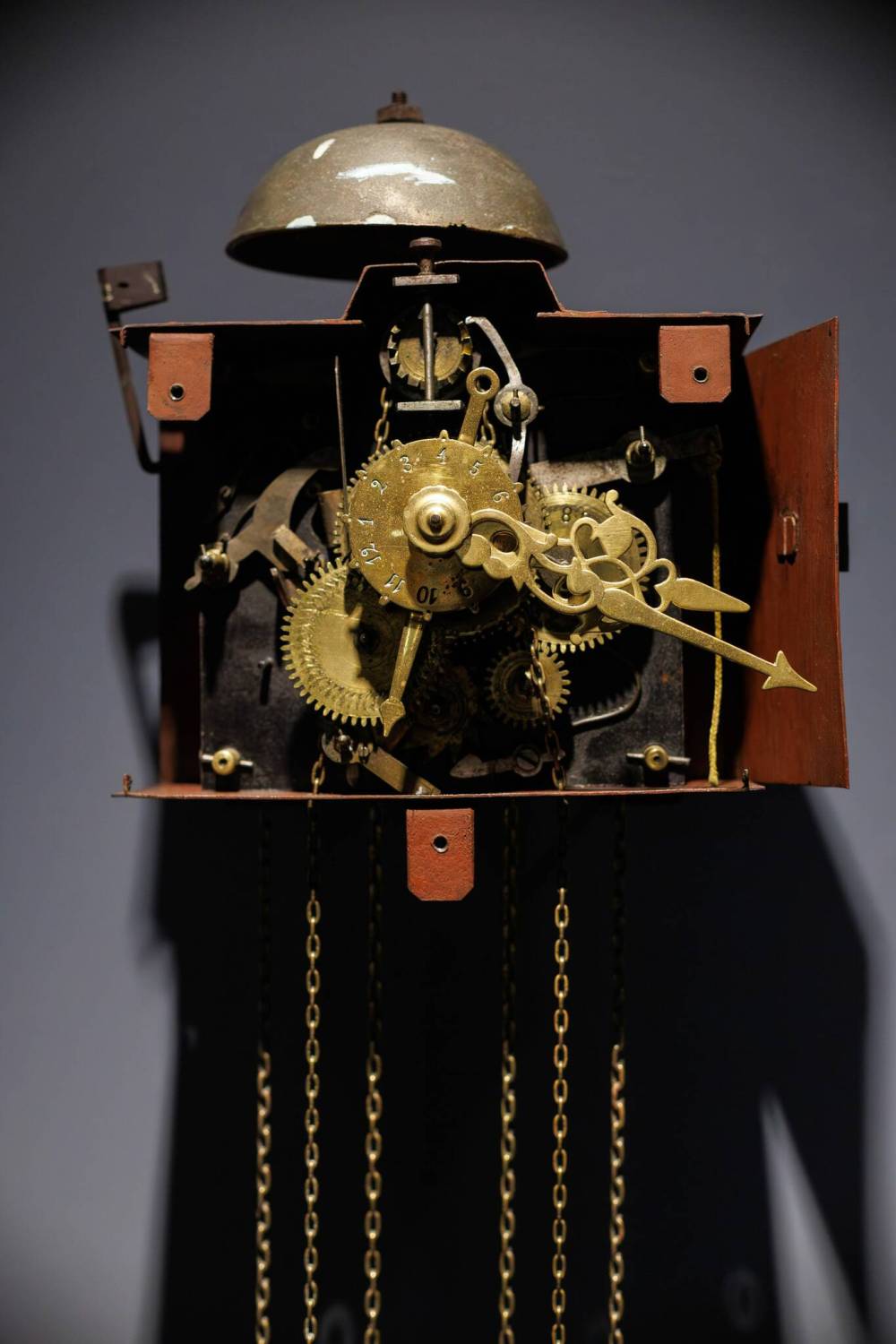
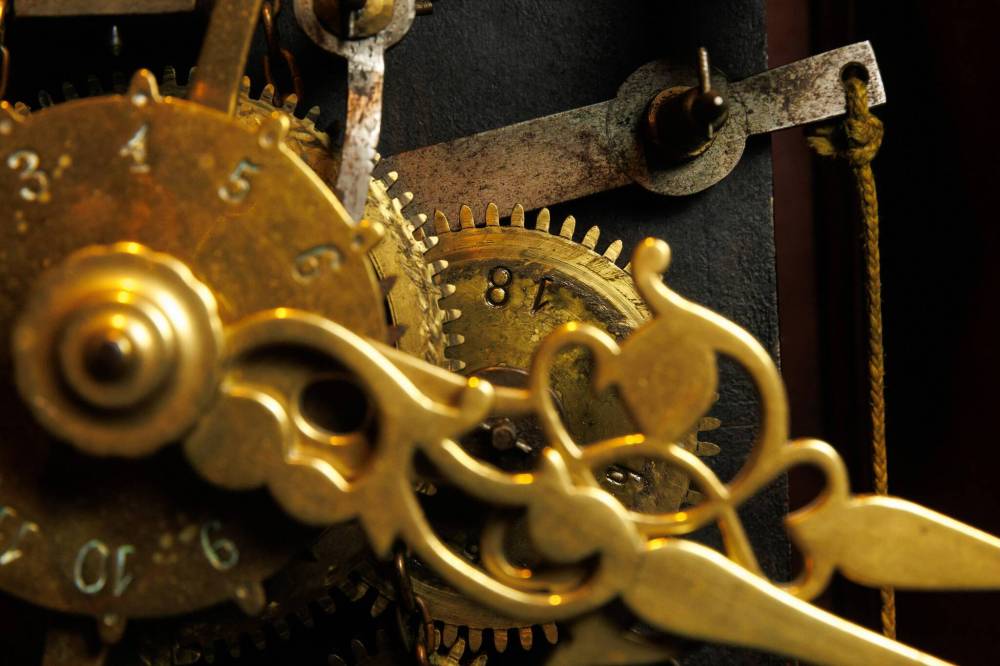
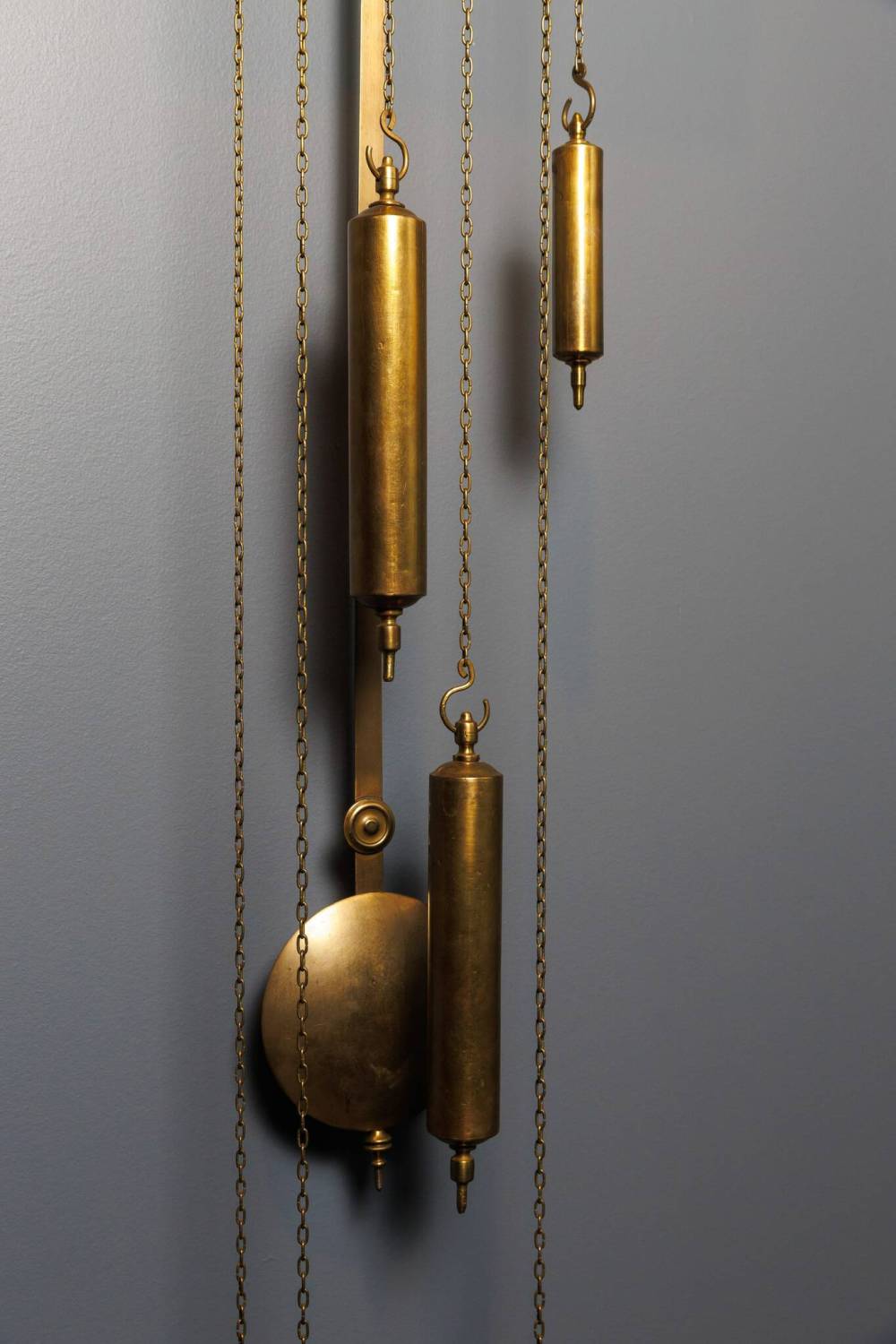
                                This “Cadillac Clock” has all the bells and whistles! It demonstrates the highest sophistication of Mennonite wall clocks, telling the hour, minute, month, and day, and also features an alarm setting (gears and mechanisms, above and below). In contrast to the rope-driven clock, this one has a chain drive. Rope drives required frequent cleaning, as the fibres clogged the mechanism. Chain drives were more expensive but practical.
MIKE DEAL / WINNIPEG FREE PRESS

This “Cadillac Clock” has all the bells and whistles! It demonstrates the highest sophistication of Mennonite wall clocks, telling the hour, minute, month, and day, and also features an alarm setting (gears and mechanisms, above and below). In contrast to the rope-driven clock, this one has a chain drive. Rope drives required frequent cleaning, as the fibres clogged the mechanism. Chain drives were more expensive but practical.

MIKE DEAL / WINNIPEG FREE PRESS
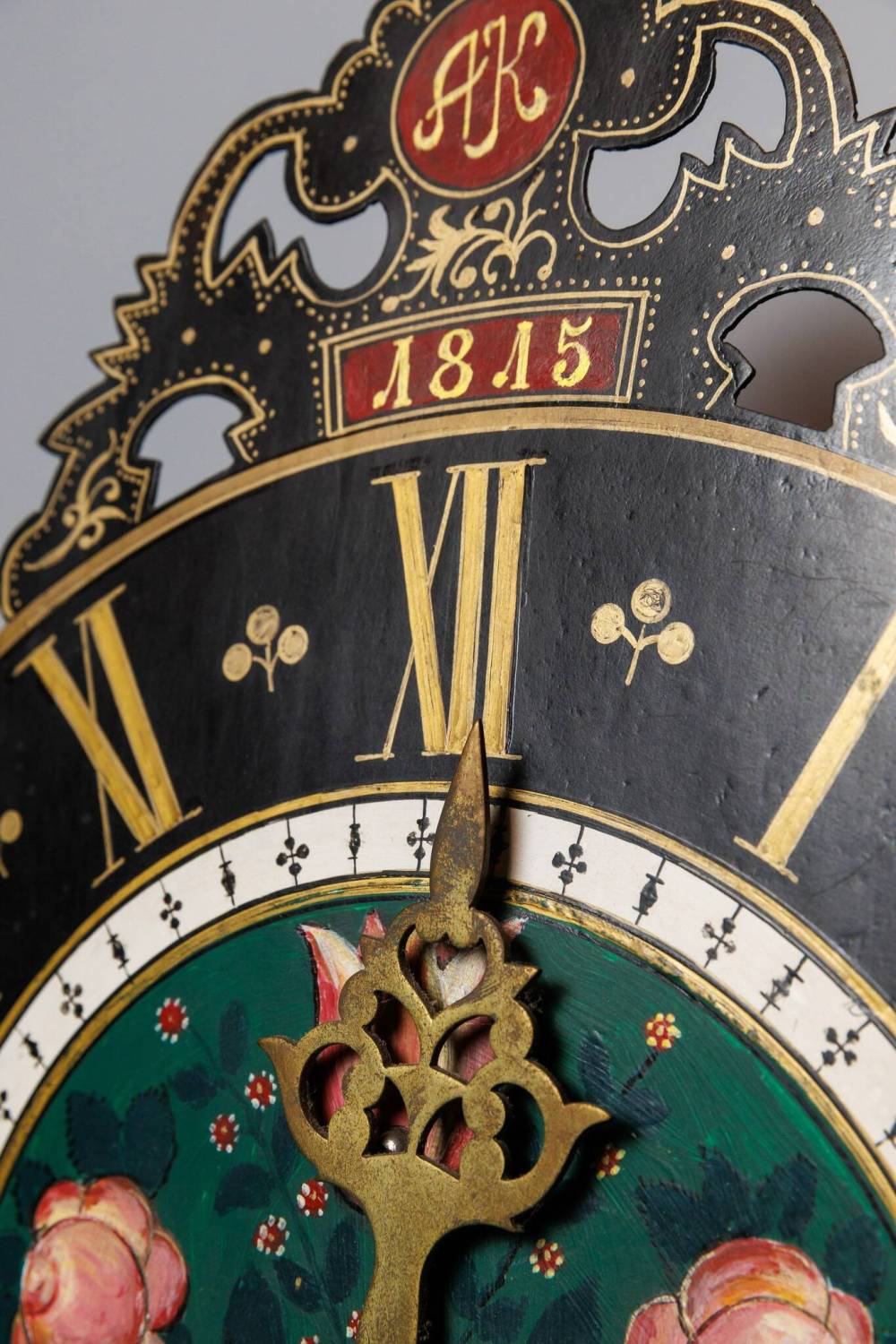
                                The “Cadillac” clock showcases the sophistication and ingenuity of the timepieces.
MIKE DEAL / WINNIPEG FREE PRESS

The “Cadillac” clock showcases the sophistication and ingenuity of the timepieces.

MIKE DEAL / WINNIPEG FREE PRESS
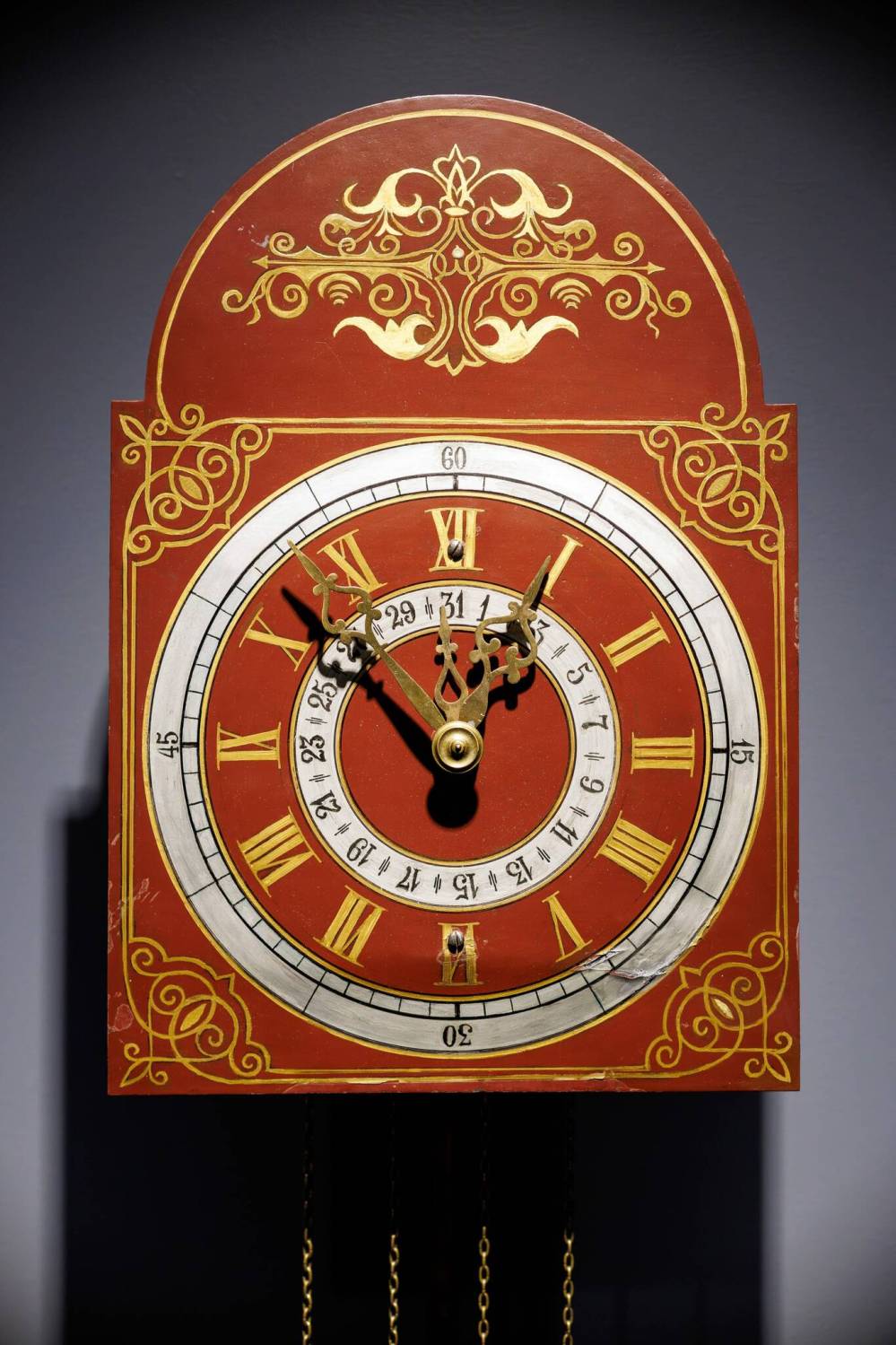
                                Abraham Kroeger (1791–1872) likely made this clock in Rosenthal around 1815.
MIKE DEAL / WINNIPEG FREE PRESS

Abraham Kroeger (1791–1872) likely made this clock in Rosenthal around 1815.

MIKE DEAL / WINNIPEG FREE PRESS
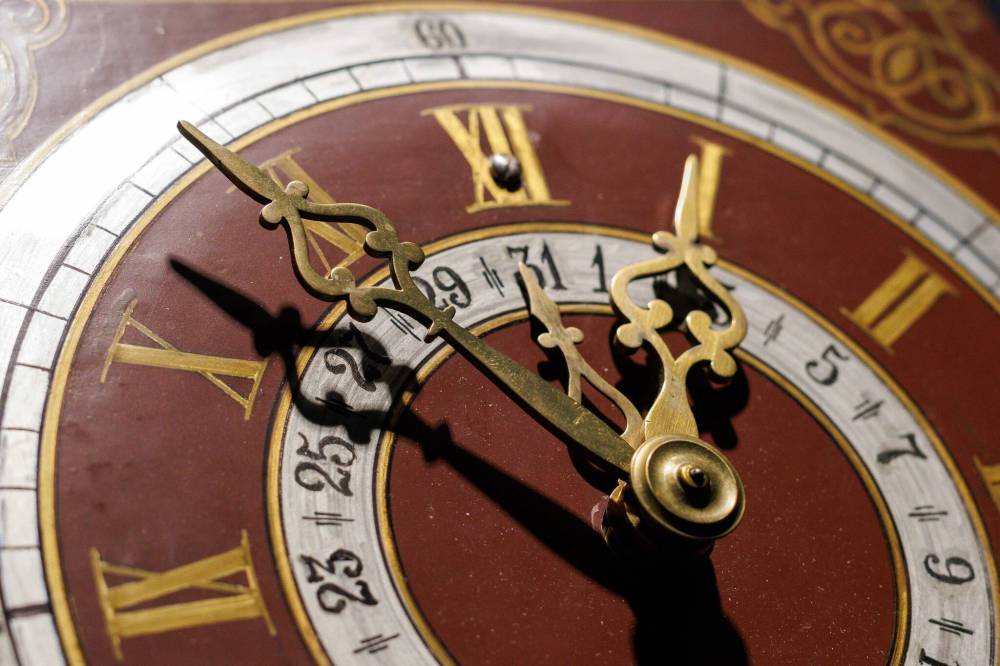
                                The 'Schulz' clock was made during the peak period of Kroeger clock manufacturing, between 1890 and 1910. It was commissioned by a wealthy Mennonite factory owner and would have been one of the most expensive models Kroeger Clockmakers made.
MIKE DEAL / WINNIPEG FREE PRESS

The 'Schulz' clock was made during the peak period of Kroeger clock manufacturing, between 1890 and 1910. It was commissioned by a wealthy Mennonite factory owner and would have been one of the most expensive models Kroeger Clockmakers made.

MIKE DEAL / WINNIPEG FREE PRESS
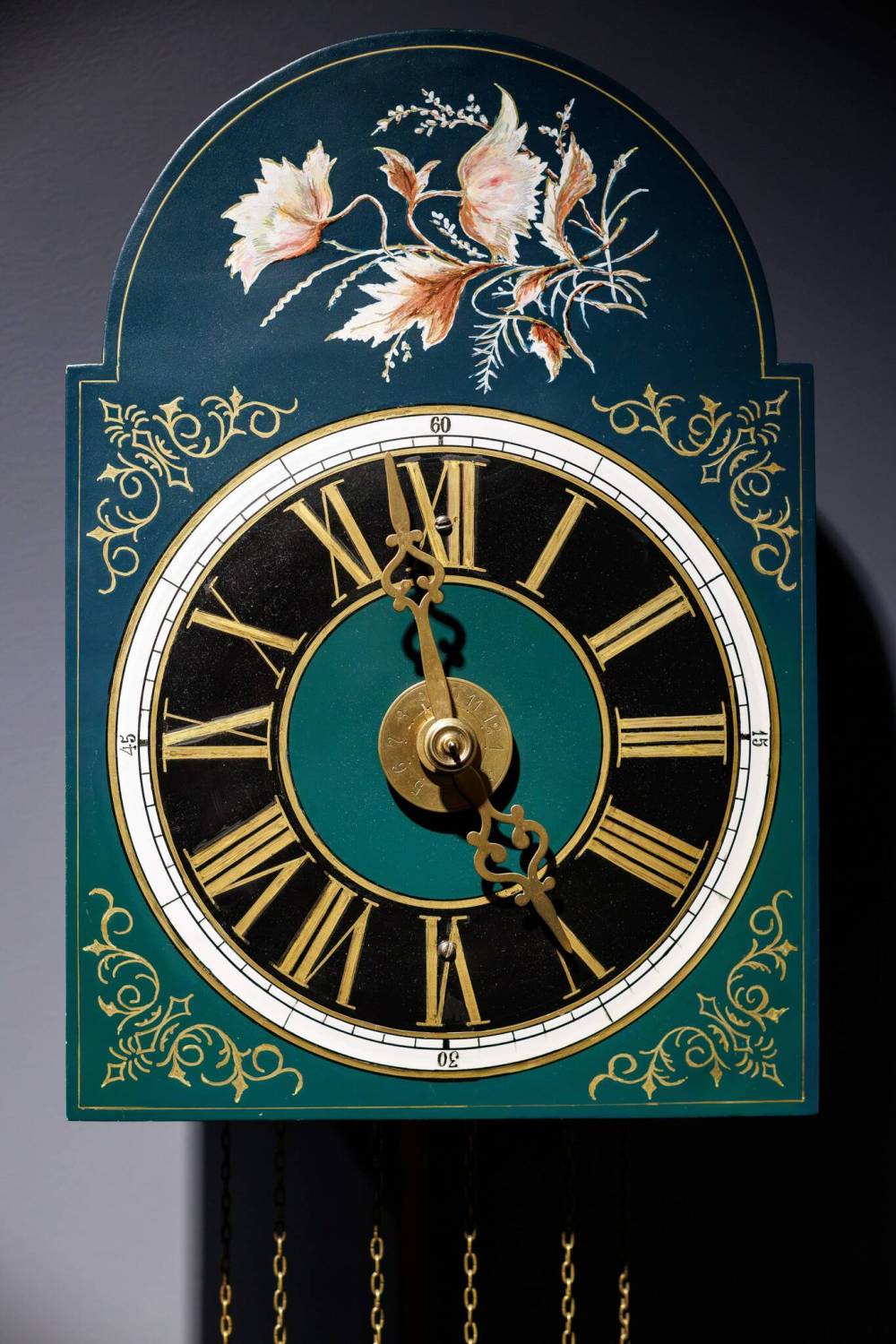
On the eve of the wedding of Anna Zacharias and Peter Schulz in 1893, the groom's father presented the couple with a Kroger clock to celebrate their marriage. The beautiful clock would become part of their family heritage for generations to follow. The couple's happiness, however, was not to last. In 1914, as war broke out in Europe, Peter died of a heart condition and left Anna a widow. In 1927, the family journeyed across the Atlantic Ocean to Canada, with the precious clock packed in their luggage, a reminder of life and family in Russia. Like Anna and Peter, Mennonite couples often received wall clocks as wedding gifts. Clocks represented a new start for young couples and symbols of prosperity and legacy as they were passed down from one generation to the next.
MIKE DEAL / WINNIPEG FREE PRESS

On the eve of the wedding of Anna Zacharias and Peter Schulz in 1893, the groom's father presented the couple with a Kroger clock to celebrate their marriage. The beautiful clock would become part of their family heritage for generations to follow. The couple's happiness, however, was not to last. In 1914, as war broke out in Europe, Peter died of a heart condition and left Anna a widow. In 1927, the family journeyed across the Atlantic Ocean to Canada, with the precious clock packed in their luggage, a reminder of life and family in Russia. Like Anna and Peter, Mennonite couples often received wall clocks as wedding gifts. Clocks represented a new start for young couples and symbols of prosperity and legacy as they were passed down from one generation to the next.

MIKE DEAL / WINNIPEG FREE PRESS 
                                The ‘Zaporoshye’ clock belonged to a family that, despite extreme hardship and suffering, stayed in the Soviet Union.

MIKE DEAL / WINNIPEG FREE PRESS

The ‘Zaporoshye’ clock belonged to a family that, despite extreme hardship and suffering, stayed in the Soviet Union.

MIKE DEAL / WINNIPEG FREE PRESS
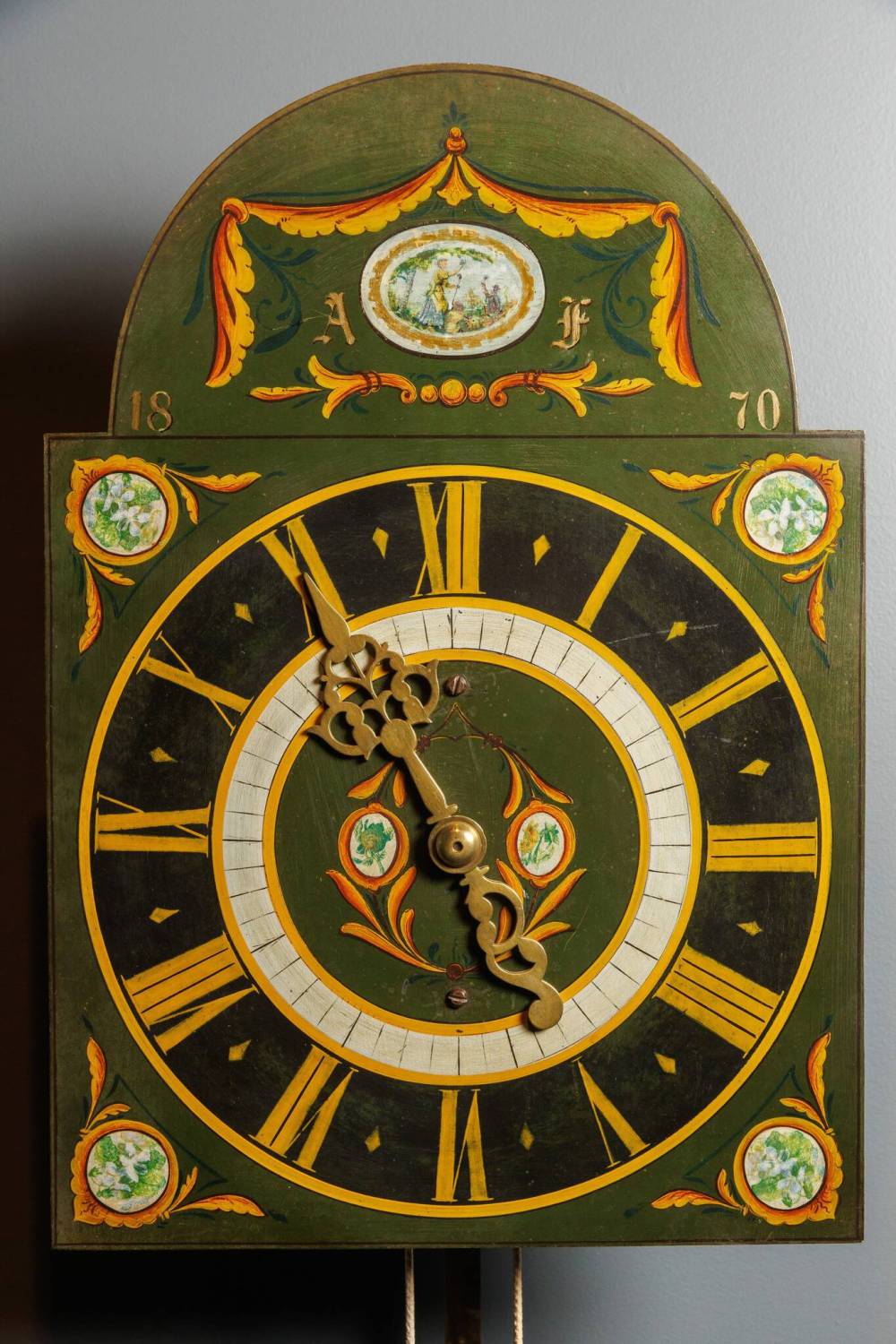
This clock beautifully illustrates the decal decorations that adorned Mennonite clocks at the turn of the twentieth century. Replacing hand-painted artwork on clock faces with decals became more efficient when the Industrial Revolution made large-scale production possible.
MIKE DEAL / WINNIPEG FREE PRESS

This clock beautifully illustrates the decal decorations that adorned Mennonite clocks at the turn of the twentieth century. Replacing hand-painted artwork on clock faces with decals became more efficient when the Industrial Revolution made large-scale production possible.

MIKE DEAL / WINNIPEG FREE PRESS 
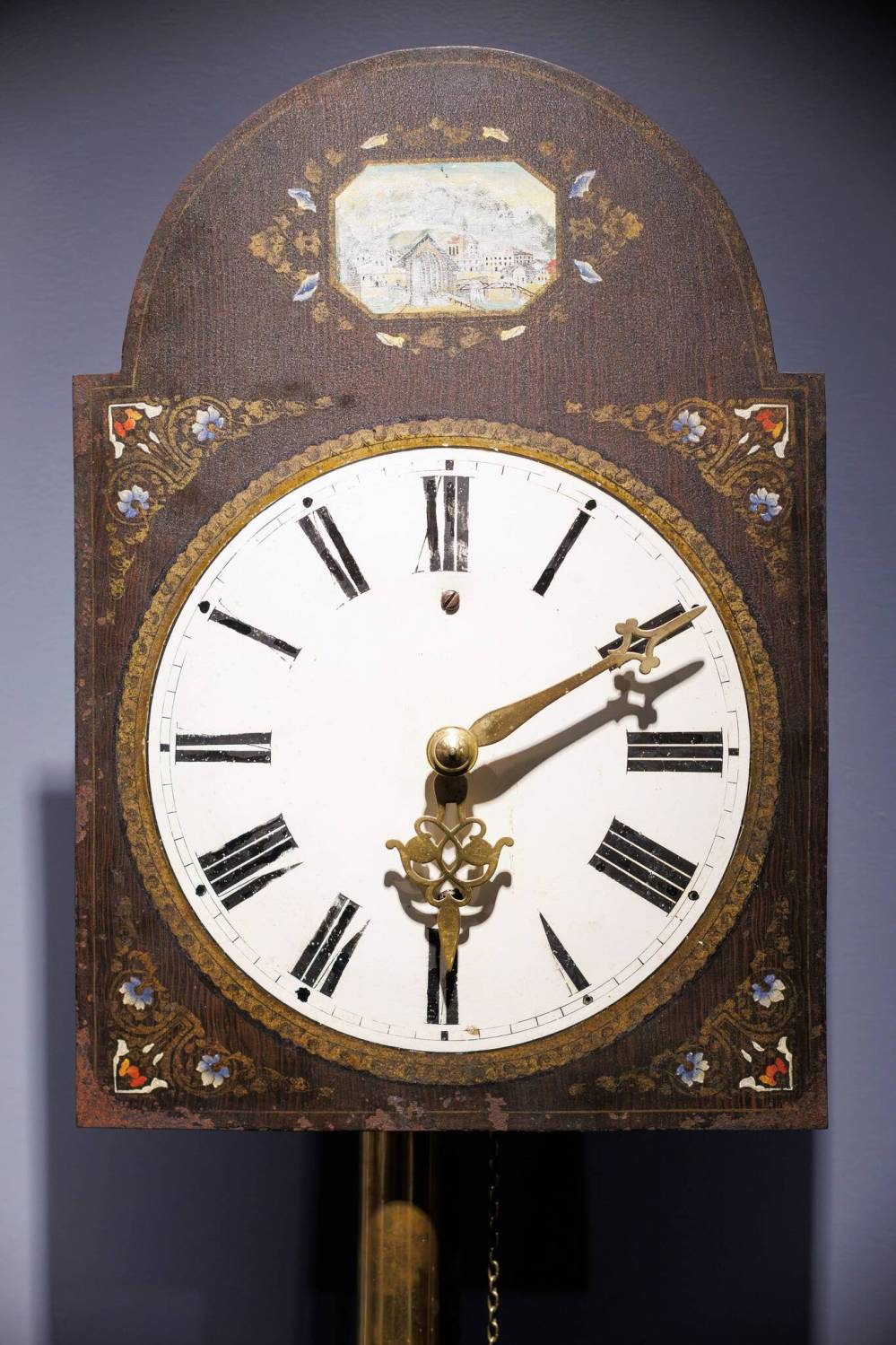
                                The ‘Lilac’ Mandtler (1870) is a one-handed clock. At the time, knowing the exact minute of the day was not crucial.
MIKE DEAL / WINNIPEG FREE PRESS

The ‘Lilac’ Mandtler (1870) is a one-handed clock. At the time, knowing the exact minute of the day was not crucial.

MIKE DEAL / WINNIPEG FREE PRESS 
                                Gerhard Mandtler made this clock in 1865. The painted wood grain pattern was unique to Mennonite clocks.
MIKE DEAL / WINNIPEG FREE PRESS

Gerhard Mandtler made this clock in 1865. The painted wood grain pattern was unique to Mennonite clocks.

MIKE DEAL / WINNIPEG FREE PRESS
Fifteen Mennonite wall clocks are on temporary display at the Manitoba Museum in an exhibition developed by the Kroeger Heritage Clocks Foundation, in partnership with the Mennonite Heritage Museum.

MIKE DEAL / WINNIPEG FREE PRESS

Fifteen Mennonite wall clocks are on temporary display at the Manitoba Museum in an exhibition developed by the Kroeger Heritage Clocks Foundation, in partnership with the Mennonite Heritage Museum.

Mike Deal

Mike Deal
Photojournalist

Mike Deal started freelancing for the Winnipeg Free Press in 1997. Three years later, he landed a part-time job as a night photo desk editor.

Our newsroom depends on a growing audience of readers to power our journalism. If you are not a paid reader, please consider becoming a subscriber.

Our newsroom depends on its audience of readers to power our journalism. Thank you for your support.

History

Updated on Thursday, February 15, 2024 2:42 PM CST: Corrects location of exhibit

Updated on Saturday, February 17, 2024 10:17 AM CST: Corrects name of the museums

Report Error Submit a Tip

More Stories

Winnipeg teacher disciplined for ‘liking’ student’s post

Maggie Macintosh 5 minute read Preview

Winnipeg teacher disciplined for ‘liking’ student’s post

Maggie Macintosh 5 minute read 6:05 PM CDT

A Winnipeg teacher has been reprimanded for accidentally clicking ‘like’ on a student’s year-old social media post during a late-night scroll.

A recent investigation by Manitoba’s independent teacher commissioner found Jordan Nelson, a hockey coach in the Pembina Trails School Division, engaged in professional misconduct by viewing online profiles of students who were following a team account he was managing on behalf of his school.

“Using information associated with the school’s hockey team account to access and review a student’s social media account, without any legitimate educational or workplace purpose, was inappropriate and inconsistent with the professional boundaries expected of a teacher,” commissioner Noni Classen wrote.

A five-page report, better known as a consent resolution agreement, details agreed-upon facts about an October 2025 incident and subsequent disciplinary action.

Read
6:05 PM CDT

Foreign workers at Manitoba hotel are owed $138K in unpaid wages and fees, labour board rules

Abiola Odutola 4 minute read Preview

Foreign workers at Manitoba hotel are owed $138K in unpaid wages and fees, labour board rules

Abiola Odutola 4 minute read Yesterday at 11:47 AM CDT

BRANDON — The Manitoba Labour Board has ordered the Western Star All Suites Hotel to pay nearly $138,000 in unpaid wages and administrative fees after it dismissed the appeals involving three foreign workers employed by the company.

In a decision dated Aug. 25, the board ordered 6692452 Manitoba Ltd. (doing business as Western Star All Suites Hotel), 1638185 Alberta Ltd. and company director P.X. to pay a total of $137,915.79 to the Employment Standards Branch for wages owed to foreign workers S.J., J.B. and G.R.

The decision was edited to protect the personal information of the employees, who worked at a hotel, reportedly in Melita, at different times and also lived there during their employment.

The board stated the employees were owed wages after hearing evidence about long working hours, irregular payments, inadequate employment records and working conditions.

Read
Yesterday at 11:47 AM CDT

Additional candidates register for Winnipeg’s fall election

Free Press staff 2 minute read Preview

Additional candidates register for Winnipeg’s fall election

Free Press staff 2 minute read Yesterday at 3:18 PM CDT

Every city council ward is set to have a contested race in the Oct. 28 municipal election, barring any withdrawals, after additional candidates registered for two contests.

Dennis Bayomi is running in Charleswood-Tuxedo-Westwood, where Evan Duncan is the incumbent candidate.

Bayomi is president and co-deputy leader of the Green Party of Manitoba. He’s run for the Greens in provincial and federal elections.

Fred Morris registered to run against incumbent Cindy Gilroy in Daniel McIntyre.

Read
Yesterday at 3:18 PM CDT

Nightclub owner, divorced dad sentenced for involvement in cocaine-trafficking case

Erik Pindera 5 minute read Preview

Nightclub owner, divorced dad sentenced for involvement in cocaine-trafficking case

Erik Pindera 5 minute read Saturday, Aug. 29, 2026

Three people, including a Winnipeg nightclub owner and a divorced dad desperate for cash, have been sentenced in a cocaine-trafficking case city police were once concerned had been compromised by a corrupt cop.

The trio was charged in early 2024 as part of Project Roasted, a lengthy investigation into a drug trafficking network by the Winnipeg Police Service organized crime unit.

Investigators arrested two of the men, Mohamed Ali and Abdullah Khan, as they left the Stella’s on Pembina Highway in early February 2024. Two kilograms of cocaine was found in Khan’s car.

On the same day, Ahmed Dini was arrested at his River Avenue suite, where investigators found more than 200 rocks of crack cocaine.

Read
Saturday, Aug. 29, 2026

Looking back on Bombers shocking, and convincing, win over CFL’s top team

Taylor Allen 7 minute read Preview

Looking back on Bombers shocking, and convincing, win over CFL’s top team

Taylor Allen 7 minute read Saturday, Aug. 29, 2026

It was getting harder and harder to believe in the 2026 edition of the Winnipeg Blue Bombers.

If anyone outside their locker room picked them to beat the Montreal Alouettes, they must’ve kept it to themselves, as pundits — this one included — and armchair quarterbacks across the nation doubted their chances heading into Friday night.

And honestly, rightfully so. The Bombers had left a lot to be desired through their opening 10 games.

But no matter what the stats say or what outsiders think, they play the games for a reason.

Read
Saturday, Aug. 29, 2026

Port of Churchill celebrates first grain shipment in six years

Aaron Epp 6 minute read Preview

Port of Churchill celebrates first grain shipment in six years

Aaron Epp 6 minute read 6:02 PM CDT

Approximately 30,000 tonnes of Canadian durum wheat from Saskatchewan-based AGT Foods is being loaded at the northern Manitoba port and will be shipped to customers in Europe.

Read
6:02 PM CDT