

‘I want to honour Miguel’s spirit’
Convicted killer tells ‘faint hope’ jury he’s a changed man

Advertisement
Read this article for free:
or
Already have an account? Log in here »
To continue reading, please subscribe:

Digital Subscription
One year of digital access for only $205*
- Enjoy unlimited reading on winnipegfreepress.com
- Read the E-Edition, our digital replica newspaper
- Access News Break, our award-winning app
- Play interactive puzzles
*First annual payment billed as $205.00 + GST for one year. This annual subscription will automatically renew at $233.00 + GST every 52 weeks (10% off the regular annual price of $259.35). Offer available to new and qualified returning subscribers only. Cancel any time.
To continue reading, please subscribe:
Add Free Press access to your Brandon Sun subscription for only an additional
$1 for the first 4 weeks*
- Enjoy unlimited reading on winnipegfreepress.com
- Read the E-Edition, our digital replica newspaper
- Access News Break, our award-winning app
- Play interactive puzzles
*Your next Brandon Sun subscription payment will increase by $1.00 and you will be charged $17.95 plus GST for four weeks. After four weeks, your payment will increase to $24.95 plus GST every four weeks.
Read unlimited articles for free today:
or
Already have an account? Log in here »
Hey there, time traveller!
This article was published 28/03/2024 (903 days ago), so information in it may no longer be current.
Tam Le has spent more than 15 years in prison for murdering Miguel Munoz outside a Winnipeg nightclub.
Now, the 48-year-old Stony Mountain Penitentiary inmate says he is ready to be “part of the solution, rather than part of the problem.”
“I have a choice to better myself and be a role model,” Le told a jury Wednesday. “That day I shot Miguel, there are a million things I could have done differently… I had a choice.”
Le was found guilty of first-degree murder following a jury trial in 2009 and sentenced to life in prison with no chance of parole for 25 years.
Le is asking a jury to allow him to apply for early parole under the “faint hope” clause. The Criminal Code provision allows prisoners sentenced to life in prison for first-degree murder to ask a jury that they be allowed to apply for parole after serving only 15 years.
The faint hope clause was eliminated by Stephen Harper’s government in 2011, but is still available to prisoners who were convicted before the law was changed.
“I must emphasize you are not deciding whether Mr. Le can get out of prison; that is the job of the National Parole Board,” King’s Bench Justice Joan McKelvey told jurors at the first day of the hearing last week.
“You are only deciding whether he can make an application before the parole board before serving 25 years. Even if you grant Mr. Le’s application, there is no guarantee that parole will be granted, and even if it is, a prisoner on parole is generally required to follow a strict plan and is closely monitored in the community.”
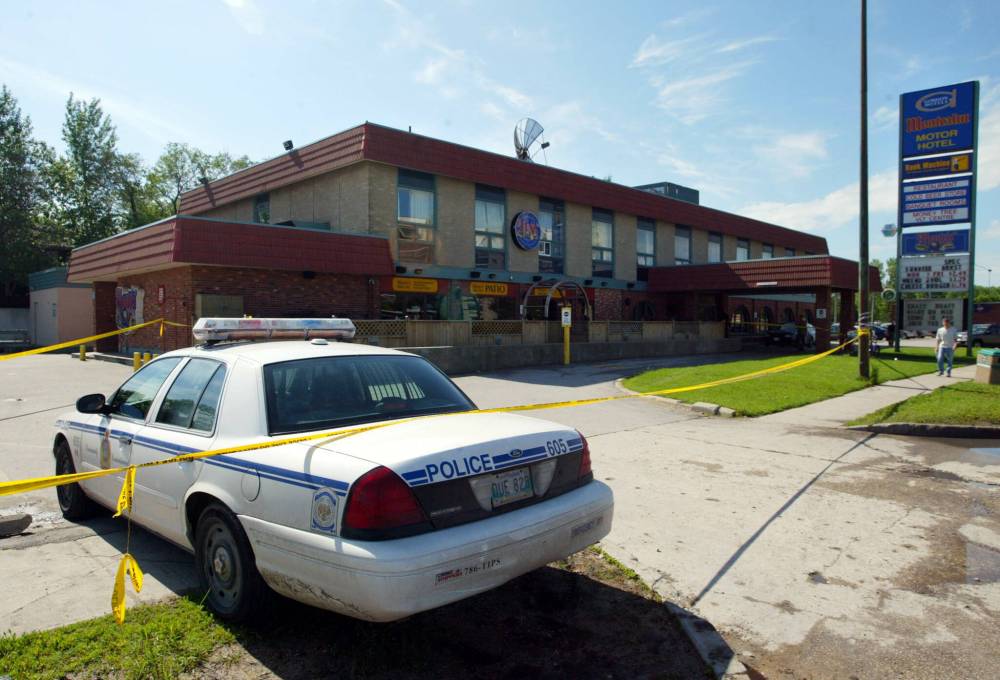
Jurors were told Le had been called to pick up his then-girlfriend’s sister at Monty’s nightclub on Pembina Highway, June 15, 2005, and was trying to separate a group of women who were fighting when he and Munoz, 28, “scuffled and exchanged words.”
The men were separated by bar security, but continued to argue.
Witnesses said Le left the bar and crossed the road toward a pharmacy parking lot, gesturing at Munoz to follow him. Munoz removed his shirt and advanced on Le before Le pulled out a handgun and shot him four times at close range — once in the head, twice in the chest, and once in the arm.
Le, his girlfriend’s sister and another woman got into his truck and drove to his girlfriend’s Southlawn Stroll home, where Le buried the gun under a rock. Le woke up his girlfriend and young child and drove in another vehicle to his parents’ home.
At the time, Le was on bail for break and enter and possession of cocaine, and on parole after serving nine months of a four-year prison sentence for drug trafficking.
Le was arrested later that day and denied any involvement in the killing. Jurors were told Le convinced his girlfriend and sister to provide police with a false alibi, claiming his truck had been in his sister’s possession at the time of the killing.
At trial, Le testified he had driven to the nightclub, but turned back after seeing police, fearing he would be arrested for breaching his parole.
“I was only thinking of myself… I was a piece of s—t,” Le said Wednesday, explaining why he came up with a false alibi. “I didn’t want to take responsibility. I had no empathy for the things I did.”
Le said his time in prison has changed him from a man who thought enough money and a successful court appeal could solve his problems, to someone constantly trying to better himself and atone for the pain he has caused others.
The death of his father in 2011 “made me realize I’m vulnerable, I’m not invincible and that losing somebody really hurts,” Le said.
“I never confessed to my father that I killed Miguel and he kept paying my legal fees,” he said. “I kept on with the charade until he died, and then I told my mom.”
Earlier in the hearing, several witnesses, including a retired prison chaplain who himself had been convicted of murder, testified to the efforts Le has taken to come to grips with the crime he committed and forge a positive future.
Jurors heard Le co-authored a paper on prison life, is an active advocate for prisoners, and provides on-call crisis support at the prison.
Le said he’s not the same man he was when he entered prison, and if released would never return to drug dealing.
“I see the ripple effects and the damage it causes… I don’t want to be part of that,” he said. “I want to honour Miguel’s spirit. I don’t want to let anyone down.”

Le broke down in tears as he read out an apology addressed to Munoz’s mother, who was not present in court.
“My heart aches with the weight of your grief,” Le said. “I recognize the anguish of a mother burying a child is beyond compare and will honour his spirit by continuing a path of profound personal growth.”
Le is currently eligible for day parole July 12, 2029 and full parole July 12, 2032.
The hearing resumes Tuesday.
dean.pritchard@freepress.mb.ca
Dean Pritchard is courts reporter for the Free Press. He has covered the justice system since 1999, working for the Brandon Sun and Winnipeg Sun before joining the Free Press in 2019. Read more about Dean.
Every piece of reporting Dean produces is reviewed by an editing team before it is posted online or published in print — part of the Free Press‘s tradition, since 1872, of producing reliable independent journalism. Read more about Free Press’s history and mandate, and learn how our newsroom operates.
Our newsroom depends on a growing audience of readers to power our journalism. If you are not a paid reader, please consider becoming a subscriber.
Our newsroom depends on its audience of readers to power our journalism. Thank you for your support.
Dean Pritchard is courts reporter for the Free Press. He has covered the justice system since 1999, working for the Brandon Sun and Winnipeg Sun before joining the Free Press in 2019. Read more about Dean.
Every piece of reporting Dean produces is reviewed by an editing team before it is posted online or published in print — part of the Free Press‘s tradition, since 1872, of producing reliable independent journalism. Read more about Free Press’s history and mandate, and learn how our newsroom operates.
Our newsroom depends on a growing audience of readers to power our journalism. If you are not a paid reader, please consider becoming a subscriber.
Our newsroom depends on its audience of readers to power our journalism. Thank you for your support.
Related Articles
‘Faint hope’ jury gives Brandon killer break on parole



Advertisement Advertise With Us
Advertisement Advertise With Us
History
Updated on Thursday, March 28, 2024 6:35 AM CDT: Adds web headline
Updated on Thursday, March 28, 2024 8:55 AM CDT: Fixes typos
Updated on Thursday, March 28, 2024 2:42 PM CDT: adds hearing resumes Tuesday