Weekly encampment cleanup would cost $4M: report Homeless agencies say high pricetag overinflated
Read this article for free:
or
Already have an account? Log in here »
To continue reading, please subscribe:

Digital Subscription
One year of digital access for only $205*
- Enjoy unlimited reading on winnipegfreepress.com
- Read the E-Edition, our digital replica newspaper
- Access News Break, our award-winning app
- Play interactive puzzles
*First annual payment billed as $205.00 + GST for one year. This annual subscription will automatically renew at $233.00 + GST every 52 weeks (10% off the regular annual price of $259.35). Offer available to new and qualified returning subscribers only. Cancel any time.
To continue reading, please subscribe:
Add Free Press access to your Brandon Sun subscription for only an additional
$1 for the first 4 weeks*
- Enjoy unlimited reading on winnipegfreepress.com
- Read the E-Edition, our digital replica newspaper
- Access News Break, our award-winning app
- Play interactive puzzles
*Your next Brandon Sun subscription payment will increase by $1.00 and you will be charged $17.95 plus GST for four weeks. After four weeks, your payment will increase to $24.95 plus GST every four weeks.
Read unlimited articles for free today:
or
Already have an account? Log in here »
Hey there, time traveller!
This article was published 10/04/2024 (883 days ago), so information in it may no longer be current.
Standing outside a friend’s ramshackle shelter on the bank of the Assiniboine River, John Larkin said he’d be happy if the city helped keep homeless camps clean.
The 37-year-old has been living in shacks or tents along the river for about two years after a split with his wife, problems with methamphetamine and difficulty getting on welfare.
“I could help them — I bag up all my stuff and put it in the bin. Some of the people, they bring garbage right to their place and just leave it, I don’t know why. There’s a lot of mess, a lot of garbage,” Larkin said.
MIKAELA MACKENZIE / FREE PRESS John Larkin (who has lived rough by the river for two years) outside of a friend's tent along the Assiniboine River.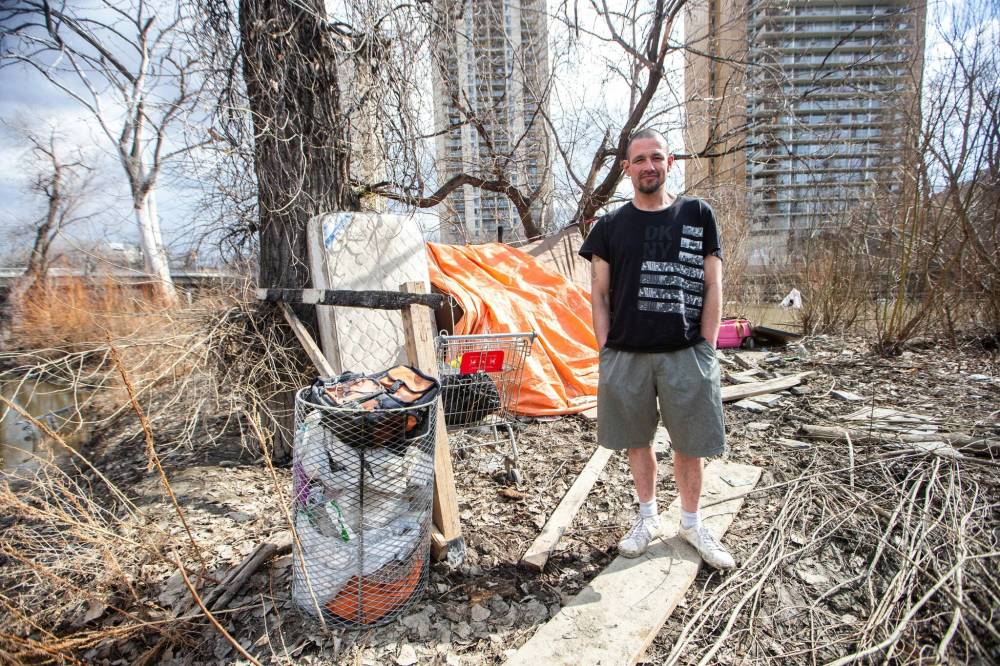
Larkin was happy to learn the City of Winnipeg was examining the idea of cleaning up trash weekly at encampments.
A report, written by city Chief Administrative Officer Michael Jack, goes to council’s executive policy committee meeting next week. It indicates the city paid $83,888 for 162 cleanups last year, or $517 each.
To clean up each camp once a week, Jack estimates the city would have to spend approximately $4.06 million a year, based on last year’s costs.
Encampment cleanups since 2018 have cost the city $301,439, most of which was spent to hire contractors.
The report, prompted by a recommendation out of the Lord Selkirk-West Kildonan Community Committee, notes there are currently about 150 homeless camps spread across the city.
“Garbage accumulation at encampments has become increasingly difficult to manage,” reads Jack’s report.
“Citizens as well as residents of encampments regularly express concerns regarding how to manage and dispose of garbage in encampments. There is limited budget and available equipment to conduct regular cleanups, and often there are material difficulties in engaging in mindful cleanups of encampment sites, whether due to mistrust of staff by encampment residents, location limitations, or the transitory nature of encampments.”
Main Street Project’s director of community initiatives Kate Sjoberg said the report is the right step, but that the potential costs Jack cited are wildly overinflated compared to what her organization and others in the sector think regular cleanups would cost.
“Generally, this is a really positive direction,” said Sjoberg, who added that many people living in camps want to keep them clean but don’t have the ability.
She said Main Street Project and Siloam Mission examined the issue recently and sent findings to the city. The agencies determined camps would only require intensive deep cleans initially, with regular weekly pickups afterward similar to how residential trash is collected.
“This is so astronomically unnecessary, in terms of $4 million — all Winnipeggers should balk at those numbers and not take it seriously.”–Kate Sjoberg
”($4.06 million) is so far beyond what we ever proposed. For the most part, what we proposed is the city needs to figure out regular pickups for known encampment sites in the city, and we’ll support folks to do the gathering work themselves,” said Sjoberg.
“This is so astronomically unnecessary, in terms of $4 million — all Winnipeggers should balk at those numbers and not take it seriously.”
She said the cost of the proposal from the two shelters would be around $250,000 annually, using the city’s figures, or less based on what Main Street Project and Siloam estimated.
Winnipeg’s public service has been discussing garbage pickups with representatives from Siloam Mission, Main Street Project and the Downtown Community Safety Partnership, Jack wrote. The agencies have proposed partnerships with the city to conduct cleanups at encampments in their service areas.
There are “numerous limitations” to the estimates in his report, as costs would likely decrease over time, Jack wrote.
“In theory, week-over-week costs would decrease significantly upon establishment of a regular cleanup schedule, as encampment sites would have less accumulated waste,” the report said.
“Regular cleanups also have the potential to reduce emergency calls for service, via reduction of overall fire and life safety risk.”
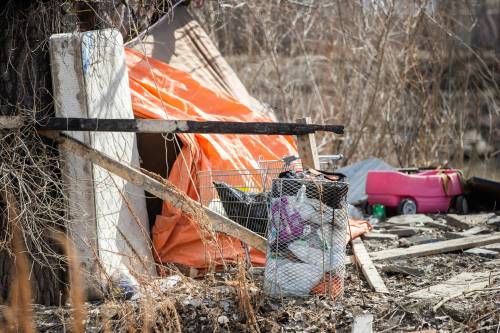
MIKAELA MACKENZIE / FREE PRESS A new report to city council estimates that weekly cleanups to all 150 encampments in the city could cost approximately $4.06 million annually.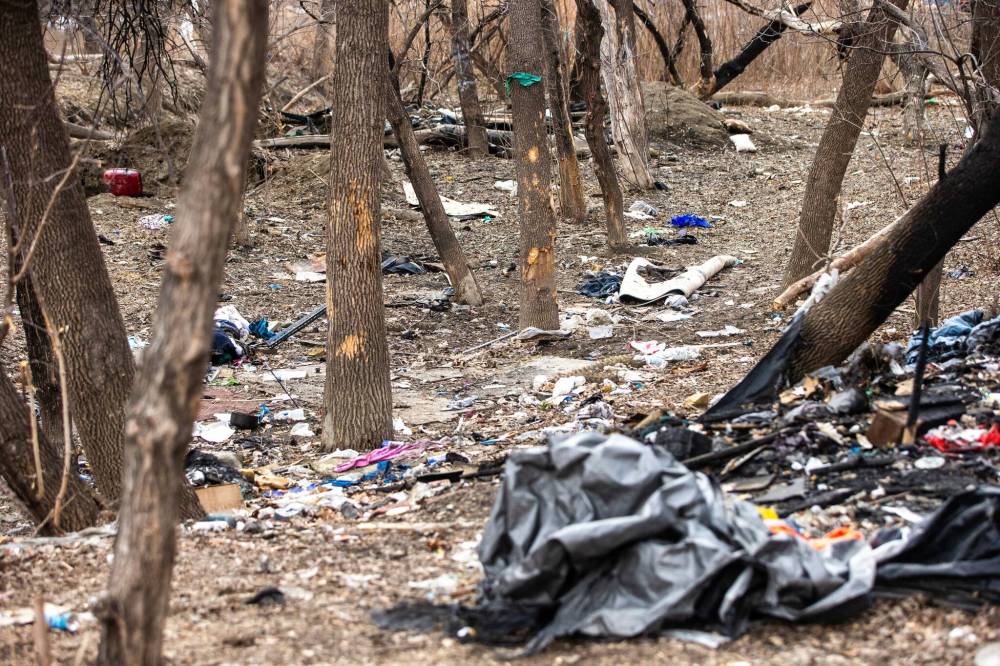
But expanding the number of encampment cleanups would also put “inflationary pressure” on contractors, the city’s public works department and outreach service providers, drastically increasing the number of staff, equipment and materials needed, he said.
Scheduling regular cleanings would be complicated, he suggested; people living in smaller camps often move freely, without notice, and encampment sites such as riverbanks can be difficult to access with typical waste cleanup machinery. The report also said the efforts require trust among camp residents and crews, but in the past, city staff, contractors and outreach workers have faced threats and aggression.
The report noted the city’s policy is to evict camp residents only as a last resort, when there is a significant threat to life. The city currently passes on complaints about camps to outreach agencies whose workers visit to determine whether there are any immediate dangers to life, then try to connect residents to shelters or available social housing.
Outreach workers notify the city if a camp is abandoned; public works employees or private contractors are sent to clean up.
Jack’s report also examined other cities’ policies on sanctioning homeless camps in certain locations and providing municipal services, including regular garbage pickup.
Mayor Scott Gillingham said that although the report has not yet been discussed at council, the city needs to address encampments.
“We need to clean up our community in the springtime, we need ongoing cleanup in encampments,” he told reporters Wednesday. “This is something we’ll continue to discuss.”
The mayor said that the city is working with service agencies and the province to try to address the issue and homelessness more broadly. He added that he recognizes that the camps can be unsightly and dangerous for nearby residents.
“People need housing and that has got to be the focus — a housing-first approach, so we can get people out of encampments, into housing with wraparound supports,” Gillingham said. “If people are in housing with wraparound supports, they don’t need to be in (an) encampment.”
Fort Rouge-East Fort Garry Coun. Sherri Rollins, who sits on the executive policy committee, said that people living in camps is an “ongoing humanitarian crisis.”
“We’ve had a lot of problems with extending necessities, like garbage and toileting, which I think is our human rights duty,” said Rollins.
MIKAELA MACKENZIE / FREE PRESS Community organizations are pushing back on the cited cost, saying camps would only require intensive deep cleans initially, with regular weekly pickups afterward similar to how residential trash is collected.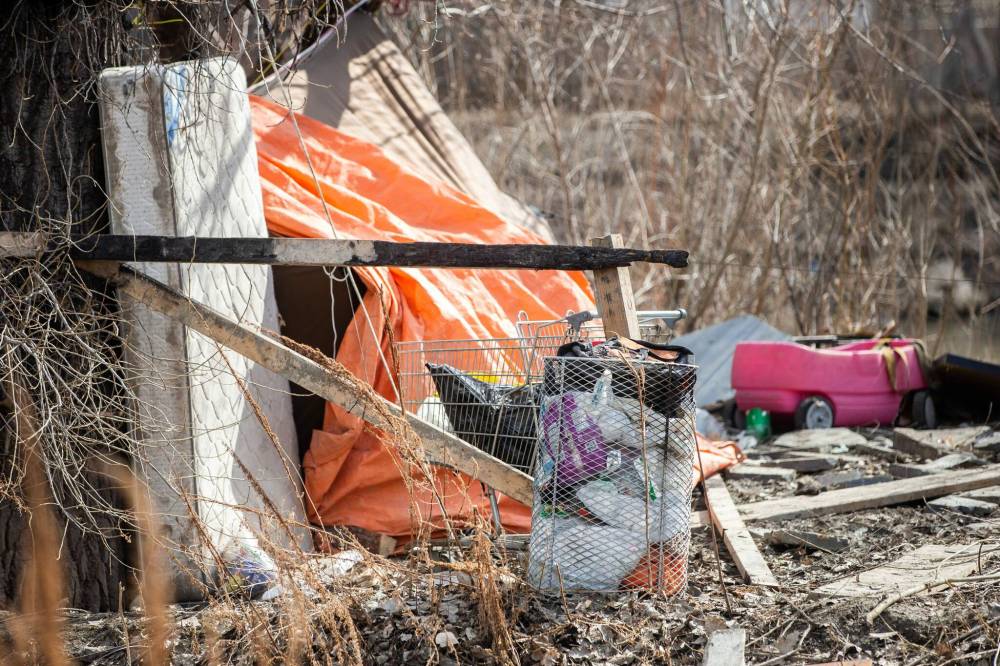
She said there is a “very intensive need” to clean up and provide services to camps.
“These prices look like a lot, but that’s how much it is estimated for the frequency we need in order to have an appreciable difference,” said Rollins.
Marion Willis of the St. Boniface Street Links social services agency said that the costs of cleaning up camps is “absolutely enormous.” Her organization had to partner with a trash-removal company and use its outreach workers as cleaners to cut costs.
Ultimately, she said, the city should focus on addressing homelessness outright.
“Money well spent is money put into taking proactive steps to end homelessness,” she said. “Then there won’t be homeless encampments to clean up.”
Larkin had a similar sentiment.
“It would make me feel better if they started cleaning up, helping us — but more than just cleaning, they should help us get off the freaking streets.”
erik.pindera@freepress.mb.ca

Erik Pindera is a reporter for the Free Press, mostly focusing on crime and justice. The born-and-bred Winnipegger attended Red River College Polytechnic, wrote for the community newspaper in Kenora, Ont. and reported on television and radio in Winnipeg before joining the Free Press in 2020. Read more about Erik.
Every piece of reporting Erik produces is reviewed by an editing team before it is posted online or published in print — part of the Free Press‘s tradition, since 1872, of producing reliable independent journalism. Read more about Free Press’s history and mandate, and learn how our newsroom operates.
Our newsroom depends on a growing audience of readers to power our journalism. If you are not a paid reader, please consider becoming a subscriber.
Our newsroom depends on its audience of readers to power our journalism. Thank you for your support.
Related Articles
Fiery crisis of garbage at encampments









History
Updated on Wednesday, April 10, 2024 6:20 PM CDT: Adds report