Serial killer used three different garbage bins to dispose of last victim’s remains, trial hears
Read this article for free:
or
Already have an account? Log in here »
To continue reading, please subscribe:

Digital Subscription
One year of digital access for only $205*
- Enjoy unlimited reading on winnipegfreepress.com
- Read the E-Edition, our digital replica newspaper
- Access News Break, our award-winning app
- Play interactive puzzles
*First annual payment billed as $205.00 + GST for one year. This annual subscription will automatically renew at $233.00 + GST every 52 weeks (10% off the regular annual price of $259.35). Offer available to new and qualified returning subscribers only. Cancel any time.
To continue reading, please subscribe:
Add Free Press access to your Brandon Sun subscription for only an additional
$1 for the first 4 weeks*
- Enjoy unlimited reading on winnipegfreepress.com
- Read the E-Edition, our digital replica newspaper
- Access News Break, our award-winning app
- Play interactive puzzles
*Your next Brandon Sun subscription payment will increase by $1.00 and you will be charged $17.95 plus GST for four weeks. After four weeks, your payment will increase to $24.95 plus GST every four weeks.
Read unlimited articles for free today:
or
Already have an account? Log in here »
Hey there, time traveller!
This article was published 09/05/2024 (860 days ago), so information in it may no longer be current.
Admitted serial killer Jeremy Skibicki disposed of the remains of his final victim in three different garbage bins, one of which was emptied into a garbage truck just a short time before police could seize its contents, a court heard Thursday.
Police began a search for Rebecca Contois’ remains the morning of May 17, 2022, after a man searching for scrap metal found the woman’s severed head wrapped in a plastic bag in a garbage bin in the 200 block of Edison Avenue.
Skibicki, 37, has pleaded not guilty to four counts of first-degree murder in the 2022 slayings of Contois and two other Indigenous women — Morgan Harris and Marcedes Myran — as well as a fourth still-unidentified woman given the name Mashkode Bizhiki’ikwe (Buffalo Woman) by Indigenous leaders.
Dozens of the slain women’s family members filled most of the large court gallery’s seats.
Victims of admitted serial killer Jeremy Skibicki (left to right): Morgan Beatrice Harris, Marcedes Myran, Rebecca Contois.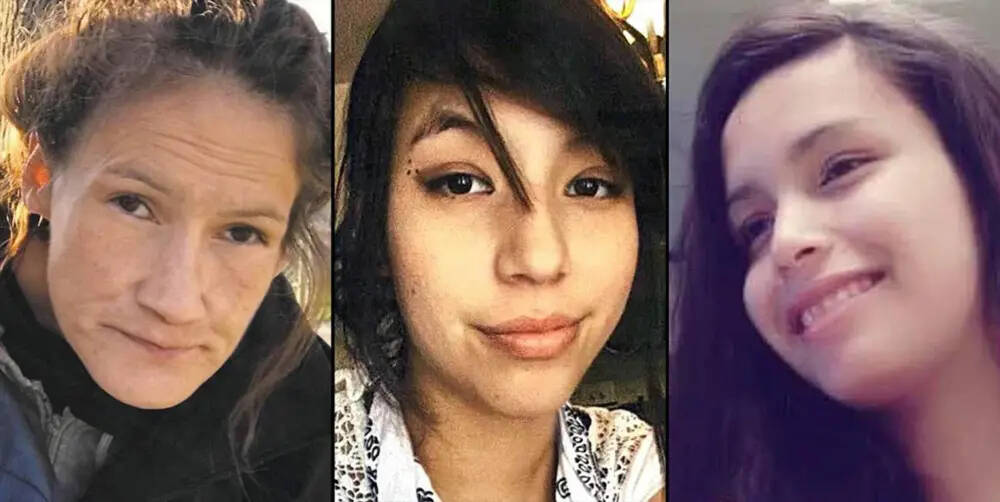
Skibicki has admitted to killing the women but is arguing he should be found not criminally responsible by reason of mental disorder.
On Thursday, court heard testimony from Winnipeg Police Service Const. Jan de Vries, who at the time was assigned to the forensic identification unit and tasked with documenting and collecting physical evidence at the crime scene and other locations, including Skibicki’s McKay Avenue apartment.
De Vries testified he was alerted to the discovery of Contois’ head shortly before 6 a.m. that same morning and that by the time he arrived at police headquarters for briefing 70 minutes later, all garbage collection in the area had been suspended.
“And that was done in order to be able to search all the bins in the area,” Crown attorney Chris Vanderhooft suggested to de Vries.
“That was my understanding,” de Vries said in response.
Photo from security video shown to Jeremy Skibicki during questioning by Winnipeg Police. 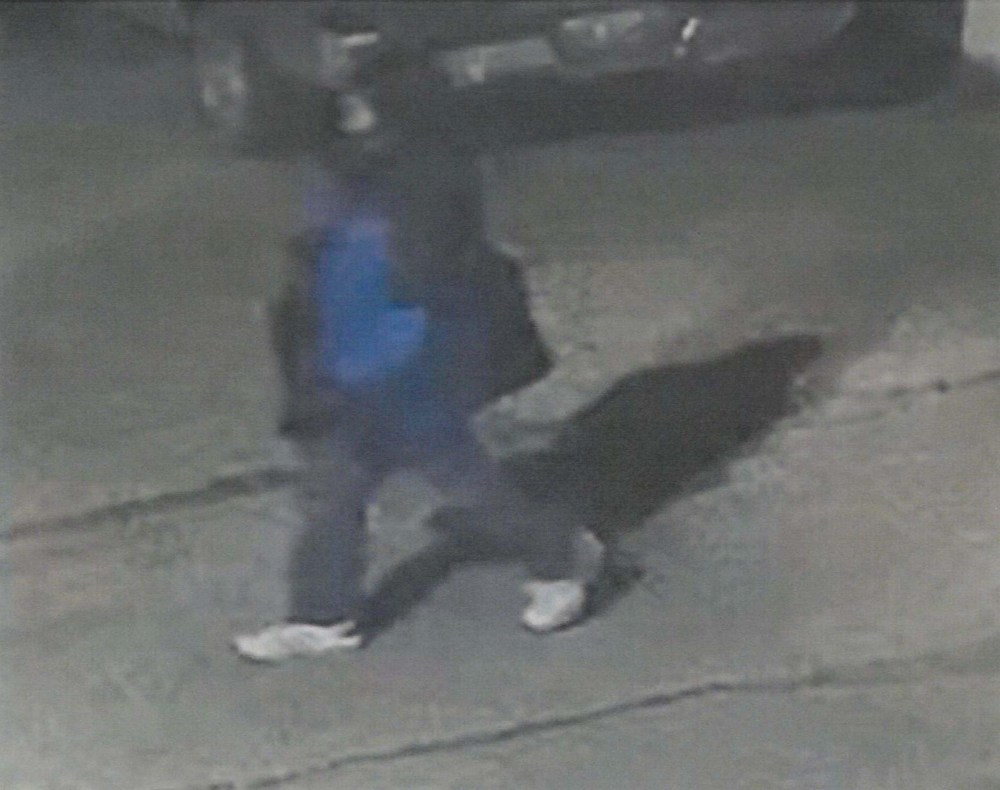
De Vries said a search of the garbage bin where Contois’ head was found revealed garbage bags containing more of her remains, as did the search of a second garbage bin further up the laneway.
Security video showed Skibicki earlier dumping a garbage bag in a large garbage bin in the rear of a Midas Muffler shop on Henderson Highway, a short walk from his home.
De Vries said that garbage bin — which would have been on the same collection route as the two bins that contained Contois’ remains — was empty by the time police searched it, prompting police to cordon off a section of the Brady Road landfill. A subsequent search of the landfill uncovered Contois’ torso wrapped in an afghan.
A search of Skibicki’s apartment found bloodstains belonging to Myran and Harris on a pillow. Contois’ blood was found on the bathroom wall, floor and the bathtub.
In a police interrogation video played for court Wednesday, Skibicki told investigators he choked both Contois and Myran to death before sexually violating their corpses, putting their bodies in the bathtub and dismembering them.
Skibicki told investigators he dismembered Contois and Myran with a combat knife.
De Vries said police seized the knife and sent it to the RCMP laboratory for DNA analysis, which revealed the presence of “biological material… attributable to Marcedes Myran.”
Police seized several personal items linking the the three identified victims to Skibicki’s home, including earrings and underwear, and a coat found to have DNA on it belonging to both Harris and Contois. Runners belonging to both Contois and Harris were found in garbage bins outside Skibicki’s apartment.
Evidence photos of personal items linked to the victims.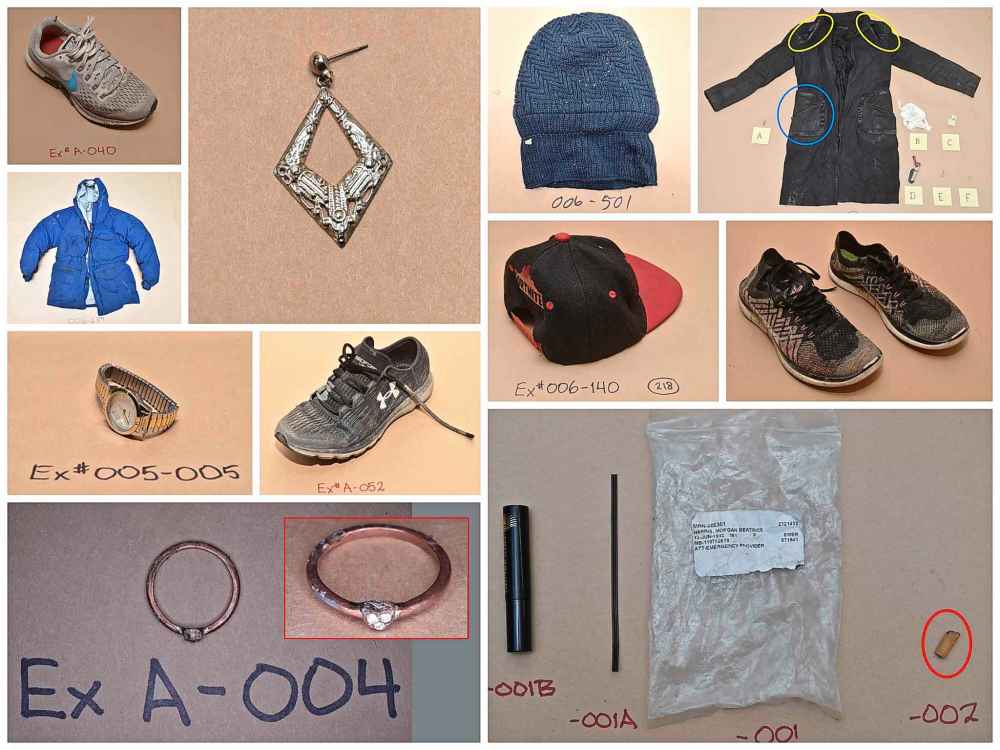
Police found DNA evidence of 16 women, including the four victims, inside Skibicki’s apartment, nine of whom remain unidentified, court heard.
De Vries said he and another identification unit officer spent about 10 minutes with Skibicki at police headquarters, photographing his body and seizing his clothing for analysis. De Vries said during his time with Skibicki, he showed no signs he was suffering from hallucinations or mental distress and “responded as normal” to directions.
• Transcript of police interview with Jeremy Skibicki (PDF)
Prosecutors allege the killings were part of a “calculated scheme” motivated by hate.
In his interrogation video, Skibicki described the slayings as “mercy killings” and said he was “directed by God,” telling investigators he was driven by a white supremacist ideology and that he didn’t believe “that races are meant to be forced to live together.”
“I believe now it was (the victims’) time,” he said. “I believe… extreme desperate measures need to be taken for the survival of my people.”
dean.pritchard@freepress.mb.ca

Dean Pritchard is courts reporter for the Free Press. He has covered the justice system since 1999, working for the Brandon Sun and Winnipeg Sun before joining the Free Press in 2019. Read more about Dean.
Every piece of reporting Dean produces is reviewed by an editing team before it is posted online or published in print — part of the Free Press‘s tradition, since 1872, of producing reliable independent journalism. Read more about Free Press’s history and mandate, and learn how our newsroom operates.
Our newsroom depends on a growing audience of readers to power our journalism. If you are not a paid reader, please consider becoming a subscriber.
Our newsroom depends on its audience of readers to power our journalism. Thank you for your support.
Related Articles
Horrific details of slayings emerge as admitted serial killer’s trial begins








History
Updated on Friday, May 10, 2024 11:28 AM CDT: Adds photo of evidence.