Hanover School Division apologizes for reopening old wound Assignment asked for positive aspects to residential schools
Read this article for free:
or
Already have an account? Log in here »
To continue reading, please subscribe:

Digital Subscription
One year of digital access for only $205*
- Enjoy unlimited reading on winnipegfreepress.com
- Read the E-Edition, our digital replica newspaper
- Access News Break, our award-winning app
- Play interactive puzzles
*First annual payment billed as $205.00 + GST for one year. This annual subscription will automatically renew at $233.00 + GST every 52 weeks (10% off the regular annual price of $259.35). Offer available to new and qualified returning subscribers only. Cancel any time.
To continue reading, please subscribe:
Add Free Press access to your Brandon Sun subscription for only an additional
$1 for the first 4 weeks*
- Enjoy unlimited reading on winnipegfreepress.com
- Read the E-Edition, our digital replica newspaper
- Access News Break, our award-winning app
- Play interactive puzzles
*Your next Brandon Sun subscription payment will increase by $1.00 and you will be charged $17.95 plus GST for four weeks. After four weeks, your payment will increase to $24.95 plus GST every four weeks.
Read unlimited articles for free today:
or
Already have an account? Log in here »
Hey there, time traveller!
This article was published 23/05/2024 (848 days ago), so information in it may no longer be current.
A rural Manitoba school division has apologized after Grade 9 social studies students were asked to name two positive aspects about residential schools.
An assignment sent home with Steinbach Regional Secondary School students in early April asked them to “make a list of what you think are two positive and two negative effects of residential schools” as per a learning activity on the legacy of residential schools.
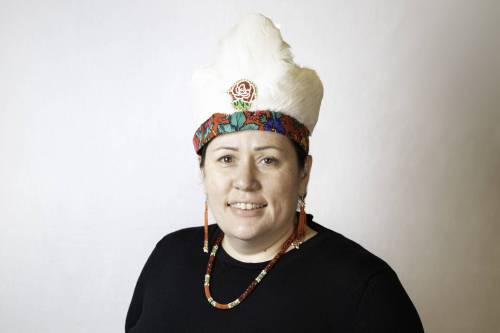
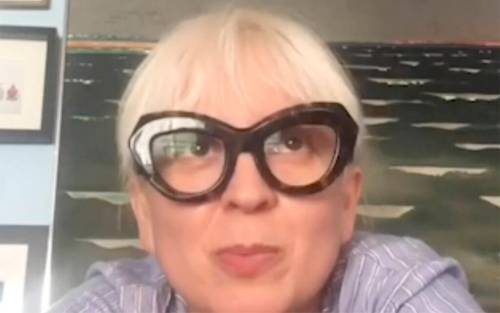
The assignment caught the attention of Bambi Bertholet.
“It’s exactly questions like this in our curriculum that perpetuate those kinds of stereotypes… and influence people about how they feel about Indigenous people,” said Bertholet, who is Cree and has lived in Steinbach for seven years.
“It’s exactly questions like this in our curriculum that perpetuate those kinds of stereotypes… and influence people about how they feel about Indigenous people.”–Bambi Bertholet
Bertholet asked school division officials to look into the assignment.
“They haven’t gotten back to me to say what they have or haven’t done,” she said.
School division confirms assignment was distributed
On Wednesday, the Hanover School Division confirmed the question was handed out by a teacher as a take-home assignment. The question was mistakenly taken from a provincial course package that is no longer in use, the division said.
“The study questions shared in this instance do not reflect the values we strive to uphold: truth, reconciliation, respect, and collaboration with Indigenous peoples,” superintendent Shelley Amos said in an emailed statement. “We extend our deepest apologies to all those affected and will take steps to ensure this oversight does not happen again.”
It declined to say whether the teacher was disciplined, citing privacy considerations.
”We extend our deepest apologies to all those affected and will take steps to ensure this oversight does not happen again.”–Superintendent Shelley Amos
The Truth and Reconciliation Commission of Canada estimates 150,000 youth were taken from their families and forced into residential schools over the more than 100 years the system operated.
Hanover Teachers’ Association president Kevin Martens wouldn’t comment on the incident, calling it a personnel issue. Martens said the association continues to work with teachers on Indigenous education.
“Education continues on… for generations and it’s good work that continually needs to be addressed,” he said.
The association employs an Indigenous advocate who works with teachers and support staff to implement Indigenous perspectives in the curriculum and create assignments that are culturally sensitive.
“We try and build bridges in our community and through Indigenous topics,” Martens said. “We want to try and help as much as we can”
Province released Indigenous education policy framework in 2023
In 2023, the province released an Indigenous education policy framework to help teachers, administration and support staff create an Indigenous-inclusive curriculum.
Education Minister Nello Altomare said the department took “immediate action” to enforce the use of the provincial curriculum and eliminate outdated material after learning about the incident at the Steinbach school.
“Manitoba schools are part of our journey to reconciliation and from Orange Shirt Day to reading Indigenous authors, schools are a place to learn about all of Canada’s history,” Altomare said in a written statement.
Amos reiterated the Hanover division adheres to provincial curriculum standards, including those for Indigenous education.
Bertholet said the question hinders the education of predominately white communities about the legacy of the schools.
In Steinbach, nearly 10 per cent of its 17,589 residents identify as Indigenous, as per Statistics Canada.
Bertholet wants the Hanover division’s curriculum to be altered to reflect history more accurately. She wants more Indigenous teachers and elders to be consulted about the curriculum on Indigenous history and residential schools.
“This is a Mennonite community, but we’re still on Treaty One territory,” she said. “These kinds of things are baked into our society and unless we say something about it, no one is going to do anything.”
nicole.buffie@freepress.mb.ca

Nicole Buffie
Multimedia producer
Nicole Buffie is a reporter for the Free Press city desk. Born and bred in Winnipeg, Nicole graduated from Red River College’s Creative Communications program in 2020 and worked as a reporter throughout Manitoba before joining the Free Press newsroom as a multimedia producer in 2023. Read more about Nicole.
Every piece of reporting Nicole produces is reviewed by an editing team before it is posted online or published in print — part of the Free Press‘s tradition, since 1872, of producing reliable independent journalism. Read more about Free Press’s history and mandate, and learn how our newsroom operates.
Our newsroom depends on a growing audience of readers to power our journalism. If you are not a paid reader, please consider becoming a subscriber.
Our newsroom depends on its audience of readers to power our journalism. Thank you for your support.