Restoring family ties New sober centre allows parents to get treatment with children at their side
Read this article for free:
or
Already have an account? Log in here »
To continue reading, please subscribe:
Digital Subscription
One year of digital access for only $1.44 a week*
- Enjoy unlimited reading on winnipegfreepress.com
- Read the E-Edition, our digital replica newspaper
- Access News Break, our award-winning app
- Play interactive puzzles
*Billed as $5.77 plus GST every four weeks. After 52 weeks, price increases to the regular rate of $19.95 plus GST every four weeks. Offer available to new and qualified returning subscribers only. Cancel any time.
To continue reading, please subscribe:
Add Free Press access to your Brandon Sun subscription for only an additional
$1 for the first 4 weeks*
- Enjoy unlimited reading on winnipegfreepress.com
- Read the E-Edition, our digital replica newspaper
- Access News Break, our award-winning app
- Play interactive puzzles
*Your next Brandon Sun subscription payment will increase by $1.00 and you will be charged $17.95 plus GST for four weeks. After four weeks, your payment will increase to $24.95 plus GST every four weeks.
Read unlimited articles for free today:
or
Already have an account? Log in here »
Hey there, time traveller!
This article was published 05/07/2024 (844 days ago), so information in it may no longer be current.
Priscilla Kent is experiencing a joy that four months ago was only a dream.
She’s surrounded by the giggles of children as she sits with her teenage daughter, Madison, in the child-minding room of the Aurora Reunification Village, a sprawling apartment style complex in south Winnipeg.
“If it weren’t for this place, I didn’t think I’d make it,” Kent says quietly.
MIKE DEAL / FREE PRESS Aurora Reunification Village resident, Priscilla Kent with her daughter, Madison Stove, who is very proud of her mother for the work she has put into recovery.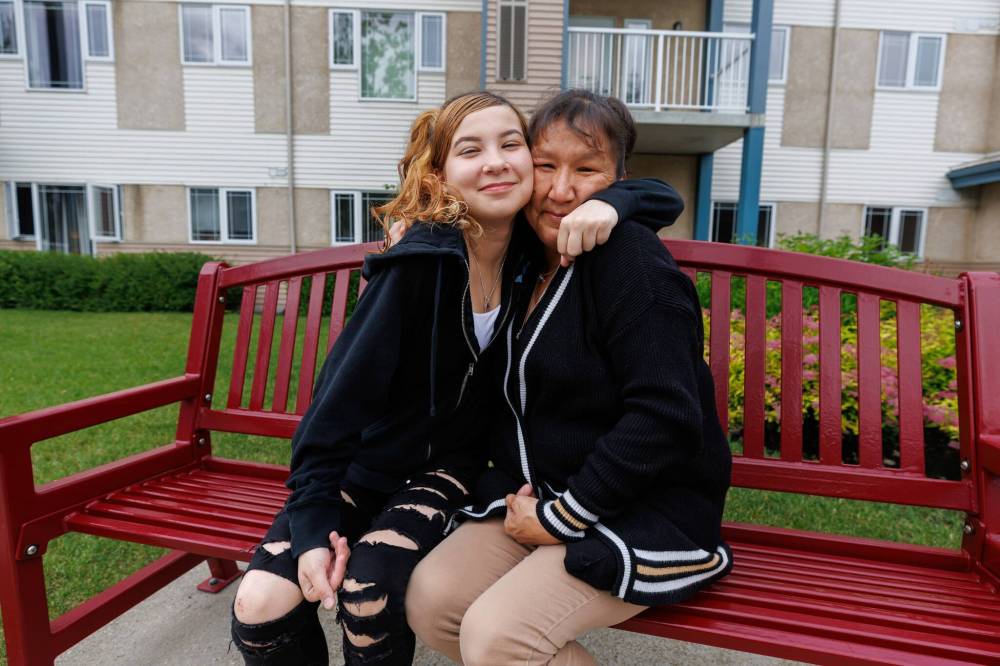
Kent has been living here for about a month, following the completion of residential treatment in Gimli. As of this week, she’s been sober four months.
Later, sitting on a couch with her daughter by her side, Kent gets teary-eyed as she talks about how the centre has helped her.
“I am grateful that this place is here and I get a new start at life.”
Kent has been able to visit with three of her children as she works to get her kids back into her care.
Without a place such as this, where she can stay sober while following case plans and cook, laugh and even have karaoke breaks with her kids, Kent says she doesn’t think she’d be in a position to care for them.
“I am grateful that this place is here and I get a new start at life.”–Priscilla Kent
She gets emotional at the thought of being discharged from residential treatment without this kind of structured independent living program to go to. She turns to her daughter with fresh tears in her eyes, saying her kids tell her they’re proud of her.
“They’re glad that I’m sober and I’m sticking to it,” Kent says.
“When I’m not here, I’ll be on the phone messaging her, telling her how proud I am of her for doing this,” 16-year-old Madison Stove adds, turning to her mom. “Because you really did need it. And I’m happy that she’s going down the right path.”
When Michael Bruneau leads a reporter and photographer into the child-minding room, a six-year-old girl hops off her chair and presents him with a work of art she made just for him.
Bruneau, the president and chief executive officer of Aurora Recovery Centre, the Gimli-based privately owned residential drug and alcohol treatment facility, says this 140-bed facility, locked and staffed around the clock, helps newly sober parents such as Kent bond with, care for and regain custody of children who may be wards of Manitoba’s child-welfare system.
MIKE DEAL / FREE PRESS ‘There’s such a need right now for what we’re doing,’ says Michael Bruneau, president and CEO of Aurora Recovery Centre. 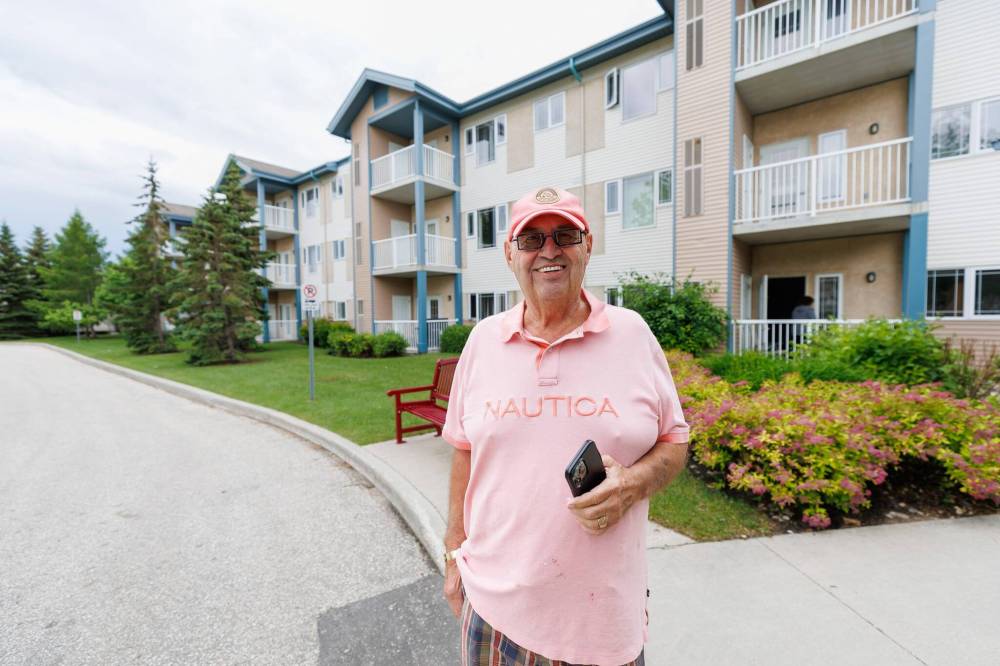
“There’s such a need right now for what we’re doing,” Bruneau said. “I think people finally realize, you know what, we’re going to get parents better, let’s get their children back, and let’s get them somewhere they can both (be proud of).”
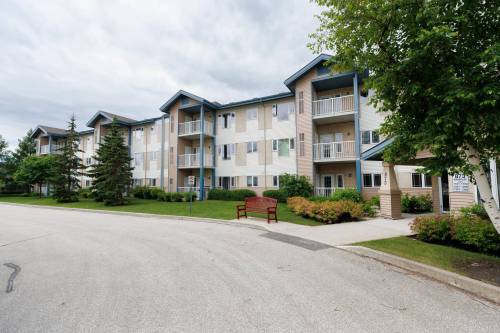
The Waverley Street location opened June 17, following a short-lived first home on Kennedy Street. The new space is much bigger, with 24 units that have one to three bedrooms. It’s in a quieter, greener area where children can play outside.
Kent is one of about five clients and their families who’ve been living at the Aurora Reunification Village since it opened a few weeks ago.
All clients are required to first complete residential addictions treatment. When they get to the village, they work to maintain their sobriety while getting their families back together.
Aurora opened a reunification residence in Brandon last summer. Its founding principles are based on the understanding that being cut off from their families too often entrenches addiction and gets in the way of recovery, thereby continuing the cycle of Child and Family Services involvement.
Many families who stay at Aurora’s reunification villages are Indigenous, and many have children in CFS. The village’s goal is to connect with CFS case workers and make practical plans toward reuniting families.
MIKE DEAL / FREE PRESS Priscilla Kent is one of about five clients and their families who’ve been living at the Aurora Reunification Village since it opened a few weeks ago.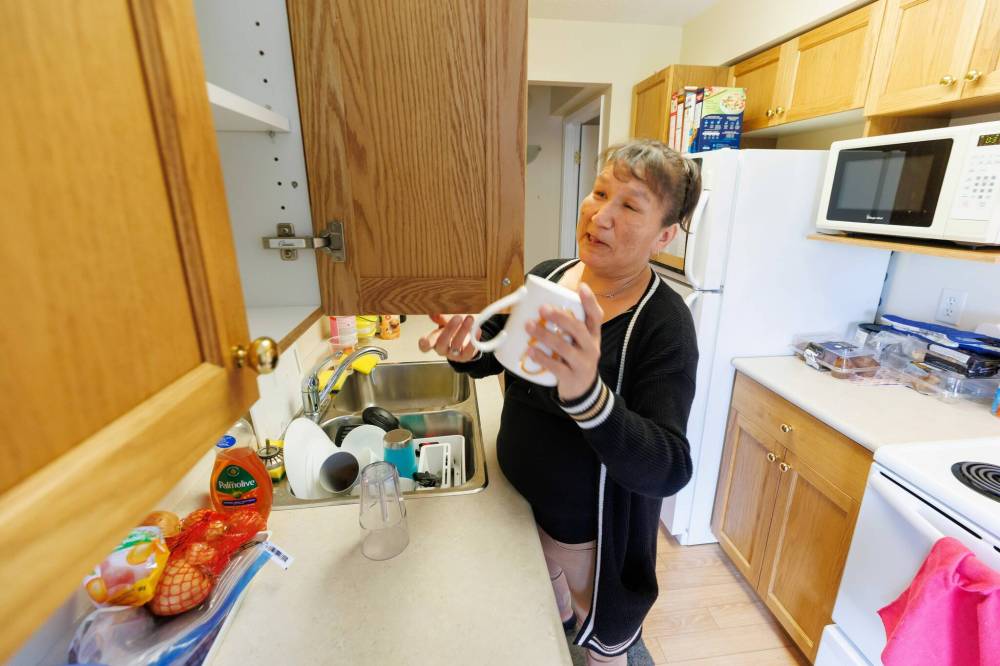
They set up visits and function as a comfortable environment for parents and their children to hang out. The suites are set up like a typical apartment, with basic but cosy furnishings. Some clients are working toward having their children live with them at the centre, says Rosetta Troia. With her background as a substance abuse counsellor, Troia is a consultant for Aurora.
“We want to work side-by-side with CFS to make sure case plans are being met,” Troia says. “We advocate for the moms (and dads) to make sure their needs are being met, with the end goal being reunification.”
The focus is on staying sober and after-care support, Troia adds.
“Our program is not just ‘get sober, bye-bye.’”
Programming such as life skills training, group therapy and 12-step program meetings are included as part of the weekly routine at the facility.
Traditional cultural activities, such as sweat ceremonies, powwow dancing and fishing are built in to the structured schedules. When parents are in a session, children are looked after in the child-minding room. Staff can also bring their kids during the day if they need child care.
There’s no set timeline for how long clients can live there, and the cost of staying in the private facility wasn’t disclosed.
Bruneau says the cost varies based on each family’s needs. Some people receive funding to attend, but Bruneau says the centre considers each person’s circumstances. He says he doesn’t believe an inability to pay should be a barrier.
Over the past year, Aurora facilities have taken in more than 100 clients who couldn’t pay, Bruneau says. Formerly in the hotel business, Bruneau has plans to expand Aurora’s facilities in Gimli, Winnipeg, Brandon and Thompson.
MIKE DEAL / FREE PRESS Aurora Reunification Village, located at 873 Waverley Street, is a private reunification centre that helps people in addictions treatment work towards building a life that includes their children.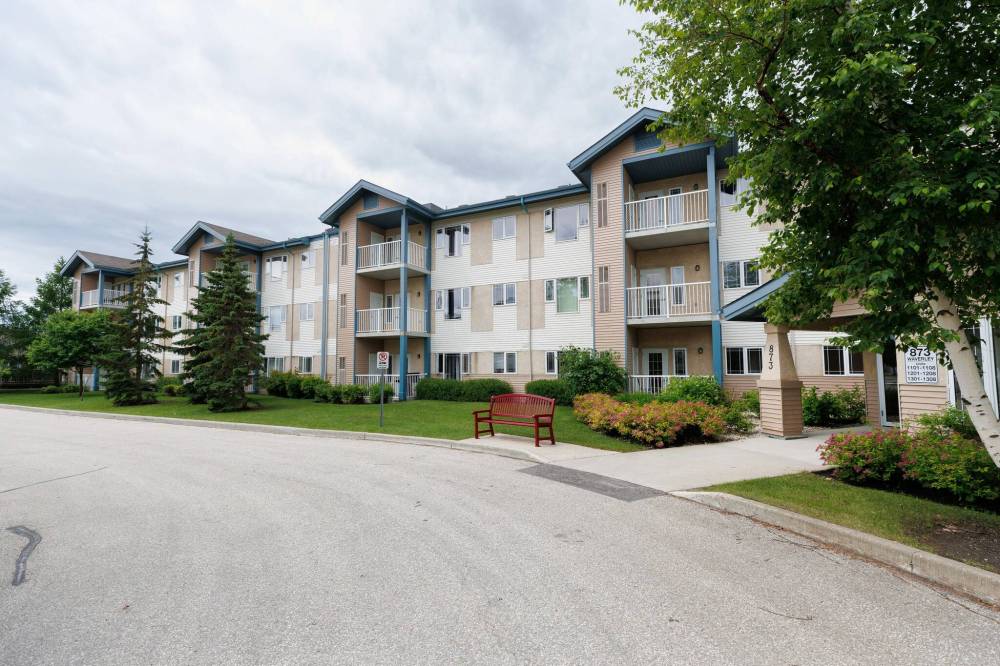
He wants to offer job training and education programs alongside the addiction recovery support.
By next year, he hopes to turn the company over to a charitable foundation. The legal details are being worked out, Bruneau says, and his intention is for the facilities to be overseen by an appointed board of directors.
“That’s my legacy,” he says. “I want Aurora to continue forever, and the way to do it is to not sell it to anybody.”
There is no publicly funded sober living program that has the same kind of focus on family reunification in Manitoba.
Although the Addictions Foundation of Manitoba, under the Winnipeg Regional Health Authority, works with CFS agencies to support reunification when women go through residential treatment, the WRHA doesn’t have a formal program.
“I want Aurora to continue forever, and the way to do it is to not sell it to anybody.”–Michael Bruneau
Reunification centre facility manager Jessica Dos Santos, who’s also a counsellor, says while children do need to be kept safe, breaking up families retraumatizes parents who are struggling with addiction.
“You can break it down very animalistic: when you take away kids from someone, it’s going against the laws of nature. So when kids are removed from a parent and then the parents are trying to get healthy and trying to recover, it’s a missing component not having their kids with them. Of course, we need to get them stabilized, but here, we create that environment so that they can thrive and they can begin to live that healthy life with their children,” she says.
“Setting an example for their children and then breaking those generational cycles.”
Troia says she’s seen the gaps people fall through, and the damage it does to kids and their parents when they don’t have help to put their families back together after getting sober.
“We had one lady who hadn’t seen her kids for six months. Nobody had even called CFS,” Troia says. “She was broken. We made that initial connection, and talking to her (now is like) talking to a different person.”
Hope is key to recovery, Troia adds.
“Even just the hope of having their family back together equals survival for them.
“When you give someone hope, they want to survive … everything else, with help, can come after.”
“When you give someone hope, they want to survive … everything else, with help, can come after.”–Rosetta Troia
Audrey Miles, a mom of three, has earned many wins on her road to recovery.
She has a two-bedroom suite at the reunification village after transferring from the former 10-bed facility on Kennedy Street. She’d been through other treatment programs, but she hadn’t been able to get her children back in her care. Now, plans are in the works for her kids and partner to join her at the centre.
“I’ve fought so hard for my children,” she says.
Her eldest, who’s three, is learning to ride a bike.
“I like the safeness around here, especially for children. Not just for children, for mothers too,” she said, noting not just anyone can show up and be allowed in.
The extra support the centre offers to parents has made a big difference to her recovery.
“The place is good for moms to get on their feet,” Miles adds. “I love it here.”
It was a struggle not having her children with her in other recovery facilities, she says.
“It was hard, but the only thing I craved was for my kids to be back in my care.”
katie.may@freepress.mb.ca

Katie May is a multimedia producer for the Free Press.
Our newsroom depends on a growing audience of readers to power our journalism. If you are not a paid reader, please consider becoming a subscriber.
Our newsroom depends on its audience of readers to power our journalism. Thank you for your support.