

Feds announce $11M in conservation funds

Advertisement
Read this article for free:
or
Already have an account? Log in here »
To continue reading, please subscribe:

Digital Subscription
One year of digital access for only $205*
- Enjoy unlimited reading on winnipegfreepress.com
- Read the E-Edition, our digital replica newspaper
- Access News Break, our award-winning app
- Play interactive puzzles
*First annual payment billed as $205.00 + GST for one year. This annual subscription will automatically renew at $233.00 + GST every 52 weeks (10% off the regular annual price of $259.35). Offer available to new and qualified returning subscribers only. Cancel any time.
To continue reading, please subscribe:
Add Free Press access to your Brandon Sun subscription for only an additional
$1 for the first 4 weeks*
- Enjoy unlimited reading on winnipegfreepress.com
- Read the E-Edition, our digital replica newspaper
- Access News Break, our award-winning app
- Play interactive puzzles
*Your next Brandon Sun subscription payment will increase by $1.00 and you will be charged $17.95 plus GST for four weeks. After four weeks, your payment will increase to $24.95 plus GST every four weeks.
Read unlimited articles for free today:
or
Already have an account? Log in here »
Hey there, time traveller!
This article was published 18/07/2024 (799 days ago), so information in it may no longer be current.
More than $11 million in federal funding announced Thursday will go toward safeguarding areas across Manitoba that help keep carbon dioxide out of the air.
The federal Liberals have earmarked $6.1 million to compensate farmers and other private landowners across the province in exchange for signing agreements to not drain their wetlands, cultivate grasslands or cut down forests.
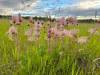
The project, led by the Manitoba Habitat Conservancy, involves nearly 3,000 acres of habitats crucial for mitigating climate change, including grasslands, wetlands and riparian areas. Most of the lands are in rural Manitoba.

MIKE DEAL / FREE PRESS FILES
“They essentially (will) pay farmers and others for conservation,” MP Terry Duguid said.
“They essentially (will) pay farmers and others for conservation,” Terry Duguid, the parliamentary secretary to the prime minister and special adviser for water, said.
Most of the land has already been identified, with large swaths north of Neepawa and in the Interlake area that haven’t received conservation support.
“It’s allowing us to work in areas where we traditionally haven’t in the past, but there’s really areas of high need,” Stephen Carlyle of the Manitoba Habitat Conservancy said.
“We’re really focusing on carbon-rich areas. So, where the carbon is in the soil, and we can really keep it there.”
Another $5.1 million will go specifically to conservation in Fisher River Cree Nation, to stop the conversion of land through peat harvesting, which releases carbon into the air.
Fisher River leadership have long expressed concern about the impact of harvesting peat, a natural resource made of organic matter, on Lake Winnipeg and moose and deer habitats.
It can also impact the harvesting of traditional medicines in the area.
“As Indigenous people, we are stewards of this land. We have a deep responsibility to protect and preserve our natural resources for future generations,” Fisher River Chief David Crate said in a statement.
“This funding will allow us to take meaningful action to safeguard our peatlands, which play a vital role in sequestering carbon and supporting the delicate ecosystems that our people have relied on for centuries.”

Carbon sequestration is the process of capturing and storing carbon dioxide.
The federal and provincial governments have committed to protecting 30 per cent of Canada’s lands and waters by 2030.
Both governments, along with the First Nations that sit on the Seal River Watershed in northern Manitoba, signed on in January to do a feasibility study on protecting the watershed by making it an Indigenous Protected and Conserved Area and possibly a national park reserve.
The study is currently underway. Should the conservation effort succeed, Duguid said that project alone would put the province 16 per cent closer to its goal.
malak.abas@freepress.mb.ca
Malak Abas is a city reporter at the Free Press. Born and raised in Winnipeg’s North End, she led the campus paper at the University of Manitoba before joining the Free Press in 2020. Read more about Malak.
Every piece of reporting Malak produces is reviewed by an editing team before it is posted online or published in print — part of the Free Press‘s tradition, since 1872, of producing reliable independent journalism. Read more about Free Press’s history and mandate, and learn how our newsroom operates.
Our newsroom depends on a growing audience of readers to power our journalism. If you are not a paid reader, please consider becoming a subscriber.
Our newsroom depends on its audience of readers to power our journalism. Thank you for your support.
Malak Abas is a city reporter at the Free Press. Born and raised in Winnipeg’s North End, she led the campus paper at the University of Manitoba before joining the Free Press in 2020. Read more about Malak.
Every piece of reporting Malak produces is reviewed by an editing team before it is posted online or published in print — part of the Free Press‘s tradition, since 1872, of producing reliable independent journalism. Read more about Free Press’s history and mandate, and learn how our newsroom operates.
Our newsroom depends on a growing audience of readers to power our journalism. If you are not a paid reader, please consider becoming a subscriber.
Our newsroom depends on its audience of readers to power our journalism. Thank you for your support.
Related Articles
Federal government announces $89 million for conservation projects across Canada
Advertisement Advertise With Us
Advertisement Advertise With Us