

Shelter worker program grad has been there, wants to help with that
Advertisement
Read this article for free:
or
Already have an account? Log in here »
To continue reading, please subscribe:

Digital Subscription
One year of digital access for only $205*
- Enjoy unlimited reading on winnipegfreepress.com
- Read the E-Edition, our digital replica newspaper
- Access News Break, our award-winning app
- Play interactive puzzles
*First annual payment billed as $205.00 + GST for one year. This annual subscription will automatically renew at $233.00 + GST every 52 weeks (10% off the regular annual price of $259.35). Offer available to new and qualified returning subscribers only. Cancel any time.
To continue reading, please subscribe:
Add Free Press access to your Brandon Sun subscription for only an additional
$1 for the first 4 weeks*
- Enjoy unlimited reading on winnipegfreepress.com
- Read the E-Edition, our digital replica newspaper
- Access News Break, our award-winning app
- Play interactive puzzles
*Your next Brandon Sun subscription payment will increase by $1.00 and you will be charged $17.95 plus GST for four weeks. After four weeks, your payment will increase to $24.95 plus GST every four weeks.
Read unlimited articles for free today:
or
Already have an account? Log in here »
Hey there, time traveller!
This article was published 22/08/2024 (710 days ago), so information in it may no longer be current.
Shantelle Emms spent five years being exploited and struggling with addiction and homelessness.
When she decided to get sober, she found a job last April at N’Dinawemak, an Indigenous-led community resource centre.
Emms is one of 19 students who graduated from the second cohort of Red River College Polytechnic’s shelter support worker micro-credential program Thursday.
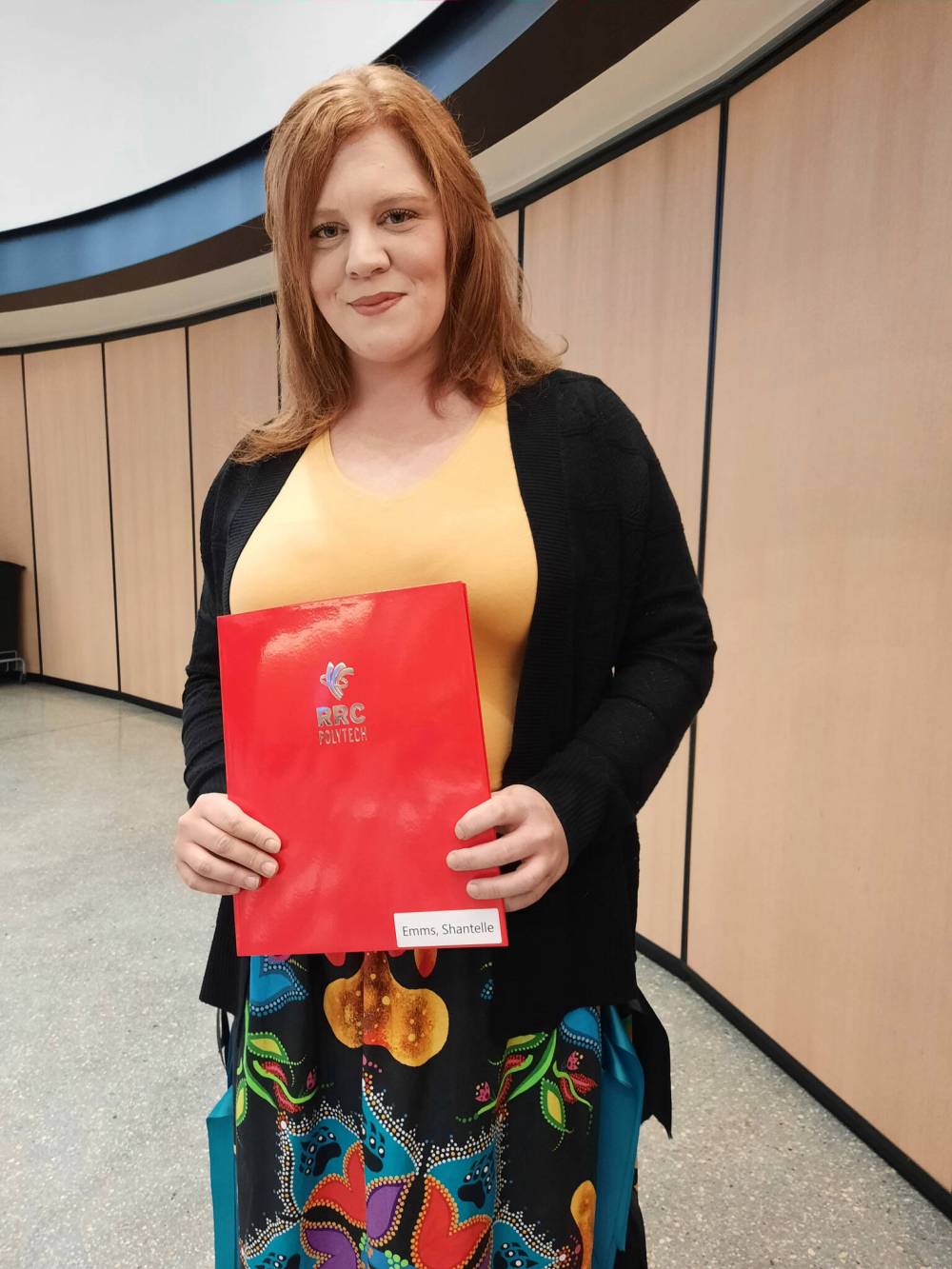
JURA MCILRAITH / FREE PRESS
Shantelle Emms, one of the grads from the shelter support worker micro credential program.
The 31-year-old hopes to use her experiences and her new skills to help those in situations similar to the one she went through.
“I just really want to give back to what I struggled with… and be able to relate to them and know where they are,” Emms said after the ceremony.
“I just want to help other people and I could just give them the love, the support I needed.”
A car collision was the beginning of Emms’ difficult journey; she became addicted to opiates, then methamphetamine and, eventually, crack cocaine.
“I got to a point where I just was sick of the addiction,” she said. “I was sick of getting beaten up, living in that lifestyle. It’s very violent and it’s scary.”
Emms said her exploitation led to her becoming a sex worker in order to feed her addiction. She made enough money so she didn’t have to access shelters, but said had she known more about them, she would have sought help.
Emms said she hadn’t “burned all her bridges,” so she had places to stay.
During the eight-month RRC Polytechnic program, Emms said she learned more about trauma-informed care and has been able to teach others at N’Dinawemak, where she now works as a manager.
The centre offered her a chance to enrol in the program and she was eager to build her skill set. She said graduating was a huge accomplishment, and she’s proud of her classmates, too.
The micro-credential program is one small part of dealing with the larger issue of gender-based violence in Manitoba, said Women and Gender Equity Minister Nahanni Fontaine.
More support is needed in rural and Indigenous communities, Fontaine said, adding there are only seven federally-funded shelters located in 63 First Nations communities across Manitoba.

“You need folks that are on the front lines, that are armed with the knowledge on how to protect the folks that they’re working with, how to protect themselves, how to defuse situations,” she said, referencing last week’s triple homicide in McCreary, where domestic violence played a role.
“You need the support to be able to undertake that really important work.”
The provincial government has spent $140,000 to support the program this year. Another $350,000 is earmarked for the next two cohorts, covering tuition, supplies and travel expenses.
Fontaine said shelter workers are desperately needed across the province and the new graduates will have more skills to better meet their clients’ needs.
jura.mcilraith@freepress.mb.ca
History
Updated on Friday, August 23, 2024 10:28 AM CDT: Clarifies graph on federally funded shelters