

DASCH celebrates 50 years of support for intellectually disabled, their families
Advertisement
Read this article for free:
or
Already have an account? Log in here »
To continue reading, please subscribe:

Digital Subscription
One year of digital access for only $205*
- Enjoy unlimited reading on winnipegfreepress.com
- Read the E-Edition, our digital replica newspaper
- Access News Break, our award-winning app
- Play interactive puzzles
*First annual payment billed as $205.00 + GST for one year. This annual subscription will automatically renew at $233.00 + GST every 52 weeks (10% off the regular annual price of $259.35). Offer available to new and qualified returning subscribers only. Cancel any time.
To continue reading, please subscribe:
Add Free Press access to your Brandon Sun subscription for only an additional
$1 for the first 4 weeks*
- Enjoy unlimited reading on winnipegfreepress.com
- Read the E-Edition, our digital replica newspaper
- Access News Break, our award-winning app
- Play interactive puzzles
*Your next Brandon Sun subscription payment will increase by $1.00 and you will be charged $17.95 plus GST for four weeks. After four weeks, your payment will increase to $24.95 plus GST every four weeks.
Read unlimited articles for free today:
or
Already have an account? Log in here »
Hey there, time traveller!
This article was published 23/08/2024 (728 days ago), so information in it may no longer be current.
A Winnipeg organization supporting people living with intellectual disabilities is celebrating 50 years.
Since it’s beginning in 1974, Direct Action in Support of Community Homes has grown to more than 60 locations and provides around-the-clock care for hundreds of people.
Jenny Adams has lived in a DASCH home for 12 years. The 45-year-old has autism and had contact with several agencies before deciding on DASCH. She said she felt the most comfortable there and liked the friendly staff.
MIKAELA MACKENZIE / FREE PRESS
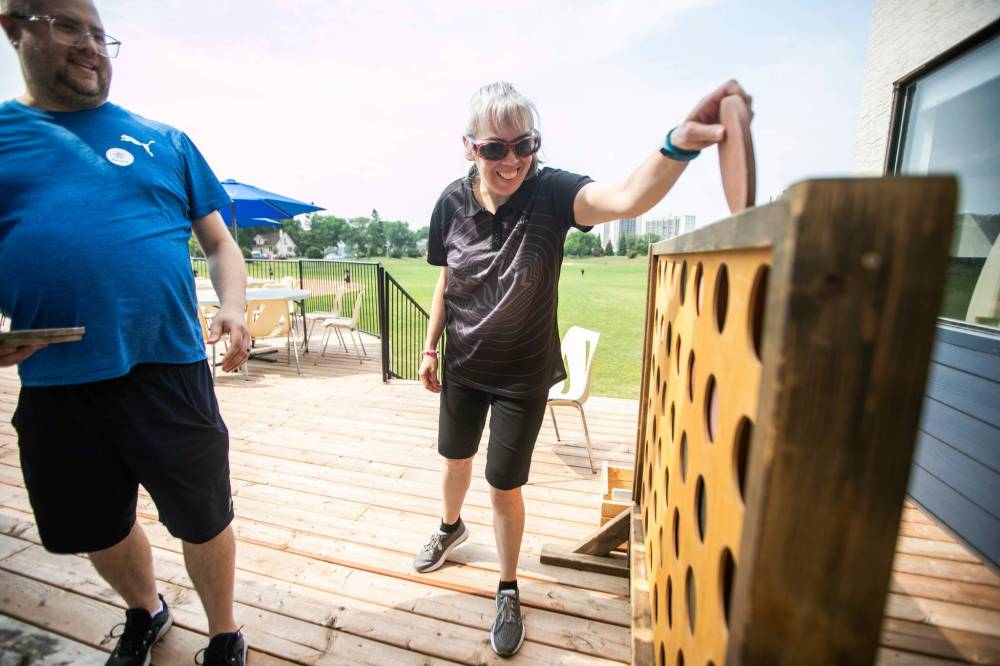
Richard Kowalchuk, director of centralized services for DASCH (left), and Jenny Adams (who lives in a DASCH home) play yard games at the DASCH Inc. and DASCH Foundation 50th anniversary barbecue at the Norwood Community Centre on Tuesday.
She now lives with three roommates and is looking to start working more again through the DASCHWorks program.
Adams worked as a file clerk for Legal Aid Manitoba for 10 years before the COVID-19 pandemic hit in 2020 and she and her roommates could no longer go to classes or work.
“I like to be around people because I’m a happy person,” she said, adding she enjoyed her filing job. “I like to be around happy people.”
Her mother Angela and father Dennis Adams said DASCH has helped support their family.
There are frequent meetings with DASCH staff to better understand what Angela said they have meetings with DASCH to better understand what their daughter wants to do in the future.
“It’s truly a blessing for us. It’s very supportive and compassionate,” said Angela Adams said during an anniversary celebration for DASCH earlier this week.
“It’s focused on the clients, the residents and we’re very blessed. They’ve always been forward-thinking, and that’s what’s important.”
As aging parents, they feel it’s crucial their daughter has a home where she’s settled, supported and happy.
She works one day a week and attends spelling and math classes every weekday.
“Her problem-solving is improving, her vocabulary, her confidence in speaking and finishing complete sentences,” the mom said.
“She’s really excelling. It’s life-changing for us that Jenny is gaining that independence.”
DASCH CEO Karen Fonseth says working with individuals to identify their needs and wants while finding them meaningful opportunities is what the organization is all about.
The agency also tries to destigmatize disabilities by integrating people with intellectual differences into the community.
“It’s important to the people that have the intellectual disability, but also us, the people that go to work and live our everyday lives, not realizing how blessed we are,” said Fonseth.
“For the people that are supported, they’re human beings and their human rights have been stripped from them for so many years. We’re still not getting to a place in this modern world where they’re getting the rights that they should have.”
MIKAELA MACKENZIE / FREE PRESS
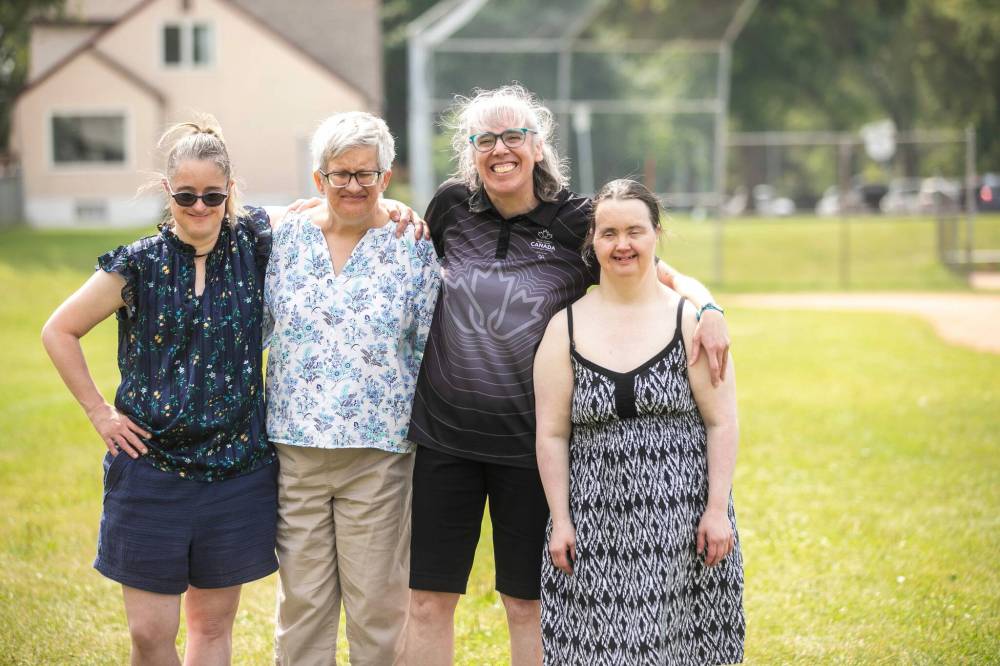
Roommates Nancy Hamilton (left), Ronda Maddison, Jenny Adams, and Karen Lehr at the 50th-anniversary barbecue at the Norwood Community Centre .
Fonseth said when DASCH started, people living with intellectual disabilities were often shunned in their communities and sometimes forced to live in institutions.
Although there has been progress in getting clients living in the community, there’s still stigma, Fonseth said. Often, people without disabilities don’t know how to interact or are uncomfortable dealing with people who have disabilities.
“We’ve tried to hard to get people to live in the community, but community members don’t know how to engage,” she said. “That still says you might as well live in an institution, if you’re in a house on the block but nobody talks to you.”
Fonseth said it’s also important to listen to a client’s needs and work with individual skill sets.
One autistic client who was volunteering at the Winnipeg Humane Society said he didn’t feel he was being sufficiently challenged, she said. The man had strong memorization skills, and is now assisting in the operating room, providing requested instruments to veterinary surgeons.
Another client who didn’t like her job asked to be taught how to read because she wanted to be a server and had to be able to read a menu. Staff made that happen.

“These people have a lot to give. They’re pretty awesomely smart and creatively talented and artistic,” said Fonseth. “There’s brilliance in people with intellectual disabilities that we are not yet understanding but we need to pay attention to and tap into.”
Typically, DASCH has a few hundred people in its care each year.
Fonseth said she hopes DASCH is able to continue its work well into the future.
“It’s about bringing people that really had no choice in life to having choices,” she said. “We all deserve to understand how to embrace each other and help each other be successful and not look away.”
jura.mcilraith@freepress.mb.ca