Federal program a pain for dentistry students School clinics struggle to attract patients now that federal dental coverage is expanded
Read this article for free:
or
Already have an account? Log in here »
To continue reading, please subscribe:

Digital Subscription
One year of digital access for only $205*
- Enjoy unlimited reading on winnipegfreepress.com
- Read the E-Edition, our digital replica newspaper
- Access News Break, our award-winning app
- Play interactive puzzles
*First annual payment billed as $205.00 + GST for one year. This annual subscription will automatically renew at $233.00 + GST every 52 weeks (10% off the regular annual price of $259.35). Offer available to new and qualified returning subscribers only. Cancel any time.
To continue reading, please subscribe:
Add Free Press access to your Brandon Sun subscription for only an additional
$1 for the first 4 weeks*
- Enjoy unlimited reading on winnipegfreepress.com
- Read the E-Edition, our digital replica newspaper
- Access News Break, our award-winning app
- Play interactive puzzles
*Your next Brandon Sun subscription payment will increase by $1.00 and you will be charged $17.95 plus GST for four weeks. After four weeks, your payment will increase to $24.95 plus GST every four weeks.
Read unlimited articles for free today:
or
Already have an account? Log in here »
Hey there, time traveller!
This article was published 16/09/2024 (748 days ago), so information in it may no longer be current.
The new, much-touted federal dental-care program has meant a loss of patients for dentistry students, who need patients to practise and improve their skills.
The University of Manitoba college of dentistry has noticed a dramatic drop in the number of patients who seek treatment. They tend to be low-income earners who are attracted by the reduced cost: the college charges as much as 50 per cent of the cost of a private clinic.
“I’ve had to refer family members to the school,” said fourth-year student Allissa Morrice. “They have had great experiences. Others have brought in family members, too.
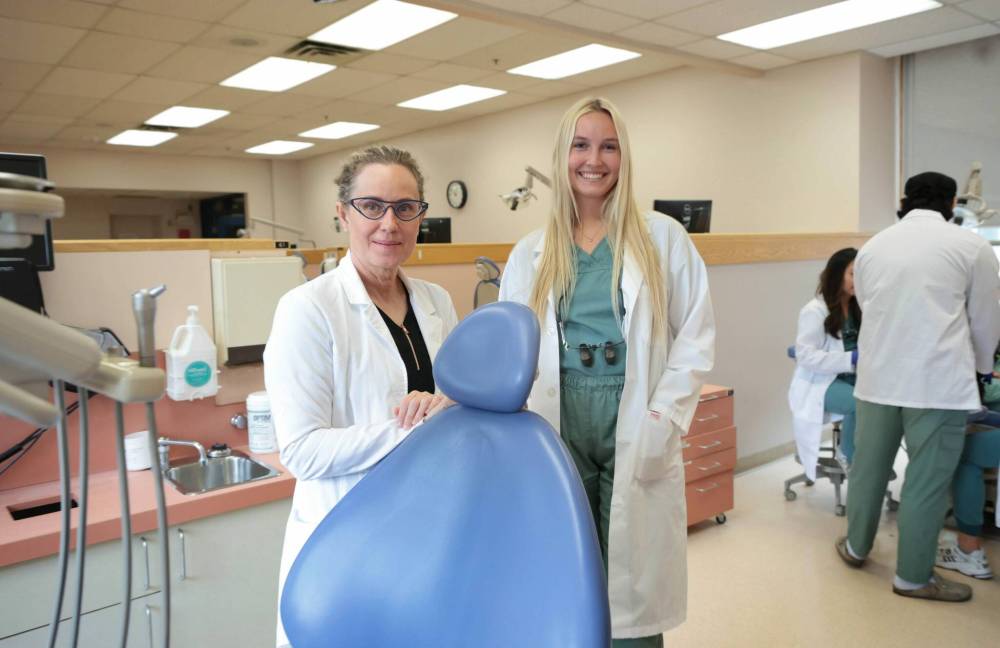
“We have had a very slow start this year. People have been trying to reach their patients. It is really affecting us.”
The federal program, brought in by the Liberal government with the support of the NDP to help low-income Canadians, is taking a bite out of dental colleges’ business across the country.
Morrice said they need to work on actual patients to be properly prepared for their dental practice.
“You definitely learn a lot more (in) clinic with patients than practising on the plastic pieces or dummies.”
The federal government says the Canadian Dental Care Plan is one of the country’s largest social programs and is aimed at making dental care more affordable for millions of Canadians.
People with a family net income of less than $70,000 will get 100 per cent of eligible oral health care services covered. Those with incomes between $70,000 to $79,999 get 60 per cent of costs covered; while those between $80,000 and $89,999 get 40 per cent covered.
Currently, there are 2.4 million eligible applicants and more than 645,000 have already seen a dentist. The program is currently only for seniors, children under the age of 18, and people who qualify for a disability tax credit.
More than 20,500 dentists have signed up to participate in the program.
Trenna Reeve, an assistant professor and an associate dean of the dental clinics on Bannatyne Avenue at the Health Sciences Centre, said she has taught there for about a dozen years. She has never seen so few patients coming through their doors.
“We are having a shortage of patients,” said Reeve.
“The (federal) program is good, it will elevate the oral health of the country, but from the school’s perspective, we need patients.”
Reeve said it’s hoped they can convince some of their patients to come back because of the difference in cost between the school and at private dental offices.
“The Manitoba Dental Association puts out a fee guide each year and, because our treatment takes longer, we charge 30 to 50 per cent lower than the fee guide for procedures,” she said.
“Patients here know they are contributing to the training of the next generation of dentists (and) their money will go farther here.”
She said the standard of care is excellent.
“It is essential training for the students.”–Dr. Daron Baxter, president of the Manitoba Dental Association
“Students are under a very big safety net here,” she said. “We have a full complement of specialists on the floor at all times. It’s one of our benefits.
“We’re not hand-holding them, but we’re helping them to get the experience they need for their future practices.”
Dr. Daron Baxter, president of the Manitoba Dental Association, said they have joined with other associations across the country to ask Ottawa to help dental schools.
“These patients are now going to private practices instead of the schools,” said Baxter, who practises in Dauphin and is a graduate of the U of M program. “It is essential training for the students. The students need to have these experiences.”
“It is really important that we look for solutions for the unintended consequences of this. We’ve brought this concern to the federal government,” she said.
Health Canada spokeswoman Tammy Jarbeau said the government understands dental schools help vulnerable communities as they train the next generation of dentists.

“The government is aware and recognizes that financial barriers have been an element of why some patients chose to use school clinics for their treatment in the past,” Jarbeau said. “Increased access to care for Canadian residents eligible under the (program) has resulted in dental schools and other oral health professions’ educational institutions adjusting how they attract patients to their training clinics.
“Health Canada has and continues to be committed in working not only with the Association of Canadian Faculties of Dentistry, but with all oral health professions’ educational institutions to ensure the next generation of oral health professionals have the training they need to graduate ready to treat all patients.”
Jarbeau said it’s partly why the federal government will spend $75 million to create the Oral Health Access Fund which will “support training adaptations to ensure sufficient clinical training opportunities.”
Reeve said if Winnipeggers want to see if they can become a patient at the dental school clinic, they can go to https://wfp.to/newpatient.
kevin.rollason@freepress.mb.ca

Kevin Rollason
Reporter
Kevin Rollason was a general assignment reporter at the Free Press.
Our newsroom depends on a growing audience of readers to power our journalism. If you are not a paid reader, please consider becoming a subscriber.
Our newsroom depends on its audience of readers to power our journalism. Thank you for your support.