

Totem pole that has stood near the Manitoba legislature for 53 years is removed
Advertisement
Read this article for free:
or
Already have an account? Log in here »
To continue reading, please subscribe:

Digital Subscription
One year of digital access for only $205*
- Enjoy unlimited reading on winnipegfreepress.com
- Read the E-Edition, our digital replica newspaper
- Access News Break, our award-winning app
- Play interactive puzzles
*First annual payment billed as $205.00 + GST for one year. This annual subscription will automatically renew at $233.00 + GST every 52 weeks (10% off the regular annual price of $259.35). Offer available to new and qualified returning subscribers only. Cancel any time.
To continue reading, please subscribe:
Add Free Press access to your Brandon Sun subscription for only an additional
$1 for the first 4 weeks*
- Enjoy unlimited reading on winnipegfreepress.com
- Read the E-Edition, our digital replica newspaper
- Access News Break, our award-winning app
- Play interactive puzzles
*Your next Brandon Sun subscription payment will increase by $1.00 and you will be charged $17.95 plus GST for four weeks. After four weeks, your payment will increase to $24.95 plus GST every four weeks.
Read unlimited articles for free today:
or
Already have an account? Log in here »
Hey there, time traveller!
This article was published 07/10/2024 (724 days ago), so information in it may no longer be current.
WINNIPEG – A totem pole that has stood on the grounds of the Manitoba legislature for more than 50 years has come down.
The five-metre-high pole was unveiled in 1971 to mark the 100th anniversary of British Columbia’s entry into Confederation.
It was made by Henry Hunt, a First Nations carver from coastal B.C., and depicts a legend of Indigenous people from the West Coast.
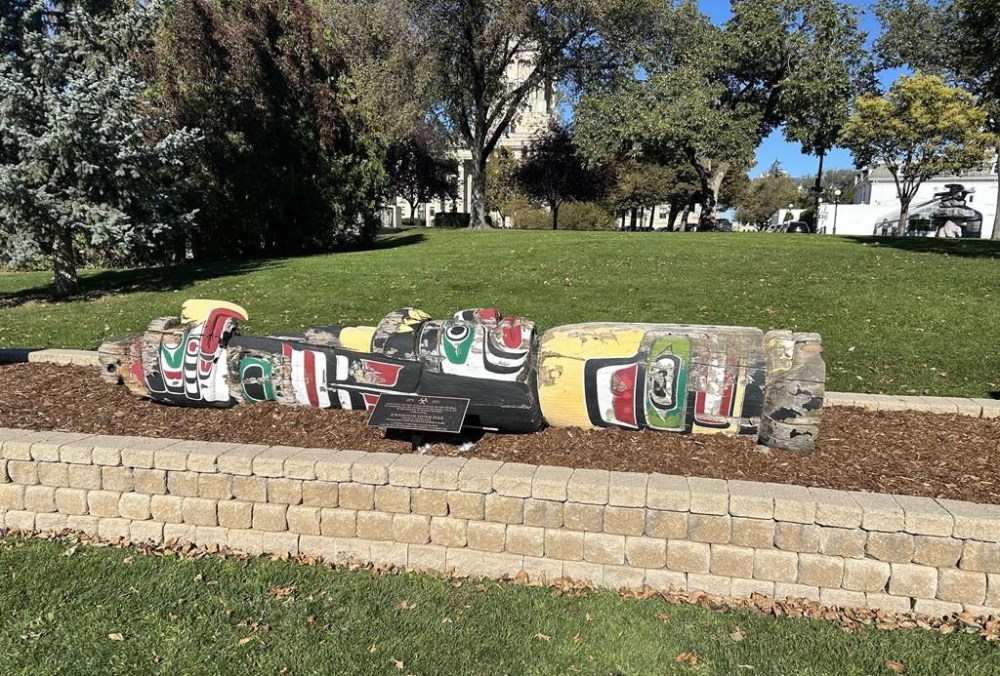
The Manitoba government says the pole deteriorated over time and has been removed from its base.
In keeping with tradition, it is to be laid in a raised planter bed, where it will decay and return to the earth.

Premier Wab Kinew says an important part of reconciliation is recognizing and honouring traditional Indigenous cultures.
This report by The Canadian Press was first published Oct. 7, 2024.