

Opaskwayak Cree Nation files suit over 2019 toxic fluid leak

Advertisement
Read this article for free:
or
Already have an account? Log in here »
To continue reading, please subscribe:

Digital Subscription
One year of digital access for only $205*
- Enjoy unlimited reading on winnipegfreepress.com
- Read the E-Edition, our digital replica newspaper
- Access News Break, our award-winning app
- Play interactive puzzles
*First annual payment billed as $205.00 + GST for one year. This annual subscription will automatically renew at $233.00 + GST every 52 weeks (10% off the regular annual price of $259.35). Offer available to new and qualified returning subscribers only. Cancel any time.
To continue reading, please subscribe:
Add Free Press access to your Brandon Sun subscription for only an additional
$1 for the first 4 weeks*
- Enjoy unlimited reading on winnipegfreepress.com
- Read the E-Edition, our digital replica newspaper
- Access News Break, our award-winning app
- Play interactive puzzles
*Your next Brandon Sun subscription payment will increase by $1.00 and you will be charged $17.95 plus GST for four weeks. After four weeks, your payment will increase to $24.95 plus GST every four weeks.
Read unlimited articles for free today:
or
Already have an account? Log in here »
Hey there, time traveller!
This article was published 10/10/2024 (709 days ago), so information in it may no longer be current.
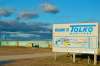
A Manitoba First Nation has launched a $10-million lawsuit against the paper mill in The Pas after a massive amount of toxic fluid leaked into the river where its residents fish, in 2019.
Opaskwayak Cree Nation has filed a claim against Canadian Kraft Paper and the federal and provincial governments that says it wasn’t warned about the hazard until a court ruling four years after 181 million litres of byproduct leaked into the Saskatchewan River.
In December 2023, the company was ordered to pay a million-dollar fine after pleading guilty to a charge under the federal Fisheries Act in Manitoba’s provincial court.
The company admitted that for six days, beginning Feb. 27, 2019, the mill released what Environment Canada called an acutely lethal toxin into the river, which has many species of fish, including endangered lake sturgeon. The release from a leaky pipe contained black liquor, a manufacturing byproduct that is toxic to fish.
On Sept. 27, Kate Kempton, a lawyer in Victoria, filed the lawsuit on behalf of the Cree Nation that seeks $10,000,000 in aggravated and punitive damages, plus other damages as the court decides, and interest and legal costs.
The defendants have yet to respond to the lawsuit with statements of defence.
The toxic spill occurred in “the heart of OCN’s territory, just 800 metres east of OCN’s Reserve 21B, and in close proximity to numerous other OCN reserves in and around The Pas,” reads the court filing.
The spill polluted the water the Cree Nation uses to exercise its treaty rights and the river and surrounding area’s natural resources, including plants, fish and mammals, it alleges.
Neither the paper company nor the governments had notified Opaskwayak about the spill, despite its proximity to the mill and the harm posed to the water, land and resources, the lawsuit alleges.
“In fact, OCN only received notice of the spill after (the company’s) regulatory conviction in December 2023,” says the court filing.
Community members continued to fish, hunt, trap and gather food in the area affected by the spill for years.
“Long-term health effects to OCN are not yet understood,” the court papers read.
Opaskwayak wasn’t able to conduct its own risk assessment, collect data, participate in response and remediation, or bring Indigenous knowledge to the table during court proceedings because it was kept in the dark, the lawsuit says.
By contaminating the water and excluding Opaskwayak from the response, the suit argues, the defendants trampled the community’s treaty rights.
“This, in turn, has left OCN with many unresolved concerns about whether the resources in their territory are safe to consume,” the filing says. “These doubts are so serious that most, if not all, OCN members are reluctant to consume food or medicine from the area, since learning of the spill.”
The area was once a hub for fishing, the lawsuit alleges, making the Cree Nation more food insecure and costing its fishers money.
“Put simply, this spill jeopardizes OCN’s ability to maintain and sustain its way of life. It could easily have been avoided and the foreseeable harms mitigated if (the company) had operated the mill with reasonable diligence and had notified OCN in a timely manner,” the filing alleges.
Canadian Kraft Paper was ordered to conduct an independent environmental audit for Environment Canada within a year of the December 2023 court date. It must include recommendations to prevent future releases of byproduct.
erik.pindera@freepress.mb.ca
Erik Pindera is a reporter for the Free Press, mostly focusing on crime and justice. The born-and-bred Winnipegger attended Red River College Polytechnic, wrote for the community newspaper in Kenora, Ont. and reported on television and radio in Winnipeg before joining the Free Press in 2020. Read more about Erik.
Every piece of reporting Erik produces is reviewed by an editing team before it is posted online or published in print — part of the Free Press‘s tradition, since 1872, of producing reliable independent journalism. Read more about Free Press’s history and mandate, and learn how our newsroom operates.
Our newsroom depends on a growing audience of readers to power our journalism. If you are not a paid reader, please consider becoming a subscriber.
Our newsroom depends on its audience of readers to power our journalism. Thank you for your support.
Erik Pindera is a reporter for the Free Press, mostly focusing on crime and justice. The born-and-bred Winnipegger attended Red River College Polytechnic, wrote for the community newspaper in Kenora, Ont. and reported on television and radio in Winnipeg before joining the Free Press in 2020. Read more about Erik.
Every piece of reporting Erik produces is reviewed by an editing team before it is posted online or published in print — part of the Free Press‘s tradition, since 1872, of producing reliable independent journalism. Read more about Free Press’s history and mandate, and learn how our newsroom operates.
Our newsroom depends on a growing audience of readers to power our journalism. If you are not a paid reader, please consider becoming a subscriber.
Our newsroom depends on its audience of readers to power our journalism. Thank you for your support.
Related Articles
Manitoba paper mill fined $1 million for toxic release into Saskatchewan River
Advertisement Advertise With Us