The Unknown Soldier of St. Peter’s Reserve Canadian Forces veteran from Peguis First Nation travels to France to find gravesite, honour relative in old family photo who died in First World War more than a century ago
Read this article for free:
or
Already have an account? Log in here »
To continue reading, please subscribe:

Digital Subscription
One year of digital access for only $205*
- Enjoy unlimited reading on winnipegfreepress.com
- Read the E-Edition, our digital replica newspaper
- Access News Break, our award-winning app
- Play interactive puzzles
*First annual payment billed as $205.00 + GST for one year. This annual subscription will automatically renew at $233.00 + GST every 52 weeks (10% off the regular annual price of $259.35). Offer available to new and qualified returning subscribers only. Cancel any time.
To continue reading, please subscribe:
Add Free Press access to your Brandon Sun subscription for only an additional
$1 for the first 4 weeks*
- Enjoy unlimited reading on winnipegfreepress.com
- Read the E-Edition, our digital replica newspaper
- Access News Break, our award-winning app
- Play interactive puzzles
*Your next Brandon Sun subscription payment will increase by $1.00 and you will be charged $17.95 plus GST for four weeks. After four weeks, your payment will increase to $24.95 plus GST every four weeks.
Read unlimited articles for free today:
or
Already have an account? Log in here »
Hey there, time traveller!
This article was published 07/11/2024 (670 days ago), so information in it may no longer be current.
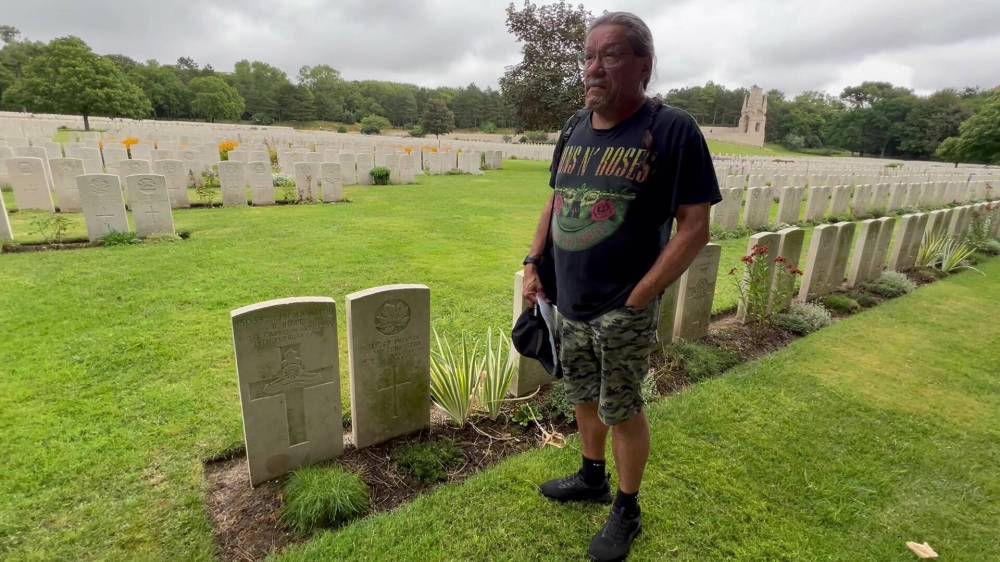
ÉTAPLES, FRANCE — An ocean away from home, in a military cemetery in northern France, Randall McKenzie surveys the rows of stone grave markers cutting lines into the green expanse of Étaples-sur-Mer, a commune off the coast of the English Channel.
Among the more than 11,000 war dead at the Étaples Military Cemetery, McKenzie expects to find his great-uncle, Pte. Oswald McCorrister, who was killed over a century ago fighting in the Great War with the Canadian Overseas Expeditionary Forces and interred in the French countryside.
“It’s hard to know what to say about a person that you’ve never really met,” says McKenzie, a Peguis First Nation band member and former naval radio operator for the Canadian Armed Forces.
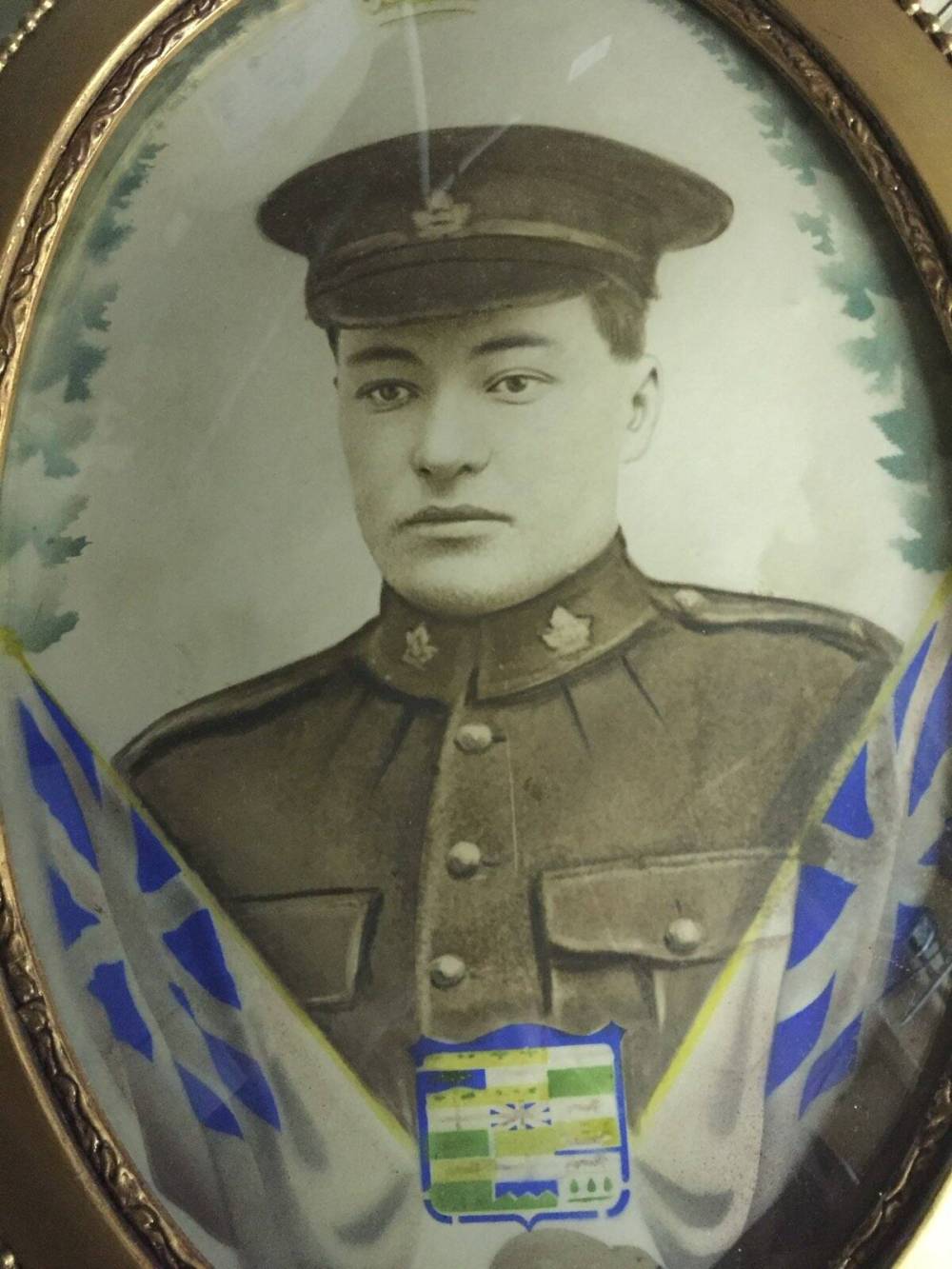
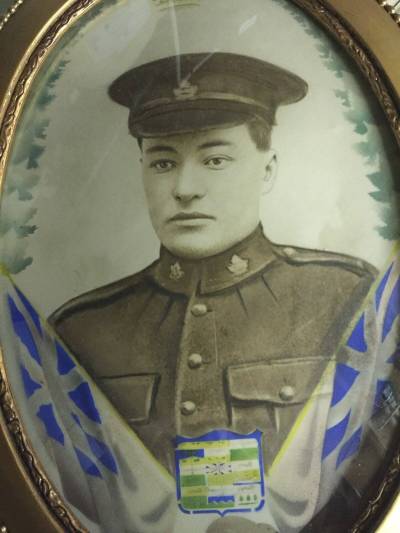
Scarcely any memories about Oswald and his military service have survived over the decades, McKenzie says. However, a childhood recollection of the young man’s military portrait — and those of two other servicemen — hanging in his grandparents’ home in Peguis has not faded.
“Grandpa didn’t even know the men — he was 10 years old when they died, but he hung on to those pictures and they were hung in prominent places,” McKenzie says.
The men were his great-uncles, and at least two fought in the First World War, McKenzie recalls his grandfather having explained, but that was the extent of what was shared. For years, he wondered about the men and gradually pieced together their stories — a remembrance project that eventually brought him to the grave this past August.
“I was just so curious about it, and you know, at the same time too, just sad,” the 56-year-old says. “Three guys — they’re only a few years apart — and just boom, boom, boom, they’re all gone to war.”
At the age of 18 , Oswald enlisted with the 108th Overseas Battalion in Selkirk on Dec. 4, 1915. Military records describe the young recruit as a five-foot-eight labourer with black hair and brown eyes, born to parents Catherine and William McCorrister on July 15, 1897.
At the time of his enlistment, Canadian troops were entrenched along the Western Front in Belgium and France, with the war having reached a gruelling impasse; months earlier, Germans had launched the first chlorine gas attack in the brutal Second Battle of Ypres, where some 6,000 Canadian soldiers were killed, wounded or captured in the country’s first major engagement of the war.
“When you look at what happened to the people of St. Peter’s and Peguis you wonder: why did they do what they did in terms of supporting military ventures?”– Bill Shead
McCorrister was one of at least three dozen men from the St. Peter’s Reserve, a former Cree and Saulteaux settlement on the banks of the Red River about 40 kilometres north of Winnipeg, who enlisted over the course of the war, military records show.
Following an illegal land surrender in 1907, the Crown ordered the band to leave their homes and move about 200 kilometres north of Winnipeg to flood-prone land in Hodgson, where the contemporary Peguis First Nation is now located.
“When you look at what happened to the people of St. Peter’s and Peguis you wonder: why did they do what they did in terms of supporting military ventures?” says Bill Shead, a retired naval officer and Peguis First Nation member, who speaks regularly about his own relative — Kenneth McLure Asham — who fought and died during the Great War, as part of Historica Canada’s Memory Project.
“There’s two things that strike me about that: you’re probably going there because a friend asked you to come. Two, it was a real adventure.”
Indeed, Oswald did not go to war alone. His older brother, Pte. William Robert McCorrister — a 22-year-old, five-foot-11 fisherman — joined the expeditionary force the same day. The brothers departed Halifax aboard the S.S. Olympia on Sept. 18, 1916 and arrived in Liverpool, England about a week later.
“My world became very large when I started my career in the military,” says McKenzie, reflecting on his own service with the navy in the 1990s.“I know now that’s exactly what happened to them.”
“When they went overseas with all those other men from different countries, their eyes must have been just wide-open,” he continued. “They must have had these experiences, too, where their skills were valued and needed, and, so that creates a lot of pride in a man.”
Records show the McCorrister brothers were likely separated shortly after arriving in France. In January 1917, William Robert joined the 78th Battalion in the trenches at Vimy Ridge, prior to the successful attack by Canadians on Easter morning, April 9, 1917, to capture the escarpment over three brutal days.
Oswald, meanwhile, was transferred to reserves of the 14th Battalion in January 1917 which, at the time, was on the front lines in Calonne, and later moved to stage for battle at Vimy Ridge in April. Oswald was then transferred to the 16th Canadian Infantry Battalion on April 20, 1917.
Connecting the dots of his great-uncles’ movements during the war will take more time, McKenzie says, but it appears they were at the front lines of some of the most devastating battles.
“You’ll never know what kind of heroism they did,” he says. “Little things, too, count: the unknown, unnamed acts of kindness.”
“You’ll never know what kind of heroism they did… Little things, too, count: the unknown, unnamed acts of kindness.”–Randall McKenzie
The work of family members to preserve stories of veterans is becoming increasingly important and necessary, especially as fewer and fewer veterans remain to tell the stories themselves, says Shead.
And with extensive access to digital archives, reaching into the past and rediscovering veterans’ sacrifices is easier than ever before.
“As long as we are interested, and we look for information, and you have patience, you can find it,” says Shead, who worked to establish the first National Indigenous Veterans Day on Nov. 8, 1994, served as chief executive officer of the Neeginan Centre (formerly the Aboriginal Centre of Winnipeg). The organization is marking the 30th anniversary this year.
“It gives people a chance to remember — it’s important to remember because there are so many things that happened during the war that people have forgotten about,” the 85-year-old says.
“I was born two weeks after World War II broke out, and when I think of it, my father and others are no longer with us, or those that are left are very ancient and not around to tell the stories. And then who is going to take over from us, us old codgers?”
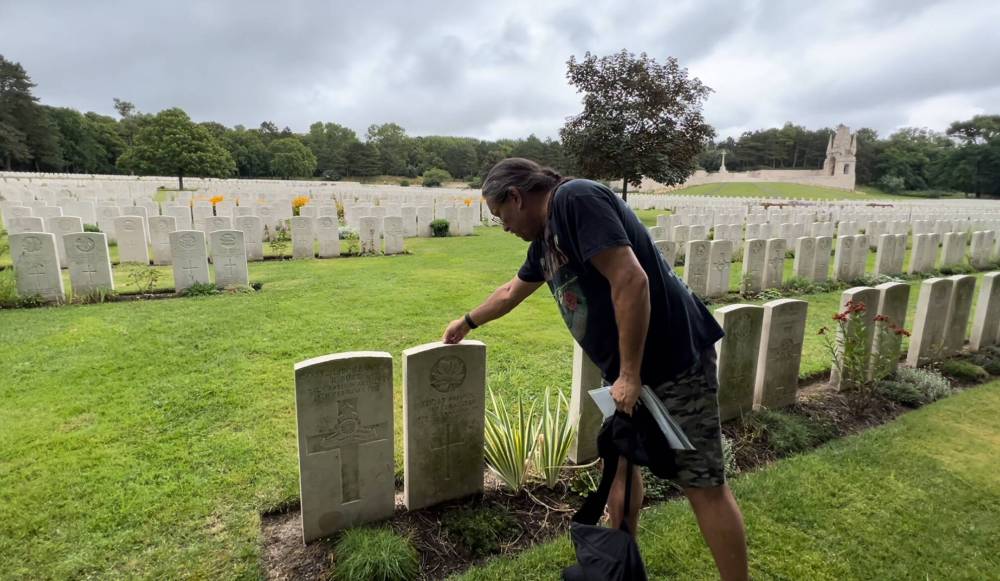
A bevelled grey headstone tucked at the back of the Étaples Military Cemetery marks Oswald’s grave. A cross and maple leaf are etched on its face, and a spattering of green algae on the stone reveals its age. Nearby, maple trees rustle in the summer wind.
Oswald was fatally wounded on Feb. 15, 1918, possibly during a raid by his battalion on German trenches. He was shot several times — in the face, arm and right knee — and died in hospital at Camiers. He was 20 years old.
The elder McCorrister brother, meanwhile, was gassed in early 1918 and suffered from pulmonary fibrosis. After months in hospital, William Robert returned to duty but never made a full recovery.
He was sent home in October 1918 and was admitted to hospital in Winnipeg. In April 1919, he was discharged from service and died two months later, on June 26, from his disease. He was buried at the St. Peter Dynevor Anglican Church cemetery, at the site of the former St. Peter’s Reserve.
William Robert was 25 years old.
Honouring and remembering… it helps me have some pride in who I am, and my family and the legacy there.”–Randall McKenzie
McKenzie believes he’s the first of his family to visit Oswald’s grave in France, where he held a moment of silence and left two small offerings to honour and remember the man’s sacrifice: a handful of strawberries, raspberries and blueberries, to feed the spirit of his ancestor; and a penny on top of the grave marker, as a token of his respect.
“I’m so grateful that I’m here, and being that those men never had that opportunity to have a future… and they went there — that’s heroic in itself,” he says.
McKenzie intends to continue his research and share stories of his great-uncles, with the hope that in doing so, the next generation will have fewer questions and plenty to say about their relatives.
“Honouring and remembering… it helps me have some pride in who I am, and my family and the legacy there,” he says, “because it’s not really something that you celebrate every day.”
fpcity@freepress.mb.ca
Related Articles
The Timber Wolves of war




History
Updated on Friday, November 8, 2024 9:20 AM CST: Corrects spelling of Étaples