

City police take gun forensics in-house
Rapid firearm matching across province step toward gun-crime lab

Advertisement
Read this article for free:
or
Already have an account? Log in here »
To continue reading, please subscribe:
Monthly Digital Subscription
$1 per week for 24 weeks*
- Enjoy unlimited reading on winnipegfreepress.com
- Read the E-Edition, our digital replica newspaper
- Access News Break, our award-winning app
- Play interactive puzzles
*Billed as $4.00 plus GST every four weeks. After 24 weeks, price increases to the regular rate of $19.95 plus GST every four weeks. Offer available to new and qualified returning subscribers only. Cancel any time.
Monthly Digital Subscription
$4.99/week*
- Enjoy unlimited reading on winnipegfreepress.com
- Read the E-Edition, our digital replica newspaper
- Access News Break, our award-winning app
- Play interactive puzzles
*Billed as $19.95 plus GST every four weeks. Cancel any time.
To continue reading, please subscribe:
Add Free Press access to your Brandon Sun subscription for only an additional
$1 for the first 4 weeks*
*Your next subscription payment will increase by $1.00 and you will be charged $16.99 plus GST for four weeks. After four weeks, your payment will increase to $23.99 plus GST every four weeks.
Read unlimited articles for free today:
or
Already have an account? Log in here »
Hey there, time traveller!
This article was published 16/05/2025 (315 days ago), so information in it may no longer be current.
Manitoba law enforcement will now be able to determine if the same gun was used in multiple shootings in just days — rather than a year.
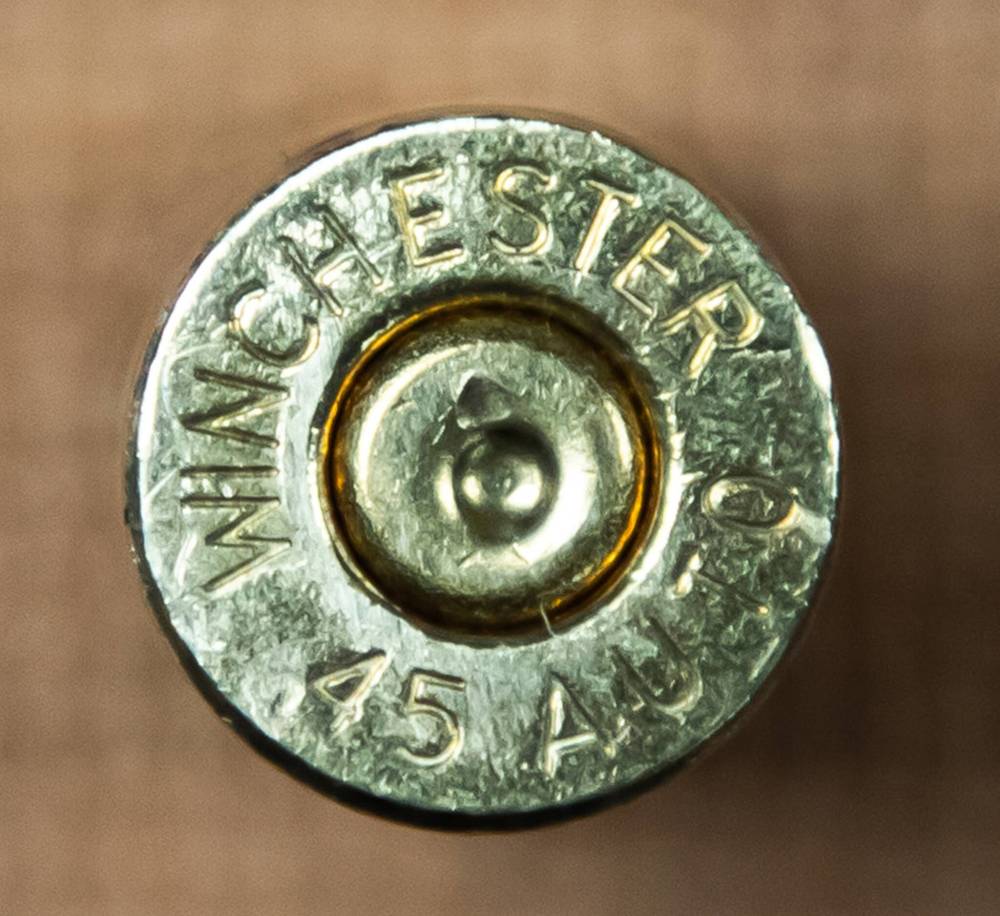
The Winnipeg Police Service’s firearms investigative analysis section will now inspect markings left on spent casings — the piece of cartridge or shell left behind after a bullet is fired — and compare them to other casings in a national database for all law enforcement agencies in Manitoba.
That will allow Manitoba police agencies to link shootings committed with the same gun in multiple jurisdictions in the province much quicker than in the past, Winnipeg police Deputy Chief Cam Mackid said Friday.
“There’s no more serious crime than a firearm offence… a third of all (Winnipeg) homicide victims are killed by gun violence,” said Mackid. “This is a benefit to public safety.”
Mackid compared shell casing analysis to taking fingerprints.
“Shell casings also are very unique — they’re much like fingerprints. We don’t identify an actual offender to a shell casing… but we can link that specific casing with a specific weapon, and we can link that specific casing with another casing that’s found at a different scene,” said Mackid, adding WPS can now do that analysis in three days or less.
The Winnipeg police firearms lab has been able to analyze and compare spent casings found in city investigations since 2020, but previously, the evidence would have to be sent to the RCMP’s national laboratory in Ottawa.
Capacity issues at the national lab meant it could sometimes take as long as a year for results to come back.
“If we had a shooting here in Winnipeg, say we had one in St. Vital, and three days later we had one in Transcona, (then) maybe a homicide downtown, all involving a firearm, and we seized casings, historically, that had taken up to a year for us to get results back… to see if we could link them together,” said Mackid.
“It’s just too long a time period to be effective.”
A new injection of just under $450,000 in provincial government funding has now allowed city police to expand capacity to take casings from cops outside the Perimeter Highway, so those agencies don’t have to send their evidence to the Ottawa RCMP lab either.
“We know that jurisdictions aren’t really respected by the criminal element, so we could have an incident we’ve got linked up here in Winnipeg, but we don’t know for a year that it’s linked to a shooting in Brandon or up north, in a First Nation jurisdiction,” said Mackid.
“Now we’re going to have that capacity to take casings provincewide and make those links very fast.”
The WPS uses the RCMP’s Canadian Integrated Ballistic Identification Network to compare their digital images of casings with other images of casings in a national database.
SUPPLIED
A shell casing from a .45-calibre cartridge.
Mackid said the use of the new system has allowed local officers to develop more than 200 investigative leads on gun crimes through the database since 2020, linking incidents both locally and across Canada.
The Friday announcement is part of a planned expansion to create a full provincial gun-crime laboratory run by Winnipeg police, with the same capabilities as the RCMP facility in Ottawa.

The province, under the prior Progressive Conservative government, first committed $5.2 million to the new gun lab project in the summer of 2023. The government has committed about $3.2 million in annual funding for the lab, NDP Justice Minister Matt Wiebe said Friday.
Wiebe said expanding capacity at the city lab will ensure “gun criminals will have nowhere to hide anywhere in our province” and alleviate strain on the RCMP’s national facility.
Further renovations at the existing facility at WPS headquarters will start later this year, which will allow police to also analyze firearms seized by other law enforcement agencies in the province, on top of their spent casings.
The final phase of the expansion will be the construction of a new firearms lab, complete with in-house scientists that will complete further analysis needed for court proceedings, at a new secure site.
erik.pindera@freepress.mb.ca
Erik Pindera is a reporter for the Free Press, mostly focusing on crime and justice. The born-and-bred Winnipegger attended Red River College Polytechnic, wrote for the community newspaper in Kenora, Ont. and reported on television and radio in Winnipeg before joining the Free Press in 2020. Read more about Erik.
Every piece of reporting Erik produces is reviewed by an editing team before it is posted online or published in print — part of the Free Press‘s tradition, since 1872, of producing reliable independent journalism. Read more about Free Press’s history and mandate, and learn how our newsroom operates.
Our newsroom depends on a growing audience of readers to power our journalism. If you are not a paid reader, please consider becoming a subscriber.
Our newsroom depends on its audience of readers to power our journalism. Thank you for your support.
Erik Pindera is a reporter for the Free Press, mostly focusing on crime and justice. The born-and-bred Winnipegger attended Red River College Polytechnic, wrote for the community newspaper in Kenora, Ont. and reported on television and radio in Winnipeg before joining the Free Press in 2020. Read more about Erik.
Every piece of reporting Erik produces is reviewed by an editing team before it is posted online or published in print — part of the Free Press‘s tradition, since 1872, of producing reliable independent journalism. Read more about Free Press’s history and mandate, and learn how our newsroom operates.
Our newsroom depends on a growing audience of readers to power our journalism. If you are not a paid reader, please consider becoming a subscriber.
Our newsroom depends on its audience of readers to power our journalism. Thank you for your support.
Advertisement Advertise With Us
Advertisement Advertise With Us
History
Updated on Friday, May 16, 2025 4:45 PM CDT: Updates with final version