City faces estimated $11-M cost to close Portage and Main underground concourse
Read this article for free:
or
Already have an account? Log in here »
To continue reading, please subscribe:

Digital Subscription
One year of digital access for only $205*
- Enjoy unlimited reading on winnipegfreepress.com
- Read the E-Edition, our digital replica newspaper
- Access News Break, our award-winning app
- Play interactive puzzles
*First annual payment billed as $205.00 + GST for one year. This annual subscription will automatically renew at $233.00 + GST every 52 weeks (10% off the regular annual price of $259.35). Offer available to new and qualified returning subscribers only. Cancel any time.
To continue reading, please subscribe:
Add Free Press access to your Brandon Sun subscription for only an additional
$1 for the first 4 weeks*
- Enjoy unlimited reading on winnipegfreepress.com
- Read the E-Edition, our digital replica newspaper
- Access News Break, our award-winning app
- Play interactive puzzles
*Your next Brandon Sun subscription payment will increase by $1.00 and you will be charged $17.95 plus GST for four weeks. After four weeks, your payment will increase to $24.95 plus GST every four weeks.
Read unlimited articles for free today:
or
Already have an account? Log in here »
Hey there, time traveller!
This article was published 08/09/2025 (363 days ago), so information in it may no longer be current.
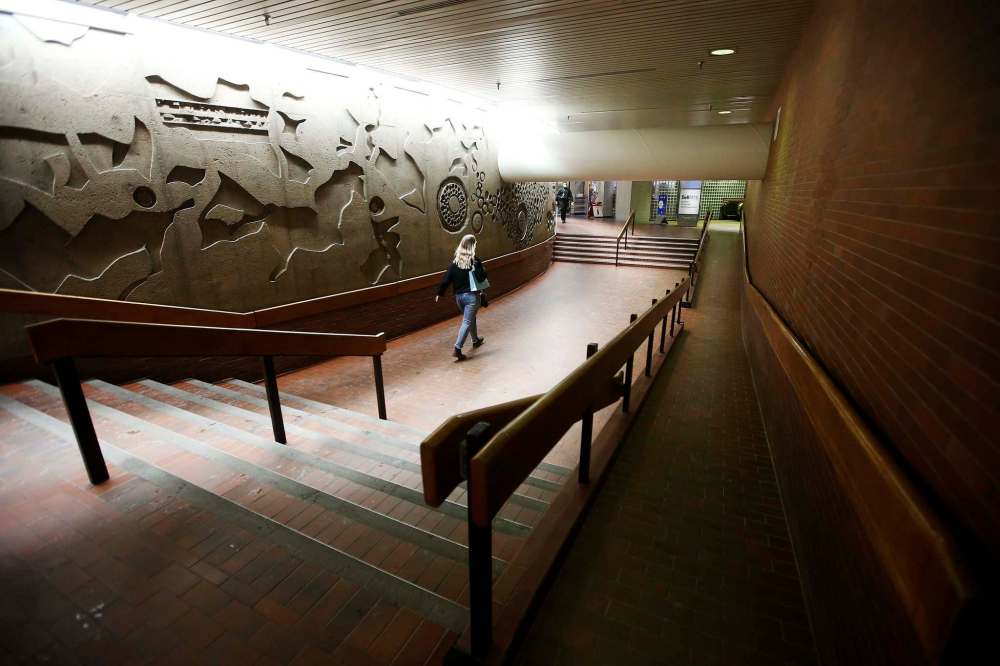
The city estimates it would cost about $11 million to fully decommission the Portage and Main underground concourse, though a decision isn’t expected any time soon.
On June 27, the historic intersection above the concourse reopened to pedestrians, who had not been able to cross at street level since 1979.
When the reopening was initially proposed in March 2024, Mayor Scott Gillingham called for the underground mall to close. At the time, the city estimated that it would take $73 million and up to five years of traffic-snarling construction to repair a leaking membrane under the street that protected the properties below.
City council voted to first require an assessment of the full cost and traffic impact of repairing the space prior to any closure.
On Monday, the city released a third-party study that estimates a full concourse closure would cost $11.14 million and require about 17 months of work. A partial decommissioning option would cost $9.44 million and take 14 months to complete.
The mayor said more information is needed to determine the best steps forward.
The city said the 2024 membrane repair price is the most updated figure it has. However, it needs to be revised because part of the repair was done in order to reopen the intersection to pedestrians, a staff report notes.
Gillingham said water still leaks into the underground during heavy rain.
Both Gillingham and Coun. Evan Duncan, chairman of property and development, said no change is imminent.
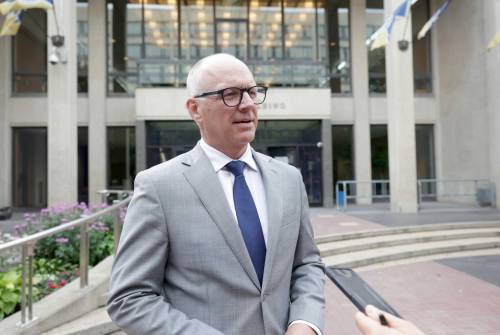
“There’s no closure of the underground taking place imminently at Portage and Main, full stop. We need to be educated on exactly what it is, all aspects of it, before we make a decision,” said Duncan (Charleswood-Tuxedo-Westwood).
A staff report calls on city council to order a cost-benefit analysis on the underground concourse before considering any changes.
Gillingham and Duncan both expressed support for that motion.
“There’s no closure of the underground taking place imminently at Portage and Main, full stop.”
“I’ve been told by the public service that when we fill (the concourse) in, it’s closed, it’s not opening again…. We need to be extremely cautious and extremely well-informed so that we make the right decision for future Winnipeggers,” said Duncan.
The report suggests a $9.44-million partial decommissioning would close the south loop of the concourse and below-grade connections to 333 and 335 Main St., while leaving the rest open. Closing the north loop instead was not priced out but would likely “be similar in magnitude,” the city report notes.
Duncan said he doesn’t believe a partial closure makes sense, since he would prefer the city make an “all-or-nothing (decision).”
Coun. Jeff Browaty repeated his call to leave the concourse open, especially for people walking in the area during extreme weather.
“I think it really adds value to our downtown…. There’s a high desirability for people that work in the downtown core to be able to traverse between businesses (indoors),” said Browaty.
The North Kildonan councillor said he’s disappointed the report didn’t spell out the exact impact of either maintaining the site or shutting it down.
“I know the concourse (businesses) are hurting right now due to a fairly high vacancy rate… I think it’s important that we make a decision sooner than later but I don’t think we have enough information (yet),” said Browaty.
The head of a building owners’ association wants the city to keep the climate-controlled walkway open year-round with 24-hour access, and suggests repairing it would help revitalize the downtown.
“The owners I’ve spoken with, I know their position is they want to see the concourse remain open. It’s important… that their buildings don’t become islands,” said Tom Thiessen, executive director of the Building Owners and Managers Association of Manitoba.
“We know that there are somewhere in the neighbourhood of 6,000 downtown workers who access those concourse-connected buildings. That’s amenities for thousands of visitors, thousands of hotel guests, thousands of workers.”
Thiessen noted BOMA’s members include Harvard Developments (owner of 201 Portage) and Richardson and Sons, which owns the Richardson Building.

“We know that there are somewhere in the neighbourhood of 6,000 downtown workers who access those concourse-connected buildings. That’s amenities for thousands of visitors, thousands of hotel guests, thousands of workers,” said Thiessen.
The city would need permission from private property owners to backfill material in order to shut down the concourse, the staff report notes.
Council’s property and development committee will discuss the report on Friday.
joyanne.pursaga@freepress.mb.ca
X: @joyanne_pursaga

Joyanne is city hall reporter for the Winnipeg Free Press. A reporter since 2004, she began covering politics exclusively in 2012, writing on city hall and the Manitoba Legislature for the Winnipeg Sun before joining the Free Press in early 2020. Read more about Joyanne.
Every piece of reporting Joyanne produces is reviewed by an editing team before it is posted online or published in print — part of the Free Press‘s tradition, since 1872, of producing reliable independent journalism. Read more about Free Press’s history and mandate, and learn how our newsroom operates.
Our newsroom depends on a growing audience of readers to power our journalism. If you are not a paid reader, please consider becoming a subscriber.
Our newsroom depends on its audience of readers to power our journalism. Thank you for your support.