HSC unions welcome 24-7 police presence in violence-plagued emergency department
Read this article for free:
or
Already have an account? Log in here »
To continue reading, please subscribe:

Digital Subscription
One year of digital access for only $205*
- Enjoy unlimited reading on winnipegfreepress.com
- Read the E-Edition, our digital replica newspaper
- Access News Break, our award-winning app
- Play interactive puzzles
*First annual payment billed as $205.00 + GST for one year. This annual subscription will automatically renew at $233.00 + GST every 52 weeks (10% off the regular annual price of $259.35). Offer available to new and qualified returning subscribers only. Cancel any time.
To continue reading, please subscribe:
Add Free Press access to your Brandon Sun subscription for only an additional
$1 for the first 4 weeks*
- Enjoy unlimited reading on winnipegfreepress.com
- Read the E-Edition, our digital replica newspaper
- Access News Break, our award-winning app
- Play interactive puzzles
*Your next Brandon Sun subscription payment will increase by $1.00 and you will be charged $17.95 plus GST for four weeks. After four weeks, your payment will increase to $24.95 plus GST every four weeks.
Read unlimited articles for free today:
or
Already have an account? Log in here »
Hey there, time traveller!
This article was published 09/09/2025 (392 days ago), so information in it may no longer be current.
Unions that represent staff at Health Sciences Centre are hopeful a 24-7 police presence in the adult emergency room will help curb violence at Manitoba’s largest hospital campus.
HSC will be at least the second hospital in Canada with police stationed in an ER around the clock, starting in the fall.
“This is something we’ve been advocating for long before the nurses at HSC grey-listed (the hospital),” said Manitoba Nurses Union president Darlene Jackson. “I think this is a direct result of the nurses having the courage to grey list.”
JOHN WOODS / FREE PRESS FILES Manitoba Nurses Union president Darlene Jackson.
MNU members at HSC voted 94 per cent in favour of “grey listing” the Winnipeg hospital last month in a bid to discourage current and new nurses from seeking jobs there.
The union called for improvements, including a temporary police presence, after what it said was a failure to address longstanding safety and security concerns.
Jackson said police had a 24-7 presence in the HSC emergency department many years ago.
The province said it is providing new funding for two uniformed Winnipeg police officers to have a visible, 24-7 presence in the ER. The plan will add five weapon-detection scanners at HSC’s main public entrances. The measures will cost $2.3 million.
“We hope to finalize with the Government of Manitoba how police can contribute to a layered safety plan; however, details are still being worked out,” police Chief Gene Bowers said in a statement.
“We are committed to be part of a safety solution at HSC. We will continue to work collaboratively with our partners to ensure the safety of patients, families, staff and those tasked with providing security at the hospital.”
“This is something we’ve been advocating for long before the nurses at HSC grey-listed (the hospital) … I think this is a direct result of the nurses having the courage to grey list.”
In a news release, Justice Minister Matt Wiebe said the officers and institutional safety officers will work together to ensure people in crisis receive the care and supervision they need.
Health Minister Uzoma Asagwara said the initiative is designed to ensure people in crisis are treated with dignity and care.
Emily Coutts, the health minister’s press secretary, said the idea is that when general patrol officers bring a person in crisis to the ER, they would transfer custody to the dedicated officers.
Those officers should be able to transfer custody to HSC’s institutional safety officers in most cases, Coutts said.
The officers would be able to respond to crises in the inner-city hospital, if needed, she said.
Coutts said the initiative has no end date and will be monitored.
RUTH BONNEVILLE / FREE PRESS FILES The Health Sciences Centre will be at least the second hospital in Canada with police stationed in an ER around the clock, starting this fall.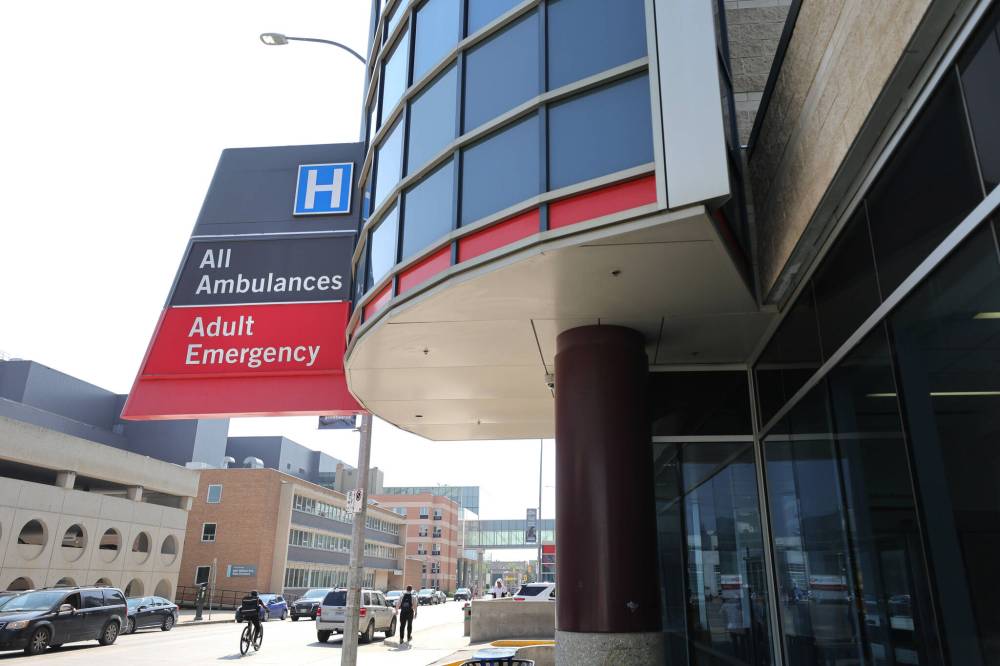
A nurse, who agreed to speak on condition of anonymity, said a 24-7 police presence could help to improve safety.
“When police are in the department with a patient, the people seem to behave,” the nurse said.
Jason Linklater, president of the Manitoba Association of Health Care Professionals, had questions about whether the officers will be tied up waiting with patients in crisis, which currently happens.
“What everybody is asking for is dedicated resources for staff and patient safety,” he said.
MIKE DEAL / FREE PRESS FILES Jason Linklater, president of the Manitoba Association of Health Care Professionals.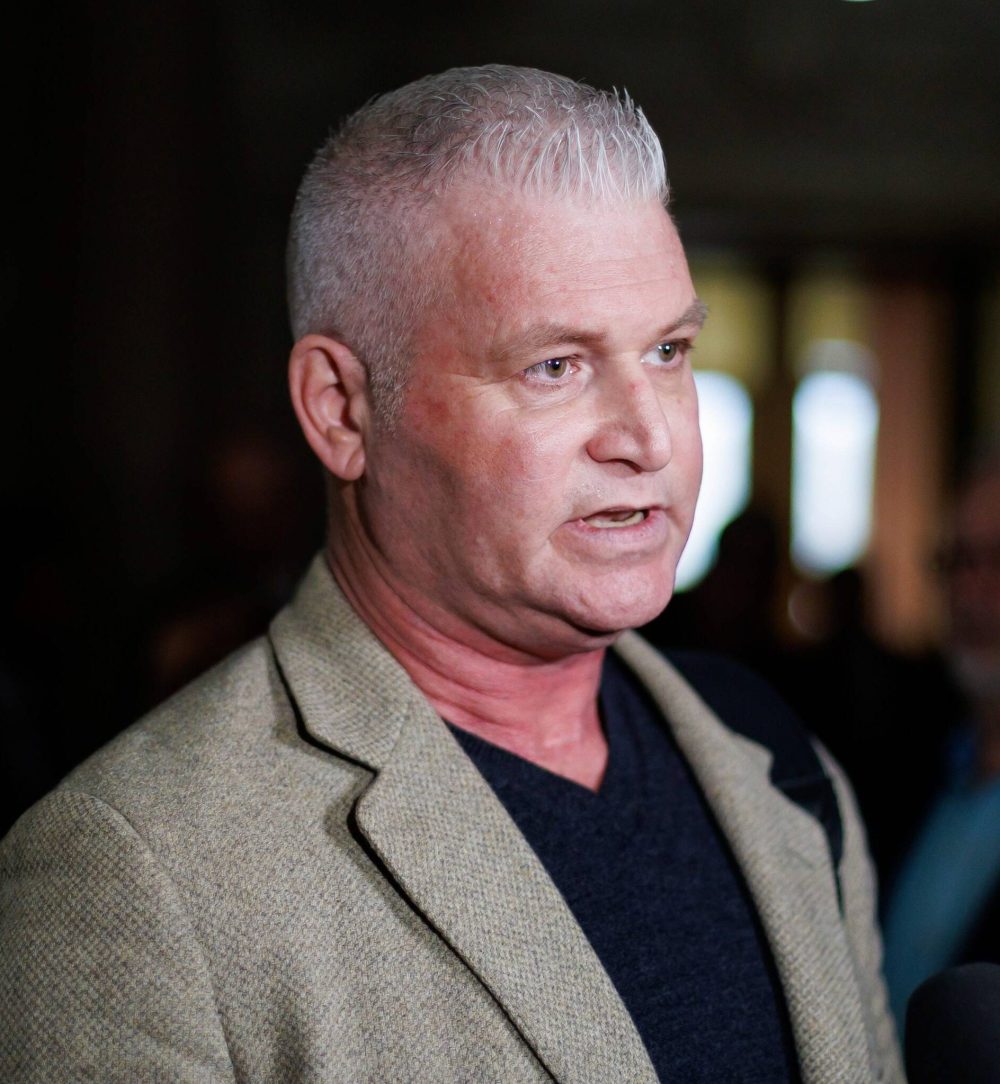
A Doctors Manitoba spokesperson said the plan is an “important step” toward making HSC safer.
“We feel health system leaders are taking physicians’ concerns seriously, and we look forward to seeing further action to make the hospital campus safer and more accessible for all patients, doctors, staff, and community members,” the spokesperson said.
Progressive Conservative Leader Obby Khan called the move a “knee-jerk reaction by the NDP government to make an announcement to make it look like they’re doing something when, really, the results aren’t going to be there.”
He questioned whether the initiative is sustainable.
“Where are they pulling these police officers from? Are they pulling them off in the streets where they might be needed? What is this going to cost?”
Jackson said a 24-7 police presence could “trigger” some people who are not comfortable with police being in such a space, or it could stop some people from going to the ER.
“That certainly is not what we want to happen,” she said. “The whole goal is to ensure that receiving care and providing care… is done in a safe environment.”
“What everybody is asking for is dedicated resources for staff and patient safety.”
As part of the grey listing, the nurses union called for a temporary police presence until HSC has a full complement of institutional safety officers. The union recommended fewer public entrances, restricted access to tunnels and timely notification of serious incidents.
“What we have been hearing from nurses is that the violence is increasing, and not decreasing, since the grey-listing,” Jackson said.
The province said Tuesday it will reduce the number of public entrances and make improvements to the safety officer program, security in the tunnels and communications systems.
Since 2023, police in Windsor, Ont., have had one officer stationed at Windsor Regional Hospital’s Ouellette Campus 24-7 to speed up person-in-crisis transfer times and get patrol members back on the street.
Patrol officers used to wait up to 12 hours with each person in crisis who had to be admitted to the ER. The average patient transfer time is now less than 15 minutes, said Windsor police Insp. Chris Werstein.
“It’s a really positive program. The key has been the hospital has been a great partner for us as well,” he said.

Werstein and Kristen Scott, director of Windsor Regional Hospital’s emergency department, were not aware of any other program like it in Canada.
“It has really bridged the health-care sector and policing services,” Scott said.
The partners have since launched a team that pairs nurses and police officers to respond to mental health and substance use-related calls.
Some U.S. hospitals or health-care organizations have set up their own police departments.
Eric Clay, a past-president of the Illinois-based International Association for Healthcare Security and Safety, said more than 30 U.S. states have passed or proposed legislation to allow private health-care sites to create independent police departments.
Public or university hospitals were already permitted to do so, he said.
“There has been a trend toward that over the last several years,” said Clay, citing the increase in violence at hospitals as one reason.
—With files from Carol Sanders
chris.kitching@freepress.mb.ca

Chris Kitching is a general assignment reporter at the Free Press. He began his newspaper career in 2001, with stops in Winnipeg, Toronto and London, England, along the way. After returning to Winnipeg, he joined the Free Press in 2021, and now covers a little bit of everything for the newspaper. Read more about Chris.
Every piece of reporting Chris produces is reviewed by an editing team before it is posted online or published in print — part of the Free Press‘s tradition, since 1872, of producing reliable independent journalism. Read more about Free Press’s history and mandate, and learn how our newsroom operates.
Our newsroom depends on a growing audience of readers to power our journalism. If you are not a paid reader, please consider becoming a subscriber.
Our newsroom depends on its audience of readers to power our journalism. Thank you for your support.
Related Articles
Province to launch 24-hour police presence at HSC