

City considers reimbursement fund for cabbies stiffed by riders
Advertisement
Read this article for free:
or
Already have an account? Log in here »
To continue reading, please subscribe:

Digital Subscription
One year of digital access for only $205*
- Enjoy unlimited reading on winnipegfreepress.com
- Read the E-Edition, our digital replica newspaper
- Access News Break, our award-winning app
- Play interactive puzzles
*First annual payment billed as $205.00 + GST for one year. This annual subscription will automatically renew at $233.00 + GST every 52 weeks (10% off the regular annual price of $259.35). Offer available to new and qualified returning subscribers only. Cancel any time.
To continue reading, please subscribe:
Add Free Press access to your Brandon Sun subscription for only an additional
$1 for the first 4 weeks*
- Enjoy unlimited reading on winnipegfreepress.com
- Read the E-Edition, our digital replica newspaper
- Access News Break, our award-winning app
- Play interactive puzzles
*Your next Brandon Sun subscription payment will increase by $1.00 and you will be charged $17.95 plus GST for four weeks. After four weeks, your payment will increase to $24.95 plus GST every four weeks.
Read unlimited articles for free today:
or
Already have an account? Log in here »
Hey there, time traveller!
This article was published 19/12/2025 (263 days ago), so information in it may no longer be current.
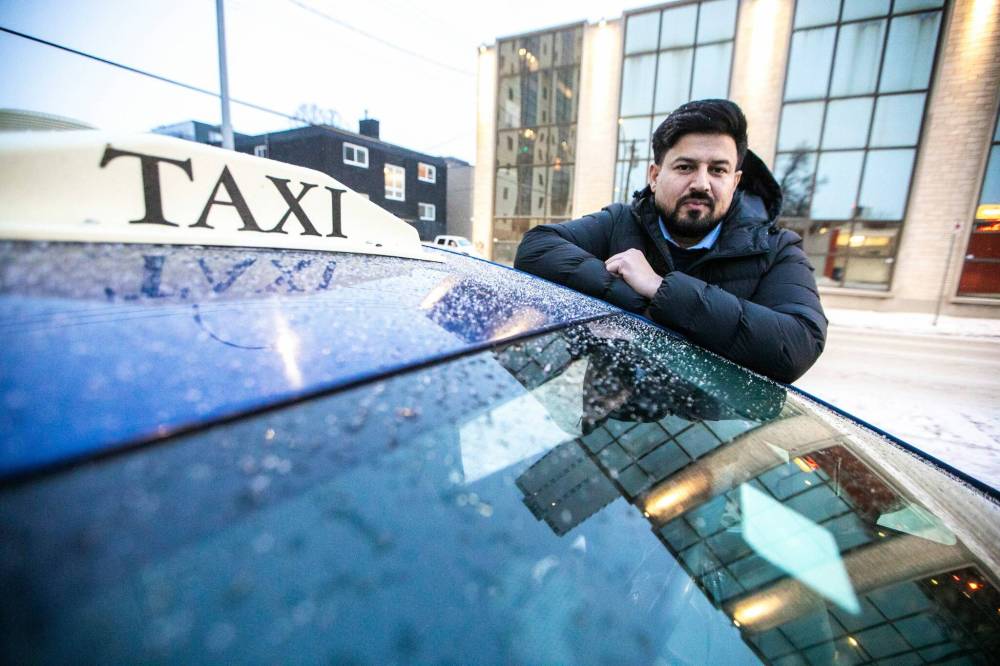
Cab driver Navkiran Dhillon is on the road 12 hours a day, six days a week, often battling poor weather.
He’s tired of battling passengers who don’t pay, too.
“It makes me feel horrible, but what can I do about it,” Dhillon said during a break from driving Winnipeggers around in a snowstorm earlier this week.

SUPPLIED
Cab driver Navkiran Dhillon says incidents of passengers driving and dashing have increased lately.
“If I ask, they’re not going to pay. They’ll simply walk out. I’m not going to run after them because then I’m at fault. I can’t do nothing about it than just feel bad.”
The city is considering a self-insurance program in which cab drivers would be partially reimbursed if they are stiffed by a passenger. It estimates Winnipeg cab drivers have lost as much as $200,000 a year because of fare-evading thieves.
“For anybody who gets a regular paycheque deposited into their bank account, imagine at the end of the week feeling like you you’re going to have $100 or $200 taken away from you,” said Grant Heather, who manages the city’s vehicles for hire department, which regulates and licenses cabs.
Dhillon, a Unicity Taxi driver for 15 years, said incidents of passengers driving and dashing have increased lately. He said he recently made two stops for a customer during a 30-minute ride. The passenger walked away at the final destination and Dhillon was out $36.
He said most drivers don’t report fare evasions because they prefer to be out on the road earning money, not stuck doing paperwork.
“We do not call the police or city. I know I’m not gonna get paid for it anyways. They’ll call me there to download the video and all that stuff. I’m losing more time there, so it’s not worth it for me to report it,” said Dhillon.
The general manager of Unicity Taxi is used to hearing similar stories from other drivers.
“If the customer doesn’t have money, then what can the police do?” said Abhishek Tara. “They (taxi drivers) feel that nowadays there are no rules and regulations, there is nobody that is going to take any action against fare jumpers. So nowadays, they are just not reporting it.”
“If the customer doesn’t have money, then what can the police do?”
All taxis have in-vehicle cameras that take video and audio of passengers. Because most drivers do not report the thieves, numbers aren’t tracked consistently by the cab companies or the city.
Heather said more than 12 million taxi trips are projected for Winnipeg by year’s end, and with that comes the increased opportunity to ride and run.
The city is exploring how to partner with police and “provide more teeth” to fare enforcement. That could include tracking chronic offenders, Heather said.
“We can’t just let it keep going unchecked, because there are real impacts. We’ll start to lose drivers from the industry, and that’ll drop levels of service. Those types of things just aren’t feasible,” said Heather.
The city cracked down on violence and fare evasion on transit buses in September by placing police officers on some buses. Heather said he’s concerned some of the non-paying riders have traded the bus for a cab.
MIKAELA MACKENZIE / FREE PRESS
Abhishek Tara, general manager at Unicity Taxi, says few cabbies report fare-jumpers.
“If you were going to get on a bus and maybe get a free ride before, but now there are police or community safety officers doing checks — taxis provide a level of anonymity where you can call one and you pay after the fact,” said Heather.
“If you put pressure on an issue in one area, it pushes that issue to another area.”
A fund to partially compensate drivers who have been ripped off would require city council approval. The vehicle-for-hire office expects to develop the plan next year and, if approved, roll it out by the end of 2026 or early 2027.
“Getting something back is better than having nothing,” said Heather. “The funds might come from a surcharge tacked on to trips and we would kind of collect that money and hold it in an insurance fund and then drivers would be able to make verifiable claims.”
wfppullqutoe:“Getting something back is better than having nothing.”:wfppullquote

As for adopting a similar pay-first model, such as Uber or Lyft, Heather said that is “shortsighted” because some people don’t have credit cards or cellphones with data.
Winnipeg isn’t the only community where some riders run away without paying.
Daisz Miloo, manager of operations at Steinbach Taxi, hears about fare evaders at least twice a week. A year ago, it was once every six months to a year. She estimates the drivers lose $1,500 to $2,000 a month.
“Everybody’s frustrated nowadays… that frustration comes down to the taxi companies,” said Miloo. “What can we do at our level? We can only call RCMP. But bothering them every day for all of this is a pain. They’re not going to be able to handle all of this either.”
fpcity@freepress.mb.ca