

Manitobans’ overall health gains not shared equally across population, 2025 report concludes

Advertisement
Read this article for free:
or
Already have an account? Log in here »
To continue reading, please subscribe:
Monthly Digital Subscription
$1 per week for 24 weeks*
- Enjoy unlimited reading on winnipegfreepress.com
- Read the E-Edition, our digital replica newspaper
- Access News Break, our award-winning app
- Play interactive puzzles
*Billed as $4.00 plus GST every four weeks. After 24 weeks, price increases to the regular rate of $19.95 plus GST every four weeks. Offer available to new and qualified returning subscribers only. Cancel any time.
Monthly Digital Subscription
$4.99/week*
- Enjoy unlimited reading on winnipegfreepress.com
- Read the E-Edition, our digital replica newspaper
- Access News Break, our award-winning app
- Play interactive puzzles
*Billed as $19.95 plus GST every four weeks. Cancel any time.
To continue reading, please subscribe:
Add Free Press access to your Brandon Sun subscription for only an additional
$1 for the first 4 weeks*
*Your next subscription payment will increase by $1.00 and you will be charged $16.99 plus GST for four weeks. After four weeks, your payment will increase to $23.99 plus GST every four weeks.
Read unlimited articles for free today:
or
Already have an account? Log in here »
Manitoba’s latest report on the health status of its population suggests significant overall improvement, but notes that those gains over the past two decades have not been shared equally.
The report, released Friday and authored by Manitoba chief provincial public health officer Dr. Brent Roussin, highlights persistent inequities in health outcomes, particularly among residents of the Northern Health Region and those in the lowest of five income levels.
“Effective health policy is a shared responsibility that extends beyond the boundaries of the health-care system,” Roussin said in a release. “Governments, communities, organizations and individuals all play a role in shaping Manitobans’ health and well-being. By working together, we can reduce health disparities, improve outcomes and build a stronger, more equitable province.”
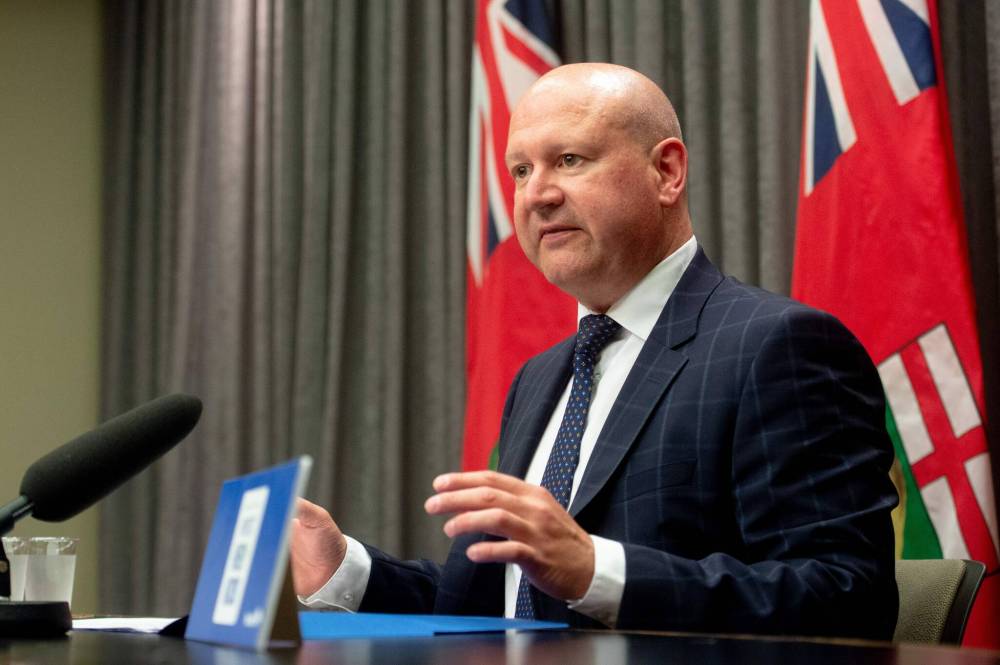
Mike Sudoma / Free Press Files
Manitoba chief provincial public health officer Dr. Brent Roussin authored the latest report on the health status of province’s population.
Among its recommendations, the report calls on the province to formally adopt a “health in all policies” framework to ensure health impacts are considered across all areas of government decision-making.
It also urges Manitoba to support distinctions-based Indigenous health reporting, led by Indigenous governance and backed by data-sharing agreements and investments in Indigenous data sovereignty.
The report further recommends institutionalizing the measurement and public reporting of social and economic determinants of health to better track inequities and guide long-term efforts to close health gaps.
While key indicators such as life expectancy, infant mortality, premature mortality and injury-related deaths have all improved significantly over the past 20 years, challenges remain.

Rates of some chronic diseases have declined, but population growth and an aging demographic mean more Manitobans are living with chronic conditions and increasingly relying on health-care services. Although hypertension rates remained stable between 2017–18 and 2022–23, the number of people living with high blood pressure increased by 10.4 per cent.
Chronic illnesses including heart disease, stroke, cancer and diabetes remain the leading causes of hospitalization and death in the province. Diabetes is of particular concern, with an estimated 152,000 Manitobans living with the disease in 2024, a figure projected to exceed 210,000 by 2034.
Communicable diseases in Manitoba highlight ongoing health inequities, with sexually transmitted and blood-borne infections disproportionately affecting people experiencing poverty, homelessness, substance use and mental-health challenges.
The report emphasizes that these disparities stem from broader social, economic and environmental factors, underscoring the need to examine underlying determinants of health, such as childhood development, education, employment and income alongside disease rates to fully understand health outcomes in the province.
scott.billeck@freepress.mb.ca
Scott Billeck is a general assignment reporter for the Free Press. A Creative Communications graduate from Red River College, Scott has more than a decade’s worth of experience covering hockey, football and global pandemics. He joined the Free Press in 2024. Read more about Scott.
Every piece of reporting Scott produces is reviewed by an editing team before it is posted online or published in print — part of the Free Press‘s tradition, since 1872, of producing reliable independent journalism. Read more about Free Press’s history and mandate, and learn how our newsroom operates.
Our newsroom depends on a growing audience of readers to power our journalism. If you are not a paid reader, please consider becoming a subscriber.
Our newsroom depends on its audience of readers to power our journalism. Thank you for your support.
Scott Billeck is a general assignment reporter for the Free Press. A Creative Communications graduate from Red River College, Scott has more than a decade’s worth of experience covering hockey, football and global pandemics. He joined the Free Press in 2024. Read more about Scott.
Every piece of reporting Scott produces is reviewed by an editing team before it is posted online or published in print — part of the Free Press‘s tradition, since 1872, of producing reliable independent journalism. Read more about Free Press’s history and mandate, and learn how our newsroom operates.
Our newsroom depends on a growing audience of readers to power our journalism. If you are not a paid reader, please consider becoming a subscriber.
Our newsroom depends on its audience of readers to power our journalism. Thank you for your support.
Advertisement Advertise With Us
Advertisement Advertise With Us