Mayor says city council showed ‘courage’ in 2025 No regret about large tax and fee hikes; mum about platform for fall election
Read this article for free:
or
Already have an account? Log in here »
To continue reading, please subscribe:

Digital Subscription
One year of digital access for only $205*
- Enjoy unlimited reading on winnipegfreepress.com
- Read the E-Edition, our digital replica newspaper
- Access News Break, our award-winning app
- Play interactive puzzles
*First annual payment billed as $205.00 + GST for one year. This annual subscription will automatically renew at $233.00 + GST every 52 weeks (10% off the regular annual price of $259.35). Offer available to new and qualified returning subscribers only. Cancel any time.
To continue reading, please subscribe:
Add Free Press access to your Brandon Sun subscription for only an additional
$1 for the first 4 weeks*
- Enjoy unlimited reading on winnipegfreepress.com
- Read the E-Edition, our digital replica newspaper
- Access News Break, our award-winning app
- Play interactive puzzles
*Your next Brandon Sun subscription payment will increase by $1.00 and you will be charged $17.95 plus GST for four weeks. After four weeks, your payment will increase to $24.95 plus GST every four weeks.
Read unlimited articles for free today:
or
Already have an account? Log in here »
Hey there, time traveller!
This article was published 19/12/2025 (263 days ago), so information in it may no longer be current.
In a year when Winnipeggers paid hefty tax and fee hikes for city services, Mayor Scott Gillingham says he’s glad city council had the political “courage” to raise property taxes.
City council approved a 5.95 per cent property tax increase in January, it’s largest single-year hike since the 1990s, which cost the owner of a sample single-family home an additional $121.
On April 1, two other major fee increases took effect. The annual per-home garbage fee rose to $254 (prorated to $190.50), from $93 the previous year, and the typical home’s sewer rate rose by $168.03 for the remainder of 2025.
MIKE DEAL / FREE PRESS Winnipeg Mayor Scott Gillingham during his year-end interview in his office at City Hall. 
The sudden surge in three key city charges triggered complaints, including concern some low-income residents wouldn’t be able to afford it.
During a wide-ranging year-end interview on Friday, the mayor said he remains convinced more revenue was needed.
“We made the difficult decision, as council, to increase property taxes, because we know we can’t kick the can down the road on the need for infrastructure that has to be invested in.”
“We made the difficult decision, as council, to increase property taxes, because we know we can’t kick the can down the road on the need for infrastructure that has to be invested in, the need to increase the delivery of services to residents. To do all of that requires that we pay for these services and these infrastructure investments, and council’s had the courage to begin to raise some of the revenue required,” said Gillingham.
The mayor stressed the city remains affordable, with overall municipal property taxes amounting to less than what is charged in many other Canadian cities.
City council approved a 2026 budget with a notably lower 3.5 per cent property tax increase on Wednesday.
On Friday, Gillingham declined to offer any hints about the taxes and fees he will campaign on leading up to the Oct. 28, 2026 municipal election, deeming it “too soon” to determine.
The mayor also stood by the city’s primary transit network, which was met with an onslaught of complaints from many riders, some of whom reported buying vehicles to avoid extra transfers and longer commute times. The switch to a spine-and-feeder concept overhauled nearly every transit route on June 29.
“I believe we made the right decision to go to the new transit network. But we knew all along, once we made the switch, we would have to make adjustments and address any problems that arise,” said Gillingham.
“I’m working hard with the province and the federal government as well, to get their funding secured… When that funding announcement happens, it will be the largest funding announcement in Winnipeg’s history.”
The 2026 city budget adds a new transit planner position, tasked with expediting key changes to the system. The new network includes direct spines along major corridors that are supported by feeder routes.
Winnipeg Transit recently noted its fare revenues fell $8.5 million short this year from what the service predicted in the 2025 budget, noting the network change as one likely reason for the ridership decline.
“You know, the new system has not rolled out the way I hoped it would, ultimately. We’re making more adjustments sooner than I had hoped, but we’re going to make the adjustments. My commitment is we’re going to fix, adjust the system to enhance it,” said Gillingham.
Looking forward to the incoming year, the mayor said his top priority will be ensuring the city secures provincial and federal funding to complete the massive upgrade to the North End sewage treatment plant on Main Street.
“Getting funding for the third (and final) phase is my priority right now… I’m working hard with the province and the federal government as well, to get their funding secured. I believe there’ll be an announcement sometime. That’s my goal to get us to that point. When that funding announcement happens, it will be the largest funding announcement in Winnipeg’s history,” said Gillingham.
The city has warned water and sewer rates could soar if it doesn’t secure $994 million in combined funding from the two senior governments to get the final $1.5-billion third phase of work completed.
MIKE DEAL / FREE PRESS Winnipeg Mayor Scott Gillingham stressed the city remains affordable, with overall municipal property taxes amounting to less than what is charged in many other Canadian cities.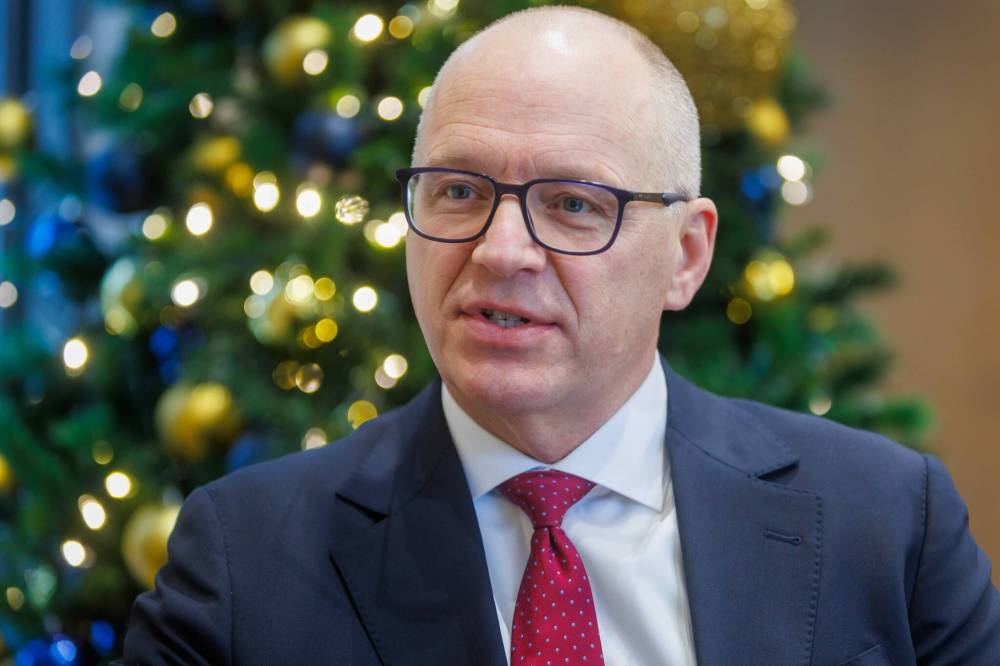
The city will take on $547 million of long-term debt to fund its share of that work, while the overall upgrade is expected to cost $3.092 billion.
The upgrade is expected to greatly reduce the amount of pollution that flows out of the sewage plant and ensure the city doesn’t run out of capacity to treat sewage, which would thwart new development.
“(Finishing the upgrade) unlocks… our economy in the future, unlocks housing in the future. It is critical to the city’s future,” said Gillingham.
The mayor said advancing a fourth emergency service to handle mental-health calls is his second most pressing priority for next year. That effort aims to alleviate pressure from well-being calls on front-line police, fire and ambulance staff.
joyanne.pursaga@freepress.mb.ca
X: @joyanne_pursaga


Joyanne is city hall reporter for the Winnipeg Free Press. A reporter since 2004, she began covering politics exclusively in 2012, writing on city hall and the Manitoba Legislature for the Winnipeg Sun before joining the Free Press in early 2020. Read more about Joyanne.
Every piece of reporting Joyanne produces is reviewed by an editing team before it is posted online or published in print — part of the Free Press‘s tradition, since 1872, of producing reliable independent journalism. Read more about Free Press’s history and mandate, and learn how our newsroom operates.
Our newsroom depends on a growing audience of readers to power our journalism. If you are not a paid reader, please consider becoming a subscriber.
Our newsroom depends on its audience of readers to power our journalism. Thank you for your support.
History
Updated on Friday, December 19, 2025 7:13 PM CST: Adds photo