

Judge issues caution against politicizing inquest into inmate’s death
Six parties granted standing at hearings into 2021 death at Headingley jail

Advertisement
Read this article for free:
or
Already have an account? Log in here »
To continue reading, please subscribe:

Digital Subscription
One year of digital access for only $205*
- Enjoy unlimited reading on winnipegfreepress.com
- Read the E-Edition, our digital replica newspaper
- Access News Break, our award-winning app
- Play interactive puzzles
*First annual payment billed as $205.00 + GST for one year. This annual subscription will automatically renew at $233.00 + GST every 52 weeks (10% off the regular annual price of $259.35). Offer available to new and qualified returning subscribers only. Cancel any time.
To continue reading, please subscribe:
Add Free Press access to your Brandon Sun subscription for only an additional
$1 for the first 4 weeks*
- Enjoy unlimited reading on winnipegfreepress.com
- Read the E-Edition, our digital replica newspaper
- Access News Break, our award-winning app
- Play interactive puzzles
*Your next Brandon Sun subscription payment will increase by $1.00 and you will be charged $17.95 plus GST for four weeks. After four weeks, your payment will increase to $24.95 plus GST every four weeks.
Read unlimited articles for free today:
or
Already have an account? Log in here »
Hey there, time traveller!
This article was published 24/12/2025 (258 days ago), so information in it may no longer be current.
An inquest into the case of an inmate who died following an hours-long standoff with corrections officers is one step closer after a judge granted standing to six parties who will be allowed representation in the proceeding.
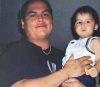
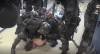
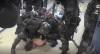
William Ahmo, 45, died in hospital on Feb. 14, 2021. Seven days earlier, the Sagkeeng First Nation man was shackled, pinned to the ground, placed in a “spit hood” and strapped into a restraint chair in the common area of his unit after a three-hour standoff at the Headingley Correctional Centre.
At a one-hour hearing Tuesday, provincial court Judge Victoria Cornick granted standing to Ahmo’s family, the Assembly of Manitoba Chiefs, Manitoba Corrections, Shared Health, Winnipeg Regional Health Authority and the John Howard Society.

Inquests are called when someone dies as the result of force used by a peace officer or when the death occurs while in custody.
The purpose of the inquest is to establish the facts surrounding Ahmo’s death and, if appropriate, make recommendations to prevent future deaths in similar circumstances, Cornick said.
“This inquest is focused on the discrete facts surrounding the circumstances of (Ahmo’s) death,” Cornick said, cautioning that the proceeding is not to be politicized.
“While social context and the Indigenous perspective and experience are important… this inquest cannot and will not become a larger inquiry into the criminal and correctional systems at large,” she said. “They will also not become an advocacy platform for social and public interest groups to broadcast larger messages beyond the very limited scope of what an inquest is supposed to accomplish.”
Cornick, at the request of inquest counsel Kerry Unruh, ordered that production orders be issued for the retrieval of relevant documents and evidence in the hands of Shared Health, Manitoba Corrections and the RCMP.
No dates have been set for the inquest, which isn’t expected to start for several months.
Last year, a judge found Robert Jeffrey Morden, a corrections officer who led the tactical team that responded to the standoff, not guilty of criminal negligence causing death and failing to provide the necessities of life.
Court heard evidence at trial that Ahmo flew into a violent, destructive rage after he was told a racist joke, resulting in dozens of inmates in his unit being locked in their cells.
“While social context and the Indigenous perspective and experience are important… this inquest cannot and will not become a larger inquiry into the criminal and correctional systems at large.”
Manitoba’s chief medical examiner deemed Ahmo’s death a homicide, from a brain injury caused by a heart attack as he struggled to breathe.
Ahmo was in an “extremely agitated” state and exhausted when he was forced into a prone position for several minutes, with his chest pressed to the floor, making it difficult for him to breathe, pathologist Dr. Charles Littman testified.
The inmate had an enlarged heart, was obese and had been hit with pepper spray three times before the takedown, all of which would have compromised his ability to breathe effectively, Littman said.
Video played in court showed Morden and other guards storming the unit and firing chemical irritant projectiles at Ahmo as the inmate stood on a second-floor walkway.
Ahmo, who was brandishing a broken mop handle, advanced on the officers, who forcefully took him to the floor. Ahmo screamed and flailed as officers piled on top of him, forcing his face and neck to the floor.
He told officers more than 20 times while restrained on the floor: “I can’t breathe.” Ahmo, unmoving, was placed in a restraint chair, after which he was found to have no pulse. A “code red” was issued.
Crown attorney Jason Nicols said officers had no training for the restraint chair, which under the circumstances would have compromised Ahmo’s ability to breathe. Nicol said that under the jail’s 2019 use-of-force policy at the time, the chair was to be used only in cases in which an inmate posed a risk of self-harm.
“The accused was surrounded by medical personnel that he was entitled to rely upon.”
Provincial court Judge Tony Cellitti, however, said he accepted the testimony of a use-of-force expert who told court that corrections officers were in fact still operating under a 2017 policy that allowed officers to use the chair to control and restrain violent inmates.
“This provides important context when I consider the objective fault element in this case,” he said.
Cellitti said Morden would have had every reason to believe Ahmo’s comments about not being able to breathe were the result of being pepper sprayed, “particularly given that Mr. Ahmo continued to fight, resist and struggle, and given that Mr. Ahmo can be seen (on video) breathing heavily at times… something that would have been visible to those present… including the accused.”
The trial was told Ahmo was medically cleared by a nurse and two members of Morden’s team before he was put in the restraint chair and became unresponsive.
“The accused was surrounded by medical personnel that he was entitled to rely upon,” Cellitti said. “However, medical intervention would only have been possible if Mr. Ahmo had not been combative and had not resisted in the manner that he did.”
dean.pritchard@freepress.mb.ca
Dean Pritchard is courts reporter for the Free Press. He has covered the justice system since 1999, working for the Brandon Sun and Winnipeg Sun before joining the Free Press in 2019. Read more about Dean.
Every piece of reporting Dean produces is reviewed by an editing team before it is posted online or published in print — part of the Free Press‘s tradition, since 1872, of producing reliable independent journalism. Read more about Free Press’s history and mandate, and learn how our newsroom operates.
Our newsroom depends on a growing audience of readers to power our journalism. If you are not a paid reader, please consider becoming a subscriber.
Our newsroom depends on its audience of readers to power our journalism. Thank you for your support.
Dean Pritchard is courts reporter for the Free Press. He has covered the justice system since 1999, working for the Brandon Sun and Winnipeg Sun before joining the Free Press in 2019. Read more about Dean.
Every piece of reporting Dean produces is reviewed by an editing team before it is posted online or published in print — part of the Free Press‘s tradition, since 1872, of producing reliable independent journalism. Read more about Free Press’s history and mandate, and learn how our newsroom operates.
Our newsroom depends on a growing audience of readers to power our journalism. If you are not a paid reader, please consider becoming a subscriber.
Our newsroom depends on its audience of readers to power our journalism. Thank you for your support.
Related Articles
Mother hopes inquest sheds light on son’s death in Stony Mountain prison

Advertisement Advertise With Us
Advertisement Advertise With Us
History
Updated on Wednesday, December 24, 2025 11:10 AM CST: Edits photo cutline