Donning the vest since 1936 Young crossing guards take up safety tradition
Read this article for free:
or
Already have an account? Log in here »
To continue reading, please subscribe:
Digital Subscription
One year of digital access for only $1.44 a week*
- Enjoy unlimited reading on winnipegfreepress.com
- Read the E-Edition, our digital replica newspaper
- Access News Break, our award-winning app
- Play interactive puzzles
*Billed as $5.77 plus GST every four weeks. After 52 weeks, price increases to the regular rate of $19.95 plus GST every four weeks. Offer available to new and qualified returning subscribers only. Cancel any time.
To continue reading, please subscribe:
Add Free Press access to your Brandon Sun subscription for only an additional
$1 for the first 4 weeks*
- Enjoy unlimited reading on winnipegfreepress.com
- Read the E-Edition, our digital replica newspaper
- Access News Break, our award-winning app
- Play interactive puzzles
*Your next Brandon Sun subscription payment will increase by $1.00 and you will be charged $17.95 plus GST for four weeks. After four weeks, your payment will increase to $24.95 plus GST every four weeks.
Read unlimited articles for free today:
or
Already have an account? Log in here »
Hey there, time traveller!
This article was published 05/01/2026 (286 days ago), so information in it may no longer be current.
Georgia Donachuk and the rest of her all-girls squad have given up their lunch hour for the greater good.
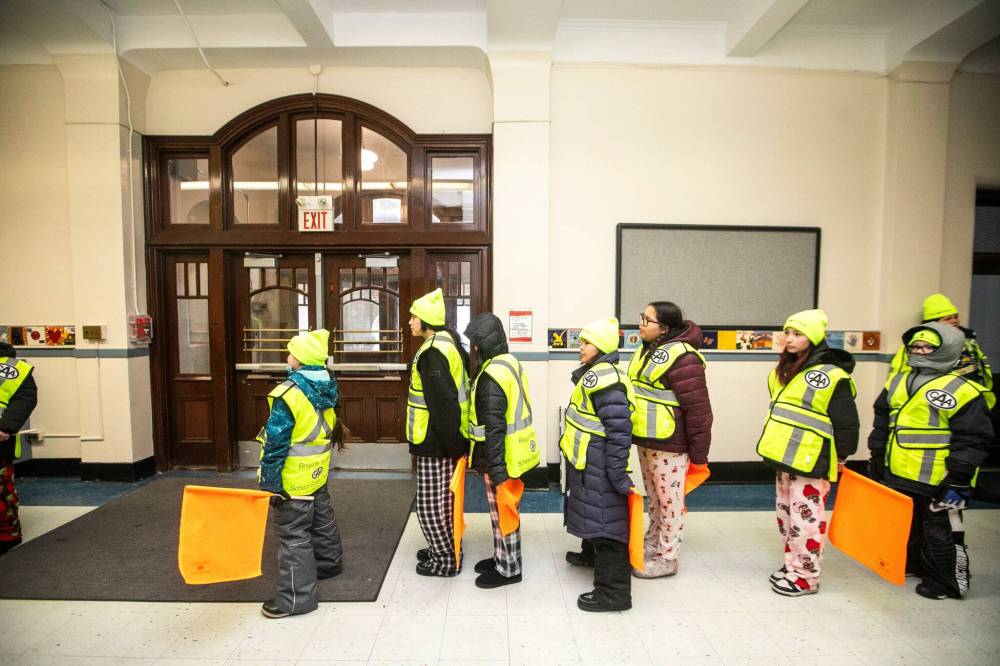
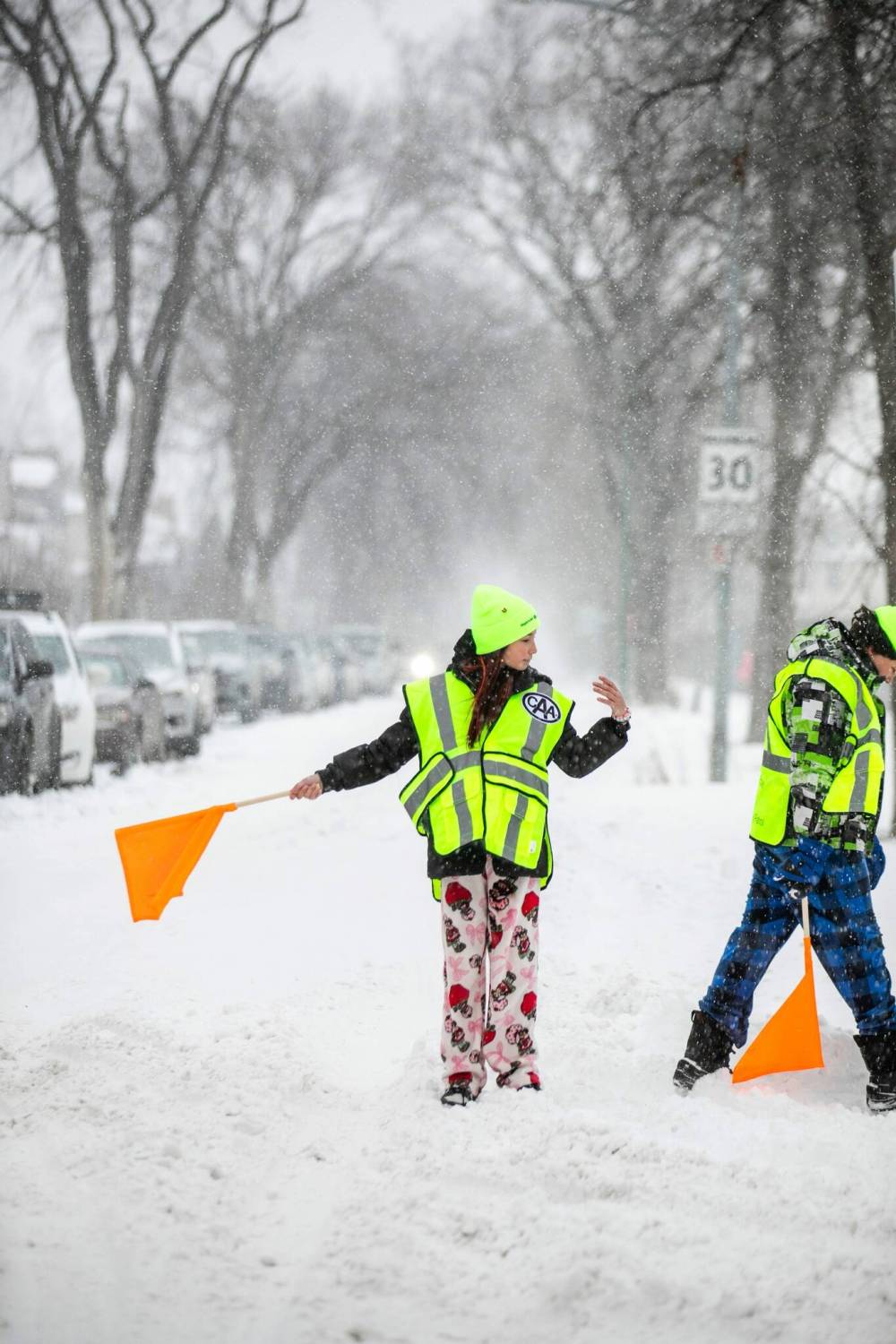
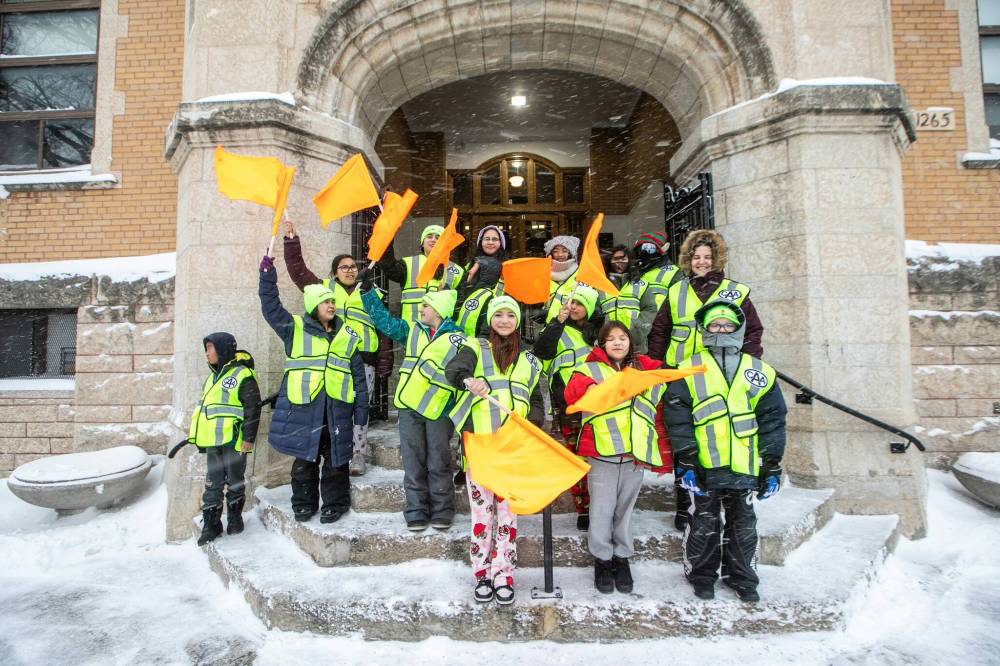
Equipped with flags, vests and, at this time of year, lots of layers, five girls can be found scanning the perimeter of Isaac Brock School on weekdays.
What motivates them to clock in daily for the 12:30 p.m. shift, even when it’s -25 C?
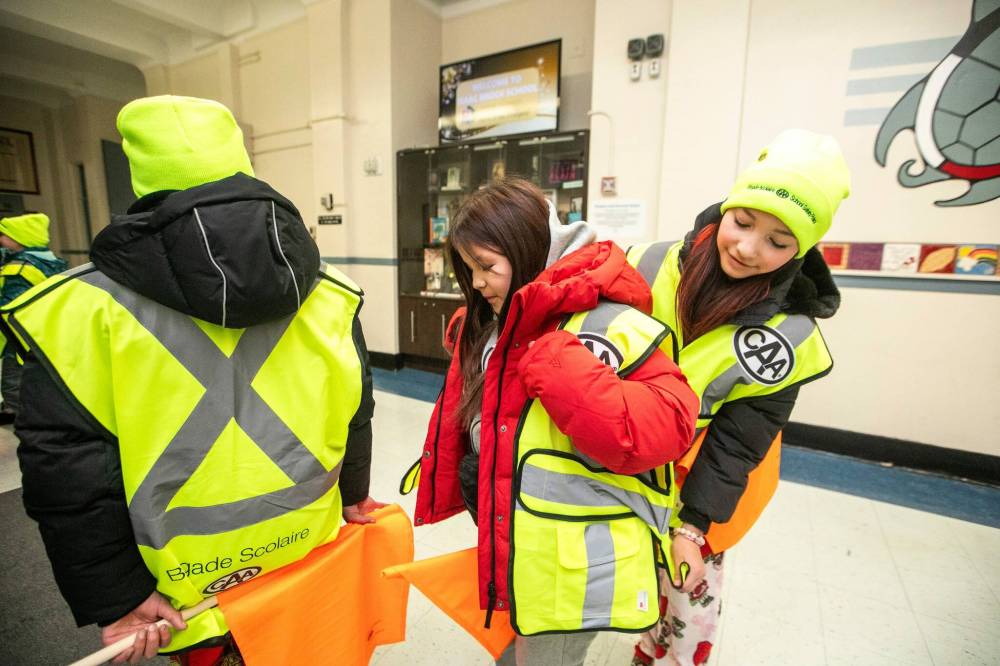
“I like keeping people safe when they cross the street,” Georgia, 10, said after shedding her CAA vest and hanging it on a hook in her school’s front lobby on a recent weekday. “Also, every time we go out, we see a cat!”
Her fellow patrollers echoed those motivations, although some noted their routes are frequented by canines instead of kitties. One admitted the promise of an end-of-year excursion — last year, students went bowling — was a motivating factor, too.
Georgia, a Grade 5 student, is following in the footsteps of her older sister and thousands of other community-minded children who’ve taken part in the CAA School Safety Patrol since its inception.
“It’s a big rite of passage that kids love.”
This year marks the 90th anniversary of the flagship road safety program in Manitoba. The first volunteer patrollers in the province were assigned posts in the Winnipeg School Division in 1936.
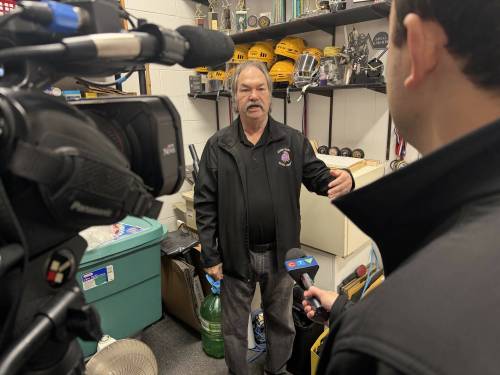
“It’s a big rite of passage that kids love,” said Christopher Goring, a city principal and proud alumnus of the program.
He said he has noticed patrollers — whether or not they realize it — have an innate desire to extend a helping hand.
These students often pursue leadership roles later in their schooling and professional careers, he said, adding that “some of us have the spirit of community in us, already, (as kids).”
CAA spokesperson Teresa Di Felice said the program is as relevant in 2026 as it was when it first started.
Patrollers continue to serve as a reminder “that when you’re entering a place where there are vulnerable road users, everybody needs to be extra cautious and extra diligent,” said the assistant vice-president of government and community relations at the national organization.
CAA Manitoba’s latest polling data suggests 43 per cent of parents in this province drive their children to school.
Louise Staples is credited with mobilizing student volunteers in Manitoba to help pedestrians cross the street and remind drivers to slow down.
Staples (1899-1988) rallied the first group of patrollers out of Greenway School at 390 Burnell St.
“I had to do something. Kids were just running wild across the streets and I couldn’t do everything myself. Someone was going to get killed,” Staples told the Free Press in 1986 in the wake of a 50th anniversary parade.
She successfully pitched the initiative to her principal in response to growing concerns about vehicular traffic in the West End. Captain Douglas McGhee led the inaugural 14-boy squad.
The boys organized a paper drive and sold candies to raise funds for felt badges that identified their special status.
Staples’ leadership inspired other schools to create their own programs within a year.
The Winnipeg Police Service has since made it an annual tradition to award patrols, primarily made up of students aged 11 to 14, for their service in the founding teacher’s name.
Sgt. Natalie Aitken said the judges select winners based on participants’ discipline and their verbal and physical signals, as outlined in their training manuals and videos.
Manitoba schools have upwards of 8,300 young volunteers carrying out high-vis patrols during peak commuter times. There are 270 participating schools.
Girls were only allowed to join Greenway’s program two years after it was founded, according to school division records.
Georgia expressed disbelief that such “unfair” rules once existed in a school located two kilometres east of her current homeroom.
The 10-year-old suggested anyone with a proven track record of being responsible should be able to sign up.
“People think boys are stronger, but they’re not,” she said, adding that she learned what it means to be responsible by helping care for her family’s toy poodle.
As far as she is concerned, a strong patroller is dedicated to reporting to duty on time, helping others cross the road and “not fooling around.”
The Patroller’s Pledge
I promise to do my best to:
Report for duty on time
Perform my duties well
Set a good example for others
Follow the directions of my teachers and patrol officers
Report dangerous practices
Earn the respect of fellow students
The Patroller’s Pledge, which every member must take, alongside their orientation training, requires volunteers to commit themselves to setting a good example for their peers at all times.
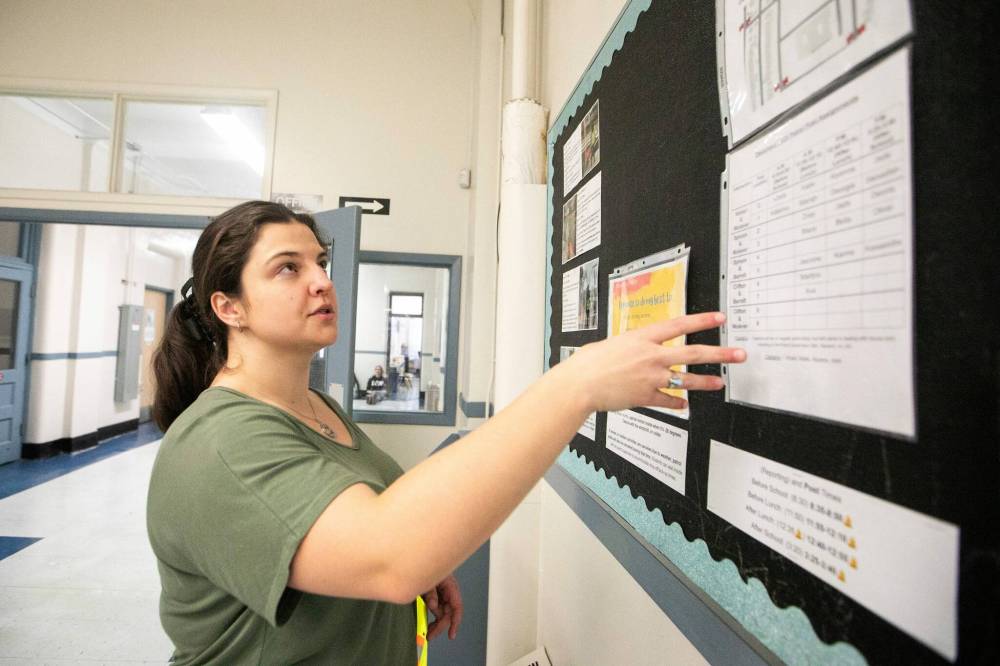
“If they’re not being responsible in class, it’s hard for them to be taken seriously outside,” said Claire Hanson, an early-career teacher who recently took over the patrol program at Isaac Brock.
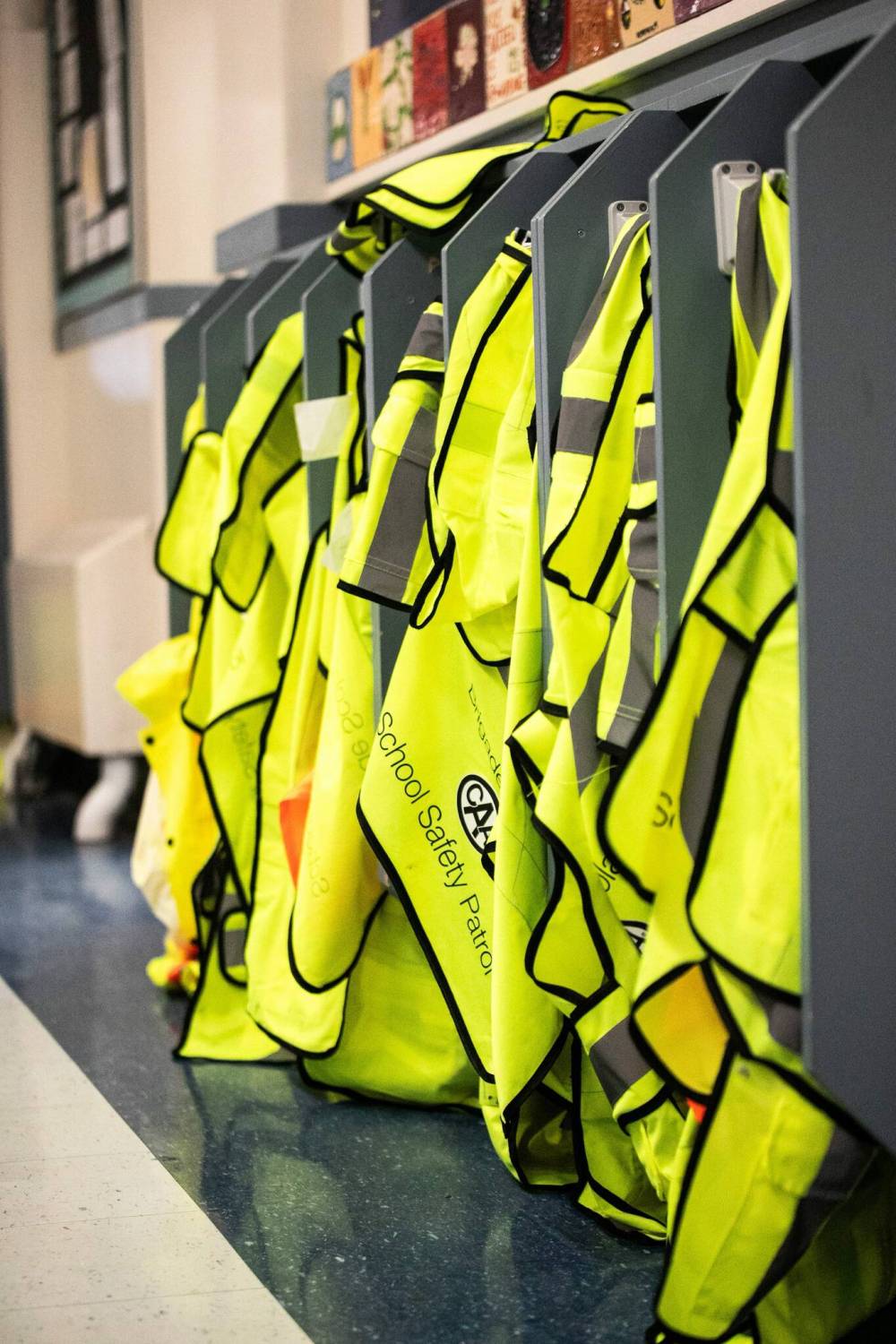
So far this year, 19 students have signed up to be a patroller. The volunteers were rewarded with high-vis toques, which match their lime green CAA vests, ahead of the winter break.
The elementary school requires first-time volunteers obtain three references to prove they are punctual, mature and reliable. Returning patrollers are asked to reflect on past performance and future goals.
Hanson vetted a stack of applications — one of which included a veteran patroller’s modest self-assessment of “1000/20,” based on their efforts in 2024-25 — at the start of the school year.
“A little responsibility feels like such a big deal when you’re that age because you don’t have a lot of autonomy and freedom,” Hanson said.
One of the reasons she got involved with the program in the first place is because she saw its potential to help students find a sense of belonging.
“A little responsibility feels like such a big deal when you’re that age because you don’t have a lot of autonomy and freedom.”
Di Felice said students “develop a voice” because they have to relay what they learn during training sessions to their peers in real-world scenarios.
The CAA spokesperson likened being on a patrol to getting a first job.
Isaac Brock School patrollers have reported witnessing speeding and on at least one occasion, someone blowing through a stop sign.
Jen Donachuk, Georgia’s mother, called patrol “a great growth opportunity” for her daughter.
“It gives her a sense of pride, an opportunity to give back to her community, and to use her leadership skills,” Donachuk said.
maggie.macintosh@freepress.mb.ca

Maggie Macintosh
Education reporter
Maggie Macintosh reports on education for the Free Press. Originally from Hamilton, Ont., she first reported for the Free Press in 2017. Read more about Maggie.
Funding for the Free Press education reporter comes from the Government of Canada through the Local Journalism Initiative.
Every piece of reporting Maggie produces is reviewed by an editing team before it is posted online or published in print — part of the Free Press‘s tradition, since 1872, of producing reliable independent journalism. Read more about Free Press’s history and mandate, and learn how our newsroom operates.
Our newsroom depends on a growing audience of readers to power our journalism. If you are not a paid reader, please consider becoming a subscriber.
Our newsroom depends on its audience of readers to power our journalism. Thank you for your support.
Related Articles
City eyes changes to school zones with most ticketed speeders