

Manitoba judge jails two U.S. men caught in ‘unsophisticated’ attempt to get friends illegally over border

Advertisement
Read this article for free:
or
Already have an account? Log in here »
To continue reading, please subscribe:

Digital Subscription
One year of digital access for only $205*
- Enjoy unlimited reading on winnipegfreepress.com
- Read the E-Edition, our digital replica newspaper
- Access News Break, our award-winning app
- Play interactive puzzles
*First annual payment billed as $205.00 + GST for one year. This annual subscription will automatically renew at $233.00 + GST every 52 weeks (10% off the regular annual price of $259.35). Offer available to new and qualified returning subscribers only. Cancel any time.
To continue reading, please subscribe:
Add Free Press access to your Brandon Sun subscription for only an additional
$1 for the first 4 weeks*
- Enjoy unlimited reading on winnipegfreepress.com
- Read the E-Edition, our digital replica newspaper
- Access News Break, our award-winning app
- Play interactive puzzles
*Your next Brandon Sun subscription payment will increase by $1.00 and you will be charged $17.95 plus GST for four weeks. After four weeks, your payment will increase to $24.95 plus GST every four weeks.
Read unlimited articles for free today:
or
Already have an account? Log in here »
Hey there, time traveller!
This article was published 30/01/2026 (246 days ago), so information in it may no longer be current.
Two American citizens arrested at the Emerson border last year after they were caught trying to help their Cuban friends illegally cross into Canada have been sentenced to a year in a Manitoba jail.
The two men, 29-year-old Emanuel Trejo Gonzalez and 51-year-old Jose Rafael Ramos Cartagena, each pleaded guilty on Thursday to one count of violating the federal Immigration and Refugee Protection Act.
They’re to serve 75 days going forward, considering time served since their arrest on July 21, and are expected to be turned over at the border once released from Headingley jail.
Adam Gray / The Associated Press Files A woman is detained by Federal ICE officers in Minneapolis. Roughly 3,000 ICE agents have been deployed to the Minneapolis region in the last month in an aggressive effort to find and deport undocumented immigrants.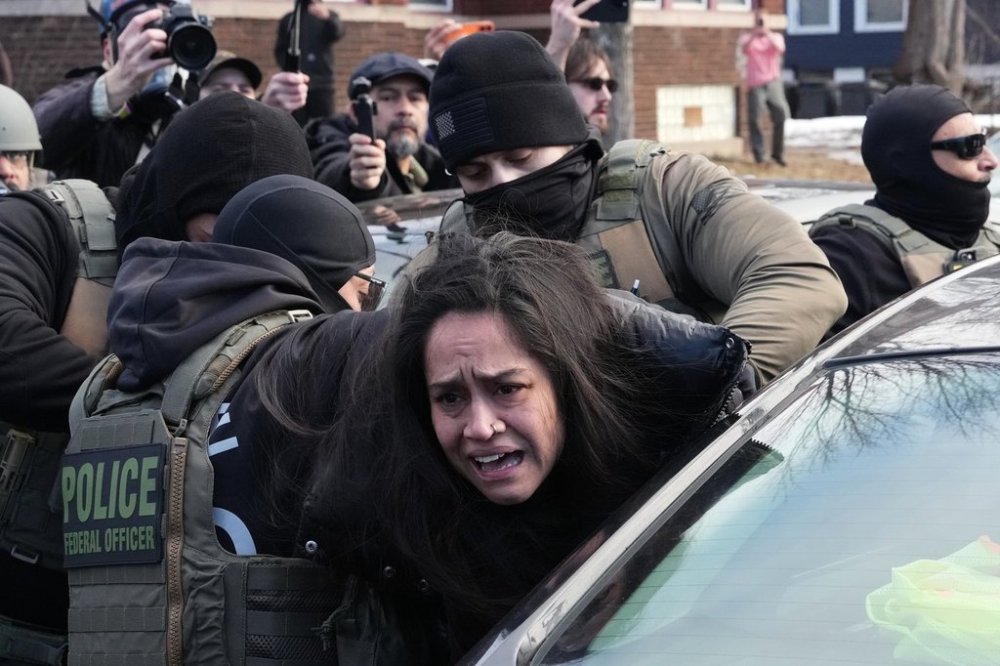
Their lawyers told court the men came up with their unsophisticated scheme at the spur of the moment, as concerns about the Cuban men’s illegal status in the U.S. ratcheted up when President Donald Trump’s administration began its aggressive effort to find and deport undocumented immigrants.
“Following the news, I can understand how there might be a temptation to try to help, but that is not the right way to do it,” provincial court Judge Denis Guénette told Gonzalez, alluding to the operations of Immigration and Customs Enforcement agents in Minneapolis and beyond.
Roughly 3,000 ICE agents have since deployed to the Minneapolis region in a sweeping crackdown, leading to mass demonstrations and alleged abuses of civil rights, including two recent fatal shootings of protesters by ICE personnel.
Canada Border Services Agency investigators were alerted by agents at the Emerson crossing about a possible human smuggling incident at about 11:30 p.m. on July 21, when Gonzalez and Cartagena arrived at the border in a vehicle and sought entry, federal Crown prosecutor Matthew Sinclair told Guénette.
Jeff McIntosh / THE CANADIAN PRESS FILES A Canada Border Services Agency officer.
They told border agents they planned to visit Winnipeg for a day, but were selected for a secondary examination. Despite declaring everything in the vehicle was their own, agents found an identification card and medication in another man’s name, said Sinclair.
As Gonzalez and Cartagena’s vehicle was being searched, RCMP officers from the force’s border integrity team arrived and advised CBSA officials they had intercepted two Cuban nationals who had walked over the border on foot and sought to make refugee claims.
Sinclair said neither of the Cuban men were admissible to Canada, as they had prior criminal convictions on their records, as do Gonzaelez and Cartagena, who have been convicted of cocaine trafficking and bank robbery, respectively.
One of the Cubans RCMP caught was the man whose ID card and medication were found in Gonzalez’s vehicle. While Gonzalez and Cartagena were being processed into cells in the CBSA building, the Cuban men greeted them as if they knew each other, Sinclair told court.
“For years, Manitoba has been sought after… for its large, porous, unsupervised border by human smugglers…. Investigative agencies have confirmed that human smugglers have counselled and facilitated the crossing of vulnerable persons to cross the border, both southbound and northbound, even in fatal weather,” Sinclair told court, adding such smuggling operations must be deterred and denounced by the courts.
“This was a stupid mistake…. But unlike… the issue of traffickers, this is not that. These were friends… this was an unorganized event.”
However, he said, the plan in this case was “unsophisticated” and there was no evidence to suggest it was an “ongoing, profit-based operation.”
Gonzalez’s lawyer, Danny Gunn, told Guénette it was important to understand the wider context of why the men attempted to assist their friends cross the border, as Immigration and Customs Enforcement agents began the crackdown late last spring and in the early summer.
“Persons who were there within the community were very concerned about the manner in which the ICE agents were conducting themselves at the time,” said Gunn.
“You can certainly understand that, from an even more significant standpoint today, and given the obvious challenges that it’s presented.”
BORIS MINKEVICH / FREE PRESS FILES The U.S. border crossing at Emerson, Manitoba.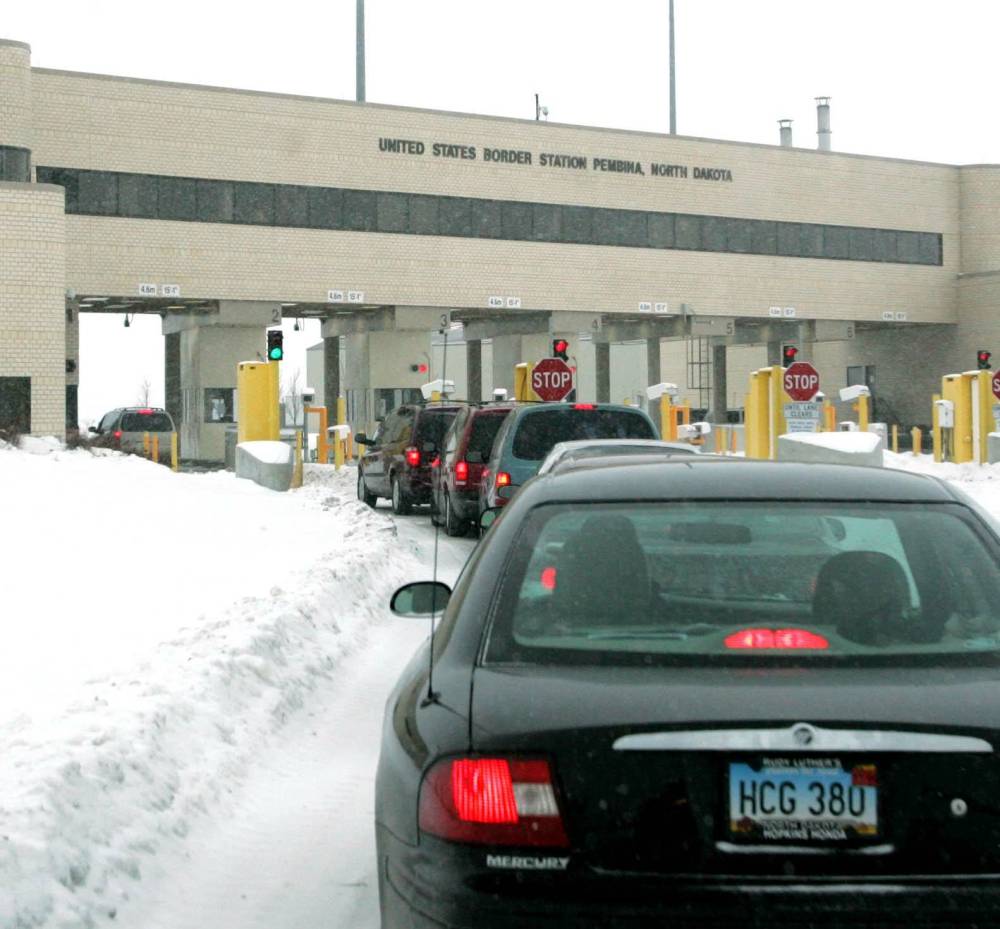
He said one of the Cuban men had been receiving cancer treatments in the U.S., but suddenly wasn’t able to get followup appointments due to a sudden surge of concerns over illegal immigration, and told Gonzalez of his situation.
“There were discussions at that point in time, ‘Where do we go to? Where do we go?’” said Gunn.
The men went on a camping trip, but after they were stopped by highway patrol officers in North Dakota, they came up with the last-minute plan to help the Cubans get over the border.
“It was a dumb idea. But it certainly wasn’t the sort of profit-motivated smuggling that we sometimes see,” said Gunn.
Both men normally live in Wisconsin. Cartagena works as a commercial baker in Milwaukee, lawyer R. Dule Vicovac told court. Gonzalez is a welder and has worked at his family’s restaurant, Gunn said.
Cartagena, who speaks no English and had to be assisted by a Spanish-language interpreter in court, has had a difficult time in jail, said Vicovac.

“This was a stupid mistake…. But unlike… the issue of traffickers, this is not that. These were friends… this was an unorganized event,” said Vicovac, who also pointed to concerns about the conduct of ICE agents in the U.S.
Vicovac said he’s seen a big jump in cases involving people crossing the border into Canada recently.
“There has been a significant increase, that I’ve never seen in the last 10 years, of people running across the border from the United States,” he told court, adding many of those crossers then attempt to make refugee claims.
erik.pindera@freepress.mb.ca
Erik Pindera is a reporter for the Free Press, mostly focusing on crime and justice. The born-and-bred Winnipegger attended Red River College Polytechnic, wrote for the community newspaper in Kenora, Ont. and reported on television and radio in Winnipeg before joining the Free Press in 2020. Read more about Erik.
Every piece of reporting Erik produces is reviewed by an editing team before it is posted online or published in print — part of the Free Press‘s tradition, since 1872, of producing reliable independent journalism. Read more about Free Press’s history and mandate, and learn how our newsroom operates.
Our newsroom depends on a growing audience of readers to power our journalism. If you are not a paid reader, please consider becoming a subscriber.
Our newsroom depends on its audience of readers to power our journalism. Thank you for your support.
Erik Pindera is a reporter for the Free Press, mostly focusing on crime and justice. The born-and-bred Winnipegger attended Red River College Polytechnic, wrote for the community newspaper in Kenora, Ont. and reported on television and radio in Winnipeg before joining the Free Press in 2020. Read more about Erik.
Every piece of reporting Erik produces is reviewed by an editing team before it is posted online or published in print — part of the Free Press‘s tradition, since 1872, of producing reliable independent journalism. Read more about Free Press’s history and mandate, and learn how our newsroom operates.
Our newsroom depends on a growing audience of readers to power our journalism. If you are not a paid reader, please consider becoming a subscriber.
Our newsroom depends on its audience of readers to power our journalism. Thank you for your support.

Advertisement Advertise With Us
Advertisement Advertise With Us