

Province, Ottawa back feasibility study of northern marine conservation area

Advertisement
Read this article for free:
or
Already have an account? Log in here »
To continue reading, please subscribe:

Digital Subscription
One year of digital access for only $205*
- Enjoy unlimited reading on winnipegfreepress.com
- Read the E-Edition, our digital replica newspaper
- Access News Break, our award-winning app
- Play interactive puzzles
*First annual payment billed as $205.00 + GST for one year. This annual subscription will automatically renew at $233.00 + GST every 52 weeks (10% off the regular annual price of $259.35). Offer available to new and qualified returning subscribers only. Cancel any time.
To continue reading, please subscribe:
Add Free Press access to your Brandon Sun subscription for only an additional
$1 for the first 4 weeks*
- Enjoy unlimited reading on winnipegfreepress.com
- Read the E-Edition, our digital replica newspaper
- Access News Break, our award-winning app
- Play interactive puzzles
*Your next Brandon Sun subscription payment will increase by $1.00 and you will be charged $17.95 plus GST for four weeks. After four weeks, your payment will increase to $24.95 plus GST every four weeks.
Read unlimited articles for free today:
or
Already have an account? Log in here »
Hey there, time traveller!
This article was published 03/02/2026 (215 days ago), so information in it may no longer be current.
The Manitoba government and Ottawa will partner with Indigenous leaders and environmental groups to assess whether the biodiverse expanse of the Hudson Bay coast is a good candidate for conservation amid the province’s push to expand the Port of Churchill.
During a news conference in Churchill on Tuesday, Premier Wab Kinew announced Manitoba will contribute $250,000 to study the feasibility of a national marine conservation area in Western Hudson Bay.
Oceans North, a national conservation organization, will invest a further $1 million over the next year to support research, training and education initiatives in and around Churchill, Chris Debicki, the organization’s vice-president of policy and counsel, announced.
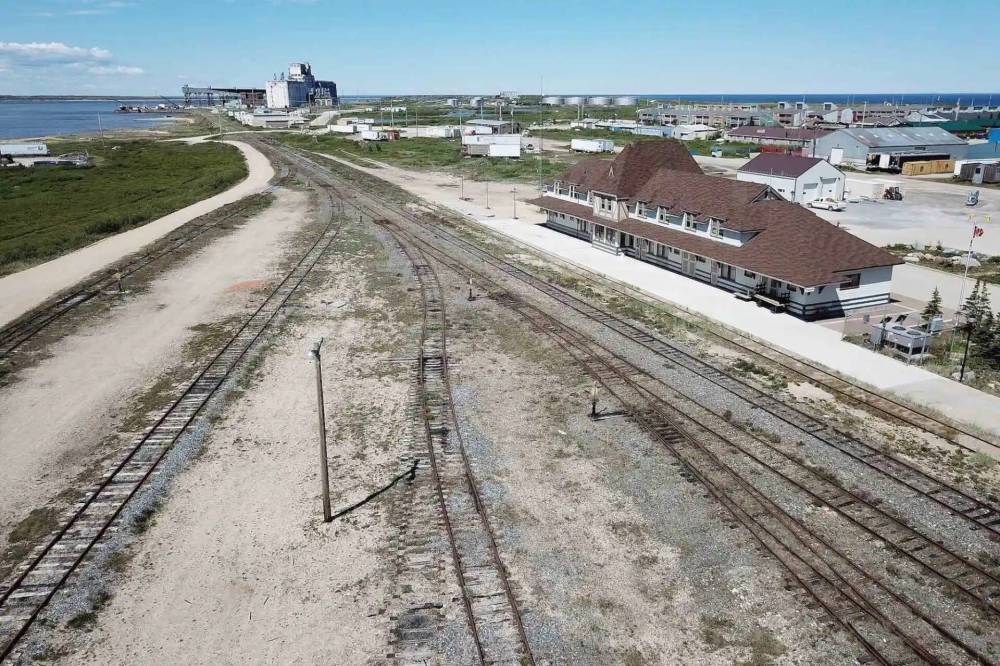
Churchill is home to one of Canada’s most northern deepwater ports. (John Woods/The Canadian Press files)
The feasibility study, led by Parks Canada, marks the first step toward protecting what Manitoba Environment Minister Mike Moyes called “one of the most ecologically significant marine environments on the planet.” It will coincide with a previously announced $750,000 feasibility study to boost ice-breaking capacity in the northern waters.
Churchill is home to one of Canada’s most northern deepwater ports and is the only one with access to the Arctic Ocean.
“These ecosystems are changing rapidly and the need for action has never been more urgent,” Moyes said. “This initiative represents a major step forward for safeguarding the health of these waters and supporting responsible economic development.”
Marine conservation areas, which protect both coastal and freshwater ecosystems, form part of the federal government’s plan to protect 30 per cent of the nation’s lands and waters by 2030. Canada has designated five such protected areas to date and plans to establish another 10 by 2030. Alongside Western Hudson Bay, the federal government is studying the feasibility of protecting Ontario’s portion of the Hudson and James Bay coasts.
Three major rivers — the Seal, Nelson and Churchill — converge in Western Hudson Bay. The waterways are summering habitat for more than a quarter of the global beluga population, and are a meeting ground for a rich mix of species, from polar bears and seals to migratory birds. Oceans North has been advocating for a conservation area in the region since Parks Canada first identified it as a potential site in 2017.
“If Manitoba is serious about balanced development, we must ensure our economic ambitions don’t outpace our responsibility,” Debicki said.
Tuesday’s announcement comes against a backdrop of renewed political attention on Manitoba’s northern port. Prairie provincial leaders have pitched the Port of Churchill as a future international trade hub and economic driver. Manitoba has proposed an expansion that would include critical mineral storage, railway upgrades, ice-breaking capacity and the ability to export resources, such as natural gas.
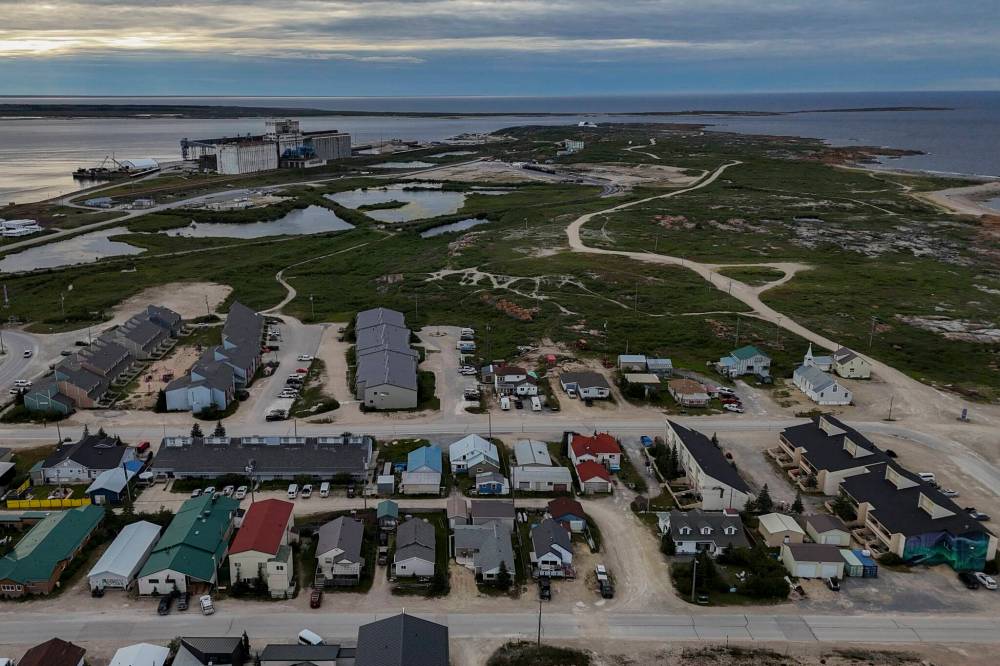
Manitoba Premier Wab Kinew made the funding announcement during a news conference in Churchill on Tuesday. (Joshua A. Bickel / The Associated Press files)
Prime Minister Mark Carney recently identified the proposed “Churchill Plus” expansion as one of seven “transformative strategies” being handled by the newly minted Major Projects office. The federal government has announced more than $175 million in funding for the project and is working with the province and port owners, Arctic Gateway Group, to study the economics of the expansion.
The province also plans to sign a non-disclosure agreement and enter in-depth discussions with a major energy company regarding a potential pipeline to the port, the premier said in late January.
“When we’re talking about pursuing export and import along Hudson Bay, we can’t do that without thinking about the environment,” Kinew said.
“Instead of just trying to build up some massive export terminal and then wait for environmentalists or land users, water users to highlight the downsides years in the future, we’re saying let’s have that conversation now.”

The province plans to consult with researchers, First Nations, Inuit and Dene communities, local residents, as well as the tourism and business industries as part of the study process. Kinew stressed the province’s approach to developing the port — which is being spearheaded by a first-of-its-kind Crown-Indigenous Corporation uniting First Nations, Métis and provincial leaders — will ensure Indigenous nations take the lead in deciding what developments take place.
York Factory First Nation Chief Darryl Wastesicoot said his nation’s priority is to find a healthy balance of economic development and environmental protection. He is focused on establishing educational opportunities in the region so the community can play a role in determining what that balance should look like.
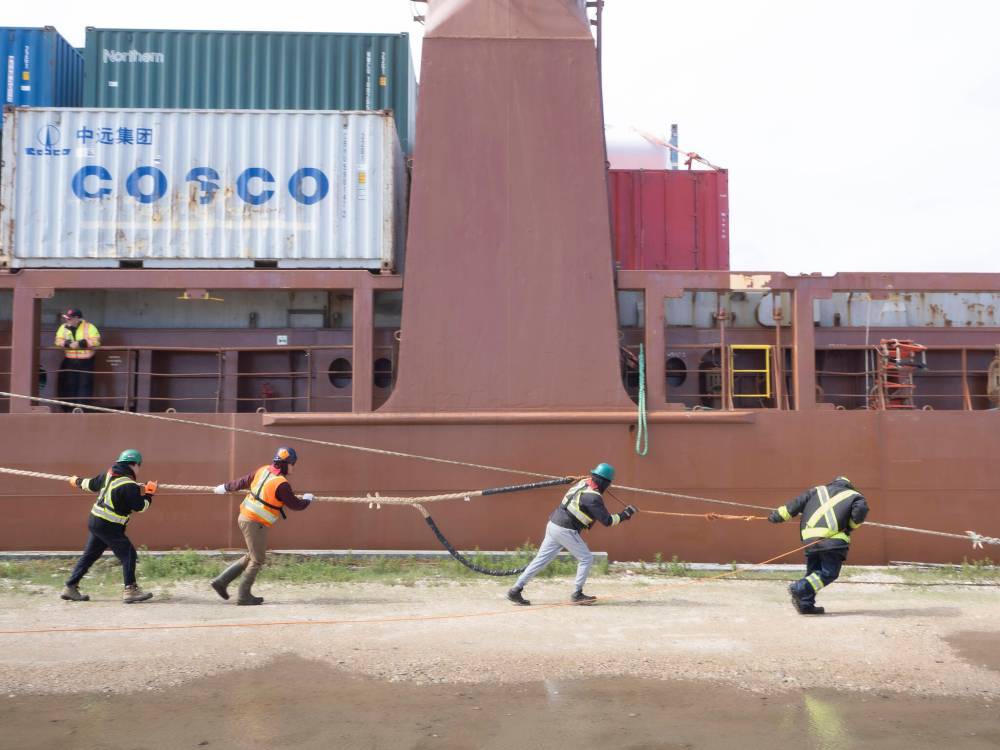
Political leaders have pitched the Port of Churchill as a future international trade hub. (Supplied)
“We’re not against industry, we’re not against progress,” Wastesicoot said. “We just want to be part of it. Our goal, for my nation, is that we get out of this poverty we’re in.”
No timeline has been set for the feasibility study, though Moyes noted a similar study for the nearby Seal River watershed protected area took approximately one year. Parks Canada will take the lead establishing terms of reference and outlining the study area.
julia-simone.rutgers@freepress.mb.ca
Julia-Simone Rutgers is the Manitoba environment reporter for the Free Press and The Narwhal. She joined the Free Press in 2020, after completing a journalism degree at the University of King’s College in Halifax, and took on the environment beat in 2022. Read more about Julia-Simone.
Julia-Simone’s role is part of a partnership with The Narwhal, funded by the Winnipeg Foundation. Every piece of reporting Julia-Simone produces is reviewed by an editing team before it is posted online or published in print — part of the Free Press‘s tradition, since 1872, of producing reliable independent journalism. Read more about Free Press’s history and mandate, and learn how our newsroom operates.
Our newsroom depends on a growing audience of readers to power our journalism. If you are not a paid reader, please consider becoming a subscriber.
Our newsroom depends on its audience of readers to power our journalism. Thank you for your support.
Julia-Simone Rutgers is the Manitoba environment reporter for the Free Press and The Narwhal. She joined the Free Press in 2020, after completing a journalism degree at the University of King’s College in Halifax, and took on the environment beat in 2022. Read more about Julia-Simone.
Julia-Simone’s role is part of a partnership with The Narwhal, funded by the Winnipeg Foundation. Every piece of reporting Julia-Simone produces is reviewed by an editing team before it is posted online or published in print — part of the Free Press‘s tradition, since 1872, of producing reliable independent journalism. Read more about Free Press’s history and mandate, and learn how our newsroom operates.
Our newsroom depends on a growing audience of readers to power our journalism. If you are not a paid reader, please consider becoming a subscriber.
Our newsroom depends on its audience of readers to power our journalism. Thank you for your support.
Related Articles
Energy sector’s interest in Churchill heating up: Kinew


Advertisement Advertise With Us
Advertisement Advertise With Us