

Inquest hears officer shot at teen because he believed other officers could get hurt
Advertisement
Read this article for free:
or
Already have an account? Log in here »
To continue reading, please subscribe:

Digital Subscription
One year of digital access for only $205*
- Enjoy unlimited reading on winnipegfreepress.com
- Read the E-Edition, our digital replica newspaper
- Access News Break, our award-winning app
- Play interactive puzzles
*First annual payment billed as $205.00 + GST for one year. This annual subscription will automatically renew at $233.00 + GST every 52 weeks (10% off the regular annual price of $259.35). Offer available to new and qualified returning subscribers only. Cancel any time.
To continue reading, please subscribe:
Add Free Press access to your Brandon Sun subscription for only an additional
$1 for the first 4 weeks*
- Enjoy unlimited reading on winnipegfreepress.com
- Read the E-Edition, our digital replica newspaper
- Access News Break, our award-winning app
- Play interactive puzzles
*Your next Brandon Sun subscription payment will increase by $1.00 and you will be charged $17.95 plus GST for four weeks. After four weeks, your payment will increase to $24.95 plus GST every four weeks.
Read unlimited articles for free today:
or
Already have an account? Log in here »
Hey there, time traveller!
This article was published 04/02/2026 (242 days ago), so information in it may no longer be current.
WINNIPEG – A police officer who fatally shot a 16-year-old First Nations girl after a robbery and vehicle chase in Winnipeg told an inquest that he believed his colleagues’ lives were in danger when he fired two shots at the teen.
For the first time since the shooting death of Eishia Hudson in April 2020, Const. Kyle Pradinuk spoke publicly Wednesday about the moments that led up to the girl’s death during the third day of a fatality inquest.
Court has heard Eishia was driving a stolen Jeep when three out of the four teens who were in the vehicle with her robbed a liquor store. An agreed statement of facts stated that one of the teens threatened to stab a security guard before the group took off.
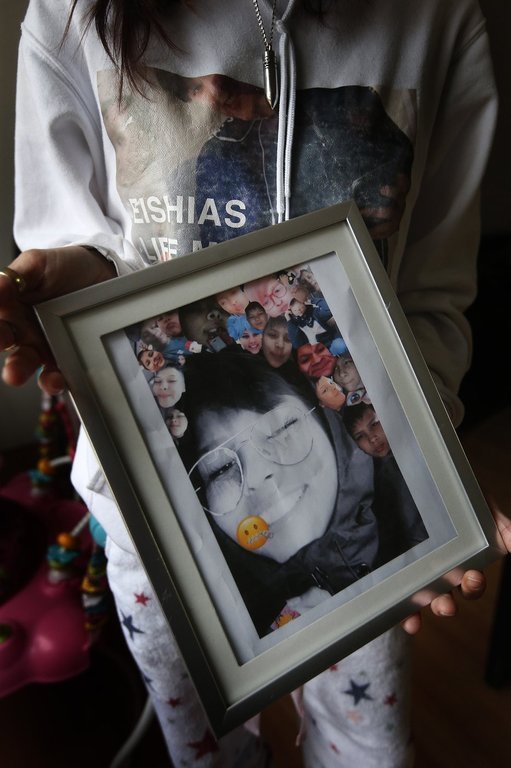
Police initiated a pursuit after an employee reported the theft, describing the suspects as Indigenous youth between the ages of 15 and 18.
Pradinuk was part of a group of officers who tried to stop the vehicle at a Winnipeg intersection by deploying a spike-studded belt, known as a Stop Stick, before it crashed into a nearby truck.
The officer testified that police surrounded the vehicle on foot after the crash with the goal of arresting the driver. He said he fired two shots at Eishia after he believed the vehicle was moving toward other officers.
“I was reacting to what I perceived as a threat,” Pradinuk told the inquest. “I don’t know what her intent was.”
Much of Wednesday’s testimony focused on the minutes between when the Jeep crashed into the truck and when Eishia was transported to hospital, where she later died.
Pradinuk and his partner set up a blockade at a normally busy intersection in the southeastern part of the city. Traffic was light at the time due to restrictions from the COVID-19 pandemic. They made the decision to stop vehicles while they waited for the Jeep.
The officers were notified by other police that the Jeep was speeding their way.
Pradinuk said he watched the Jeep cross over a boulevard into a lane where traffic would have been going the opposite direction before the driver gained control again. The Jeep went over the boulevard a second time and crashed into the truck.
He testified he believed that the crash made the vehicle inoperable, which prompted his decision to try to apprehend Eishia.
“I yell, ‘Winnipeg police. Stop. Show me your hands,'” Pradinuk told the inquest.
He said at that point he could see that the teen’s hands appeared to “manipulate” the wheel and the vehicle began to roll toward the direction of where his partner was stationed. Pradinuk fired his first shot.
“I’m thinking at that moment that (my partner) is about to be run over by that vehicle,” said Pradinuk.
The officer testified he didn’t know at the time if the bullet hit Eishia, but that he believed the vehicle no longer posed a threat. Seconds later, Pradinuk said, he could see that the teen still had one hand on the wheel and the other appeared to be near the gear shift. The officer said he fired the second shot after he believed the Jeep was moving in a forward motion near another officer at the scene.
Pradinuk continued to yell directions at the car, at which point Eishia put her hands up and was handcuffed, the officer testified. It would later become clear that the teen lost consciousness and was sent to hospital.
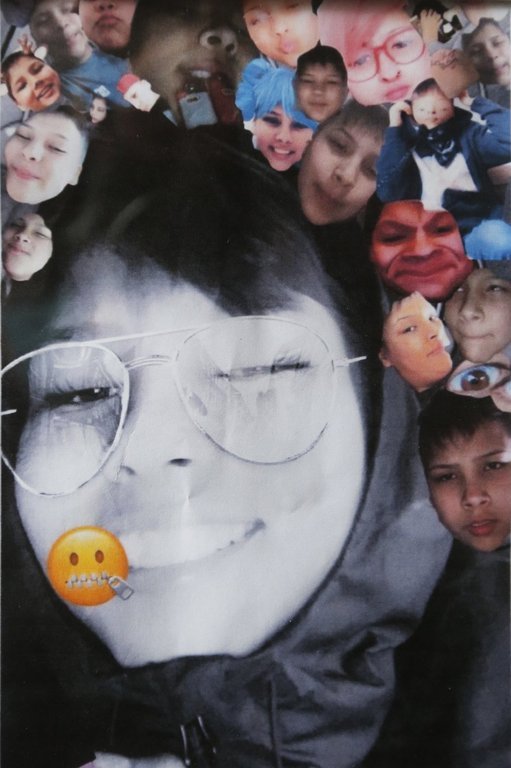
Cellphone video evidence taken from a witness was presented during the inquest. It appeared to show the Jeep was backing away from officers during the encounter.
“Would you agree that it’s possible your perception of the Jeep’s movement is different than what the video shows?” Danielle Morrison, counsel to Eishia’s family, asked Pradinuk.
“I would say anything is possible. I can only say what I remember or what I recall of that experience,” the officer replied.
The teen’s death sparked protests and calls for a public inquiry into police-related deaths of Indigenous people after Manitoba’s police watchdog did not recommend charges against Pradinuk.
The inquest is examining whether the use of force was appropriate and whether systemic racism played a role in the death because the suspects were identified as Indigenous.
Pradinuk said when he first encountered the vehicle, he believed Eishia was an Indigenous male youth, but that it did not factor into any of his actions at the time.
The officer was also questioned on whether police receive training on encounters like the one he experienced.
“Definitely not … it’s pretty dangerous,” he said. “You’re shooting at a moving target with unknown occupants, with police members almost in front of the vehicle. It’s not something you can get trained in.”
The inquest has heard that air support wasn’t available at the time of the chase.
Officers who were on the scene, including Pradinuk, say it would have been helpful to have that resource because it would have meant the air support would track the vehicle to its final destination, eliminating the need for a ground chase.
This report by The Canadian Press was first published Feb. 4, 2026.
Related Articles
Officers on scene of police shooting testify at inquest into teen's death


Advertisement Advertise With Us
Advertisement Advertise With Us