

Inmate responsible for own death, government says in defence claim

Advertisement
Read this article for free:
or
Already have an account? Log in here »
To continue reading, please subscribe:

Digital Subscription
One year of digital access for only $205*
- Enjoy unlimited reading on winnipegfreepress.com
- Read the E-Edition, our digital replica newspaper
- Access News Break, our award-winning app
- Play interactive puzzles
*First annual payment billed as $205.00 + GST for one year. This annual subscription will automatically renew at $233.00 + GST every 52 weeks (10% off the regular annual price of $259.35). Offer available to new and qualified returning subscribers only. Cancel any time.
To continue reading, please subscribe:
Add Free Press access to your Brandon Sun subscription for only an additional
$1 for the first 4 weeks*
- Enjoy unlimited reading on winnipegfreepress.com
- Read the E-Edition, our digital replica newspaper
- Access News Break, our award-winning app
- Play interactive puzzles
*Your next Brandon Sun subscription payment will increase by $1.00 and you will be charged $17.95 plus GST for four weeks. After four weeks, your payment will increase to $24.95 plus GST every four weeks.
Read unlimited articles for free today:
or
Already have an account? Log in here »
Hey there, time traveller!
This article was published 05/02/2026 (221 days ago), so information in it may no longer be current.
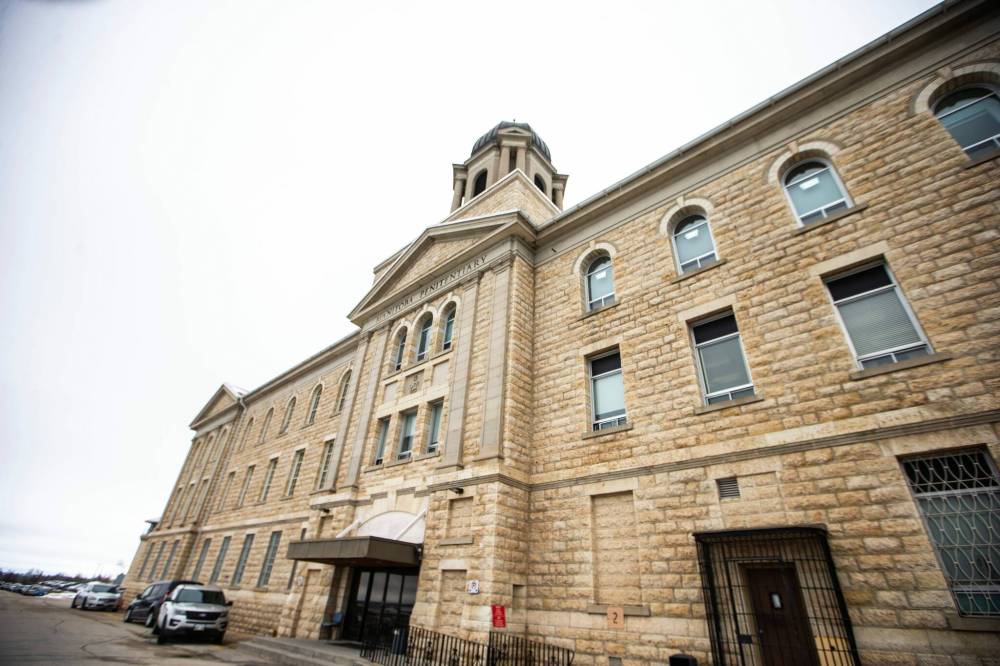
The Correctional Service of Canada did all it could to prevent the overdose death of an inmate at Stony Mountain prison after he was put in isolation following a deadly riot in 2023, the federal government argues in response to a lawsuit launched by his mother.
Ricardo Pereira, 23, died of an overdose of methadone in the prison north of Winnipeg on Sept. 5, 2023, while serving an eight-year sentence for break-and-enter and aggravated assault, among other offences.
Dawna La Rose filed her suit in the Manitoba Court of King’s Bench last summer on behalf of her son’s estate. She alleges his mental health deteriorated after he was put in isolation.
MIKAELA MACKENZIE / FREE PRESS FILES
Ricardo Pereira, 23, died of an overdose of methadone in Stony Mountain prison in 2023, while serving an eight-year sentence.
In its statement of defence, which argues the lawsuit should be rejected by the court, corrections officials said Pereira’s death wasn’t the result of staff negligence.
“CSC took reasonable care of Mr. Pereira’s health and safety as a person in its custody. The incident giving rise to his death was not the result of CSC’s actions and was not reasonably foreseeable,” reads the federal government’s court filing.
“All reasonable and proper steps were taken to protect Mr. Pereira from injury. CSC was not negligent, nor did it breach the duty owed to Mr. Pereira, for which the plaintiff claims damages.”
The government says corrections officers gave Pereira appropriate care in the circumstances — and that it was his decision to take methadone.
“Mr. Pereira voluntarily ingested an unknown quantity of methadone,” reads the government’s statement. “Mr. Pereira’s cause of death was methadone toxicity, which was a direct and foreseeable result of his actions.”
Pereira’s fatal overdose took place seven weeks after a riot between as many as 50 armed rival gang members in the exercise yard on July 17, 2023. Seven were injured and one inmate, a 33-year-old convicted killer, was slain.
On July 23, Pereira’s unit was searched.
The federal government’s court filing alleges that during the search, Pereira “uttered very serious threats towards correctional officers.”
That included “threatening to stab a correctional officer in the neck and making threats toward the family members of correctional officers,” reads the government filing. Officials decided to transfer Pereira to a structured intervention unit out of safety concerns.
He was isolated from other inmates for most of each day in the cell, his mom’s lawsuit says.
Under federal policy, inmates are supposed to get what’s called “meaningful” contact with other people for two hours a day.
The units replaced solitary confinement in 2019, following court rulings that deemed prolonged isolation unconstitutional.
On July 25, Pereira was transferred to the federal prison in Edmonton, where he was placed in a confinement cell because of his ties to the Manitoba Warriors gang, who have rivals there.
The corrections service said Pereira made no mention of any physical or mental concerns when he was placed in isolation and did not raise concerns when his mental health was assessed during his period in the structured intervention units.
Other inmates from Stony were transferred to the Alberta prison on July 31 and Pereira was taken out of confinement for a time, because he was considered compatible with them, the court filing says.
Later, he was transferred back to Stony for a court appearance on Aug. 29.

On Sept. 4, the lawsuit claims Pereira was meant to have a visit with his mother, but visits were cancelled following an incident in his unit, leading him to take the methadone — a synthetic opioid often used to treat addiction to other opioids — to get high.
He was treated for the overdose at a nearby hospital and taken back to the prison that evening.
Just before 1 a.m. on Sept. 5, an officer conducting a routine check noticed him face down and paramedics were summoned. Officers started CPR and gave him naloxone, says the government’s court filing.
In a reply filed in court to the statement of defence, Pereira’s mother again asserted that his death was caused or contributed to by CSC, including failures in supervision, monitoring, medical decision-making, emergency response and institutional safety.
erik.pindera@freepress.mb.ca
Erik Pindera is a reporter for the Free Press, mostly focusing on crime and justice. The born-and-bred Winnipegger attended Red River College Polytechnic, wrote for the community newspaper in Kenora, Ont. and reported on television and radio in Winnipeg before joining the Free Press in 2020. Read more about Erik.
Every piece of reporting Erik produces is reviewed by an editing team before it is posted online or published in print — part of the Free Press‘s tradition, since 1872, of producing reliable independent journalism. Read more about Free Press’s history and mandate, and learn how our newsroom operates.
Our newsroom depends on a growing audience of readers to power our journalism. If you are not a paid reader, please consider becoming a subscriber.
Our newsroom depends on its audience of readers to power our journalism. Thank you for your support.
Erik Pindera is a reporter for the Free Press, mostly focusing on crime and justice. The born-and-bred Winnipegger attended Red River College Polytechnic, wrote for the community newspaper in Kenora, Ont. and reported on television and radio in Winnipeg before joining the Free Press in 2020. Read more about Erik.
Every piece of reporting Erik produces is reviewed by an editing team before it is posted online or published in print — part of the Free Press‘s tradition, since 1872, of producing reliable independent journalism. Read more about Free Press’s history and mandate, and learn how our newsroom operates.
Our newsroom depends on a growing audience of readers to power our journalism. If you are not a paid reader, please consider becoming a subscriber.
Our newsroom depends on its audience of readers to power our journalism. Thank you for your support.
Related Articles
Mom of inmate who died from overdose files lawsuit
Advertisement Advertise With Us
Advertisement Advertise With Us