

‘Public good’ behind unplanned $200-M health-care expenditure, province says

Advertisement
Read this article for free:
or
Already have an account? Log in here »
To continue reading, please subscribe:

Digital Subscription
One year of digital access for only $205*
- Enjoy unlimited reading on winnipegfreepress.com
- Read the E-Edition, our digital replica newspaper
- Access News Break, our award-winning app
- Play interactive puzzles
*First annual payment billed as $205.00 + GST for one year. This annual subscription will automatically renew at $233.00 + GST every 52 weeks (10% off the regular annual price of $259.35). Offer available to new and qualified returning subscribers only. Cancel any time.
To continue reading, please subscribe:
Add Free Press access to your Brandon Sun subscription for only an additional
$1 for the first 4 weeks*
- Enjoy unlimited reading on winnipegfreepress.com
- Read the E-Edition, our digital replica newspaper
- Access News Break, our award-winning app
- Play interactive puzzles
*Your next Brandon Sun subscription payment will increase by $1.00 and you will be charged $17.95 plus GST for four weeks. After four weeks, your payment will increase to $24.95 plus GST every four weeks.
Read unlimited articles for free today:
or
Already have an account? Log in here »
Hey there, time traveller!
This article was published 20/02/2026 (231 days ago), so information in it may no longer be current.
The Manitoba government has approved an unbudgeted $200 million to cover health-care costs.
Manitoba’s lieutenant-governor signed off on a special warrant last week. The warrant states the health-care spend — while not foreseen or sufficiently provided for — is “required for the public good.”
Most of the money ($150 million) will pay for physicians’ services, such as tests and office visits.
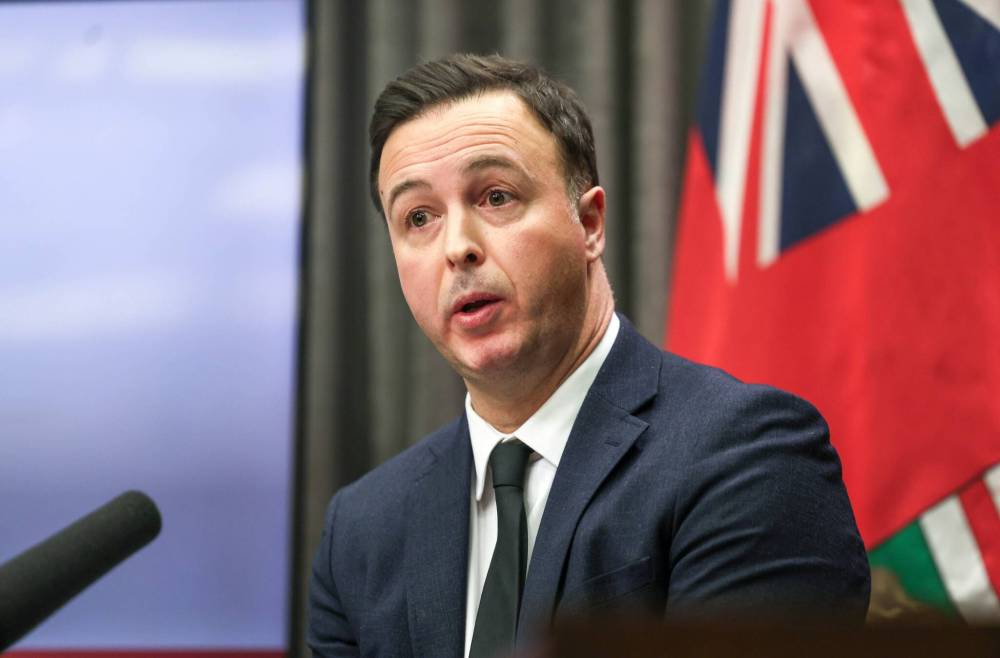
RUTH BONNEVILLE / FREE PRESS FILES
Finance Minister Adrien Sala
Finance Minister Adrien Sala attributed the costs to “staffing up” Manitoba’s health-care system, including hiring 3,500 net new workers since 2023. Roughly one-third of them — 1,110 — are nurses.
“(This) essentially reflects our cost as a province of paying the cost for doctors in Manitoba,” Sala said. “We continue to do that important work of ensuring Manitobans can get access to the health-care that they need.”
The order slates $20 million for pharmacare and drug programs. Capital project expenses consume the latter $30 million.
The province budgeted $9.38 billion for health, seniors and long-term care in its 2025 budget.
Its recent $200-million spend shows “poor planning,” said Gage Haubrich, prairie director of the Canadian Taxpayers Federation.
“Taxpayers aren’t going around every day looking at what’s in the special warrants — they’re looking at the budget,” Haubrich said. “(This) shows a lack of accountability.”

Manitoba is already eyeing a $1.6-billion deficit this fiscal year, more than double its original forecast, Haubrich noted. The province’s spring budget estimated a $794 million deficit.
Wildfires and losses at Manitoba Hydro — both results of dry conditions — are blamed for the ballooned deficit.
“Because of how much the government is spending already, they should’ve looked for savings in other areas of their budget to try and then recompense out to then spend on this,” Haubrich said.
The province sought $1.04 billion last December for health care and Manitoba Hydro operations. Earlier in 2025, in February, it approved another $405 million, largely to cover health costs, including fees for service and drug programs.
gabrielle.piche@winnipegfreepress.com
Gabrielle Piché reports on business for the Free Press. She interned at the Free Press and worked for its sister outlet, Canstar Community News, before entering the business beat in 2021. Read more about Gabrielle.
Every piece of reporting Gabrielle produces is reviewed by an editing team before it is posted online or published in print — part of the Free Press‘s tradition, since 1872, of producing reliable independent journalism. Read more about Free Press’s history and mandate, and learn how our newsroom operates.
Our newsroom depends on a growing audience of readers to power our journalism. If you are not a paid reader, please consider becoming a subscriber.
Our newsroom depends on its audience of readers to power our journalism. Thank you for your support.
Gabrielle Piché reports on business for the Free Press. She interned at the Free Press and worked for its sister outlet, Canstar Community News, before entering the business beat in 2021. Read more about Gabrielle.
Every piece of reporting Gabrielle produces is reviewed by an editing team before it is posted online or published in print — part of the Free Press‘s tradition, since 1872, of producing reliable independent journalism. Read more about Free Press’s history and mandate, and learn how our newsroom operates.
Our newsroom depends on a growing audience of readers to power our journalism. If you are not a paid reader, please consider becoming a subscriber.
Our newsroom depends on its audience of readers to power our journalism. Thank you for your support.
Advertisement Advertise With Us
Advertisement Advertise With Us