Bus driver’s assault sparks calls for better protection, possible transit police unit
Read this article for free:
or
Already have an account? Log in here »
To continue reading, please subscribe:

Digital Subscription
One year of digital access for only $205*
- Enjoy unlimited reading on winnipegfreepress.com
- Read the E-Edition, our digital replica newspaper
- Access News Break, our award-winning app
- Play interactive puzzles
*First annual payment billed as $205.00 + GST for one year. This annual subscription will automatically renew at $233.00 + GST every 52 weeks (10% off the regular annual price of $259.35). Offer available to new and qualified returning subscribers only. Cancel any time.
To continue reading, please subscribe:
Add Free Press access to your Brandon Sun subscription for only an additional
$1 for the first 4 weeks*
- Enjoy unlimited reading on winnipegfreepress.com
- Read the E-Edition, our digital replica newspaper
- Access News Break, our award-winning app
- Play interactive puzzles
*Your next Brandon Sun subscription payment will increase by $1.00 and you will be charged $17.95 plus GST for four weeks. After four weeks, your payment will increase to $24.95 plus GST every four weeks.
Read unlimited articles for free today:
or
Already have an account? Log in here »
Hey there, time traveller!
This article was published 06/03/2026 (215 days ago), so information in it may no longer be current.
A recent random assault on a Winnipeg Transit driver is renewing calls for improved safety on the city’s sometimes-violent bus system, with the drivers’ union raising concerns and a city councillor saying it’s time to explore dedicated transit police.
Amalgamated Transit Union Local 1505 president James Van Gerwen said the attack happened near Polo Park mall at about 9 p.m. Tuesday.
“We had a driver who was… attacked by a passenger who, literally, just reached around the shield and punched him square in the face,” Van Gerwen said Friday. “He was bleeding.”
Winnipeg Police Service spokesman Const. Pat Saydak said officers arrived at the scene at about 10 p.m., and the investigation remains open.
City community safety officers — sworn peace officers who patrol in and around the transit system and elsewhere — arrive more quickly but did little, Van Gerwen said.
“He was bleeding.”
However, City of Winnipeg spokeswoman Julie Dooley disputed the union official’s description of the events.
She said safety officers spoke with the individual the driver pointed out as the assailant, but the police investigation determined it wasn’t the man who assaulted him.
Dooley added that Winnipeg Transit officials already advised the union on Thursday the safety officers can only detain people causing an immediate threat and that the individual questioned by the safety officers was not involved in the assault.
Van Gerwen said the attack could have been avoided if Winnipeg Transit had installed full protective shields around drivers’ seats.
“Plain and simple, if… the full barriers were in place, this would have never happened,” he said.
MIKE DEAL / FREE PRESS FILES City of Winnipeg spokeswoman Julie Dooley said safety officers spoke with the individual the driver pointed out as the assailant, but the police investigation determined it wasn’t the man who assaulted him. 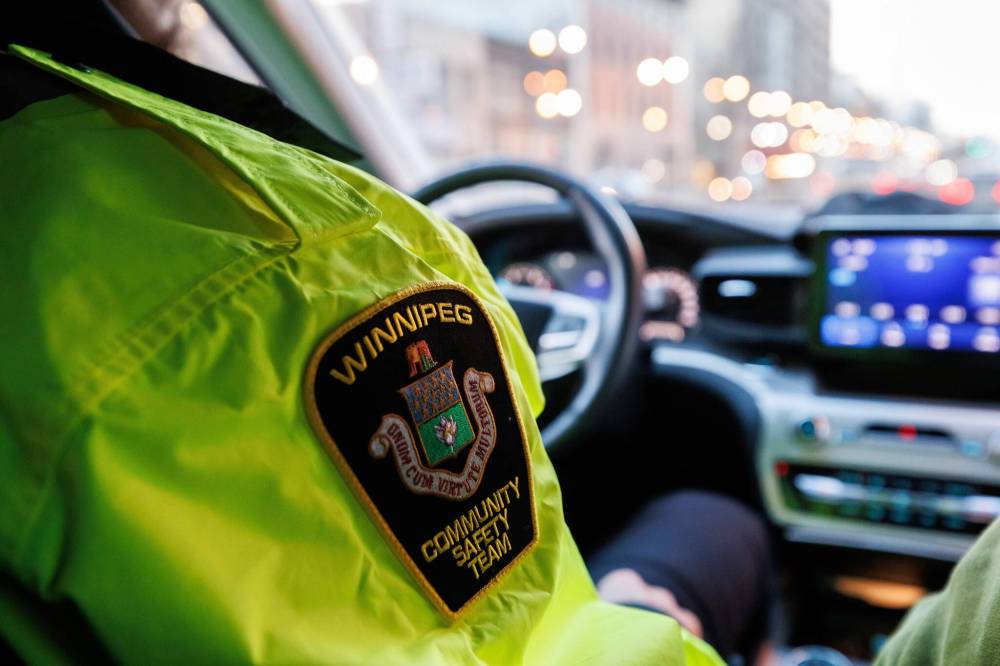
A Winnipeg Transit official said in November that the agency is exploring replacing the partial driver shields, installed on the bus fleet in 2019, with floor-to-ceiling driver compartments.
At the time, Rick Young, manager of operations, offered a ballpark estimate of $15 million to install the compartments.
Dooley said the union had initially asked the city’s transit advisory committee to explore full shields — which would cover the door of the driver compartment to the windshield, but not extend up to the bus ceilings.
The committee posted an expression of interest for the full shields last June. Three vendors showed interest, but the shield committee decided the required cost and work would outweigh potential benefits.
Instead, the shield committee recommended the transit advisory committee investigate compartments.
“Plain and simple, if… the full barriers were in place, this would have never happened.”
“Opting for full enclosures rather than shield extensions will greatly affect the project’s scope and cost,” said Dooley. “This change will go beyond the current capital budget for this initiative.”
City public service officials are revising the project’s business case and cost estimates and they will be included in Winnipeg Transit’s capital budget submission next year, she said.
Meantime, Charleswood-Tuxedo-Westwood city Coun. Evan Duncan told reporters Friday he wants city and police officials to explore whether creating a dedicated police unit for the transit system is needed.
“I think we need to explore what the needs are on transit, what resources we’re putting towards safety on transit and look at if we’re doing enough for Winnipeggers,” said Duncan.
He pointed to the random Feb. 21 assault on a 66-year-old man on a bus in his ward by a suspect who, after getting off the vehicle, allegedly attacked a child with a baseball bat in a nearby store.
Security incidents on Winnipeg Transit
Figures provided by the union that represents Winnipeg Transit drivers show security incidents on buses — which include everything from physical assaults to passengers banging on the driver’s protective shields — increased last year to a record number.
Figures provided by the union that represents Winnipeg Transit drivers show security incidents on buses — which include everything from physical assaults to passengers banging on the driver’s protective shields — increased last year to a record number.
There were 266 such incidents reported on Winnipeg Transit in 2025, compared to 220 in 2024, 257 in 2023 and 130 in 2022, the Amalgamated Transit Union Local 1505 numbers show.
There were just 86 and 88 in 2020 and 2021, though union president James Van Gerwen tied that to the drop in bus ridership at the height of the COVID-19 pandemic.
So far this year, there have been 47 reported incidents.
— Erik Pindera
“Where does it end?” Duncan said. “How much public safety do we need to put at risk before we say, ‘This is our priority?’”
The driver union has been calling for transit police for years, and Van Gerwen repeated that request Friday.
He said a pilot with police, transit and the city launched in September with an increased number of officers patrolling on buses and around the system until the end of 2025, was helpful.
“We found that they actually were charging people,” said Van Gerwen, noting many Canadian cities have dedicated transit police units. “So, it worked, but at Dec. 31, it was stopped… we need people who can actually arrest (criminals) on the bus.”
If the city decides police should become responsible for transit security, there would need to be discussions among officials about additional funding and more officers, WPS Chief Gene Bowers told reporters Friday.
“Right now, currently, we don’t have the members to be able to initiate a transit police arm of the WPS,” said Bowers.
He noted officers occasionally board buses when they have time as a proactive measure.
Winnipeg Police Board Chair Colleen Mayer said that other levels of government should come to the table to discuss the idea of a transit police unit.
— With files from Joyanne Pursaga
erik.pindera@freepress.mb.ca

Erik Pindera is a reporter for the Free Press, mostly focusing on crime and justice. The born-and-bred Winnipegger attended Red River College Polytechnic, wrote for the community newspaper in Kenora, Ont. and reported on television and radio in Winnipeg before joining the Free Press in 2020. Read more about Erik.
Every piece of reporting Erik produces is reviewed by an editing team before it is posted online or published in print — part of the Free Press‘s tradition, since 1872, of producing reliable independent journalism. Read more about Free Press’s history and mandate, and learn how our newsroom operates.
Our newsroom depends on a growing audience of readers to power our journalism. If you are not a paid reader, please consider becoming a subscriber.
Our newsroom depends on its audience of readers to power our journalism. Thank you for your support.