Pilot law enforcement program on transit reduced crime, police say
Read this article for free:
or
Already have an account? Log in here »
To continue reading, please subscribe:
Digital Subscription
One year of digital access for only $1.44 a week*
- Enjoy unlimited reading on winnipegfreepress.com
- Read the E-Edition, our digital replica newspaper
- Access News Break, our award-winning app
- Play interactive puzzles
*Billed as $5.77 plus GST every four weeks. After 52 weeks, price increases to the regular rate of $19.95 plus GST every four weeks. Offer available to new and qualified returning subscribers only. Cancel any time.
To continue reading, please subscribe:
Add Free Press access to your Brandon Sun subscription for only an additional
$1 for the first 4 weeks*
- Enjoy unlimited reading on winnipegfreepress.com
- Read the E-Edition, our digital replica newspaper
- Access News Break, our award-winning app
- Play interactive puzzles
*Your next Brandon Sun subscription payment will increase by $1.00 and you will be charged $17.95 plus GST for four weeks. After four weeks, your payment will increase to $24.95 plus GST every four weeks.
Read unlimited articles for free today:
or
Already have an account? Log in here »
Hey there, time traveller!
This article was published 11/03/2026 (227 days ago), so information in it may no longer be current.
A 15-week crackdown on crime aboard Winnipeg buses has proved effective, officials said Wednesday, but establishing a dedicated police unit for transit hinges on resources — which are already taxed.
Violent crime fell by 18 per cent and property crime on buses and bus shelters dropped by 15 per cent during the period of enhanced enforcement from Sept. 17 to Dec. 31, 2025, the Winnipeg Police Service said.
There was an overall 15 per cent decrease in the number of criminal incidents, compared to the same period in 2024.
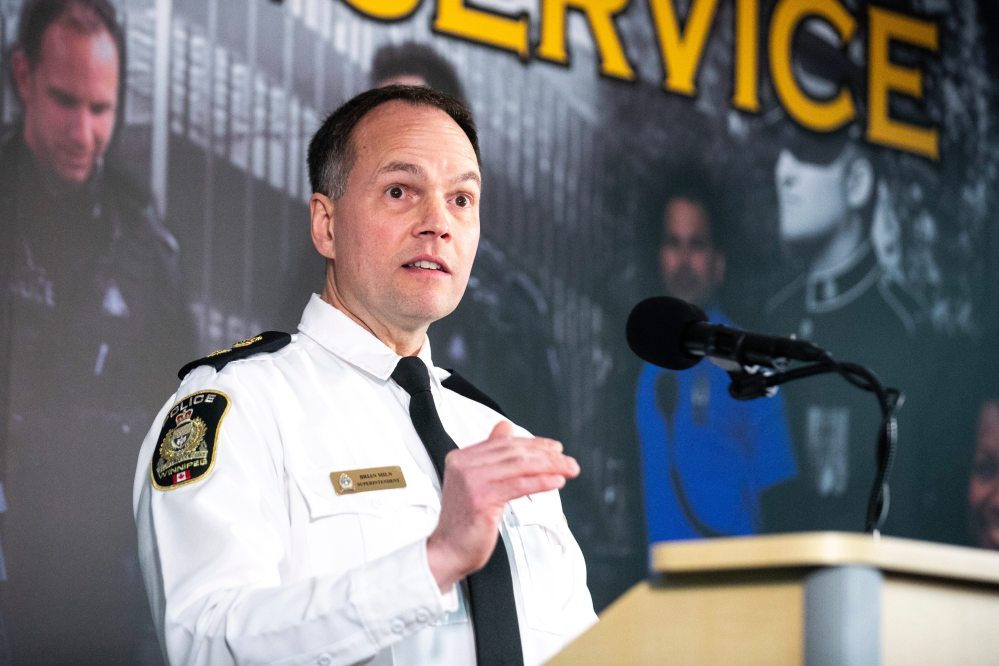
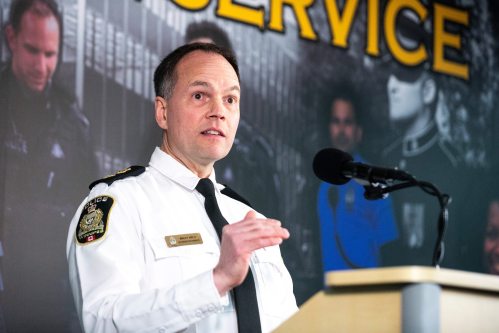
“The WPS is very pleased with the results of the program. I don’t think it comes as a surprise that if we put additional resources and direct them to a specific problem or a specific area, that we are going to achieve results,” police Supt. Brian Miln said.
“We have a lot of routes in Winnipeg, so there’s a lot of area to cover, but we were Johnny-on-the-spot for a number of incidents.”
Miln spearheaded the crackdown, which focused on high-visibility policing, targeted enforcement and a proactive police presence on buses, in transit corridors and at bus stops.
The operation was conducted in partnership with Winnipeg Transit and the city’s team of community safety officers. It was a response to growing concern and incidents of violence and disorder on and around the transit system, which logged a record 325 violent crimes in 2024 — nearly triple the previous record, in 2019.
When police announced the operation in September, Miln said uniformed and plainclothes officers would focus on known “hot spots” throughout the transit system.
Wednesday’s update revealed that police spent 143 hours riding buses during the operation. Another 101 hours were spent on foot at bus stops and other locations, and officers dedicated 36 hours of marked cruiser patrols that focused on transit.
Overall, police arrested 12 suspects and enforced fare evasion 98 times.
Miln acknowledged that 15 weeks is not a long enough period to fully evaluate the program, but said the early data exceeded police expectations.
“We’re not having a victory lap on this right now… there’s still all kinds of work that needs to be done in this area,” Miln said.
“There’s a lot of area to cover, but we were Johnny-on-the-spot for a number of incidents.”
“Are we ever going to get down to zero and perfection? Absolutely not, but can we drive the numbers even further down to promote safety? Certainly.”
Miln said police are “assessing the success of the program” but resources are already taxed.
“If we direct resources in one direction, we’re going to be taking those resources from somewhere else. It’s about finding that equilibrium, or finding that balance, where we can achieve results in multiple areas.” Miln said.
Although the pilot project has ended, Mayor Scott Gillingham said some officers will continue to ride the buses, while the community safety officer team will continue to focus on transit safety and collaborate with police when necessary.
“When they work alongside police, it really strengthens the co-ordinated approach that we need,” the mayor said.
James Van Gerwin, president of Amalgamated Transit Union Local 1505, said he hopes police and politicians consider how much money could be saved by reducing the number of calls for service related to safety incidents on buses.
Police data show the number of times Winnipeg Transit initiated calls for help dropped by 17 per cent during the 15-week project.
“Our members deal with safety issues every day. They need real support, not a short-time pilot,” Van Gerwin said.
“We can’t have people fearing for their safety.”
Several transit drivers reached out to the union during the crackdown to say they appreciate having police officers on buses. In particular, it was an effective way to reduce instances of fare evasion, which Van Gerwin said sparks confrontations and potentially violent incidents.
Maria Schiller, 41, who takes the bus daily, agreed.
“You’ve got the people that want to pay for their fare, and then you’ve got the other people that don’t want to pay for their fare, and so the bus drivers are just obligated to let them on so that there are no arguments or fights,” she said.
Schiller, who has cerebral palsy and uses a walker, said she was assaulted by a passenger in September after she asked the woman to make space for her in the section reserved for handicapped riders.
Schiller believes a dedicated police unit would be too expensive, but said there should be a better way to prevent people who are intoxicated or who fail to pay from riding the bus.
Kathleen Anderson, another regular rider, said she has had negative experiences on transit.
The 55-year-old Winnipeg woman uses the transit service multiple times a week to travel from her home in Richmond West to her workplace downtown. In January, she decided to take the bus only in the morning.
“For my own personal safety, my husband has insisted on picking me up from my workplace every day I’m in the office, so that is going to continue to be my strategy until I retire.”

Anderson believes a police transit unit could improve public safety, but said it is “disappointing” the city would need to take such a measure and divert police resources from elsewhere.
Coun. Evan Duncan, who has spoken out about transit safety, said the city must use the data collected during the pilot project to make an informed decision on how to improve the service.
“We need to evaluate the resources that we’re putting toward transit safety,” he said. “We can’t have people fearing for their safety.”
tyler.searle@freepress.mb.ca


Tyler Searle is a multimedia producer who writes for the Free Press’s city desk. A graduate of Red River College Polytechnic’s creative communications program, he wrote for the Stonewall Teulon Tribune, Selkirk Record and Express Weekly News before joining the paper in 2022. Read more about Tyler.
Every piece of reporting Tyler produces is reviewed by an editing team before it is posted online or published in print — part of the Free Press‘s tradition, since 1872, of producing reliable independent journalism. Read more about Free Press’s history and mandate, and learn how our newsroom operates.
Our newsroom depends on a growing audience of readers to power our journalism. If you are not a paid reader, please consider becoming a subscriber.
Our newsroom depends on its audience of readers to power our journalism. Thank you for your support.
Related Articles
Fewer newcomers, bus network overhaul blamed for ridership drop










History
Updated on Wednesday, March 11, 2026 5:58 PM CDT: Adds quotes, details, photo