

Manitoba looks to strengthen whistleblower protections

Advertisement
Read this article for free:
or
Already have an account? Log in here »
To continue reading, please subscribe:

Digital Subscription
One year of digital access for only $205*
- Enjoy unlimited reading on winnipegfreepress.com
- Read the E-Edition, our digital replica newspaper
- Access News Break, our award-winning app
- Play interactive puzzles
*First annual payment billed as $205.00 + GST for one year. This annual subscription will automatically renew at $233.00 + GST every 52 weeks (10% off the regular annual price of $259.35). Offer available to new and qualified returning subscribers only. Cancel any time.
To continue reading, please subscribe:
Add Free Press access to your Brandon Sun subscription for only an additional
$1 for the first 4 weeks*
- Enjoy unlimited reading on winnipegfreepress.com
- Read the E-Edition, our digital replica newspaper
- Access News Break, our award-winning app
- Play interactive puzzles
*Your next Brandon Sun subscription payment will increase by $1.00 and you will be charged $17.95 plus GST for four weeks. After four weeks, your payment will increase to $24.95 plus GST every four weeks.
Read unlimited articles for free today:
or
Already have an account? Log in here »
Employers who’ve been accused of taking action against a whistleblower would be forced to prove their innocence, under proposed legislation introduced by the Manitoba government.
“Individuals who report wrongdoing should be protected,” said Public Service Minister Adrien Sala, who introduced Bill 14 last week.
Currently, people must prove they were laid off, demoted or otherwise punished because they’d reported wrongdoing.
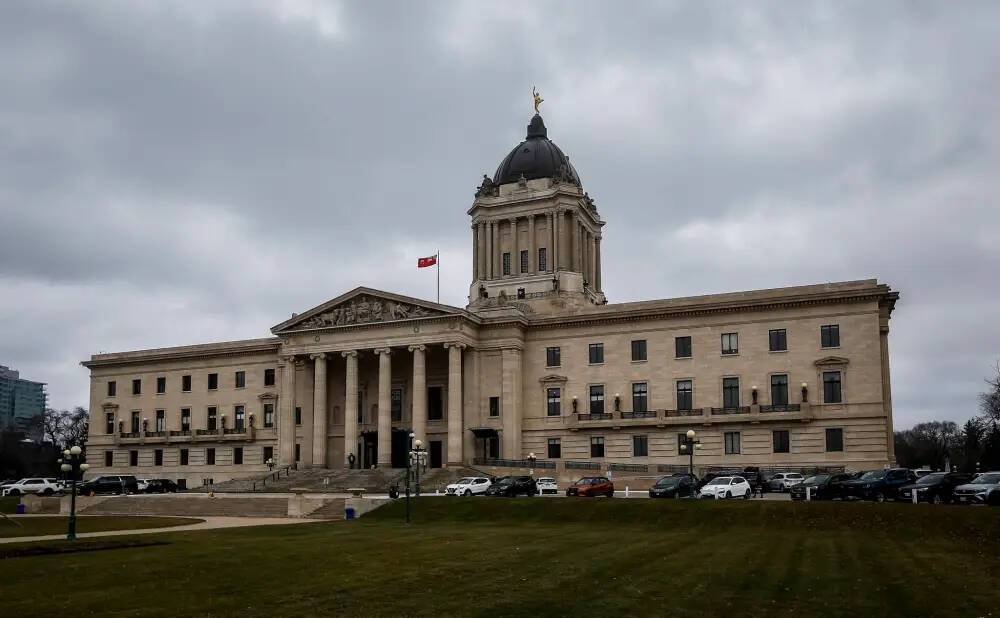
Changes to Manitoba’s Public Interest Disclosure Act have been introduced under proposed legislation put forward by the provincial government. (The Canadian Press files)
Changes to Manitoba’s Public Interest Disclosure Act, which apply only to public-sector employees, would also enable workers who have signed non-disclosure agreements or other restrictive contracts to file whistleblower reports.
The law includes employees of the provincial government, government bureaus, health authorities and school divisions.
“The amendments will help to strengthen the framework so employees can come forward without fear of reprisal,” the minister said.
The changes are a result of recommendations contained in an independent review of the law conducted in 2023, which were published by the government in 2024.
Pamela Forward, president of the Whistleblowing Canada Research Society, said while the changes represent a positive start, the bill doesn’t go far enough.
“Most (Canadian disclosure legislation) only protects public servants. Why?” Forward said, adding the law must be broadened to include private-sector employees.
Manitoba’s bill aims to prohibit an employer from taking action against a worker who has made a disclosure, or is suspected of having done so, or sought advice to make a disclosure, co-operated in an investigation under the law or declined to participate in wrongdoing.
Potential reprisals include demotions, firings and other disciplinary action.
“Without that (legislation), whistleblowers don’t have a chance to prevail at all, because it’s really difficult as an employee to prove why the reprisal occurred,” Forward said.
“They don’t have access to all the information; it’s the management that has most of it.”
Still, there’s language in Bill 14 that could hinder whistleblowers, Forward said. The act requires whistleblowers to report in “good faith,” which Forward calls “a distraction from the wrongdoing.”
The 2023 review recommends wording of “good faith” be replaced with “reasonable belief” to ensure tests of whistleblower complaints are based on facts and evidence rather than the submitter’s motivations.
The Manitoba ombudsman supported the recommendation in a report released this month.
Sala didn’t answer whether the wording would change, but said the government is “proceeding with a number of the recommendations” provided in the review.
Several headline-making whistleblower cases have hit the province in recent years.
In 2025, IT consultant David Morash filed a lawsuit claiming the government breached his company’s contract after he reported concerns about its handling of a major software project to the Manitoba ombudsman. The province filed a statement of defence saying it didn’t breach any law or contract.
Also in 2025, a University of Winnipeg staffer flagged leadership concerns to the Manitoba ombudsman. The president of the university was removed; Todd Mondor has since sued the university over his departure.
A former University of Manitoba law dean was disbarred following an investigation — prompted by a whistleblower — into how he spent U of M money.
Bill 14 offers better protections to people who are weighing the pros and cons on reporting wrongdoing, said Michelle Gallant, a University of Manitoba law professor.
“If you actually act in good faith and are… troubled by something that’s going on, I think this might tip it a little bit to the sense that you’d say, ‘OK, I’m going to make a disclosure here,’” Gallant said.
The Manitoba government counted six disclosures, not including to the Manitoba ombudsman, under the law in fiscal 2024-25.
Not one of the disclosures was considered wrongdoing under the law; just two prompted investigations. Nearly all disclosures since 2007 (not including through the ombudsman) ended without investigations or findings of wrongdoing. Just one, in 2008-09, resulted in disciplinary action being taken against the infrastructure department’s fleet vehicle agency.
The 2023 review didn’t examine an expansion of what constitutes wrongdoing. Definitions are usually “narrow and restrictive” across Canada, Forward said.
The Manitoba ombudsman office — which takes disclosures from several entities, including municipalities and universities — counted 24 disclosures and five investigations in fiscal 2024-25.

When wrongdoing is found, the ombudsman makes recommendations to the respective public body, communications director Amie Lesyk wrote in a statement.
Investigation outcomes may become public if it serves the public interest, she said.
Lesyk applauded the proposed amendments on reprisals: “Any efforts to strengthen and enhance reprisal protection can help the overall functioning of the legislation.”
Bill 14 is subject to further debate during the legislative session.
gabrielle.piche@winnipegfreepress.com
Gabrielle Piché reports on business for the Free Press. She interned at the Free Press and worked for its sister outlet, Canstar Community News, before entering the business beat in 2021. Read more about Gabrielle.
Every piece of reporting Gabrielle produces is reviewed by an editing team before it is posted online or published in print — part of the Free Press‘s tradition, since 1872, of producing reliable independent journalism. Read more about Free Press’s history and mandate, and learn how our newsroom operates.
Our newsroom depends on a growing audience of readers to power our journalism. If you are not a paid reader, please consider becoming a subscriber.
Our newsroom depends on its audience of readers to power our journalism. Thank you for your support.
Gabrielle Piché reports on business for the Free Press. She interned at the Free Press and worked for its sister outlet, Canstar Community News, before entering the business beat in 2021. Read more about Gabrielle.
Every piece of reporting Gabrielle produces is reviewed by an editing team before it is posted online or published in print — part of the Free Press‘s tradition, since 1872, of producing reliable independent journalism. Read more about Free Press’s history and mandate, and learn how our newsroom operates.
Our newsroom depends on a growing audience of readers to power our journalism. If you are not a paid reader, please consider becoming a subscriber.
Our newsroom depends on its audience of readers to power our journalism. Thank you for your support.
Advertisement Advertise With Us
Advertisement Advertise With Us