

Churchill port could further stunt polar bear growth: U of M researcher
Advertisement
Read this article for free:
or
Already have an account? Log in here »
To continue reading, please subscribe:
Monthly Digital Subscription
$1 per week for 24 weeks*
- Enjoy unlimited reading on winnipegfreepress.com
- Read the E-Edition, our digital replica newspaper
- Access News Break, our award-winning app
- Play interactive puzzles
*Billed as $4.00 plus GST every four weeks. After 24 weeks, price increases to the regular rate of $19.95 plus GST every four weeks. Offer available to new and qualified returning subscribers only. Cancel any time.
Monthly Digital Subscription
$4.99/week*
- Enjoy unlimited reading on winnipegfreepress.com
- Read the E-Edition, our digital replica newspaper
- Access News Break, our award-winning app
- Play interactive puzzles
*Billed as $19.95 plus GST every four weeks. Cancel any time.
To continue reading, please subscribe:
Add Free Press access to your Brandon Sun subscription for only an additional
$1 for the first 4 weeks*
*Your next subscription payment will increase by $1.00 and you will be charged $16.99 plus GST for four weeks. After four weeks, your payment will increase to $23.99 plus GST every four weeks.
Read unlimited articles for free today:
or
Already have an account? Log in here »
Manitoba’s bold plan to transform the Port of Churchill into a shipping powerhouse could have a negative effect on the area’s treasured polar bear population, which fuels its tourism trade, new research shows.
Ruth Rivkin, a postdoctoral fellow at the University of Manitoba and Polar Bears International, says research shows polar bears are failing to adapt evolutionarily to the rapidly warming Arctic. The research refers to 40 years of evolutionary and genetic data that show many polar bear populations are losing the genetic diversity needed for their survival.
“Hudson Bay is a mixing bowl for polar bears,” Rivkin said, explaining that polar bears across the region gather on the ice to breed, and then disperse.
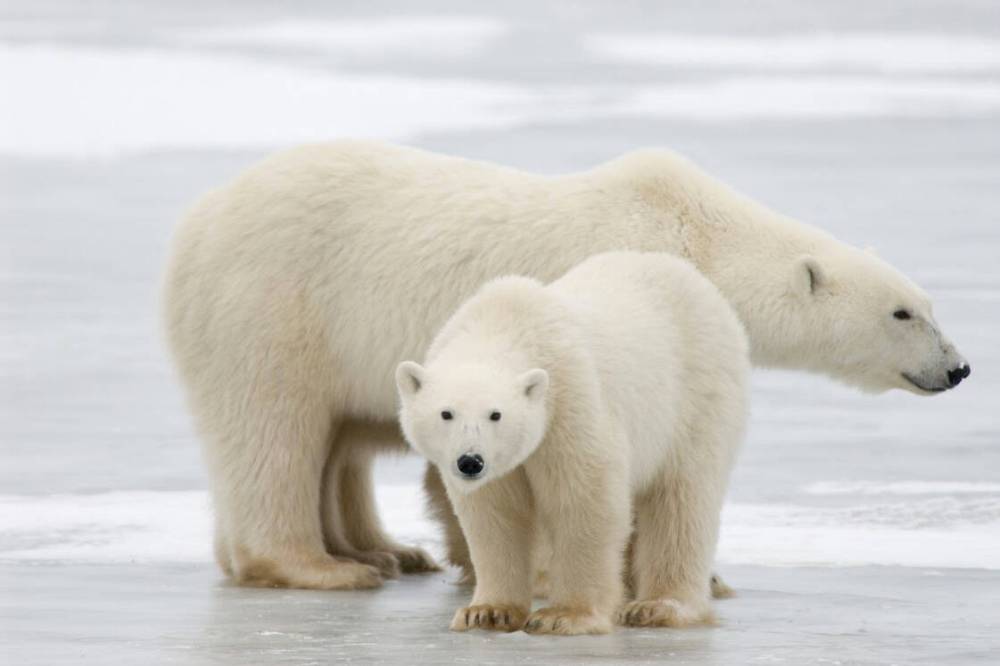
BJ KIRSCHHOFFER / Polar Bear International
Research shows polar bears are failing to adapt evolutionarily to the rapidly warming Arctic.
“Genetic variation is really important for adaptation and evolution in all species,” she said. “The more genetic variation you have, the better able species are to adapt.”
Rivkin said polar bears spend six to nine months of the year on sea ice and head to land as it melts, only to wait until it freezes again in the fall. Once icebreakers work in that habitat, such as on a massive port project, wildlife behaviour can change.
“Activities that might break up the sea ice earlier or impact the ability of polar bears to disperse will likely have negative effects on their genetic diversity and, potentially, survival rates,” Rivkin said.
The loss of sea ice, driven by climate change, is already limiting the movement of polar bears across the Arctic, the researcher said.
The Port of Churchill Plus project plans to use icebreakers to extend the shipping season and add infrastructure to expand trade to Europe and Asia, thereby reducing Canada’s reliance on U.S. markets. The plan would boost the northern outpost’s commercial potential and align with Prime Minister Mark Carney’s goal to assert Canada’s sovereignty in the Arctic.
Dave Sandford, a wildlife photographer and guide who has spent nearly a decade working in Churchill, said the possibility of year-round shipping at the port raises concern about the region’s wildlife.
“With a 365-day-a-year operation, that means trenching the sea ice,” Sandford said, referring to the port project. “The sea ice is such a vital component of the polar bears’ existence.”
The sourced data for Rivkin’s research showed polar bears may be evolving to become smaller, a change she believes could be harmful. “Bigger bears generally do better,” she said.
“There used to be bigger bears,” Sandford said. “We don’t see as many of the really big males.”

Sandford said polar bears also face increasing challenges as freeze-up occurs later in the fall and melting happens earlier in the spring.
“If you compare it to the 1980s, the bears have approximately five weeks less time on the sea ice,” Sandford said.
The research paper by Rivkin and her team includes recommendations and indicators for population health they hope will be considered when management and conservation plans are developed.
“Long-term monitoring data has become extremely important for developing conservation plans,” Rivkin said.
fpcity@freepress.mb.ca
Related Articles
NDP includes $10M for ‘unlocking opportunities’ in Manitoba’s North
Advertisement Advertise With Us
Advertisement Advertise With Us