
City councillors fear backlash over tax bills thanks to huge increases in education portion Combined school, municipal tax bill should be scrapped, they say
Read this article for free:
or
Already have an account? Log in here »
To continue reading, please subscribe:
Monthly Digital Subscription
$1 per week for 24 weeks*
- Enjoy unlimited reading on winnipegfreepress.com
- Read the E-Edition, our digital replica newspaper
- Access News Break, our award-winning app
- Play interactive puzzles
*Billed as $4.00 plus GST every four weeks. After 24 weeks, price increases to the regular rate of $19.95 plus GST every four weeks. Offer available to new and qualified returning subscribers only. Cancel any time.
Monthly Digital Subscription
$4.99/week*
- Enjoy unlimited reading on winnipegfreepress.com
- Read the E-Edition, our digital replica newspaper
- Access News Break, our award-winning app
- Play interactive puzzles
*Billed as $19.95 plus GST every four weeks. Cancel any time.
To continue reading, please subscribe:
Add Free Press access to your Brandon Sun subscription for only an additional
$1 for the first 4 weeks*
*Your next subscription payment will increase by $1.00 and you will be charged $16.99 plus GST for four weeks. After four weeks, your payment will increase to $23.99 plus GST every four weeks.
Read unlimited articles for free today:
or
Already have an account? Log in here »
Two councillors say Winnipeggers who experience sticker shock when they open their 2026 municipal tax bills should know who to blame — and it isn’t the city.
Taxpayers can thank “rapidly rising” school board taxes that are collected by the provincial government, say Jeff Browaty and Evan Duncan, who said they worry about blow-back because each bill lists municipal taxes and school taxes.
School divisions have increased taxes by as much as 43 per cent since 2023 — about double the City of Winnipeg’s 17.5 per cent increase over the past four years. The education portion now accounts for more than half of all property taxes collected by the City of Winnipeg.
MIKAELA MACKENZIE / FREE PRESS FILES
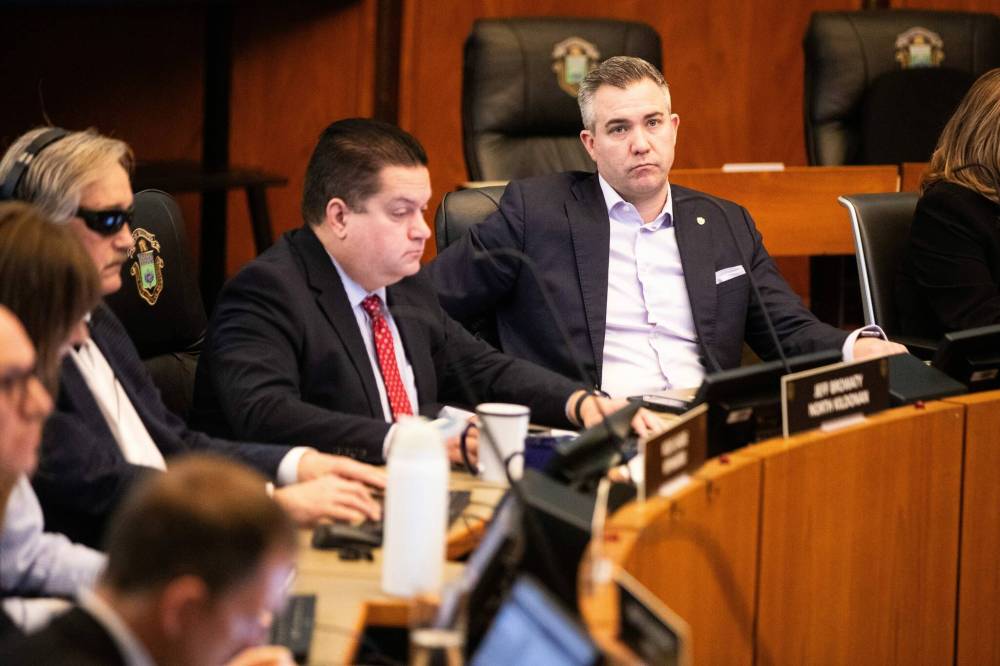
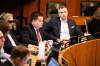
Councillors Jeff Browaty (left) and Evan Duncan co-signed a news release Tuesday over how school taxes are collected.
It’s the city’s responsibility to collect school board taxes on behalf of the province, as per the Public Schools Act, but the city has no say in the rates or how the funding is spent.
Its role of collecting the tax has resulted in the city inevitably being asked to answer for these rising fees by constituents, say Duncan (Charleswood-Tuxedo-Westwood) and Browaty (North Kildonan), who co-signed a news release ahead of Tuesday’s executive policy committee meeting.
Duncan said he wants the provincial government to send a separate bill for school board taxes to ratepayers.
“I’d like to see them take accountability and ownership of it.”
“I think it’s alarming that you have school trustees and the Province of Manitoba now taking (54) per cent of the City of Winnipeg’s property tax bill that goes out … I’d like to see them take accountability and ownership of it,” Duncan told reporters.
“They can mail out their own education tax separate from the City of Winnipeg, so Winnipeggers aren’t confused on what’s going where, how it’s being spent.”
The school divisions with the highest cumulative property tax increases from 2023 to present are Louis Riel (43.1 per cent), Seven Oaks (37.7 per cent) and Pembina Trails (37.3 per cent). The lowest is Seine River (24.2 per cent increase), according to data provided by Browaty and Duncan.
“I do think the school divisions could give a better explanation as to why they’ve had to increase their funding requirements as much as they have,” Browaty said.
An administrative report on 2026 school board tax changes was discussed Tuesday and forwarded to the March 26 council meeting. The executive policy committee heard that any changes to the bill format would require provincial approval.
Mayor Scott Gillingham said the city has raised the issue in the past.
“No provincial government has made the change, but I certainly would welcome getting two separate bills sent out.”
Manitoba School Boards Association president Alan Campbell said the councillors’ view lacks context.
He said the blame lies with “a decade or more of outright provincial funding cuts” under the previous PC government, and continued challenges funding education amid competing interests.
“We’re talking about reductions to funding at a time when public schools, especially in Winnipeg, but certainly across the province, are providing more complex and dynamic resources and services to students and families than ever before.”
“We’re not talking about not keeping up with inflation. We’re talking about reductions to funding at a time when public schools, especially in Winnipeg, but certainly across the province, are providing more complex and dynamic resources and services to students and families than ever before,” he said.
As for the province mailing out a separate bill, Campbell said taxpayers deserve credit for understanding their tax bills.
“Just like it applies to councillors Duncan and Browaty, school boards are very happy to take questions from constituents about what goes into the budgets, and, I dare say, school divisions are the most consultative form of government when it comes to budget consultation with their local taxpayer,” he said.
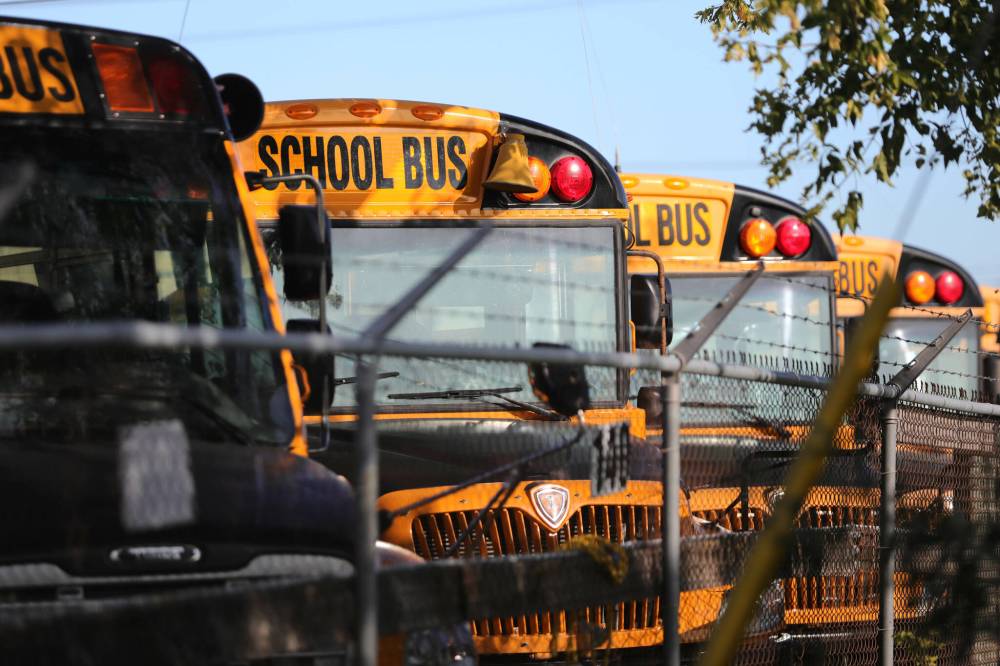
On Tuesday, rising education property taxes dominated question period as Tory MLAs grilled the government on major increases in homeowners’ incoming tax bills.
“Instead of relief, this NDP is offering nothing but Band-Aid solutions after ripping away every single safeguard that protected Manitoba homeowners,” PC finance critic Lauren Stone said.
School divisions have imposed double-digit tax increases since the NDP came to power and failed to fund education to the rate of inflation, she said.
The Kinew government removed the two per cent cap on education property tax increases imposed by the former PC government, as well as the 50 per cent education property tax rebate introduced by the Tories.
Finance Minister Adrien Sala said the province is “finally” providing enough funding for education after years of cuts and austerity under the PCs.
“That was a huge concern and no doubt created some pressures for families and for our schools,” the minister said after question period.
“Across the province, this government has funded education above the rate of inflation.”
The NDP government, he said, helped homeowners and renters with the $1,500 education property tax credit in its first budget, and increased it to $1,600 in its second budget.
“In our upcoming budget, we’re going to be providing even more relief to help reduce the cost of education,” Sala said one week before budget day.

When asked why the city should be responsible for sending out the education property tax bill for school divisions, Sala sidestepped the question.
“When it comes to local decision making by school divisions, we know that the former government tried to centralize all that power in their hands with Bill 64,” Sala told reporters. The 2021 Education Modernization Act introduced by the PCs, who were in power at the time, would’ve done away with most elected school boards and transferred power to education authorities.
“Manitobans rejected that bill,” Sala said. “They said ‘We want local decision making’, and so we are partners in the delivery of education here in Manitoba with school divisions. We’re ensuring that we’re bringing adequate funding to the table and we want to work together with school divisions to make sure that we keep life as affordable as possible for residents who are province.”
—With files from Carol Sanders
malak.abas@freepress.mb.ca

Malak Abas is a city reporter at the Free Press. Born and raised in Winnipeg’s North End, she led the campus paper at the University of Manitoba before joining the Free Press in 2020. Read more about Malak.
Every piece of reporting Malak produces is reviewed by an editing team before it is posted online or published in print — part of the Free Press‘s tradition, since 1872, of producing reliable independent journalism. Read more about Free Press’s history and mandate, and learn how our newsroom operates.
Our newsroom depends on a growing audience of readers to power our journalism. If you are not a paid reader, please consider becoming a subscriber.
Our newsroom depends on its audience of readers to power our journalism. Thank you for your support.
Related Articles
River East-Transcona School Division offers residents base-model budget or, for a few bucks more, one with a few options Private French school to make the grade in Winnipeg this fall St. James-Assiniboia School Division proposes nine per cent tax hike


History
Updated on Wednesday, March 18, 2026 9:25 AM CDT: Minor copy edit