

Ukrainians who call Manitoba home relieved work permit deadline extended
More than 38,000 Ukrainians arrived in province after Russia started war

Advertisement
Read this article for free:
or
Already have an account? Log in here »
To continue reading, please subscribe:
Digital Subscription
One year of digital access for only $1.44 a week*
- Enjoy unlimited reading on winnipegfreepress.com
- Read the E-Edition, our digital replica newspaper
- Access News Break, our award-winning app
- Play interactive puzzles
*Billed as $5.77 plus GST every four weeks. After 52 weeks, price increases to the regular rate of $19.95 plus GST every four weeks. Offer available to new and qualified returning subscribers only. Cancel any time.
To continue reading, please subscribe:
Add Free Press access to your Brandon Sun subscription for only an additional
$1 for the first 4 weeks*
- Enjoy unlimited reading on winnipegfreepress.com
- Read the E-Edition, our digital replica newspaper
- Access News Break, our award-winning app
- Play interactive puzzles
*Your next Brandon Sun subscription payment will increase by $1.00 and you will be charged $17.95 plus GST for four weeks. After four weeks, your payment will increase to $24.95 plus GST every four weeks.
Read unlimited articles for free today:
or
Already have an account? Log in here »
Ukrainians who came to Manitoba after Russia invaded their country in February 2022 were relieved after the federal government extended the deadline for work permit renewals by another year.
Ottawa announced Tuesday, when the deadline was set to expire, that Ukrainians who arrived in Canada on or before March 31, 2024, now have until the same date in 2027 to apply to extend their permits for up to three years.
“We are very grateful the Canadian government accepted us in very hard times,” said Khrystyna Pivniak, who arrived in Winnipeg with her husband, Taras, and their five children in July 2022. “We made the decision (to come to Canada) for our kids. We were rescuing our kids.”
Pivniak and her husband obtained work permits after the family, from Kyiv, arrived via the Canada-Ukraine Authorization for Emergency Travel program.
Khrystyna and Taras Pivniak left Ukraine and arrived in Winnipeg with their children (from left): Vira, 14, Oles, 12, Marko, five, Mariia, 16, and Myroslav, eight, after Russia launched an invasion in February 2022.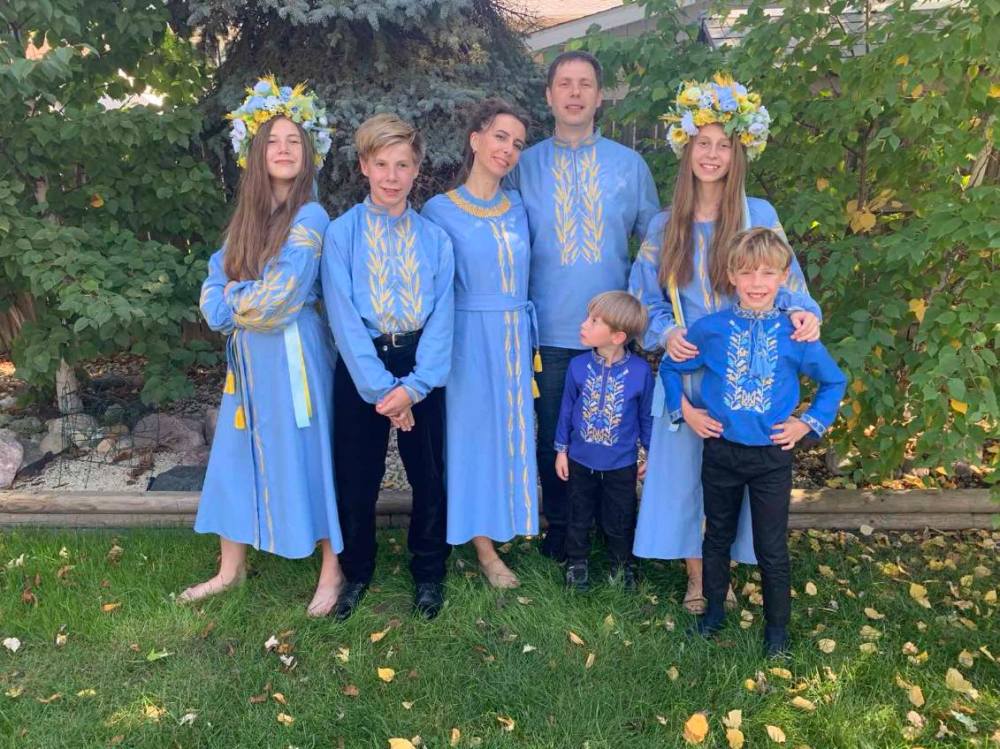
She said the extension offers more time to Ukrainians who face an uncertain future while the war continues.
“When we got here, we thought maybe (the war) is temporary and we can go back,” Pivniak said. “Unless we know everything is good in Ukraine, we cannot go back.”
The amount of paperwork for a family of seven, on top of the application fees, can be overwhelming.
“It’s such a great pressure for us, all of these documents,” Pivniak said.
The extension also applies to CUAET holders who didn’t receive a decision before March 31, 2024, but were allowed to arrive by Dec. 31, 2024.
Manitoba welcomed more than 38,000 Ukrainians who were displaced by the invasion and war. It was unclear how many remain in the province, or how many are eligible to extend work permits.
RUTH BONNEVILLE / FREE PRESS FILES Ivan Kutsak has spoken to families who want to stay after getting jobs and enrolling their children in school.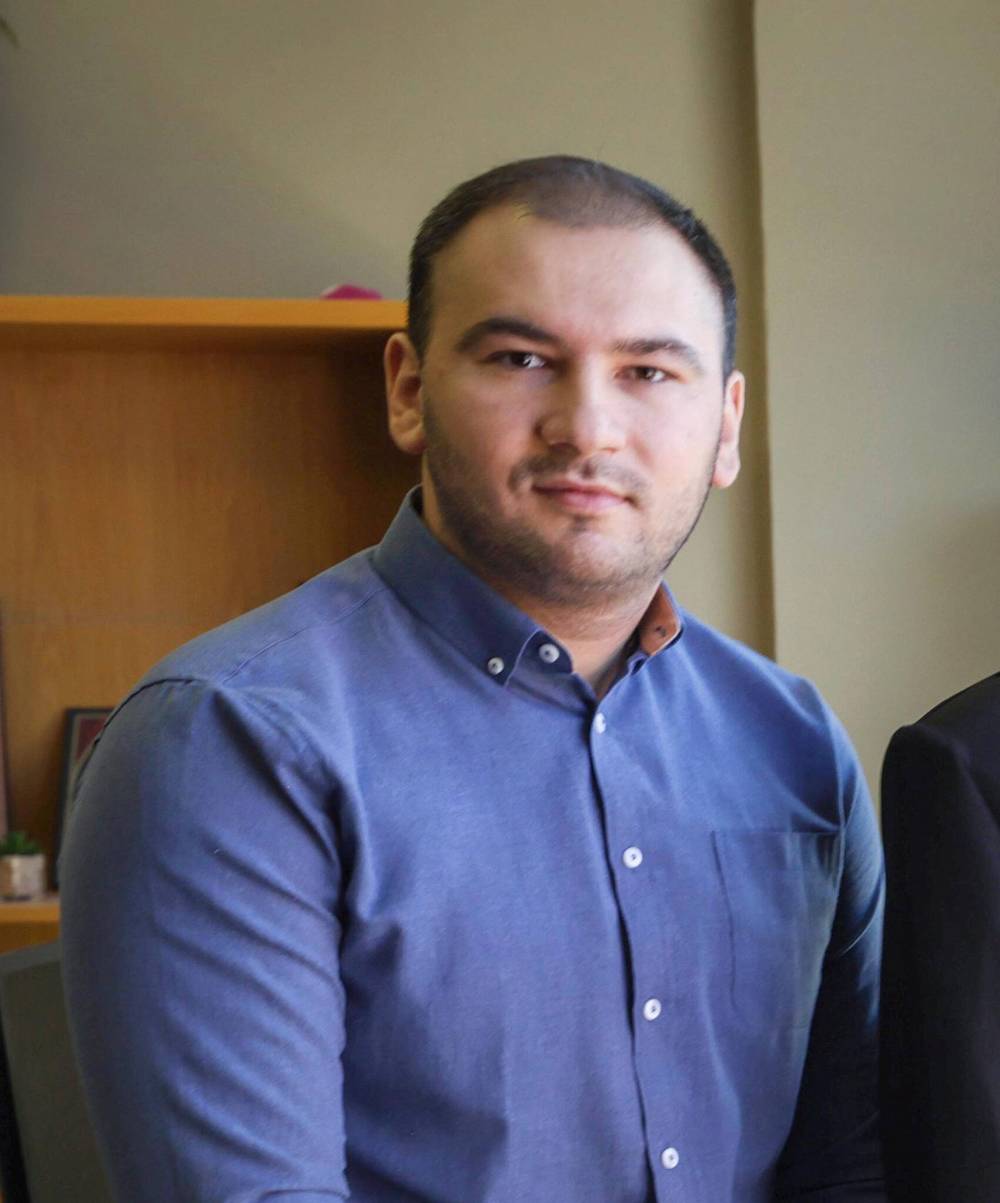
Ottawa’s decision will provide some comfort to Ukrainians who are supporting families and seeking stability, said Ivan Kutsak, a newcomer who works with the Manitoba council of the Ukrainian Canadian Congress.
“People are happy the Canadian government did this. The war is still going, and we don’t know how long it’s going to take,” he said.
The UCC and Ukrainians who want to remain in Canada urged the federal government to create a special pathway to apply for permanent residency.
Kutsak has spoken to families who want to stay after getting jobs and enrolling their children in school.
“In another category, some families don’t know if they want to stay, but they have no place to go home in Ukraine,” Kutsak said.
He arrived in Manitoba in October 2022 under CUAET, a temporary measure to help Ukrainians fleeing the war.
Kutsak, who got married while living in Canada, initially acquired a work permit, which he extended before he obtained permanent residency.
He noted the federal government recently took steps to reduce the number of permanent residents allowed into Canada.
For Pivniak and her husband, she said their children, ages five to 16, are most important when it comes to decisions about the future.
The family has put down roots in Manitoba. The parents have full-time jobs, their children are in local schools, and they purchased a home.
“I always have a wish in my heart to return to Ukraine,” Pivniak said. “When the war is still going, we cannot even think to take our kids to Ukraine. It’s very dangerous.”
The United Nations said it has verified more than 15,000 civilian deaths and more than 41,000 injuries in Ukraine since Russia invaded the country.
Joanne Lewandosky, president of the UCC’s Manitoba council, said she attended a recent meeting with Immigration, Refugees and Citizenship Minister Lena Metlege Diab.
“We had begged that there be an extension because they welcomed all these people. The deadline came and there was no notice,” Lewandosky said.
The federal government said 298,128 Ukrainians arrived in Canada under CUAET between March 17, 2022, and April 1, 2024.
UCC officials were relieved when they learned about the extension Tuesday night.
“It’s a win-win because these people have nothing to go back to,” Lewandosky said. “Canada welcomed them, so Canada has to continue to support them in whatever means they need. Ninety-nine per cent are working, and they’re building up the economy of Canada.”
In a news release, Immigration, Refugees and Citizenship Canada said the extension for applications will allow Ukrainians to continue to work, “while recognizing that many will eventually return home to contribute to Ukraine’s recovery and reconstruction.”
Manitoba Labour and Immigration Minister Malaya Marcelino said the province is proud to have one of the largest Ukrainian populations outside of Ukraine.
“We’re pleased to see the decision from the federal government to extend the time for Ukrainian refugees to apply for a work permit, and we will continue our support for refugees who come to Manitoba — to help them settle and build a good life here,” Marcelino said in a statement.
chris.kitching@freepress.mb.ca
Chris Kitching is a general assignment reporter at the Free Press. He began his newspaper career in 2001, with stops in Winnipeg, Toronto and London, England, along the way. After returning to Winnipeg, he joined the Free Press in 2021, and now covers a little bit of everything for the newspaper. Read more about Chris.
Every piece of reporting Chris produces is reviewed by an editing team before it is posted online or published in print — part of the Free Press‘s tradition, since 1872, of producing reliable independent journalism. Read more about Free Press’s history and mandate, and learn how our newsroom operates.
Our newsroom depends on a growing audience of readers to power our journalism. If you are not a paid reader, please consider becoming a subscriber.
Our newsroom depends on its audience of readers to power our journalism. Thank you for your support.
Chris Kitching is a general assignment reporter at the Free Press. He began his newspaper career in 2001, with stops in Winnipeg, Toronto and London, England, along the way. After returning to Winnipeg, he joined the Free Press in 2021, and now covers a little bit of everything for the newspaper. Read more about Chris.
Every piece of reporting Chris produces is reviewed by an editing team before it is posted online or published in print — part of the Free Press‘s tradition, since 1872, of producing reliable independent journalism. Read more about Free Press’s history and mandate, and learn how our newsroom operates.
Our newsroom depends on a growing audience of readers to power our journalism. If you are not a paid reader, please consider becoming a subscriber.
Our newsroom depends on its audience of readers to power our journalism. Thank you for your support.
Advertisement Advertise With Us
Advertisement Advertise With Us