

Fewer than 2,500 Manitobans declare intention to turn over prohibited firearms in federal buyback program

Advertisement
Read this article for free:
or
Already have an account? Log in here »
To continue reading, please subscribe:

Digital Subscription
One year of digital access for only $205*
- Enjoy unlimited reading on winnipegfreepress.com
- Read the E-Edition, our digital replica newspaper
- Access News Break, our award-winning app
- Play interactive puzzles
*First annual payment billed as $205.00 + GST for one year. This annual subscription will automatically renew at $233.00 + GST every 52 weeks (10% off the regular annual price of $259.35). Offer available to new and qualified returning subscribers only. Cancel any time.
To continue reading, please subscribe:
Add Free Press access to your Brandon Sun subscription for only an additional
$1 for the first 4 weeks*
- Enjoy unlimited reading on winnipegfreepress.com
- Read the E-Edition, our digital replica newspaper
- Access News Break, our award-winning app
- Play interactive puzzles
*Your next Brandon Sun subscription payment will increase by $1.00 and you will be charged $17.95 plus GST for four weeks. After four weeks, your payment will increase to $24.95 plus GST every four weeks.
Read unlimited articles for free today:
or
Already have an account? Log in here »
The federal government’s deadline for Canadians to declare ownership of prohibited assault-style firearms and get paid for them passed Tuesday with 2,442 Manitobans indicating they will surrender their guns.
“There’s very little uptake,” Manitoba Wildlife Federation senior policy adviser Chris Heald said Thursday.
The federation has slammed Ottawa for regulations targeting law-abiding hunters and sport shooters, rather than criminals.
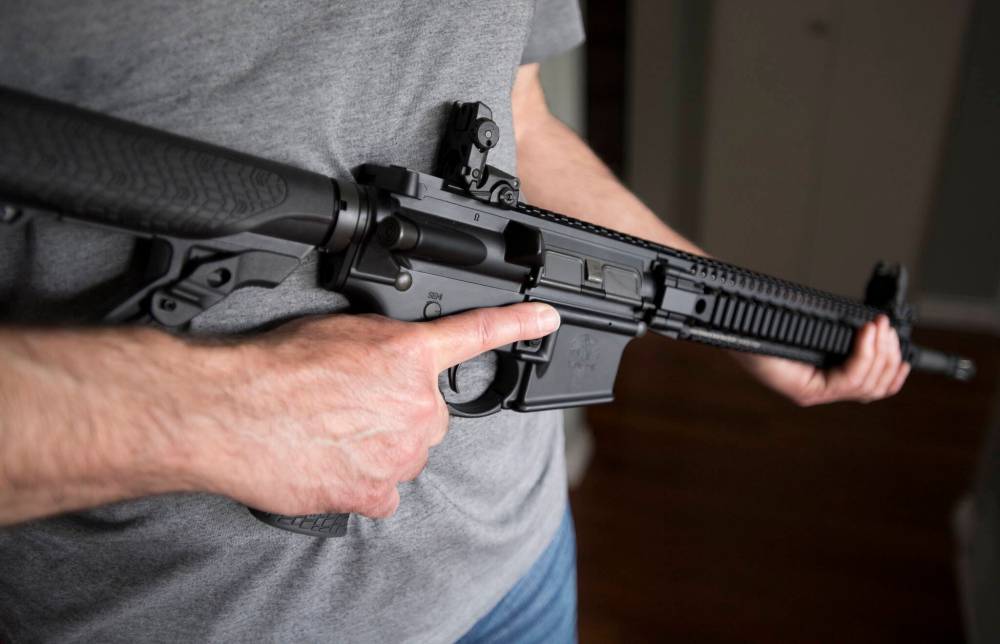
JONATHAN HAYWARD / THE CANADIAN PRESS FILES
Across Canada, more than 67,000 firearms were declared as part of the federal government’s gun buyback program for assault-style weapons.
“I think there’s a lot of mistrust with the federal government and the way they handled this whole file,” said Heald.
Across Canada, more than 67,000 firearms were declared, Public Safety Canada reported Thursday. The Liberal government set aside compensation money for 136,000 when the program opened for individual owners in January.
Since May 2020, the federal government banned more than 2,500 makes and models it dubbed “assault-style” firearms. Individual owners of the outlawed guns had until March 31 to submit a declaration to be eligible for compensation under the federal buyback program.
Those who don’t turn over banned weapons must safely dispose of or permanently deactivate them before the amnesty period ends on Oct. 30. If not, they risk criminal liability for illegal possession of a prohibited firearm.
The Supreme Court of Canada announced March 19 that it would hear a challenge of the ban on certain firearms models the government considers suitable only for the battlefield.
Heald welcomed the high court review, saying many of the firearms now prohibited are designed and widely used for hunting and sporting purposes.
“These people legally purchased the firearm, made a contract with the government, went through all the vetting processes and then had government turn around and say, ‘We don’t like the look of that,’” he said.
“It’s based on the looks of a firearm. We’re not talking about assault-style weapons — they’re already illegal.”
Heald said he doesn’t own any of the banned firearms.
Both Premier Wab Kinew and Mayor Scott Gillingham have distanced themselves from the federal program, saying they respect the rights of law-abiding gun owners.
Kinew, a gun owner and hunter, has criticized the program for being inefficient and misguided, and refused to have the province play any role in administering it.
The RCMP and mobile collection units will gather the banned weapons outside Winnipeg, Public Safety Canada has said. Manitoba RCMP would not comment on its participation, deferring to the federal department.
The Winnipeg Police Service said Thursday it wasn’t able to provide the tally on how many prohibited firearm declarations it received by Tuesday’s declaration deadline.
A $2.8-million contribution agreement with the federal government covers the cost of the WPS co-ordination and administration involved in securely removing the prohibited firearms from individual owners, as well as the collection, verification, transportation and storage of the weapons.
Work will involve special-duty officers working voluntary overtime to mitigate negative impacts on police resources and responses to calls for service, according to the terms of the agreement.

Disposal will be performed by a third party designated by the federal government.
The Canadian Association of Chiefs of Police has said it’s committed to reducing firearm-related harm across the country. The association said that while the buyback program may help reduce the availability of domestically sourced prohibited firearms, it doesn’t address current policing priorities, including the illegal importation, trafficking, smuggling and criminal use of firearms.
Public Safety Minister Gary Anandasangaree, the federal minister in charge, made headlines last year for questioning the logic and rollout of the program in a conversation that was secretly recorded.
“When you have almost unanimous support from the police associations across the country and even the minister himself caught on tape saying this isn’t going to work, you have a tough time having hunters and sport shooters buy into a program,” said Heald.
carol.sanders@freepress.mb.ca
Carol Sanders
Legislature reporter
Carol Sanders is a reporter at the Free Press legislature bureau. The former general assignment reporter and copy editor joined the paper in 1997. Read more about Carol.
Every piece of reporting Carol produces is reviewed by an editing team before it is posted online or published in print — part of the Free Press‘s tradition, since 1872, of producing reliable independent journalism. Read more about Free Press’s history and mandate, and learn how our newsroom operates.
Our newsroom depends on a growing audience of readers to power our journalism. If you are not a paid reader, please consider becoming a subscriber.
Our newsroom depends on its audience of readers to power our journalism. Thank you for your support.
Declarations across Canada
Alberta — 7,334
British Columbia — 15,600
Manitoba — 2,442
New Brunswick — 1,150
Newfoundland and Labrador — 484
Northwest Territories — 81
Nova Scotia — 1,702
Nunavut — fewer than 10
Ontario — 27,487
Prince Edward Island — 170
Québec — 9,801
Saskatchewan — 1,255
Yukon — 134
Total — more than 67,000
Source: Public Safety Canada
Carol Sanders
Legislature reporter
Carol Sanders is a reporter at the Free Press legislature bureau. The former general assignment reporter and copy editor joined the paper in 1997. Read more about Carol.
Every piece of reporting Carol produces is reviewed by an editing team before it is posted online or published in print — part of the Free Press‘s tradition, since 1872, of producing reliable independent journalism. Read more about Free Press’s history and mandate, and learn how our newsroom operates.
Our newsroom depends on a growing audience of readers to power our journalism. If you are not a paid reader, please consider becoming a subscriber.
Our newsroom depends on its audience of readers to power our journalism. Thank you for your support.
Related Articles
Gun buyback tally of over 67,000 firearms falls well short of federal estimate

Advertisement Advertise With Us
Advertisement Advertise With Us