

Missing Ukrainian man found dead

Advertisement
Read this article for free:
or
Already have an account? Log in here »
To continue reading, please subscribe:

Digital Subscription
One year of digital access for only $205*
- Enjoy unlimited reading on winnipegfreepress.com
- Read the E-Edition, our digital replica newspaper
- Access News Break, our award-winning app
- Play interactive puzzles
*First annual payment billed as $205.00 + GST for one year. This annual subscription will automatically renew at $233.00 + GST every 52 weeks (10% off the regular annual price of $259.35). Offer available to new and qualified returning subscribers only. Cancel any time.
To continue reading, please subscribe:
Add Free Press access to your Brandon Sun subscription for only an additional
$1 for the first 4 weeks*
- Enjoy unlimited reading on winnipegfreepress.com
- Read the E-Edition, our digital replica newspaper
- Access News Break, our award-winning app
- Play interactive puzzles
*Your next Brandon Sun subscription payment will increase by $1.00 and you will be charged $17.95 plus GST for four weeks. After four weeks, your payment will increase to $24.95 plus GST every four weeks.
Read unlimited articles for free today:
or
Already have an account? Log in here »
The community is mourning a Ukrainian refugee who was found dead Saturday night, nearly three months after he was last seen.
Anatolii Ishchenko, 30, was missing since Jan. 22. His body was located in the Red River at the intersection of Lyndale Drive and Chandos Avenue at around 11 p.m. Saturday — more than 10 kilometres north of where he was last seen in the 2300 block of Pembina Highway. He had walked out of Victoria Hospital’s waiting room before being reported missing.
“We need this death not to go in vain,” said volunteer search-and-rescue organizer Oksana Burchak, saying the young man’s death emphasizes the need for change in the response to patients who leave health-care facilities after seeking pyschiatric help, particularly in brutally cold weather.
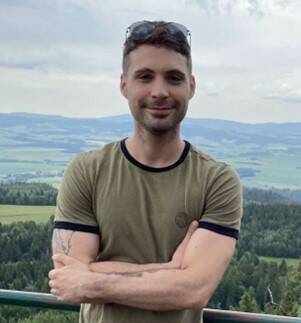
SUPPLIED
Anatolii Ishchenko, 30, has been found dead. The Ukrainian refugee was missing since Jan. 22.
Burchak said she was notified a body was found late Saturday. She said she confirmed with Winnipeg police that it was Ishchenko, identified by his tattoos as well as height and age. Police haven’t released any information publicly.
On Sunday, a Winnipeg Police Service spokesman said the department had no information to share, but Ishchenko’s family has been notified, his cousin confirmed.
Dennis Mashevsky, Ishchenko’s maternal cousin, lives in California. He travelled to Winnipeg for what was supposed to be the start of the second stage of the volunteer ground search on Sunday. Instead, Mashevsky faced the reality of the tragic discovery and expressed gratitude for the closure it brought the family.
His cousin was hard-working and family-oriented, Mashevsky said.
“He had little-brother energy. He was a playful, sweet guy. He was shy and likeable, he left a good impression. And he was given a heavy load to bear. I think if there was a security guard, somebody to just stop him from leaving the hospital on the coldest day of winter, I mean, we could have prevented this,” he said.
“I just wish somebody maybe could have stopped him.”
Around 10:30 a.m. on the morning he was last seen alive, Ishchenko was taken by ambulance to the Victoria Hospital, but he left the hospital at about noon without being seen by a doctor. He’d been having panic attacks and had lost his job days earlier. It was a frigid winter day, with temperatures dropping below -30 C. It felt more like -48 C that day, Burchak said.
She said Ishchenko contacted a clinic to make a mental-health appointment the day after he lost his job.
“He was trying to reach for help. It’s not that he was kind of sitting and doing nothing. He was a person of action,” she said, adding: “We could have saved him if we knew that this was happening.”
Ishchenko was among thousands of Ukrainan refugees who arrived in Canada in 2022; he came to Winnipeg alone, without family members here. He had worked in information technology in Ukraine. After he met Burchak in February 2025, he asked for business advice. When he was missing and volunteers went to his apartment, they found written notes that showed Ishchenko had taken her advice to heart.
“It touched me so much, because he really listened to what I was telling him,” she said, describing him as smart and “a good guy.” Though she’d only met Ishchenko a couple of times, Burchak organized a search-and-rescue mission when he went missing, gathering more than 100 volunteers.
The first large-scale ground search took place on April 3 in St. Vital, as snow melt created more visibility.
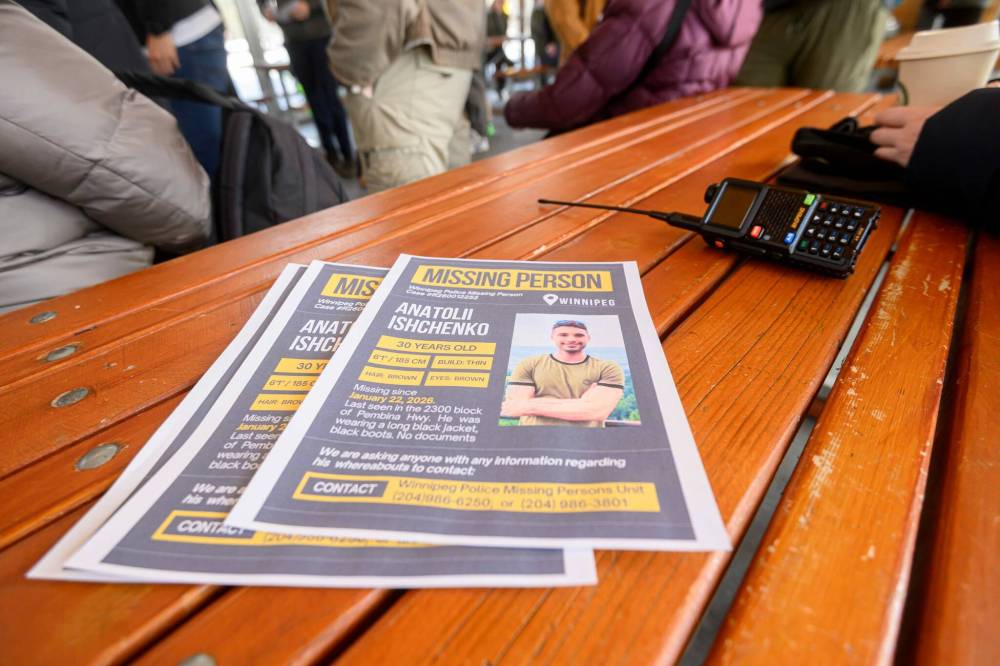
MIKE SUDOMA / FREE PRESS FILES
Missing posters for Ishchenko were widely distributed, including at a community search in St. Vital on April 3.
On Sunday, Burchak thanked the searchers, including Indigenous elders who offered prayers and gifts to the Red River.
“It’s kind of amazing, because river finally gave him back to us,” she said.
She and Mashevsky called for protocol changes to better protect those in crisis so that what happened to Ishchenko never happens again. Burchak said it is not uncommon for people to leave crowded hospital waiting rooms while in need of psychiatric help — she has personally stepped in to help, including for another Ukrainian man who needed support last year.
“We were able to help him. He’s alive, he’s working. It was just a matter of bringing him to the psychiatric ward of the Health Sciences Centre.”

“We need to do something to prevent this. And it’s easily preventable, you know, and prevention will save lives. It’s not only about Ukrainians, it’s about everyone,” Burchak said.
Mashevsky thanked volunteers for their efforts.
“The Ukrainian community came together, just very impressively. The police only have so many resources and we’re lucky that we found him and we have this closure, and we wish the same for other missing people,” he said.
“And I think the most important thing I want to say is that if you are a displaced Ukrainian, you matter, your life matters, and there’s a community here that loves you and is here for you.”
An autopsy is scheduled for Monday and details about a memorial service will be released later.
Katie May is a multimedia producer for the Free Press.
Our newsroom depends on a growing audience of readers to power our journalism. If you are not a paid reader, please consider becoming a subscriber.
Our newsroom depends on its audience of readers to power our journalism. Thank you for your support.
Katie May is a multimedia producer for the Free Press.
Our newsroom depends on a growing audience of readers to power our journalism. If you are not a paid reader, please consider becoming a subscriber.
Our newsroom depends on its audience of readers to power our journalism. Thank you for your support.
Related Articles
Search for missing Ukrainian refugee detailed, methodical

Advertisement Advertise With Us
Advertisement Advertise With Us