

Shortage of housing for Indigenous seniors in city raising concerns ahead of northern flood, fire evacuations

Advertisement
Read this article for free:
or
Already have an account? Log in here »
To continue reading, please subscribe:
Digital Subscription
One year of digital access for only $1.44 a week*
- Enjoy unlimited reading on winnipegfreepress.com
- Read the E-Edition, our digital replica newspaper
- Access News Break, our award-winning app
- Play interactive puzzles
*Billed as $5.77 plus GST every four weeks. After 52 weeks, price increases to the regular rate of $19.95 plus GST every four weeks. Offer available to new and qualified returning subscribers only. Cancel any time.
To continue reading, please subscribe:
Add Free Press access to your Brandon Sun subscription for only an additional
$1 for the first 4 weeks*
- Enjoy unlimited reading on winnipegfreepress.com
- Read the E-Edition, our digital replica newspaper
- Access News Break, our award-winning app
- Play interactive puzzles
*Your next Brandon Sun subscription payment will increase by $1.00 and you will be charged $17.95 plus GST for four weeks. After four weeks, your payment will increase to $24.95 plus GST every four weeks.
Read unlimited articles for free today:
or
Already have an account? Log in here »
A small group of women elders is expressing concerns about a lack of urban housing for Indigenous seniors, warning the crisis will only worsen as flood and wildfire evacuations uproot more from their communities.
“A lot of our people are coming from rural areas to the city, especially with the wildfires and the floods,” Kathy Mallett said at a forum Thursday at Sergeant Tommy Prince Place in north Winnipeg hosted by the Indigenous Seniors Resource Centre’s research committee.
“We’re going to have more and more people coming into the city looking for places to live. Guess what? We don’t have any homes for them.”
THE CANADIAN PRESS FILES
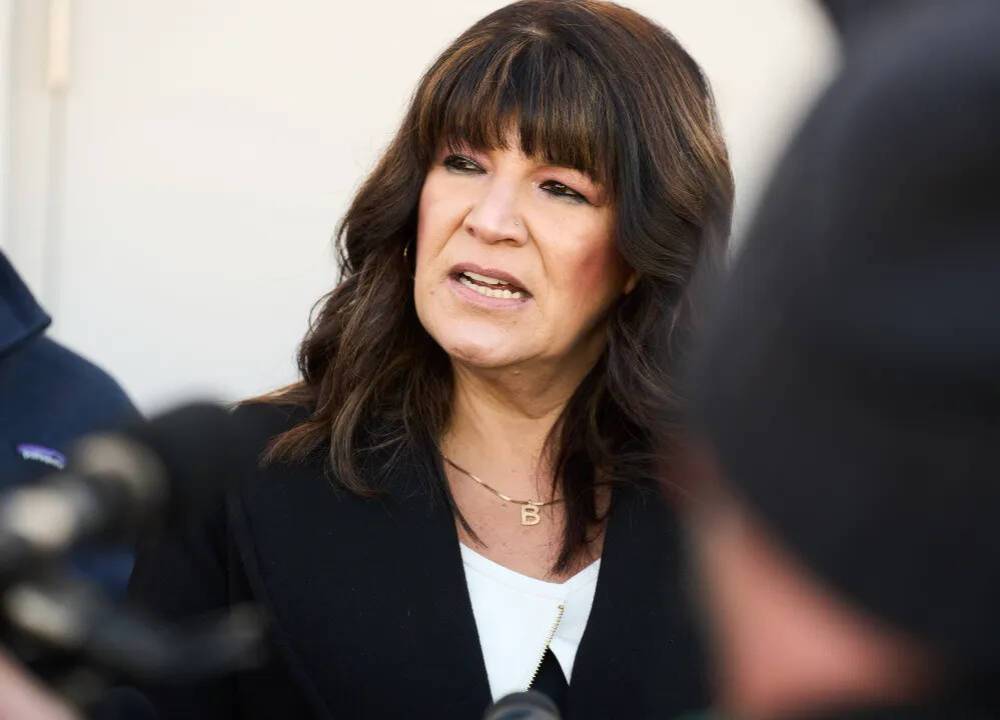
Housing, Addictions and Homelessness Minister Bernadette Smith said the province is taking action to create more affordable housing for Indigenous seniors.
Older Indigenous adults are a fast-growing segment of Canada’s population, data shows. The proportion aged 65 and up grew from 4.8 per cent in 2006 to 7.3 per cent in 2016, and is projected to double by 2036. In Manitoba, the 2021 census reported 10 per cent of the province’s population identify as Indigenous, 52 per cent of whom identify as Métis and 46 per cent as First Nation.
End Homelessness Winnipeg’s 2018 Street Health Survey report identified 71 per cent of those considered homeless as Indigenous, 15 per cent of whom were seniors age 55 and older.
The Indigenous seniors research committee led the Minosin Kikiwa (“a good home”) project in 2023-24 to draw attention to the complex housing-related challenges faced by older Indigenous adults in Winnipeg.
Because of lower average life expectancies, Indigenous elders are considered “senior” before they turn 65, the committee said.
Respondents to its survey of those age 55-plus included 58 per cent who rented and 21 per cent who were homeless or in unstable or transitional housing. Only 27 per cent of the 48 respondents said they could easily meet their financial needs.
Many struggle to access safe, affordable housing with the added challenges of racism, institutional trauma and culture shock, said Joanne Mason, who co-chairs the research committee. Some stay in dilapidated rentals and are exposed to violence and abuse because it’s too difficult and expensive to move, she said.
“If you don’t feel safe at home, it affects your health,” said Mason.
One 66-year-old survey participant at the forum said she feels safe in her seniors building after moving there seven years ago from the main floor of a North End house that was not a peaceful place to live.
“My neighbour upstairs was abusing his girlfriend,” said the woman, who asked not to be named.
“I warned him that I’m not going to take that — for him to treat her like that,” she said. “He told me to my mind my own business. I said, ‘It is my business, regarding my fellow woman.’”
She said she wants to have “peace of mind,” but it’s a challenge when so many are experiencing what she called displaced anger.
“I see a lot of trauma,” said the woman.
Mason recalled moving to the city from “the bush” in northern Manitoba decades ago. It was challenging, she said.
“It’s a whole new country, a whole new way of life — it was just so different,” she said, adding she is concerned about the struggles of uprooted elderly Indigenous people.
“That’s what they go through, and this is supposed to be our golden years.”
Housing Minister Bernadette Smith said the province is taking action to create more affordable housing for Indigenous seniors.

“They’ve helped build our province… and we want to make sure housing is there that is affordable,” Smith said.
The province has 13 projects worth more than $33 million on the go with First Nations and Métis governments, she said, noting the NDP is also funding Manitoba Housing to get 2,100 units back in the system.
The province is trying to remove some “generational barriers” by funding housing projects that employ Indigenous workers, and added $2.5 million to the adult education budget this year, Smith said.
“We’re getting people into the workforce. Generations behind them are going to see that and value that,” she said. “That’s the kind of generational barriers that we’re trying to overcome.”
carol.sanders@freepress.mb.ca
Carol Sanders
Legislature reporter
Carol Sanders is a reporter at the Free Press legislature bureau. The former general assignment reporter and copy editor joined the paper in 1997. Read more about Carol.
Every piece of reporting Carol produces is reviewed by an editing team before it is posted online or published in print — part of the Free Press‘s tradition, since 1872, of producing reliable independent journalism. Read more about Free Press’s history and mandate, and learn how our newsroom operates.
Our newsroom depends on a growing audience of readers to power our journalism. If you are not a paid reader, please consider becoming a subscriber.
Our newsroom depends on its audience of readers to power our journalism. Thank you for your support.
Carol Sanders
Legislature reporter
Carol Sanders is a reporter at the Free Press legislature bureau. The former general assignment reporter and copy editor joined the paper in 1997. Read more about Carol.
Every piece of reporting Carol produces is reviewed by an editing team before it is posted online or published in print — part of the Free Press‘s tradition, since 1872, of producing reliable independent journalism. Read more about Free Press’s history and mandate, and learn how our newsroom operates.
Our newsroom depends on a growing audience of readers to power our journalism. If you are not a paid reader, please consider becoming a subscriber.
Our newsroom depends on its audience of readers to power our journalism. Thank you for your support.

Advertisement Advertise With Us
Advertisement Advertise With Us