

Two more 7-Eleven locations bite the dust
Inner-city crime, rising food prices blamed for latest closures

Advertisement
Read this article for free:
or
Already have an account? Log in here »
To continue reading, please subscribe:

Digital Subscription
One year of digital access for only $205*
- Enjoy unlimited reading on winnipegfreepress.com
- Read the E-Edition, our digital replica newspaper
- Access News Break, our award-winning app
- Play interactive puzzles
*First annual payment billed as $205.00 + GST for one year. This annual subscription will automatically renew at $233.00 + GST every 52 weeks (10% off the regular annual price of $259.35). Offer available to new and qualified returning subscribers only. Cancel any time.
To continue reading, please subscribe:
Add Free Press access to your Brandon Sun subscription for only an additional
$1 for the first 4 weeks*
- Enjoy unlimited reading on winnipegfreepress.com
- Read the E-Edition, our digital replica newspaper
- Access News Break, our award-winning app
- Play interactive puzzles
*Your next Brandon Sun subscription payment will increase by $1.00 and you will be charged $17.95 plus GST for four weeks. After four weeks, your payment will increase to $24.95 plus GST every four weeks.
Read unlimited articles for free today:
or
Already have an account? Log in here »
Outside of one of two 7-Eleven locations to abruptly close in the last three days, a small gathering forms Monday morning.
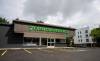
The store at Notre Dame Avenue and Arlington Street shut its doors a day early, despite signs on the windows listing its last day as Tuesday. Its lights had been turned off and shelves were stripped bare.
Customers who were turned away begin to discuss the closure amongst themselves outside of the building; when a manager walks out and is asked why the store is being closed, he says “no comment” before walking back inside.
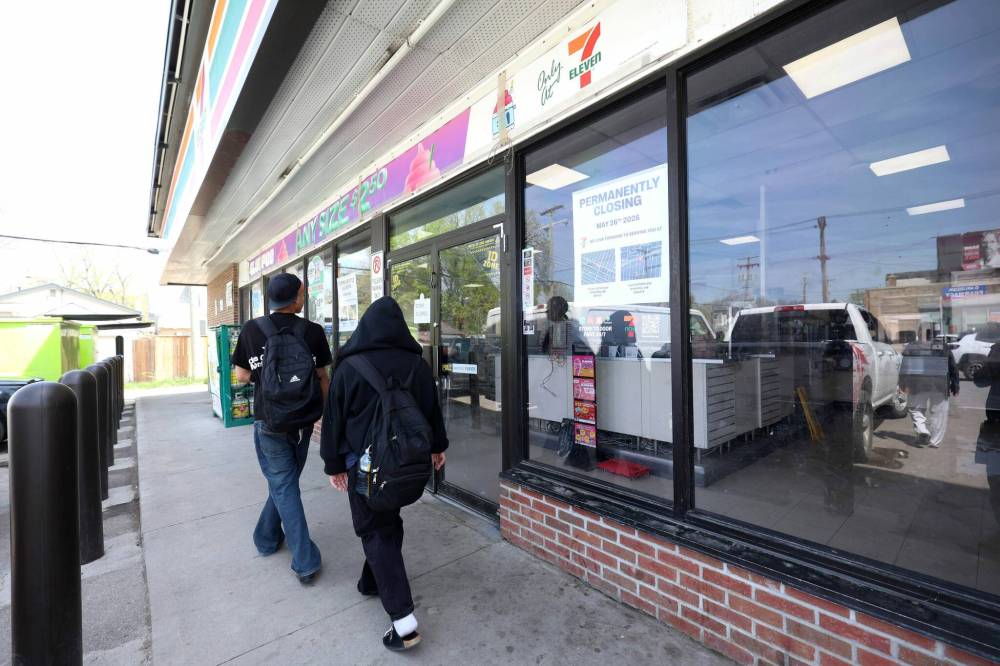
RUTH BONNEVILLE / FREE PRESS
Customers at the 7-Eleven at Arlington Street and Notre Dame Avenue were turned away after finding the store closed permanently Monday.
Shoppers told the Free Press the location was a frequent spot for petty robbery and several said they had tried to intervene in incidents where staff were not able to stop thieves.
One customer, who comes to the store regularly and was hoping to shop one last time, shook his head at the closed signs.
“I knew this was closed, but I thought I’d come over and have a peek. It’s like saying goodbye to an old friend in a way,” the customer, who declined to be named, said outside of the store Friday. “It gives you that kind of feeling. It’s terrible.”
At the 7-Eleven at Keewatin Street and Logan Avenue, a staff member cleaning out shelves said the business closed Friday “because of the robberies” and she and other employees would be moved to other locations. She declined to comment further.
“It’s ridiculous,” said a customer. “How many of them have closed in the last two years? … You can’t blame them. Too many shenanigans.”
There have been at least eight Winnipeg 7-Eleven stores shut down since Aug. 2024, when the company warned city councillors that crime had put 10 of its locations at risk of closure. Stores in areas including Main Street, Pembina Highway and McPhillips Street have since closed.
Despite this, Mayor Scott Gillingham said earlier this year 7-Eleven representatives had told him the corporation planned to expand in Winnipeg.
Colin Fast, a spokesman for Gillingham, said those conversations had happened at the beginning of the year and his office has “no indication those plans for Winnipeg have changed.”
The convenience store chain did not respond to a request for comment Monday and has not responded to questions on prior closures.
“How many of them have closed in the last two years? …You can’t blame them. Too many shenanigans.”
According to earnings filings published by 7-Eleven in April, its North American operators plan to close 645 stores in the 2026 fiscal year and open 205 locations. The store’s parent company cited impacts of high costs “particularly among low-income households, as inflation continued to weigh on spending” in its April 9 report.
Coun. Cindy Gilroy, whose Daniel McIntyre ward borders the Arlington Street 7-Eleven, called the closure “no surprise,” noting that just a few blocks away, Valour Community Centre hosts its Grocery Affordable Access Program, which offers food at a reduced rate for people struggling to pay bills.
“This is a real crisis, that people can not afford the cost of groceries right now, and the prices that they’re selling things at 7-Eleven is just not affordable for people to really go and access affordable groceries,” she said.
Gilroy said local stores in her ward have been able to stay afloat even with fewer resources and didn’t want to see the inner city “blamed” for the economic outcomes of a massive company.
“I know businesses are struggling with (safety), I know that there we’re seeing more theft,” she said. “But at the same time, if you look at my community, you are seeing more convenience stores opening than ever before.”
The closures tell a two-pronged story, said a University of Manitoba professor, noting crime and the cost of living likely both played a part.
“7-Eleven prices are, typically, because of the convenience they offer, are marked up slightly higher than the same product in other retailers,” said Sandeep Arora of the Asper School of Business.
“Now, the base has become higher, so the products are becoming even more expensive. Having said that, the people who were buying those products may not be able to afford those products because they’re becoming more and more expensive.”
“…If you look at my community, you are seeing more convenience stores opening than ever before.”

Losing convenience stores, particularly in the inner city, is a “slippery slope,” said Arora. Seeing a big chain like 7-Eleven unable to operate in a neighbourhood could discourage smaller, local businesses to set up shop, creating a snowball effect that could create food deserts in lower-income areas where people are less likely to be able to drive to larger grocery stores.
“End of the day, these stores, even though they exist to make profits, they also have a role to play in community,” he said.
“And when we have stores closing and communities not having access to them long term, it’s not good for the community, especially the area that they were serving.”
— with files from The Canadian Press
malak.abas@freepress.mb.ca
Malak Abas is a city reporter at the Free Press. Born and raised in Winnipeg’s North End, she led the campus paper at the University of Manitoba before joining the Free Press in 2020. Read more about Malak.
Every piece of reporting Malak produces is reviewed by an editing team before it is posted online or published in print — part of the Free Press‘s tradition, since 1872, of producing reliable independent journalism. Read more about Free Press’s history and mandate, and learn how our newsroom operates.
Our newsroom depends on a growing audience of readers to power our journalism. If you are not a paid reader, please consider becoming a subscriber.
Our newsroom depends on its audience of readers to power our journalism. Thank you for your support.
Malak Abas is a city reporter at the Free Press. Born and raised in Winnipeg’s North End, she led the campus paper at the University of Manitoba before joining the Free Press in 2020. Read more about Malak.
Every piece of reporting Malak produces is reviewed by an editing team before it is posted online or published in print — part of the Free Press‘s tradition, since 1872, of producing reliable independent journalism. Read more about Free Press’s history and mandate, and learn how our newsroom operates.
Our newsroom depends on a growing audience of readers to power our journalism. If you are not a paid reader, please consider becoming a subscriber.
Our newsroom depends on its audience of readers to power our journalism. Thank you for your support.
Related Articles
Retail crime claims another 7-Eleven in city; shoplifters target stretch of St. Anne’s Road ‘almost daily’

Advertisement Advertise With Us
Advertisement Advertise With Us