

Extreme heat, dry conditions fan fears of another explosive wildfire season

Advertisement
Read this article for free:
or
Already have an account? Log in here »
To continue reading, please subscribe:

Digital Subscription
One year of digital access for only $205*
- Enjoy unlimited reading on winnipegfreepress.com
- Read the E-Edition, our digital replica newspaper
- Access News Break, our award-winning app
- Play interactive puzzles
*First annual payment billed as $205.00 + GST for one year. This annual subscription will automatically renew at $233.00 + GST every 52 weeks (10% off the regular annual price of $259.35). Offer available to new and qualified returning subscribers only. Cancel any time.
To continue reading, please subscribe:
Add Free Press access to your Brandon Sun subscription for only an additional
$1 for the first 4 weeks*
- Enjoy unlimited reading on winnipegfreepress.com
- Read the E-Edition, our digital replica newspaper
- Access News Break, our award-winning app
- Play interactive puzzles
*Your next Brandon Sun subscription payment will increase by $1.00 and you will be charged $17.95 plus GST for four weeks. After four weeks, your payment will increase to $24.95 plus GST every four weeks.
Read unlimited articles for free today:
or
Already have an account? Log in here »
A heat wave and dry vegetation are putting Manitoba at higher risk of wildfires, with additional municipalities imposing fire bans Thursday to try to prevent human-caused ignitions.
Mike Flannigan, a professor of wildland fire at Thompson Rivers University in Kamloops, B.C., said there is a potential for a “very active” week or two based on current conditions and short-term weather forecasts.
“There’s a recipe for wildfire: vegetation — fuels — ignition and weather. The vegetation is there — the fuel — the weather is now coming or there, so it’s really about ignitions now,” he said. “People-caused ignitions are common in the spring, but we’re also kicking into lightning season, too.”
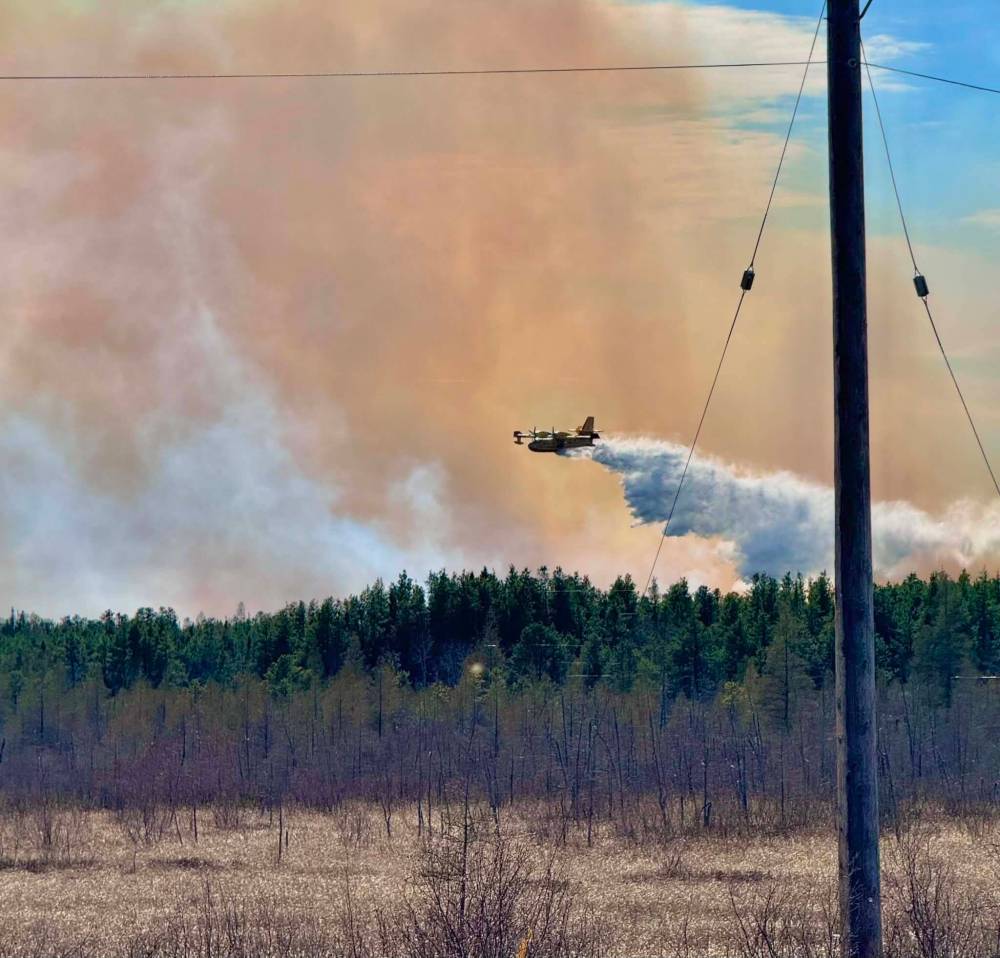
LESLIE ARROW PHOTO
A water bomber fights a wildfire southwest of Chemawawin Cree Nation on Tuesday.
Flannigan cautioned that he’s seen situations where the ingredients were there, but a flurry of new wildfires did not occur.
“Fortunately, there was no lightning and people were responsible. Let’s hope that’s what happens,” he said.
The province didn’t say how this week’s extreme heat could affect the wildfire outlook. A spokesperson pointed to the Manitoba Wildfire Service’s website, which displays daily fire danger maps.
Environment and Climate Change Canada, which issued a heat warning for much of Manitoba, expects daytime highs in the low to mid-30s and overnight lows in the high teens into early next week. Thunderstorms are possible.
Dauphin was Canada’s hot spot at 2 p.m. Thursday, with a temperature of 36.5 C.
“I can’t comment directly on how the (wildfire) risk will change, but when you’re looking at this sort of weather, it is something that you have to think about,” said Christy Climenhaga, a scientist with Environment Canada.
“Long stretches of heat, especially early in the season before things have really greened up a lot, can be problematic.”
This year’s wildfire season started later than 2025’s, which was Manitoba’s worst in 30 years.
The wildfire service’s website listed eight active fires Thursday, including two classified as out of control.
The largest of the two was just southwest of Easterville and Chemawawin Cree Nation in central Manitoba. The fire, about 400 hectares in size, didn’t pose a threat to the communities, said Chemawawin Chief Clarence Easter.
“There’s a recipe for wildfire: vegetation – fuels – ignition and weather.”
Water bombers and ground crews have attacked the blaze since it began Monday. The cause of the fire is under investigation.
“They bombarded it with water quite a bit (on Wednesday),” Easter said, adding east winds blew the fire and smoke away from the community.
He remains concerned about dry conditions and the potential for additional fires in the region.
“It snowed last week. All of a sudden it turned warm, and now you have fires,” he said. “(The fire risk) is pretty high. We have to be vigilant.”
Chemawawin has temporarily banned open fires. Easter encouraged people not to light fires and to avoid other actions that could ignite vegetation.
“People should be careful not to throw their cigarettes out, that kind of stuff, too,” he said.
About 1,700 people live in Chemawawin, roughly 450 kilometres northwest of Winnipeg.
The second out-of-control wildfire was east of St. Claire Lake in Whiteshell Provincial Park in eastern Manitoba. The fire, about eight hectares, began Wednesday. The cause is under investigation.
Almost 30 municipalities have implemented burning restrictions.
Flin Flon announced a temporary fire ban as a precaution Thursday, exactly a year after the northern city was evacuated while it was threatened by a large wildfire.
“It’s a different kind of feeling once you’ve experienced it.”
“We’re just entering into a hot spell — a few hot days coming along, with breezes — so people are concerned,” Mayor George Fontaine said. “(The ban) is just so that we’re not taking any chances.”
The measure prohibits all open fires and recreational fires, including those in approved pits. Fireworks and sky lanterns are also prohibited. Existing burn permits have been cancelled.
Flin Flon encouraged people to clear debris from around and underneath all-terrain and utility terrain vehicles after their use because dry debris can ignite.
The city spent the winter preparing for this year’s wildfire season. It purchased sprinkler trailers, and improved its communication with neighbouring municipalities and the province, Fontaine said.
Residents reflected on the one-year anniversary of the evacuation and the declaration of a provincial state of emergency.
“The feeling is one of hopefulness but caution,” Fontaine said. “It’s a different kind of feeling once you’ve experienced it. You’re going along, but you’ve got one eye looking kind of sideways just to make sure you’re ready in case something does happen.”
He encouraged people to keep an emergency bag packed in case they are forced to leave their home on short notice.
“I would suggest you keep your gas tanks full at all times in the summer because these things don’t come up with any particular warning, as we saw before,” Fontaine said.
Last month, Natural Resources and Indigenous Futures Minister Ian Bushie said Manitoba is not expecting a repeat of 2025. Long-term forecasts suggest this season could be very active despite a later start, Flannigan said.
Modelling released by the federal government Thursday suggested fire danger will increase in the Prairies in July. The federal outlook noted drought conditions have persisted for several years, and climate change is increasing wildfire risks.
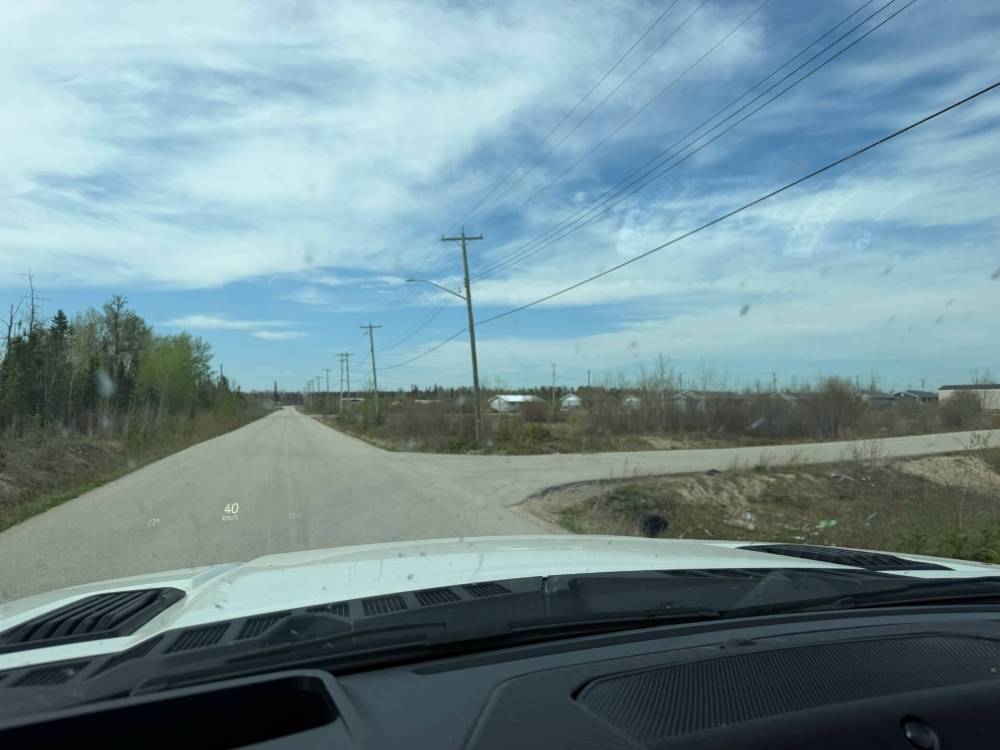
SUPPLIED
Firefighters and winds helped knock the fire down by Thursday, Chemawawin Chief Clarence Easter said, noting the fire was at the end of this gravel road and now difficult to see.
Two people died in a wildfire fire near Lac du Bonnet during the 2025 season. More than 33,000 people were displaced — the most on record — as fires affected 60 communities, including remote First Nations.
More than 2.3 million hectares (5.7 million acres) of land were burned by more than 445 fires.
The NDP government has said it was as prepared as it possibly could have been last year. The province has since spent millions to improve future wildfire preparations and response.
Manitoba’s 2025-26 emergency expenditures were expected to be $333 million over budget due to last year’s fire season.
chris.kitching@freepress.mb.ca

Chris Kitching is a general assignment reporter at the Free Press. He began his newspaper career in 2001, with stops in Winnipeg, Toronto and London, England, along the way. After returning to Winnipeg, he joined the Free Press in 2021, and now covers a little bit of everything for the newspaper. Read more about Chris.
Every piece of reporting Chris produces is reviewed by an editing team before it is posted online or published in print — part of the Free Press‘s tradition, since 1872, of producing reliable independent journalism. Read more about Free Press’s history and mandate, and learn how our newsroom operates.
Our newsroom depends on a growing audience of readers to power our journalism. If you are not a paid reader, please consider becoming a subscriber.
Our newsroom depends on its audience of readers to power our journalism. Thank you for your support.
Chris Kitching is a general assignment reporter at the Free Press. He began his newspaper career in 2001, with stops in Winnipeg, Toronto and London, England, along the way. After returning to Winnipeg, he joined the Free Press in 2021, and now covers a little bit of everything for the newspaper. Read more about Chris.
Every piece of reporting Chris produces is reviewed by an editing team before it is posted online or published in print — part of the Free Press‘s tradition, since 1872, of producing reliable independent journalism. Read more about Free Press’s history and mandate, and learn how our newsroom operates.
Our newsroom depends on a growing audience of readers to power our journalism. If you are not a paid reader, please consider becoming a subscriber.
Our newsroom depends on its audience of readers to power our journalism. Thank you for your support.
Related Articles
Wildfire advisory issued for two communities in central Manitoba




Advertisement Advertise With Us
Advertisement Advertise With Us
History
Updated on Thursday, May 28, 2026 5:35 PM CDT: Adds details, comments.