

Province names new chief electoral officer who faces ‘very challenging circumstances,’ political scientist says

Advertisement
Read this article for free:
or
Already have an account? Log in here »
To continue reading, please subscribe:

Digital Subscription
One year of digital access for only $205*
- Enjoy unlimited reading on winnipegfreepress.com
- Read the E-Edition, our digital replica newspaper
- Access News Break, our award-winning app
- Play interactive puzzles
*First annual payment billed as $205.00 + GST for one year. This annual subscription will automatically renew at $233.00 + GST every 52 weeks (10% off the regular annual price of $259.35). Offer available to new and qualified returning subscribers only. Cancel any time.
To continue reading, please subscribe:
Add Free Press access to your Brandon Sun subscription for only an additional
$1 for the first 4 weeks*
- Enjoy unlimited reading on winnipegfreepress.com
- Read the E-Edition, our digital replica newspaper
- Access News Break, our award-winning app
- Play interactive puzzles
*Your next Brandon Sun subscription payment will increase by $1.00 and you will be charged $17.95 plus GST for four weeks. After four weeks, your payment will increase to $24.95 plus GST every four weeks.
Read unlimited articles for free today:
or
Already have an account? Log in here »
The man who played a key role in Manitoba schools’ response to COVID-19 and killing a controversial bill that would’ve eliminated elected English-language school boards is going to be in charge of Manitoba elections.
The province announced Monday the appointment of Josh Watt, executive director of the Manitoba School Boards Association, as chief electoral officer, effective July 15.
Watt faces “very, very challenging circumstances,” in Manitoba’s “hyper-partisan” and “problematic” political environment, said University of Winnipeg political science professor Malcolm Bird.
“Add on foreign interference and AI and public apathy and criticism of public institutions and young people not voting, and it’s a hard job,” the professor of public policy and administration said Tuesday.
“Despite all of these problems and everything, Manitoba’s electoral system is amazing. Part of that has to do with the capacities of the chief electoral officer — the old one, the new one and the bureaucrats in the system itself,” Bird said.
Watt will resign July 8 from the school boards association, a role he’s held since 2015, a news release said Tuesday.
“We’re very excited about his appointment and he is the most qualified, so we look forward to working with him,” government house leader Nahanni Fontaine said Monday. Watt has experience with school divisions and has worked in Department of Education, she said.
Under the Elections Act, the standing committee on legislative affairs considers candidates for the office of chief electoral officer and makes a recommendation to the legislative assembly. The assembly then makes the appointment.
Watt, who was in the Legislative Building Monday when his new role was announced, declined interview requests before he’s on the job.
He’ll replace Shipra Verma, who was Manitoba’s chief electoral officer for more than a decade before moving to British Columbia to oversee its elections. She was credited with leading Elections Manitoba through a comprehensive transformation and election modernization that focused on service and accessibility.
The chief electoral officer administers provincial elections to ensure they are fair and free of political influence as set out in the Elections Act and the Election Financing Act. Reporting to the legislative assembly, the officer must be non-partisan and cannot cast a ballot.
Watt played a key role in strengthening advocacy on behalf of locally elected school boards, worked with government and education partners and guided the school board association through periods of significant change within the K-12 education system, the association said in a news release Tuesday.
Watt made sure the perspectives of school boards were effectively represented in provincial legislative and policy discussions, including “a strong and effective response” to Bill 64, the Education Modernization Act. The controversial bill introduced by the former Tory government that would have done away with English-language school boards was officially withdrawn in 2021.
Watt also played a leading role in Manitoba public schools’ response to the COVID-19 pandemic, bringing government, school boards and partners together to support the safety and well-being of students and staff, the release said.
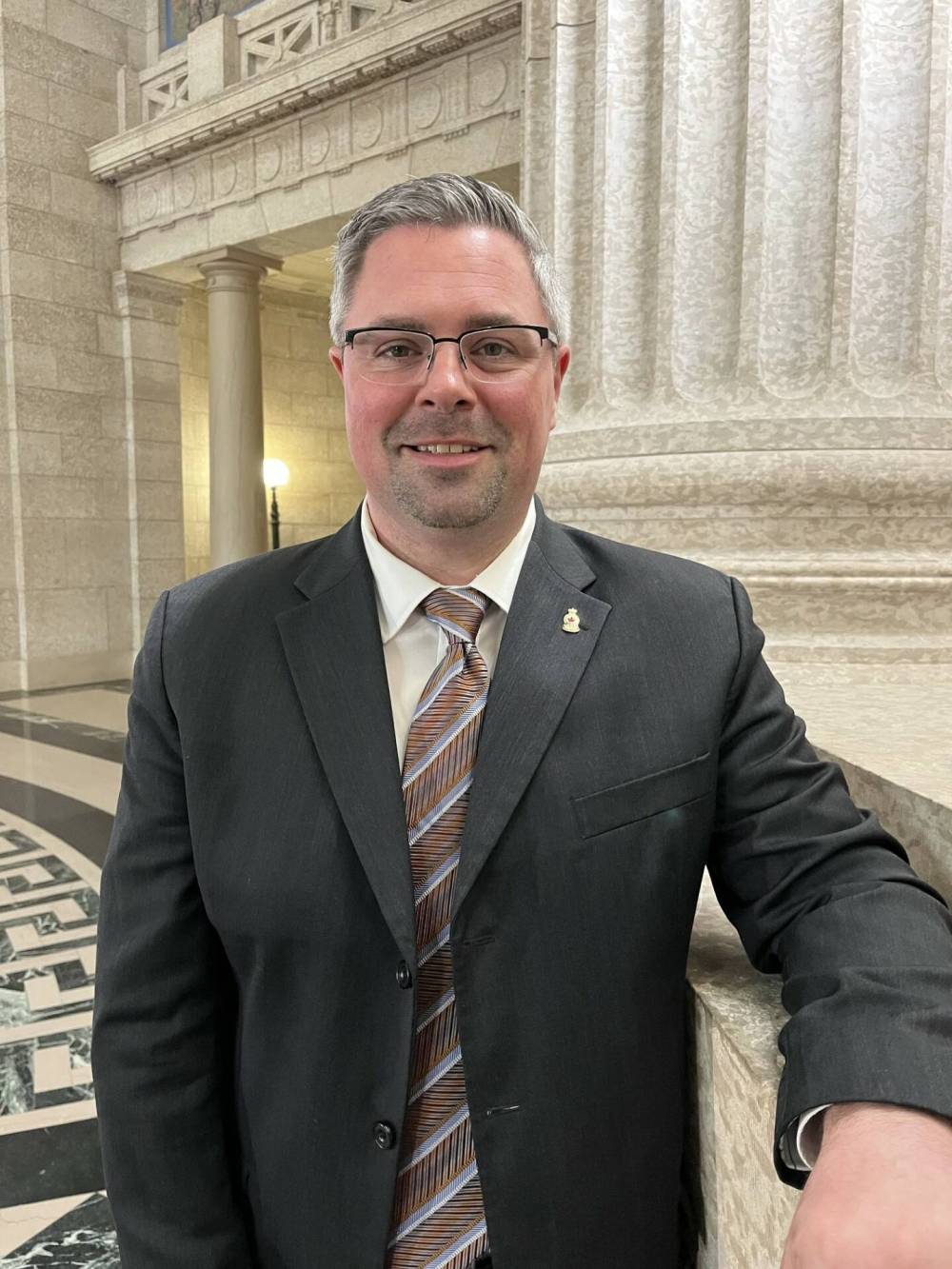
Manitoba School Board Association executive director Josh Watt at the legislature Monday (Carol Sanders / Free Press)
“His tenure has been marked by significant challenges and change, and his contributions have had a lasting impact on our organization and the school boards we represent,” interim association president Leah Klassen said.
Most Manitobans — and Canadians — don’t appreciate having functioning institutions and electoral systems, Bird said.
“You often don’t please anybody. Nobody thanks you for doing a good job,” he said.

Canadians have only to look south of the border to see what happens when faith in the electoral system falters. “It’s a disaster,” Bird said.
In the U.S., results are disputed and delayed. Deniers falsely claim that President Donald Trump won the 2020 election, and have tried to overturn the results. States have redrawn electoral boundaries to give the party in power an advantage.
“Canadians take everything for granted” when it comes to our elections, Bird said.
“They’re peaceful, they’re civilized. There’s a snafu here and there,” he said. “But it all works, and it all gets processed and tabulated and we find out who won and post it on the internet. And it’s amazing.”
carol.sanders@freepress.mb.ca
Carol Sanders
Legislature reporter
Carol Sanders is a reporter at the Free Press legislature bureau. The former general assignment reporter and copy editor joined the paper in 1997. Read more about Carol.
Every piece of reporting Carol produces is reviewed by an editing team before it is posted online or published in print — part of the Free Press‘s tradition, since 1872, of producing reliable independent journalism. Read more about Free Press’s history and mandate, and learn how our newsroom operates.
Our newsroom depends on a growing audience of readers to power our journalism. If you are not a paid reader, please consider becoming a subscriber.
Our newsroom depends on its audience of readers to power our journalism. Thank you for your support.
Carol Sanders
Legislature reporter
Carol Sanders is a reporter at the Free Press legislature bureau. The former general assignment reporter and copy editor joined the paper in 1997. Read more about Carol.
Every piece of reporting Carol produces is reviewed by an editing team before it is posted online or published in print — part of the Free Press‘s tradition, since 1872, of producing reliable independent journalism. Read more about Free Press’s history and mandate, and learn how our newsroom operates.
Our newsroom depends on a growing audience of readers to power our journalism. If you are not a paid reader, please consider becoming a subscriber.
Our newsroom depends on its audience of readers to power our journalism. Thank you for your support.
Advertisement Advertise With Us
Advertisement Advertise With Us
History
Updated on Tuesday, June 2, 2026 12:45 PM CDT: Replaces photo
Updated on Tuesday, June 2, 2026 4:56 PM CDT: Adds edits