

Manitoba judge approves $129-M settlement in solitary confinement lawsuit

Advertisement
Read this article for free:
or
Already have an account? Log in here »
To continue reading, please subscribe:

Digital Subscription
One year of digital access for only $205*
- Enjoy unlimited reading on winnipegfreepress.com
- Read the E-Edition, our digital replica newspaper
- Access News Break, our award-winning app
- Play interactive puzzles
*First annual payment billed as $205.00 + GST for one year. This annual subscription will automatically renew at $233.00 + GST every 52 weeks (10% off the regular annual price of $259.35). Offer available to new and qualified returning subscribers only. Cancel any time.
To continue reading, please subscribe:
Add Free Press access to your Brandon Sun subscription for only an additional
$1 for the first 4 weeks*
- Enjoy unlimited reading on winnipegfreepress.com
- Read the E-Edition, our digital replica newspaper
- Access News Break, our award-winning app
- Play interactive puzzles
*Your next Brandon Sun subscription payment will increase by $1.00 and you will be charged $17.95 plus GST for four weeks. After four weeks, your payment will increase to $24.95 plus GST every four weeks.
Read unlimited articles for free today:
or
Already have an account? Log in here »
A Manitoba judge has approved a $129-million settlement agreement in a lawsuit that argued the provincial government improperly used solitary confinement in its youth and adult jails, causing emotional, physical and psychological harm.
Court of King’s Bench Justice Theodor Bock, who approved the settlement at a hearing Thursday, will issue a written decision at a later date.
Koskie Minsky LLP, a class-action law firm based in Ontario, filed the suit in May 2021 on behalf of two Manitoba jail inmates — an adult and a youth — who had both been put in segregation for extended periods of time.
The Manitoba Youth Centre in Winnipeg (Mikaela MacKenzie / Free Press files)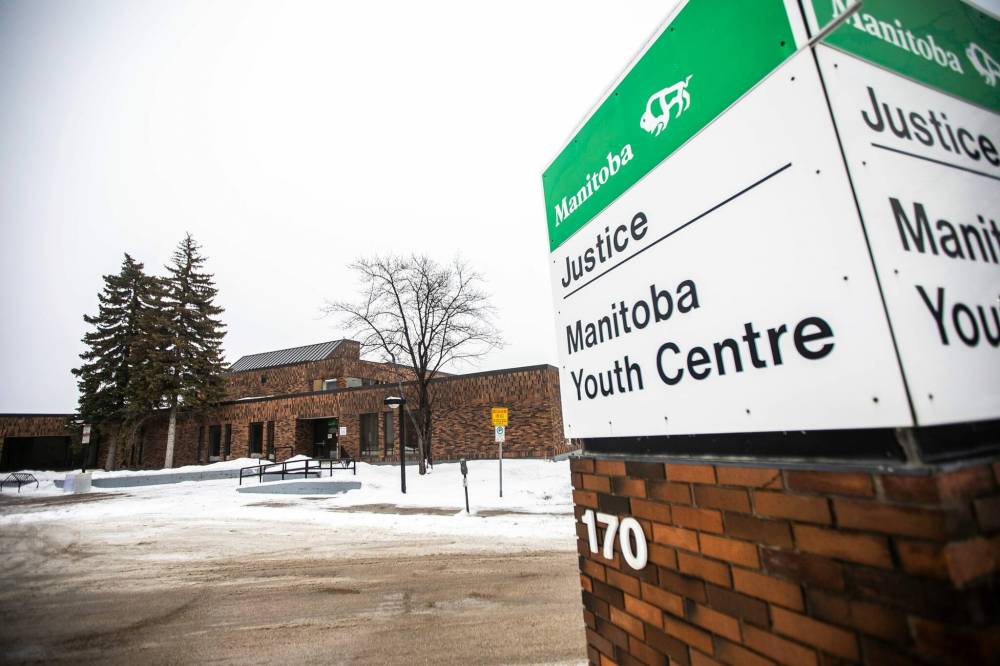
“The science shows that long periods of time in segregation can have lasting impacts and forever change a person’s life,” said James Sayce, the lead lawyer on the case. “There’s a large number of people who’ve been injured by these long periods of time in segregation.”
The class action argued the government’s use of solitary confinement — which the law firm defines as a person segregated in a room or area without any meaningful human contact for at least 22 hours a day — was negligent and breached their Charter rights to life, liberty and security, and not to be subjected to cruel and unusual punishment.
The $129-million settlement comes as part of a deal the provincial government struck to resolve the lawsuit without a trial while still denying liability, according to the law firm and class-action administrator Proactio, which is handling the settlement fund.
“The idea here is it’s too expensive to torture people, so they’ll stop.”
The settlement is recognition of the harm done, despite the fact the province is not admitting any wrongdoing, said Sayce. The settlement also “massively disincentives” the Manitoba government from the use of the practice in the future, he added.
“The hope is that this puts an end to what we alleged was solitary confinement,” the lawyer said. “The idea here is it’s too expensive to torture people, so they’ll stop.”
The United Nations has deemed prolonged solitary confinement — exceeding 15 consecutive days — a form of psychological torture.
As part of the settlement, lawyers on the class-action team will also meet with Manitoba corrections officials several times over two years to discuss potential policy reforms, with the goal of improving conditions in confinement cells in provincial jails, Sayce said.
Ben Leahy, a spokesman for Justice Minister Matt Wiebe, said the provincial government acknowledges the settlement approval, but won’t comment further until the judge’s written reasons are released.
A segregation cell at Manitoba Youth Centre (Supplied)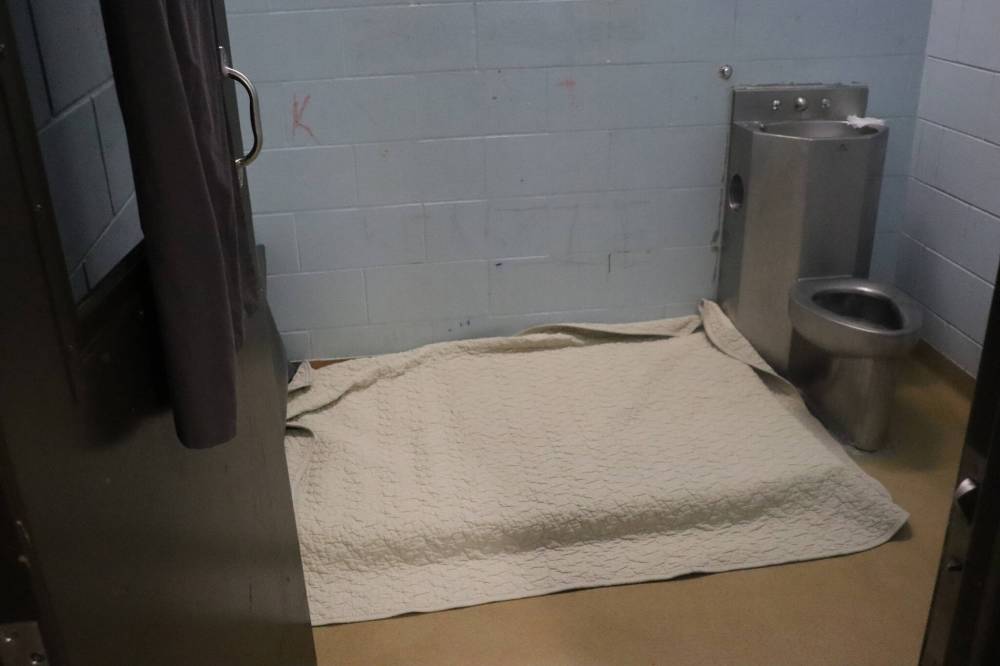
At the hearing Thursday, loved ones of two now-dead former youth inmates who they say suffered as a result of their time in segregation in provincial jails spoke to the court, as did a now-22-year-old man who was held in “horribly traumatic” segregation in the now-closed Agassiz youth jail in Portage la Prairie when he was 14.
“I’ve lived it, I’ve seen it and it will very much likely haunt me for the rest of my life,” he said.
The two plaintiffs in the case are Virgil Charles Gamblin, a man in his 30s who was an inmate in The Pas jail, and a now-adult male, who was 17 when he was incarcerated at the Manitoba Youth Centre. He cannot be identified because he was a youth at the time the suit was filed.
“I’ve lived it, I’ve seen it and it will very much likely haunt me for the rest of my life.”
At the time the litigation began, Gamblin had been in segregation in the jail in The Pas for six months and had previously been subjected to segregation in Manitoba jails for prolonged periods.
The youth plaintiff said he was first put in confinement at the age of 15. He had been put in solitary for more than a month in early 2021.
The settlement covers three groups of people who spent time in segregation, commonly referred to as solitary confinement.
The classes include any youth put in segregation in a provincial jail after Sept. 12, 2006, as well any adult put in segregation after Sept. 12, 2012 for at least 15 days or while suffering a serious mental illness.
Under the agreement, those eligible for a settlement can receive payouts starting at $3,000 for adults and $9,000 for youths. They may be entitled to higher payouts if they were held in solitary confinement for extended periods or suffered specific harms, as a result.
The maximum payout is $100,000, the agreement shows.
Lawsuits have been filed elsewhere in the country over the use of solitary confinement in jails and prisons.

In 2019, the federal government banned the use of segregation as a punishment following multiple lawsuits filed over the practice.
Isolated federal inmates must now be granted four hours a day outside their cells, including two hours of “meaningful human contact.”
Facing a similar lawsuit over the practice in its jails, the British Columbia government agreed to a proposed settlement of up to $60 million in 2025. An Ontario case, settled in 2020, resulted in an award of $30 million in damages to inmates.
erik.pindera@freepress.mb.ca
Erik Pindera is a reporter for the Free Press, mostly focusing on crime and justice. The born-and-bred Winnipegger attended Red River College Polytechnic, wrote for the community newspaper in Kenora, Ont. and reported on television and radio in Winnipeg before joining the Free Press in 2020. Read more about Erik.
Every piece of reporting Erik produces is reviewed by an editing team before it is posted online or published in print — part of the Free Press‘s tradition, since 1872, of producing reliable independent journalism. Read more about Free Press’s history and mandate, and learn how our newsroom operates.
Our newsroom depends on a growing audience of readers to power our journalism. If you are not a paid reader, please consider becoming a subscriber.
Our newsroom depends on its audience of readers to power our journalism. Thank you for your support.
Erik Pindera is a reporter for the Free Press, mostly focusing on crime and justice. The born-and-bred Winnipegger attended Red River College Polytechnic, wrote for the community newspaper in Kenora, Ont. and reported on television and radio in Winnipeg before joining the Free Press in 2020. Read more about Erik.
Every piece of reporting Erik produces is reviewed by an editing team before it is posted online or published in print — part of the Free Press‘s tradition, since 1872, of producing reliable independent journalism. Read more about Free Press’s history and mandate, and learn how our newsroom operates.
Our newsroom depends on a growing audience of readers to power our journalism. If you are not a paid reader, please consider becoming a subscriber.
Our newsroom depends on its audience of readers to power our journalism. Thank you for your support.
Related Articles
Class-action lawsuit shines a harsh spotlight on Manitoba's use of solitary confinement

Advertisement Advertise With Us
Advertisement Advertise With Us
History
Updated on Friday, June 5, 2026 9:46 AM CDT: Adds response from spokesman for justice minister
Updated on Friday, June 5, 2026 4:35 PM CDT: Adds quotes, details