World Cup a passing of the torch Tourney boasts bevy of rising stars as past superstars enter twilight of careers
Read this article for free:
or
Already have an account? Log in here »
To continue reading, please subscribe:

Digital Subscription
One year of digital access for only $205*
- Enjoy unlimited reading on winnipegfreepress.com
- Read the E-Edition, our digital replica newspaper
- Access News Break, our award-winning app
- Play interactive puzzles
*First annual payment billed as $205.00 + GST for one year. This annual subscription will automatically renew at $233.00 + GST every 52 weeks (10% off the regular annual price of $259.35). Offer available to new and qualified returning subscribers only. Cancel any time.
To continue reading, please subscribe:
Add Free Press access to your Brandon Sun subscription for only an additional
$1 for the first 4 weeks*
- Enjoy unlimited reading on winnipegfreepress.com
- Read the E-Edition, our digital replica newspaper
- Access News Break, our award-winning app
- Play interactive puzzles
*Your next Brandon Sun subscription payment will increase by $1.00 and you will be charged $17.95 plus GST for four weeks. After four weeks, your payment will increase to $24.95 plus GST every four weeks.
Read unlimited articles for free today:
or
Already have an account? Log in here »
It was 20 years ago Thursday that Cristiano Ronaldo made his World Cup debut. Five days later, Lionel Messi took his first tournament bow.
International football’s top competition gave us a number of superstars in that installment and the following four, but nevertheless there were always the supernovae who outshone the rest of the galaxy.
Well, no longer. Ronaldo has checked into Portugal’s Palm Beach basecamp at 41-years of age. Messi, meanwhile, arrived at Argentina’s Kansas City headquarters as a 38-year-old who will turn 39 during the group stage. These are stars whose stellar collapse has already happened, even if we’re only noticing now.
Butch Dill / THE ASSOCIATED PRESS Argentina forward Lionel Messi made his World Cup debut in 2006. He is one of a handful of superstars playing in the tournament for the last time.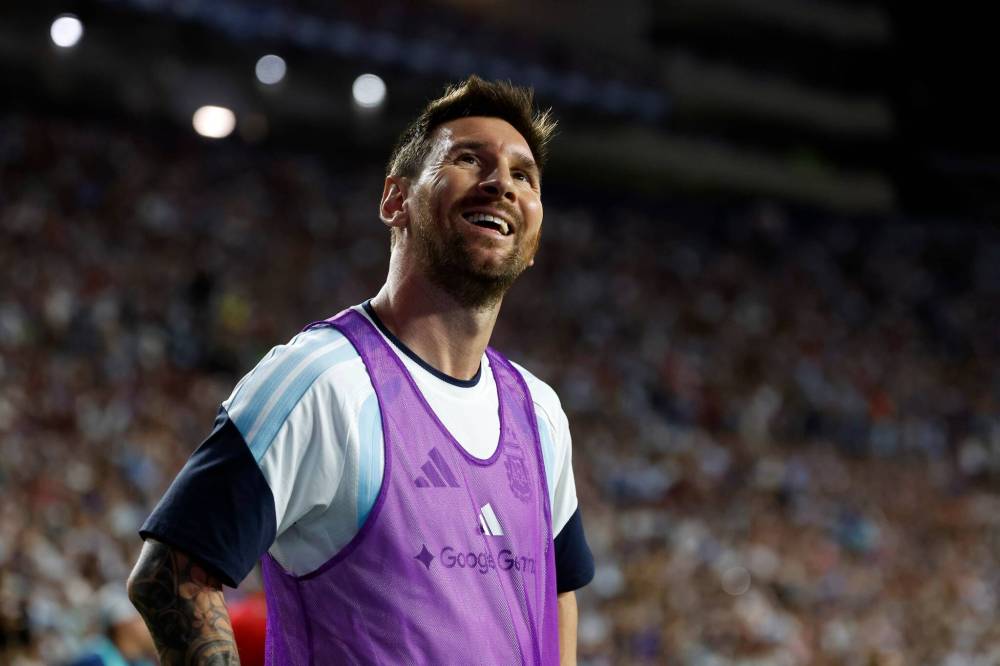
But look closely. The celestial nurseries have been busy, and over the next few weeks we should be able to distinguish the protostars who are poised to make an appearance. Some have even entered the ignition phase, already sufficiently luminous that they’ve previously caught our attention.
Lamine Yamal falls into this category. At just 16, he burst into view at Euro 2024, where he helped Spain to a fourth continental triumph. The following season he scored 18 goals for Barcelona, and he’s coming off a campaign in which he contributed 24 tallies to a second successive Spanish title.
Should Spain progress as far as the semifinals, which it should, Yamal will enter the final four as a 19-year-old. And his electrifying play from the right-hand side of the forward line will have surely had a lot to do with getting it there.
Martin Meissner / THE ASSOCIATED PRESS FILES Ivory Coast winger Yan Diomande is one of the rising stars making their debut at this year’s World Cup. The 19-year-old has quickly established himself as one of the sport’s top young prospects for RB Leipzig in the Bundesliga.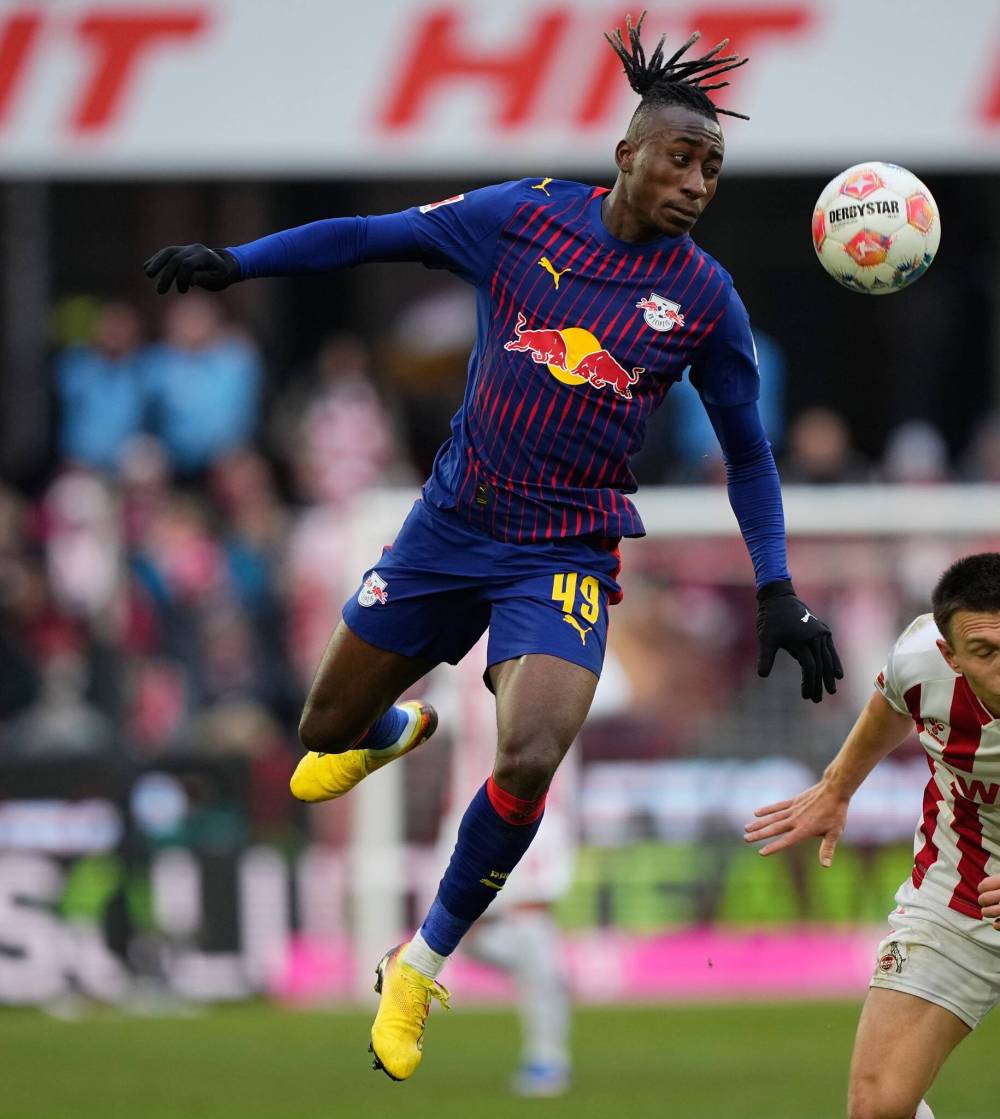
France will be similarly reliant on thrilling attacker Michael Olise, who scored 15 goals for Bayern Munich in his second Bundesliga season. Already 24, the left-footer has played only 17 times for Les Bleus, but on Monday he bagged a hat trick in the Group I favourite’s final tune-up game against Northern Ireland.
Incidentally, Spain and France could well contest a semifinal next month, giving Yamal and Olise a high-profile chance to outshine the other.
Slightly newer in the cosmic cluster but no less tantalizing is Ivory Coast winger Yan Diomande.
Barely a year since becoming a first-team professional, the 19-year-old has quickly established himself as one of the sport’s top young prospects. His 12 goals and nine assists for RB Leipzig last term made him the Bundesliga’s runaway Rookie of the Year, and his combination of shifty dribbling, spectacular finishing and physical prowess has put him on the radar of the continent’s biggest clubs.
But that’s for later. Right now it’s Group E rivals Germany, Ecuador and Curaçao that will get a close-up view of this mesmerizing starlet.
Ivory Coast will be targeting first or second in its bracket, and both Algeria and Senegal should also be competitive in a competition that could open up for a number of African teams.
David Inderlied / THE ASSOCIATED PRESS FILES
Algeria's Ibrahim Maza celebrates a Leverkusen goal during German soccer cup action last year.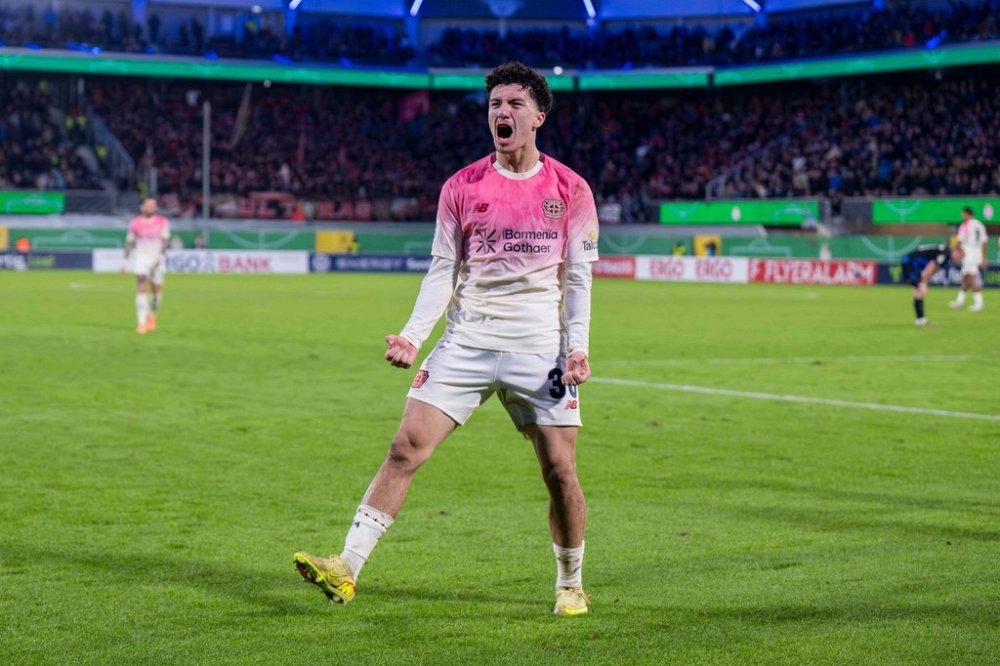
Algeria, set to take on Argentina, Austria and Jordan in Group J, will be showcasing 20-year-old playmaker Ibrahim Maza in a side that needs a jolt of youth. Senegal, for its part, has no shortage of talent but could still spring 18-year-old striker Ibrahim Mbaye on a bracket that includes France, Norway and Iraq.
Brazil might have a surprise in store as well.
Manager Carlo Ancelotti hasn’t hesitated to name a roster on merit, and after handing Rayan an international debut in March he added the 19-year-old winger to a World Cup squad that already included the likes of Vini Junior, Matheus Cunha, Raphinha, Endrick and Luiz Henrique in the wide attacking positions.
It didn’t take long to see why. Last month against Panama, in just his second Brazil appearance, the Bournemouth left-footer curled a breathtaking shot from an audacious angle into the far corner of the goal.
Not to be outdone, Argentina blue-chipper Nico Paz scored his first goal for the Albiceleste in March when he won the ball just past the half-way line against Mauritania, drew a foul and proceeded to drill a free kick into the near corner.
Antonio Saia / THE ASSOCIATED PRESS FILES Argentina's 21-year-old Nico Paz was named Serie A Midfielder of the Year and was key to Como’s Champions League qualification.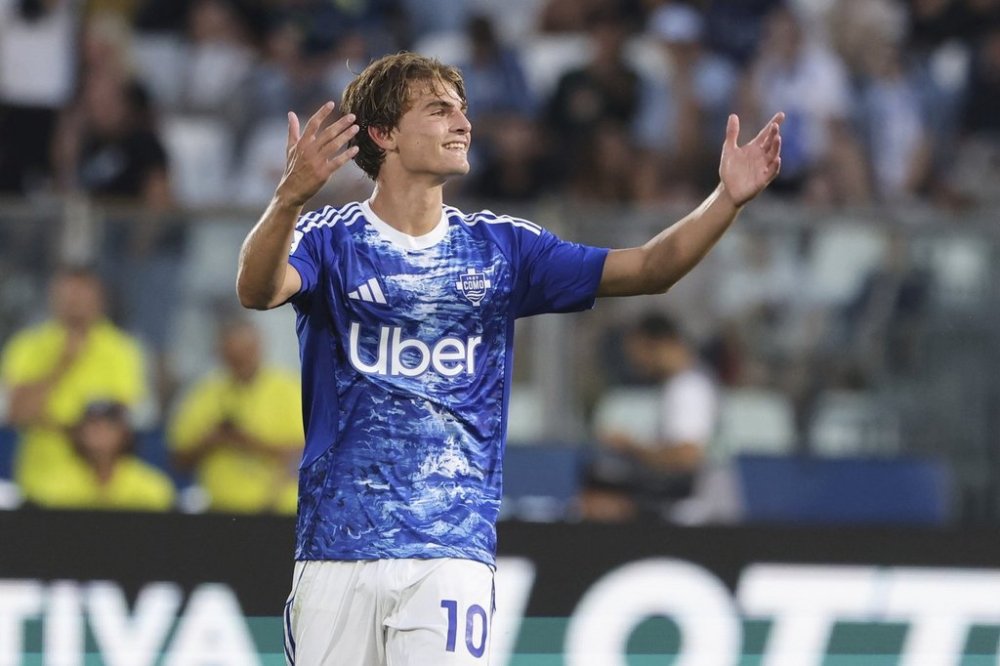
Recently named Serie A Midfielder of the Year, the 21-year-old was key to Como’s unexpected but much-deserved Champions League qualification, and he looks to have recovered from a knee injury in time for the World Cup. He can support the attack from an advanced midfield position or lead the attack as a centre-forward.
Paz is no Messi, and nobody’s suggesting he is, but his emergence can only help a group attempting to integrate a new generation.
You don’t simply replace Messi — arguably the best male footballer in history — and you don’t fill Ronaldo’s shoes, either. But certain outstanding players can still transform teams like Argentina and Portugal, and when it comes to the latter that player is João Neves.
Now, the 21-year-old Paris Saint-Germain midfielder won’t get us out of our seats, but he’s already becoming the sort of star the Seleção can orbit around.

Comparisons to Deco have been made, but Neves might most resemble Mário Coluna, who orchestrated Portugal’s third-place finish at the 1966 World Cup. Sitting deep, he moves the ball with precision and has the sort of foresight that can’t be taught.
While not polite to say, it’s plainly evident that Neves’ impact on Portugal has already eclipsed Ronaldo’s. Which is the course of things, really.
Because as certain stars fade — even the brightest kind — new ones appear that renew our awe once again.
winnipegfreepress.com/jerradpeters
Our newsroom depends on a growing audience of readers to power our journalism. If you are not a paid reader, please consider becoming a subscriber.
Our newsroom depends on its audience of readers to power our journalism. Thank you for your support.
Related Articles
Spain back at full strength ahead of its World Cup opener against Cape Verde