

Flooded-out Winnipeggers may be able to collect aid, bulletin suggests

Advertisement
Read this article for free:
or
Already have an account? Log in here »
To continue reading, please subscribe:

Digital Subscription
One year of digital access for only $205*
- Enjoy unlimited reading on winnipegfreepress.com
- Read the E-Edition, our digital replica newspaper
- Access News Break, our award-winning app
- Play interactive puzzles
*First annual payment billed as $205.00 + GST for one year. This annual subscription will automatically renew at $233.00 + GST every 52 weeks (10% off the regular annual price of $259.35). Offer available to new and qualified returning subscribers only. Cancel any time.
To continue reading, please subscribe:
Add Free Press access to your Brandon Sun subscription for only an additional
$1 for the first 4 weeks*
- Enjoy unlimited reading on winnipegfreepress.com
- Read the E-Edition, our digital replica newspaper
- Access News Break, our award-winning app
- Play interactive puzzles
*Your next Brandon Sun subscription payment will increase by $1.00 and you will be charged $17.95 plus GST for four weeks. After four weeks, your payment will increase to $24.95 plus GST every four weeks.
Read unlimited articles for free today:
or
Already have an account? Log in here »
Winnipeggers whose homes were damaged by downpours and flooding this month may be eligible to apply for disaster financial assistance from the Manitoba government after all.
The province sent a bulletin to municipalities Tuesday that said a state of local emergency does not have to be declared for a municipality and its residents to be eligible for a disaster assistance program.
It was released after Premier Wab Kinew told reporters it was his understanding a municipality had to make the declaration to be eligible.
Mike Deal / Free Press Files
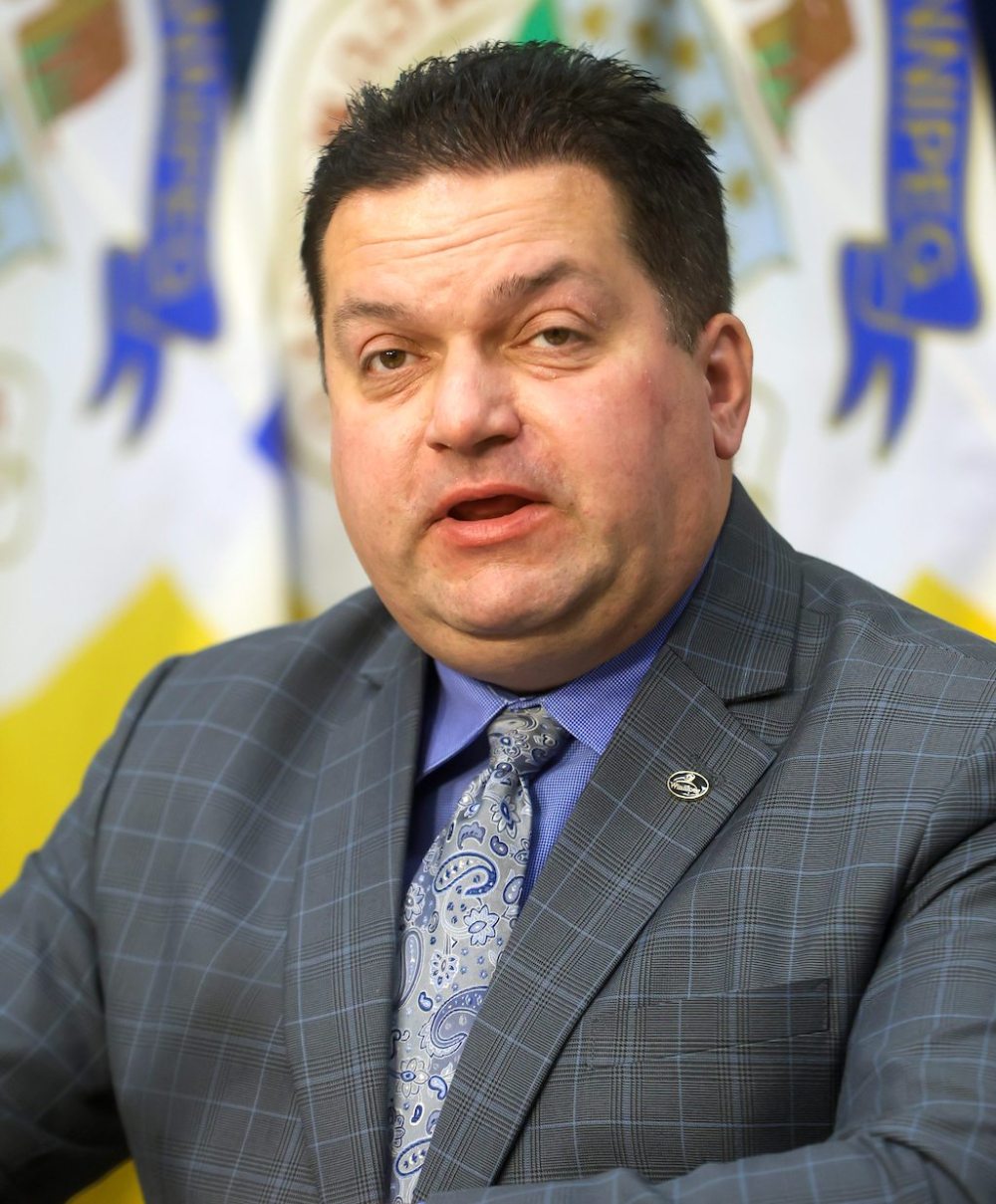
Coun. Jeff Browaty's ward of North Kildonan had several reports of sewer backup flooding.
“I think the bulletin makes it pretty clear these types of programs would be eligible within Winnipeg,” said Coun. Jeff Browaty, whose North Kildonan ward had several reports of sewer backup flooding.
In a news release, the city said it is working with the Manitoba Emergency Management Organization to learn more about the disaster assistance program and how homeowners affected by last week’s storms may qualify for provincial assistance.
The province has not explicitly stated if Winnipeggers will be eligible for assistance.
“The guidelines around DFA are being reviewed and we are working to address the damages caused by this unprecedented event,” Amy Tuckett-McGimpsey, Manitoba’s director of cabinet communications, said in a statement.
The province advised people to speak to their insurance provider first.
“We encourage Manitobans to file a DFA application,” Tuckett-McGimpsey said. “Our government is here for Manitobans and is working to provide supports to help people affected through this difficult time.”
The city received nine reports of basement flooding and 458 reports of sewer backups involving clean water or raw sewage between June 9 and noon Tuesday.
Browaty said he will speak to his council colleagues and city staff about the possibility of a renewed subsidy program to help homeowners install sump pumps and backwater valves in their basements.
“I think the bulletin makes it pretty clear these types of programs would be eligible within Winnipeg.”
A program involving the Manitoba government, Winnipeg and other municipalities subsidized the cost of systems for 3,142 homes in Winnipeg and 281 in rural communities from 2011 to 2014.
“I’m exploring to see if that perhaps is a program that can come back,” Browaty said.
Kinew announced the disaster financial assistance program June 11 amid widespread overland flooding in southern and western Manitoba.
On Tuesday, he indicated insurable damages would be included in the program, which is normally not the case. Kinew said government policy has to evolve with climate change.
The premier didn’t take questions from reporters during a photo opportunity with Andrii Plakhotniuk, Ukraine’s ambassador to Canada, on Wednesday.
Several rural communities declared states of local emergency after roads washed out or essential services were cut off last week.
The declaration gave them temporary power to accelerate their response to the disaster, including the ability to control or prohibit travel, force evacuations or authorize entry into buildings or onto land.
SUPPLIED
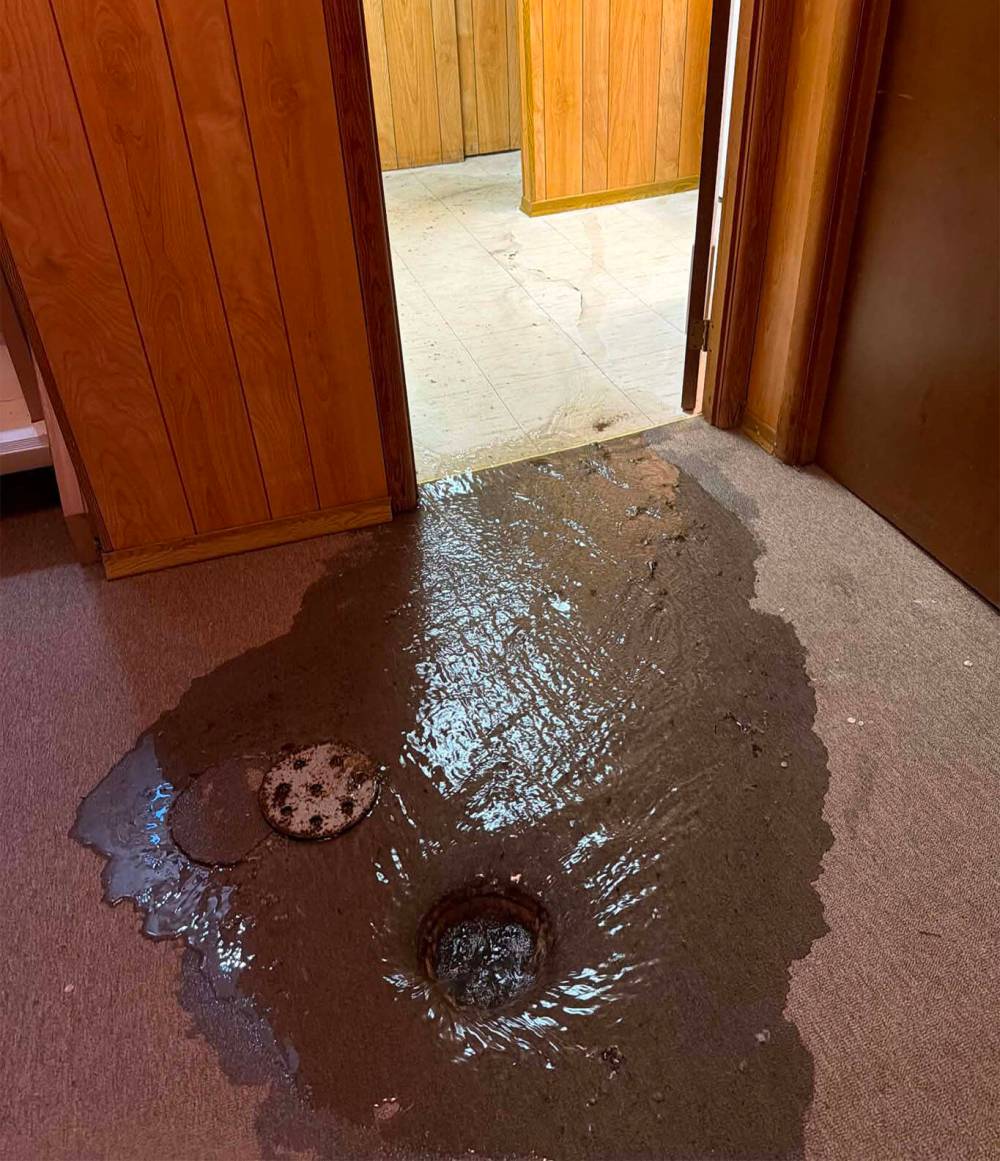
“Panic set in when the weeping tile wasn’t draining to our sump pump, which was working overtime and wasn’t functioning properly,” says Cailyn Wilson.
Browaty said Winnipeg did not have to take those steps, so declaring a state of local emergency was not necessary.
He’s heard from longtime residents who experienced sewer backup flooding for the first time last week.
“I feel terrible for the residents who’ve gone through these terrible losses,” he said.
Primary residences, farms, businesses and non-profit organizations affected by last week’s rainfall may apply for disaster assistance.
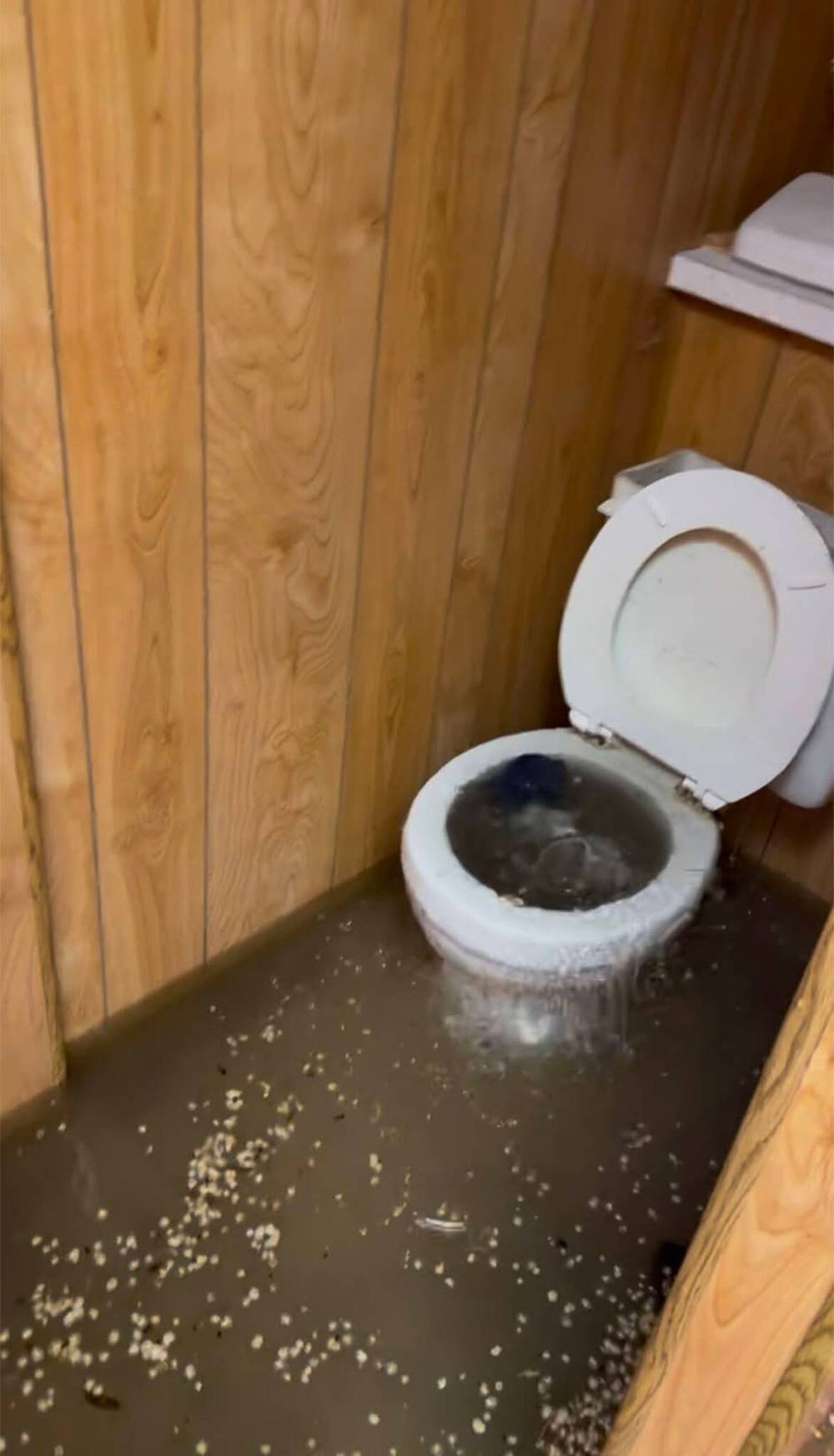
Sewer backup flooding happened twice in less than a week in the finished basement of Cailyn Wilson’s home in North Kildonan, following heavy rain June 9 and another downpour Monday.
“Panic set in when the weeping tile wasn’t draining to our sump pump, which was working overtime and wasn’t functioning properly,” the first-time homeowner said about the first incident.
“We got really lucky, though. We only had rainwater, debris and trash flow in through our toilet. Some of our neighbours had raw sewage.”
Wilson, 24, and her husband, who contacted their insurance provider, spent days drying and cleaning their basement. They replaced their sump pump as well.
“We encourage Manitobans to file an DFA application.”
Water backed up again during Monday’s downpour, although not as much as on June 9.
“This time wasn’t as bad. Our new sump pump was doing its job,” Wilson said. “But we still don’t have a properly functioning backwater valve on our main sewer line. That’s what’s allowing the water to flow in through the toilet when we get insane rain storms like this.”
The damage was not as significant the second time.
Wilson said insurance evaluators told her the basement had thousands of dollars in damage. She encouraged homeowners to have adequate protection, especially given the changing climate.
“Luckily, we opted for the sewer backup coverage so we’re going to be OK,” she said.
A Statistics Canada study, released Tuesday, said extreme weather — exacerbated by climate change — is becoming more frequent, severe and costly.
The study said insurers have paid out $9 billion for flooding across the country in the last 10 years. The cost of disaster financial assistance arrangements in Canada is expected to rise by about $1 billion by 2023.
SUPPLIED
Sewer backup flooding occurred in the basement of Cailyn Wilson’s North Kildonan home twice in a week.
From 2005 to 2014, Manitoba, Saskatchewan and Alberta accounted for 82 per cent of all disaster financial assistance costs in Canada, almost entirely due to flooding, the study said.
— With files from Carol Sanders
chris.kitching@freepress.mb.ca

Chris Kitching is a general assignment reporter at the Free Press. He began his newspaper career in 2001, with stops in Winnipeg, Toronto and London, England, along the way. After returning to Winnipeg, he joined the Free Press in 2021, and now covers a little bit of everything for the newspaper. Read more about Chris.
Every piece of reporting Chris produces is reviewed by an editing team before it is posted online or published in print — part of the Free Press‘s tradition, since 1872, of producing reliable independent journalism. Read more about Free Press’s history and mandate, and learn how our newsroom operates.
Our newsroom depends on a growing audience of readers to power our journalism. If you are not a paid reader, please consider becoming a subscriber.
Our newsroom depends on its audience of readers to power our journalism. Thank you for your support.
Chris Kitching is a general assignment reporter at the Free Press. He began his newspaper career in 2001, with stops in Winnipeg, Toronto and London, England, along the way. After returning to Winnipeg, he joined the Free Press in 2021, and now covers a little bit of everything for the newspaper. Read more about Chris.
Every piece of reporting Chris produces is reviewed by an editing team before it is posted online or published in print — part of the Free Press‘s tradition, since 1872, of producing reliable independent journalism. Read more about Free Press’s history and mandate, and learn how our newsroom operates.
Our newsroom depends on a growing audience of readers to power our journalism. If you are not a paid reader, please consider becoming a subscriber.
Our newsroom depends on its audience of readers to power our journalism. Thank you for your support.
Related Articles
Kinew vows financial aid on way for rural Manitobans, but Winnipeggers may not be covered after flooding



Advertisement Advertise With Us
Advertisement Advertise With Us
History
Updated on Wednesday, June 17, 2026 6:02 PM CDT: Adds edits