

‘It is time to take a step forward… and walk together’
Manitoba appoints Canada’s first judge of reconciliation

Advertisement
Read this article for free:
or
Already have an account? Log in here »
To continue reading, please subscribe:

Digital Subscription
One year of digital access for only $205*
- Enjoy unlimited reading on winnipegfreepress.com
- Read the E-Edition, our digital replica newspaper
- Access News Break, our award-winning app
- Play interactive puzzles
*First annual payment billed as $205.00 + GST for one year. This annual subscription will automatically renew at $233.00 + GST every 52 weeks (10% off the regular annual price of $259.35). Offer available to new and qualified returning subscribers only. Cancel any time.
To continue reading, please subscribe:
Add Free Press access to your Brandon Sun subscription for only an additional
$1 for the first 4 weeks*
- Enjoy unlimited reading on winnipegfreepress.com
- Read the E-Edition, our digital replica newspaper
- Access News Break, our award-winning app
- Play interactive puzzles
*Your next Brandon Sun subscription payment will increase by $1.00 and you will be charged $17.95 plus GST for four weeks. After four weeks, your payment will increase to $24.95 plus GST every four weeks.
Read unlimited articles for free today:
or
Already have an account? Log in here »
The Manitoba government has appointed provincial court Judge Jerilee Ryle as associate chief judge of reconciliation, the first appointment of its kind in Canada.
“I am deeply humbled by this appointment,” Ryle said at a news conference Friday announcing her appointment.
“I walk into this role with a clear understanding of the history we are working within, a system that for generations has caused significant harm to Indigenous peoples. At the same time, I carry a strong belief in the responsibility we share to do better and move forward in a good way.”
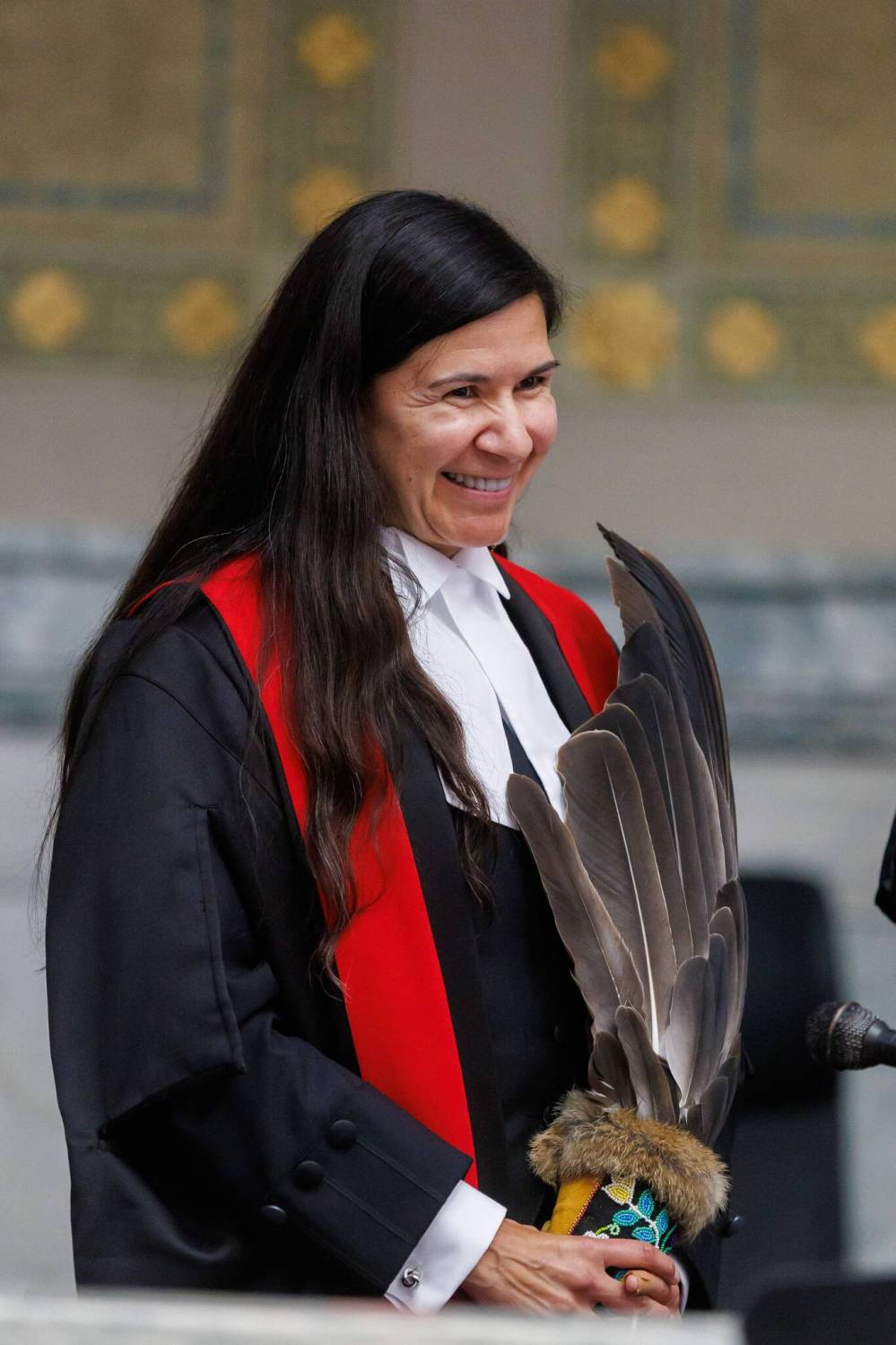
MIKE DEAL / FREE PRESS
Associate Chief Judge of Reconciliation Jerilee Ryle will work with the province’s Indigenous communities to develop a court system that better reflects Indigenous traditions, values and lived experiences.
Ryle, who is Anishinaabe from Lake St. Martin First Nation, is a former Crown attorney and was appointed to the provincial court bench last year. She said she hopes other jurisdictions follow in creating the same positions.
In her new role, she will work with the province’s Indigenous communities to develop a court system that better reflects Indigenous “traditions, values and lived experiences,” Justice Minister Matt Wiebe said in a news release.
Ryle is appointed to the position for a seven-year term, beginning July 2. Ryle said she expects her first year on the job to involve a lot of listening.
“It is a brand-new position, so there will be a lot of room for growth,” she said. “I got into law to help Indigenous people, so being able to have these opportunities to work alongside and empower Indigenous communities with a goal of healing… is very impactful for me.”
Creation of the position was spearheaded by provincial court Chief Judge Ryan Rolston.
Provincial court is the busiest of Manitoba’s three court divisions, hears the vast majority of Manitoba’s criminal cases and provides monthly court services to approximately 40 First Nation communities across the province, Rolston said.
Judges and lawyers travel to those communities each month for hearings in makeshift courtrooms set up in schools and community centres.
About 78 per cent of adults in custody in the province identified as Indigenous for the year 2023-2024, data from Statistics Canada suggests. In 2021, Indigenous people accounted for 18 per cent of the total population in Manitoba.
“I carry a strong belief in the responsibility we share to do better and move forward in a good way.”
“Indigenous people remain vastly overrepresented in jails in this province and also as victims and witnesses in criminal cases,” he said. “Despite efforts to reverse this course, it seems the problem is only getting worse.
“Over the past few years, we as a court have met with and listened to Indigenous voices who have told us that our colonial system is very different from Indigenous legal orders. It is time to take a step forward as a court system and walk together. We see that Indigenous people will not begin to trust the court if the system does not reflect Indigenous values.”
The delivery of justice must evolve to serve all people, Rolston said.
“This task is not an easy or a fast journey (and) must include a constant and steady voice and leadership that represents Indigenous people.”
Part of that journey, he suggested, is arriving at a place less reliant on incarceration as a tool of justice.
“It seems to me the two systems can work and function very well together if we can just open our minds to those things.”
“My own personal view is the colonial system is good at figuring out who did what to whom and when, but not real great at sentencing at times, whereas Indigenous legal orders deal with restoration and making communities whole and ensuring that victims in communities are part of that process,” he said.

“It seems to me the two systems can work and function very well together if we can just open our minds to those things.”
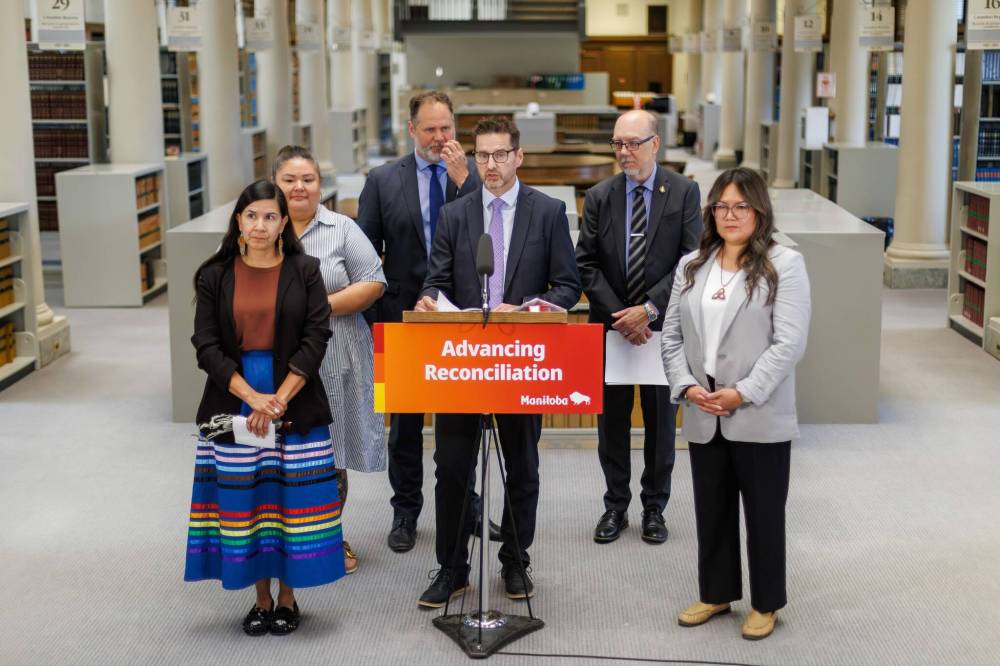
MIKE DEAL / FREE PRESS
Creation of the position was spearheaded by Chief Judge Ryan Rolston (centre).
Eagle feathers were introduced permanently in 2019 for people to hold when swearing oaths and giving testimony. More recently, courts have allowed for ceremonies, including smudging, to take place in courtrooms before hearings.
A new Indigenous courtroom is also being built at the Law Courts building in Winnipeg, Rolston said. How it will function is still to be determined, he added.
Ryle’s appointment increases the number of provincial court associate chief judges to four from three.
dean.pritchard@freepress.mb.ca
Dean Pritchard is courts reporter for the Free Press. He has covered the justice system since 1999, working for the Brandon Sun and Winnipeg Sun before joining the Free Press in 2019. Read more about Dean.
Every piece of reporting Dean produces is reviewed by an editing team before it is posted online or published in print — part of the Free Press‘s tradition, since 1872, of producing reliable independent journalism. Read more about Free Press’s history and mandate, and learn how our newsroom operates.
Our newsroom depends on a growing audience of readers to power our journalism. If you are not a paid reader, please consider becoming a subscriber.
Our newsroom depends on its audience of readers to power our journalism. Thank you for your support.
Dean Pritchard is courts reporter for the Free Press. He has covered the justice system since 1999, working for the Brandon Sun and Winnipeg Sun before joining the Free Press in 2019. Read more about Dean.
Every piece of reporting Dean produces is reviewed by an editing team before it is posted online or published in print — part of the Free Press‘s tradition, since 1872, of producing reliable independent journalism. Read more about Free Press’s history and mandate, and learn how our newsroom operates.
Our newsroom depends on a growing audience of readers to power our journalism. If you are not a paid reader, please consider becoming a subscriber.
Our newsroom depends on its audience of readers to power our journalism. Thank you for your support.

Advertisement Advertise With Us
Advertisement Advertise With Us
History
Updated on Friday, June 19, 2026 5:16 PM CDT: Adds background.