Checking in: Airbnb-type rentals on rise in Winnipeg City enforcement leads to more licences, fewer wild parties, report shows
Read this article for free:
or
Already have an account? Log in here »
To continue reading, please subscribe:

Digital Subscription
One year of digital access for only $205*
- Enjoy unlimited reading on winnipegfreepress.com
- Read the E-Edition, our digital replica newspaper
- Access News Break, our award-winning app
- Play interactive puzzles
*First annual payment billed as $205.00 + GST for one year. This annual subscription will automatically renew at $233.00 + GST every 52 weeks (10% off the regular annual price of $259.35). Offer available to new and qualified returning subscribers only. Cancel any time.
To continue reading, please subscribe:
Add Free Press access to your Brandon Sun subscription for only an additional
$1 for the first 4 weeks*
- Enjoy unlimited reading on winnipegfreepress.com
- Read the E-Edition, our digital replica newspaper
- Access News Break, our award-winning app
- Play interactive puzzles
*Your next Brandon Sun subscription payment will increase by $1.00 and you will be charged $17.95 plus GST for four weeks. After four weeks, your payment will increase to $24.95 plus GST every four weeks.
Read unlimited articles for free today:
or
Already have an account? Log in here »
Winnipeg licensed more short-term rental units last year, such as those listed on Airbnb and VRBO, imposing rules that aim to prevent the businesses from disrupting their neighbours.
As residents become more aware of the program’s rules and penalties — and the overall number of units grows — more concerns are being reported, said Coun. Vivian Santos, chairwoman of community services.
“The public is more aware that we have these bylaws and we have bylaw officers who can actually stay on top of these issues,” said Santos.
The city began licensing short-term rentals on April 1, 2024. Between April 1, 2025 and March 31, 2026, there were 865 licensed units, up from 693 the previous year. During the same period, the number of complaints made to the city about short-term rentals rose to 367, up from 165.
Ruth Bonneville / Free Press Files Coun. Vivian Santos says the number of complaints about short-term rentals that her office receives has gone down.
Santos said the number of complaints her office receives about short-term rentals has declined since the licensing program started.
City council began licensing the businesses following complaints that some short-term rentals attracted wild parties, excessive noise, hallway fights, and crime.
The city’s rules allow owners to operate one short-term rental unit, which must be their primary residence. However, permanent residents of Winnipeg, and corporations wholly owned by Winnipeggers, are permitted to rent out one primary residence and up to three short-term rental units they don’t live at via a grandfather clause, as long as they owned the properties before Feb. 23, 2023.
The licence requires operators to accept a city inspection, complete a police record review, keep detailed rental records, adhere to fire protection bylaws, provide guests a 24/7 emergency contact, list a contact number at the exterior of each rental, post human trafficking information and ensure guests don’t create excessive noise, among other rules.
The city is monitoring the units to ensure all of the above happens, said Santos.
“There’s a lot more enforcement that is now happening and I think that is good in getting people into compliance at a more successful rate,” she said.
She remains concerned, however, about the risk of trafficking though she did not have data on how often it happens.
“The public is more aware that we have these bylaws and we have bylaw officers who can actually stay on top of these issues.”
“We’re still seeing that happening all across the city in our hotels and (short-term rentals) … We’re trying to crack down on that,” said Santos.
Crime data was not included in the report as the Winnipeg Police Service and city staff are still working on a way to identify police responses linked to short-term rental units.
City enforcement involves both resident complaints and proactive inspections, while a third-party monitoring service was hired to keep track of online listings for the rentals.
The city conducted 930 inspections and 843 “spot checks” in 2025/26, issuing 175 compliance orders and 85 penalty notices.
The most common offence was operating without a licence, which triggered 41 penalties.

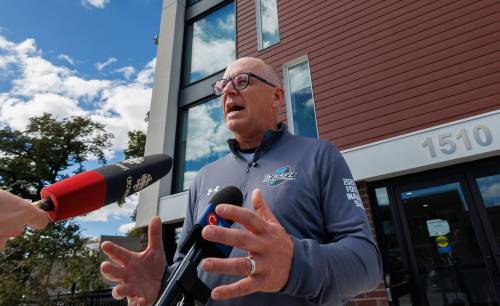
Mike Diehl, who lives in a downtown building with many short-term rental units, said he has personally noticed fewer incidents over the past year.
Diehl said wild parties, police responses and nuisance fire alarm use appear to have become less common.
“I would say that it’s subsided somewhat but it definitely is (still) not comfortable for the people on floors where (most units) are Airbnbs,” he said.
Diehl said complaints have become easier to report, since the city began licensing the units.
MIKE DEAL / FREE PRESS FILES Winnipeg Mayor Scott Gillingham.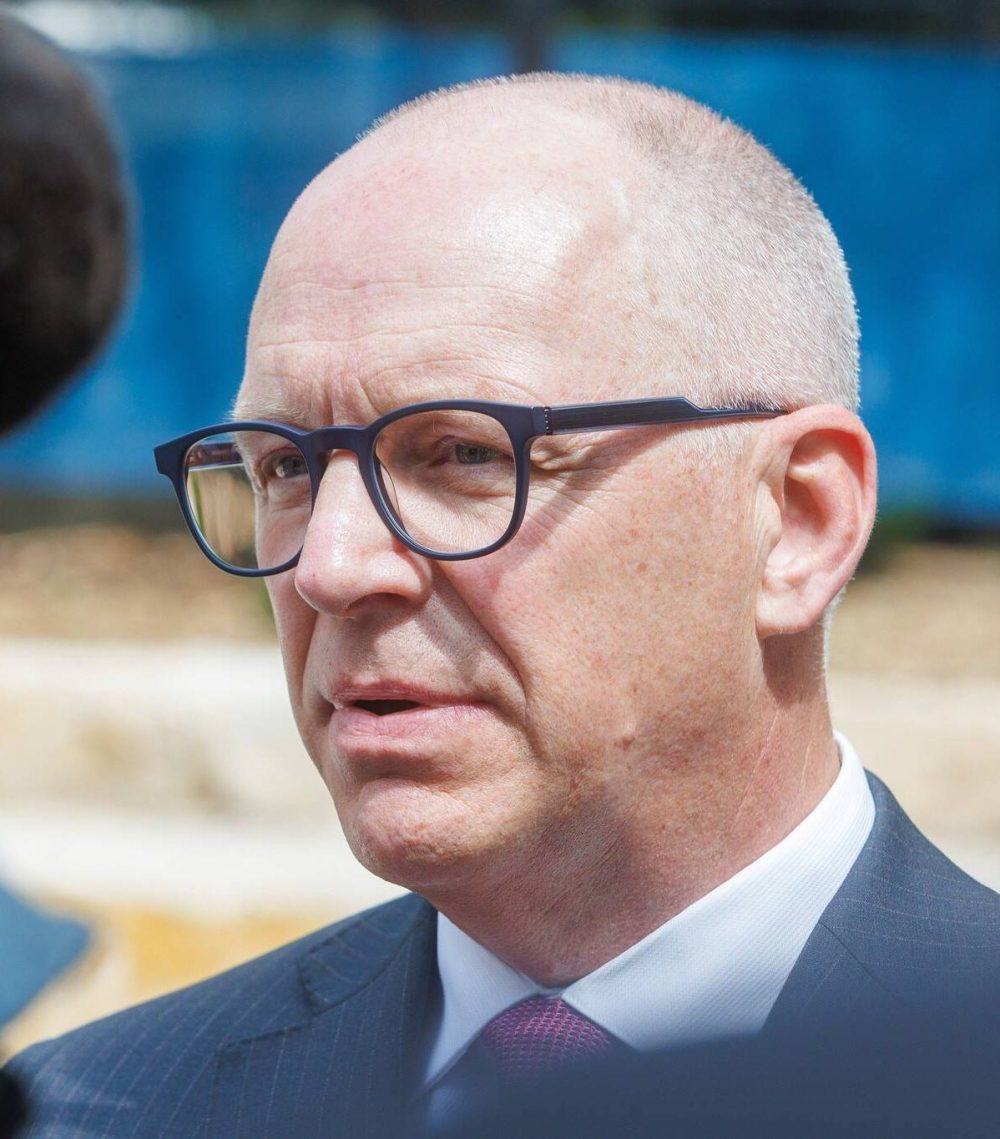
“The city system, I think, gives us an avenue to say this unit on this floor at this address is causing us a problem,” he said.
The city report notes the municipal government collected about $392,000 from licensing fees in 2025/26 and earned about $1.16 million from a six per cent accommodation tax charged on short-term rentals.
During that year, 63 licence applications were denied or withdrawn, 29 licences were cancelled, one was suspended and four were revoked, while the city also collected $32,000 in fines.
Mayor Scott Gillingham said continued monitoring of the industry, and sharing the results of the licensing program, is important.
“It’s an opportunity that we’ll have to speak to our staff (about) to see … what more needs to be done to make sure that property owners and short-term rental owners are following the rules,” said Gillingham.
The head of an association that represents owners of the businesses said the regulations were needed for the growing industry.
“Short-term rental’s not going anywhere. It’s vital to our economy.”
“Short-term rental’s not going anywhere. It’s vital to our economy,” said Melanie Mitchell, president of the Manitoba Association of Short-Term Rental Owners.
Mitchell said city penalties should help deter the few “bad operators” that have hurt the industry’s image.
However, she believes Winnipeg’s fees are too high, noting she pays nearly $3,000 to license three properties each year, deeming the amount “punitive.”
Mitchell also hopes the city will remove a 29-night limit on individual short-term rentals, which she says has cost her thousands of dollars in lost income on potential longer-term stays.
joyanne.pursaga@freepress.mb.ca
X: @joyanne_pursaga

Joyanne is city hall reporter for the Winnipeg Free Press. A reporter since 2004, she began covering politics exclusively in 2012, writing on city hall and the Manitoba Legislature for the Winnipeg Sun before joining the Free Press in early 2020. Read more about Joyanne.
Every piece of reporting Joyanne produces is reviewed by an editing team before it is posted online or published in print — part of the Free Press‘s tradition, since 1872, of producing reliable independent journalism. Read more about Free Press’s history and mandate, and learn how our newsroom operates.
Our newsroom depends on a growing audience of readers to power our journalism. If you are not a paid reader, please consider becoming a subscriber.
Our newsroom depends on its audience of readers to power our journalism. Thank you for your support.