

Science lesson in the field
Grade 7 students learn about environment in Seine River cleanup
Advertisement
Read this article for free:
or
Already have an account? Log in here »
To continue reading, please subscribe:

Digital Subscription
One year of digital access for only $205*
- Enjoy unlimited reading on winnipegfreepress.com
- Read the E-Edition, our digital replica newspaper
- Access News Break, our award-winning app
- Play interactive puzzles
*First annual payment billed as $205.00 + GST for one year. This annual subscription will automatically renew at $233.00 + GST every 52 weeks (10% off the regular annual price of $259.35). Offer available to new and qualified returning subscribers only. Cancel any time.
To continue reading, please subscribe:
Add Free Press access to your Brandon Sun subscription for only an additional
$1 for the first 4 weeks*
- Enjoy unlimited reading on winnipegfreepress.com
- Read the E-Edition, our digital replica newspaper
- Access News Break, our award-winning app
- Play interactive puzzles
*Your next Brandon Sun subscription payment will increase by $1.00 and you will be charged $17.95 plus GST for four weeks. After four weeks, your payment will increase to $24.95 plus GST every four weeks.
Read unlimited articles for free today:
or
Already have an account? Log in here »
On a rainy Wednesday morning, Grade 7 students from École Lacerte traded their classroom desks for rubber boots as they headed out along the Seine River to help plant native shrubs, test water quality, and clean up the riverbank.
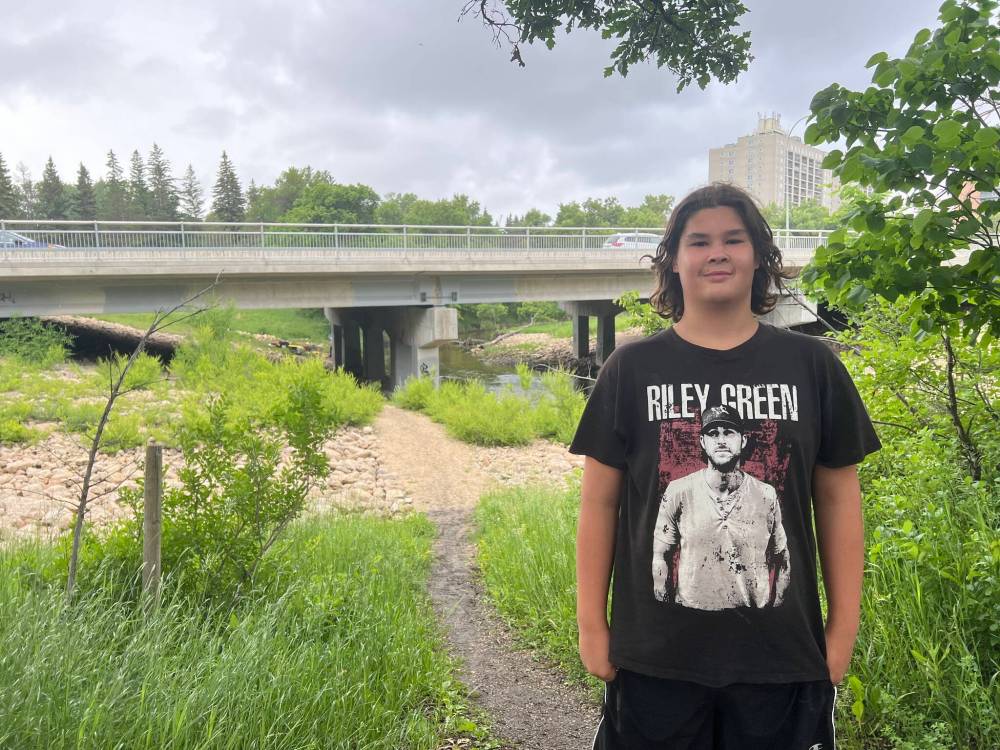
JJ Swidersky, one of about 40 students taking part in the work, says protecting the environment is important to him and his classmates.
“Planting the trees, planting the shrubs,” Swidersky said when asked about his favourite part of the effort. “Just trying to keep the river clean, trying to keep it as clean as we possibly can.”
ZOE PIERCE / FREE PRESS
‘It’s nice to spend time outside instead of being inside all day,’ says Grade 7 student JJ Swidersky.
The planting Swidersky is referring to is part of the Niakwa Trail Rain Garden, which is located next to the St. Anne’s Superstore.
Their work comes at a time when water quality has become a growing concern in Winnipeg. Earlier this month, millions of litres of untreated sewage were released into local rivers after the major rainstorm caused power failures at pumping stations across the city.
While sewage overflows often draw the most public attention, many of the Seine River’s challenges come from everyday pollution. Stormwater runoff carries oil, gasoline and other chemicals from cars, along with water and contaminants that have washed off from rooftops, streets and parking lots into the waterway. During the spring warming, melting snow releases built-up dirt and debris that can wash into the river.
The Seine also flows past residential areas and three golf courses, where litter and additional runoff can further affect water quality and aquatic habitat.
In 2015, Save Our Seine, a non-profit, received a $5,000 grant from the provincial government to help create the rain garden. Students from École Lacerte helped build it, and years later, they continue to maintain it.
“It’s nice to spend time outside instead of being inside all day,” Swidersky said.
ZOE PIERCE / FREE PRESS
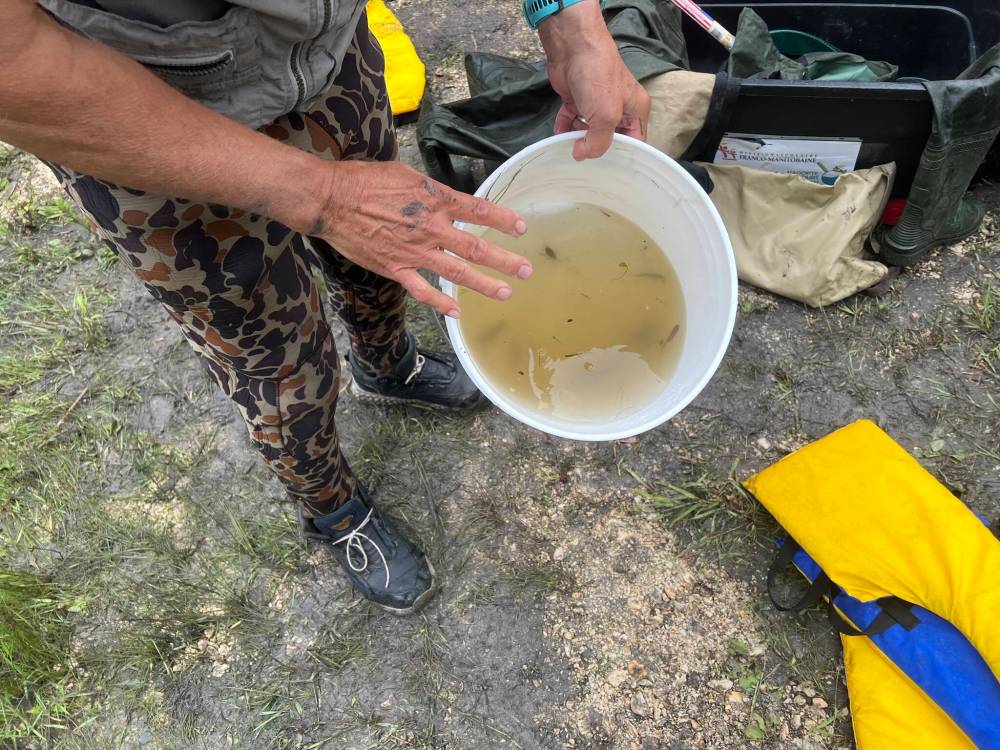
Fernand Saurette, a biologist from the Université de Saint-Boniface, shows a water sample from the Seine River.
A rain garden is a shallow, planted area designed to capture and filter stormwater before it runs into nearby rivers. Instead of letting rainwater flow directly from streets, parking lots and other surfaces, it collects in the garden where native plants and soil help absorb and clean it.
“The negative ingredients that are in the water stay back, and the clean water goes into the Seine, and then the Seine goes to Lake Winnipeg,” explained Denis Gautron, former Save Our Seine president, who volunteered Wednesday.
“The environment needs the next generation to support the work that has been done. The needs are always there and will be there forever.”
Alain Cenerini, a school counsellor at École Lacerte, says students take part in the Adopt a River initiative, a Quebec-based citizen science program that supports schools through training, field equipment and scientific protocols to study local waterways.

In the fall, students visited the Seine River to conduct macroinvertebrate testing by digging for larvae and other small aquatic organisms that were taken back to the classroom. Cenerini says the presence and diversity of such organisms can indicate the overall health of the river.
“We’re trying to promote scientific study,” Cenerini said. “I want them to learn about what scientific testing is. They’re starting to think about what they want to do, and we want to motivate kids to get into the sciences.”
Zoe Pierce / Free Press
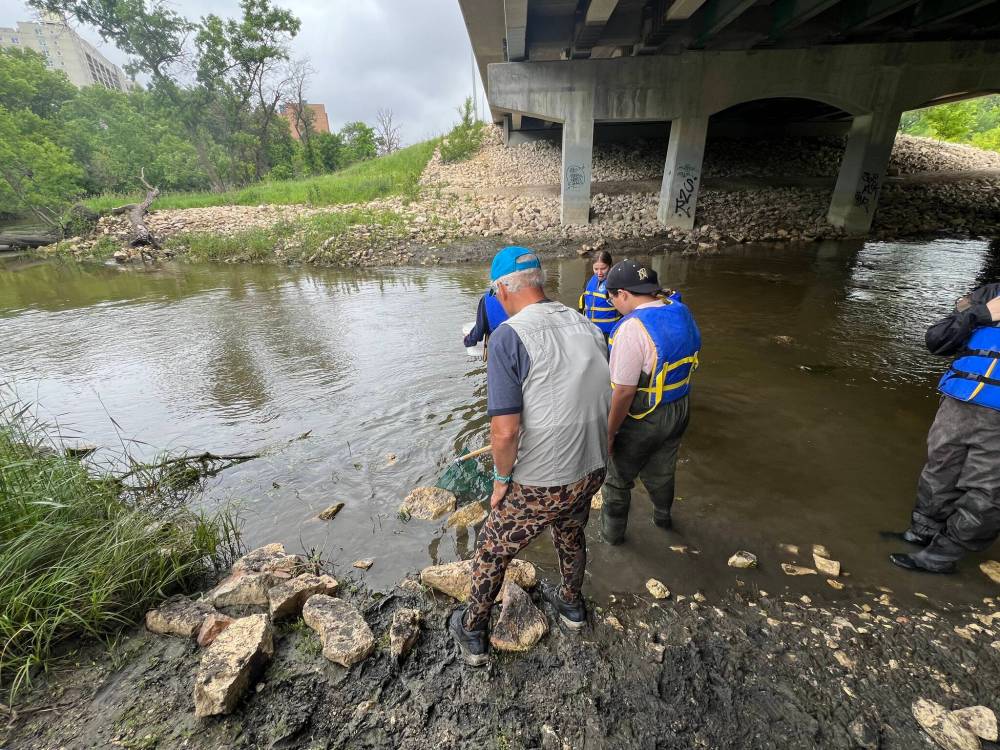
École Lacerte students collect water samples in the Seine River.
On Wednesday, they continued their work by collecting water samples alongside Fernand Saurette, a biologist from the Université de Saint-Boniface, and other Save Our Seine volunteers.
“I think that the kids are really learning a lot, and they’re also planting, which is a lot of fun, talking to the biologist, just really being outside, right?” Cenerini said. “This is an outdoor classroom, and kids have a loss of connection with nature, and we’re trying to establish a type of connection.”
zoe.pierce@freepress.mb.ca