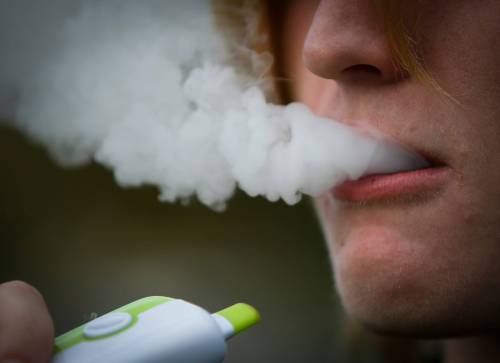
Clouds of concern A growing number of Manitoba youths is becoming nicotine-addicted vape users; the enticing flavoured ‘juice’ heated to produce inhaled vapour are laden with dangerous compounds that have health experts on high alert
Read this article for free:
or
Already have an account? Log in here »
To continue reading, please subscribe:

Digital Subscription
One year of digital access for only $205*
- Enjoy unlimited reading on winnipegfreepress.com
- Read the E-Edition, our digital replica newspaper
- Access News Break, our award-winning app
- Play interactive puzzles
*First annual payment billed as $205.00 + GST for one year. This annual subscription will automatically renew at $233.00 + GST every 52 weeks (10% off the regular annual price of $259.35). Offer available to new and qualified returning subscribers only. Cancel any time.
To continue reading, please subscribe:
Add Free Press access to your Brandon Sun subscription for only an additional
$1 for the first 4 weeks*
- Enjoy unlimited reading on winnipegfreepress.com
- Read the E-Edition, our digital replica newspaper
- Access News Break, our award-winning app
- Play interactive puzzles
*Your next Brandon Sun subscription payment will increase by $1.00 and you will be charged $17.95 plus GST for four weeks. After four weeks, your payment will increase to $24.95 plus GST every four weeks.
Read unlimited articles for free today:
or
Already have an account? Log in here »
A few minutes after the final classes of the day end at Grant Park High School on a recent afternoon, students stream out of the building, headed in myriad directions.
At the railing outside the front doors, several teens stop to vape.
Classmates and teachers walk past without a second glance. Behaviour that once might have raised eyebrows now barely registers.
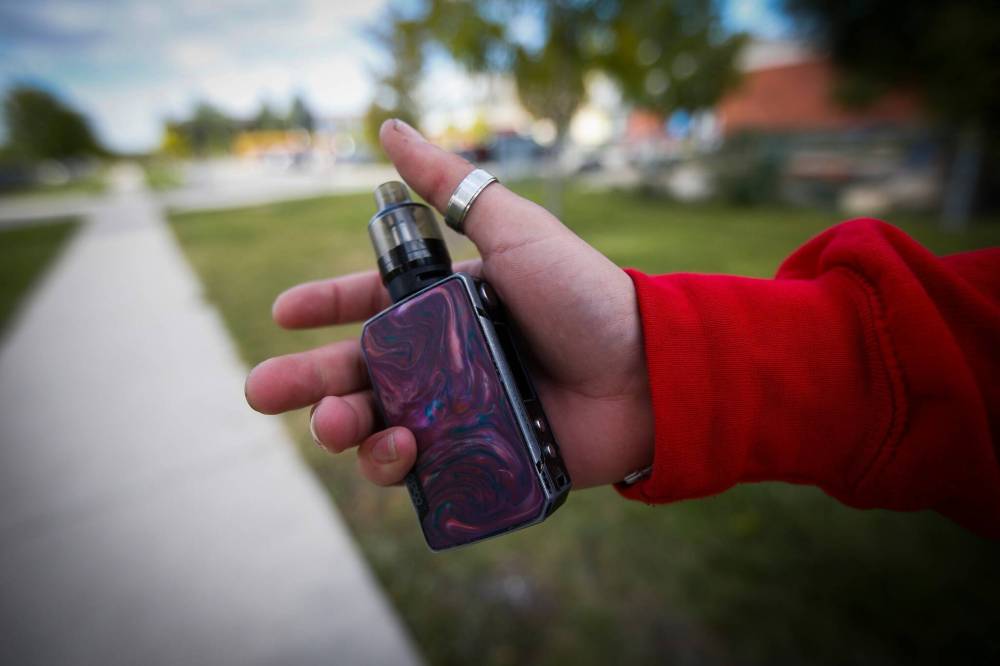
For many Manitoba teens, vaping — using a battery-powered device to heat flavoured “juice,” most often containing highly addictive nicotine, into an inhalable vapour — is a habit deeply woven into their daily lives.
Nearly one-fifth (18.4 per cent) of grades 7 to 12 students in the province reported using vapes within a month of being surveyed by Health Canada, in 2023-24.
A precise number is hard to pin down. Cynthia Carr, the executive director of MANTRA, the Manitoba Nicotine & Tobacco Reduction Alliance, said data can vary depending on the survey, the demographics being measured and whether young people are attending school at the time they’re surveyed.
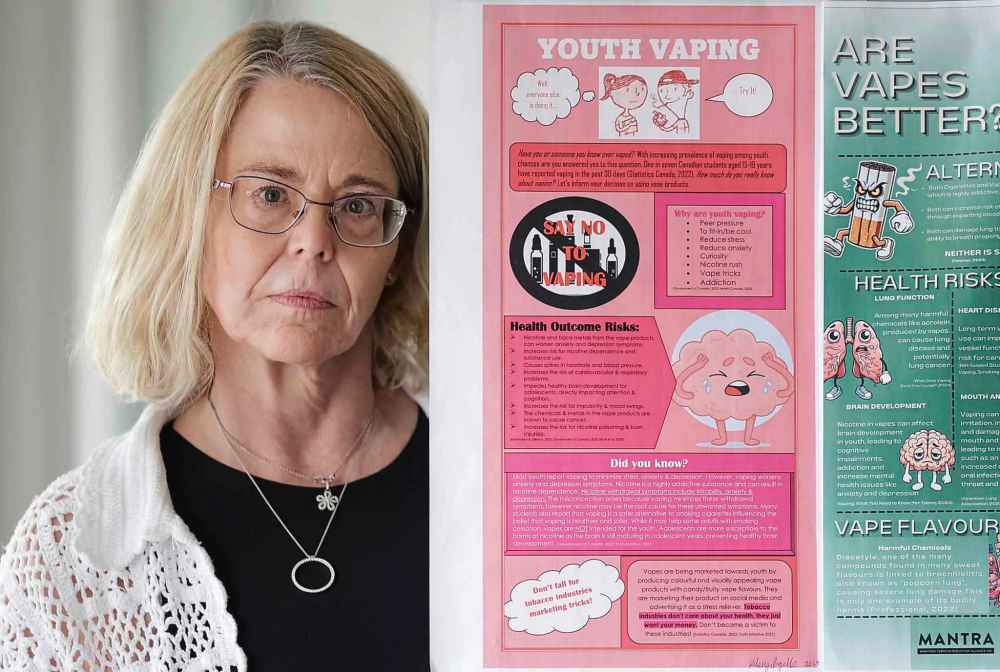
Regardless, Carr says the trend is clear: more young people are using and becoming addicted to nicotine products, from vapes or e-cigarettes to oral pouches.
It comes as no surprise to experts that the products have found favour with youth. They can be used discreetly, depending on nicotine content can be highly addictive and feature appealing confectionery-like flavours.
Nolan was 13 or 14 when he first tried vaping, which was becoming commonplace in school washrooms and at social settings.
“It was very prevalent at my high school,” said the former Kelvin student, now 19. “Saw it every day, even on the front steps of the school.”
Not much has changed.
As many as one-third of Kelvin’s population has vaped or used nicotine products, a couple of Grade 12 students estimated recently outside the school.
Students vape in washrooms, outside school entrances and, occasionally, even during class.
“Teachers don’t care at all if you’re not on (school) property,” one of the students said.
“When you call parents, they don’t believe their kids are vaping.”
Despite the disturbing trend, taking on the role as the nicotine cops isn’t the answer for educators.
“They’re so overwhelmed with everything they have to do,” Carr said. “That’s what I hear from teachers in my community work: we don’t want to be the police. If we act like the police in the school, then how can we expect students to come to us and trust us when they have questions or need support in their learning?”
One teacher in the Louis Riel School Division said the problem is so overwhelming that even kindergarten children are being exposed to vaping in K-Grade 8 facilities.
“Students of all ages share the bathroom,” the teacher said. “Kids sneak in there to vape, and then they offer it to the younger kids. When you call parents, they don’t believe their kids are vaping.”
Vaping devices entered the Canadian market in 2004, largely in a legal grey area. It wasn’t until 2018 that amendments to the Tobacco Act and the Non-Smokers’ Health Act created a new regulatory framework, including the establishment of a nationwide minimum age of 18 to purchase products and prohibiting the promotion of devices to youth.
The Manitoba Lung Association says those regulations did not go far enough. While smoking rates have declined, vaping has “skyrocketed into a crisis,” said association CEO Juliette Mucha.
“A lot of people will start vaping for a variety of reasons,” Mucha said. “Either peer pressure, stress management, mental-health purposes or just because they think it’s cool for social purposes.”
Mucha said youth often obtain vaping products through classmates — many Grade 12 students are of legal purchasing age — siblings, friends or parents who may not fully understand the risks associated with the nicotine products.
Carr said those misconceptions are widespread.
“I don’t know if people believe vaping is healthy, but tobacco companies are calling it ‘harm reduction,’ and that would only apply to people who smoke,” she said.
Vaping, she noted, is not regulated as a nicotine replacement therapy or cessation product in Canada.
As the school year winds down, it’s not unusual for the number of students who vape to increase.
Dr. Scott Hadland, chief of adolescent and young adult medicine at Mass General Brigham and Harvard Medical School in the U.S., said academic pressures can play a direct role in nicotine use.
“The stress of exam season and end-of-year requirements can actually contribute to young people vaping more,” he said. “We know that stress is an underlying factor for substance use, and for people using substances more heavily.”
When someone uses nicotine, they experience a small boost in their ability to focus, he explained. But what can begin as a perceived coping tool often develops into dependence.
Hadland says nicotine withdrawal can mirror or intensify the mental-health symptoms young people are trying to manage. He added that vaping differs from cigarettes because it doesn’t require a “smoke break,” allowing for more continuous nicotine intake throughout the day, making it harder to quit.
A MANTRA report found that youths who report poorer mental health are more likely to use nicotine products. But the relationship is not one-directional.
“You vape again or smoke or put a pouch in, and you think it helped you reduce your anxiety, but actually you’re just dealing with your nicotine craving in your brain, and it’s a very difficult cycle for kids,” Carr said.
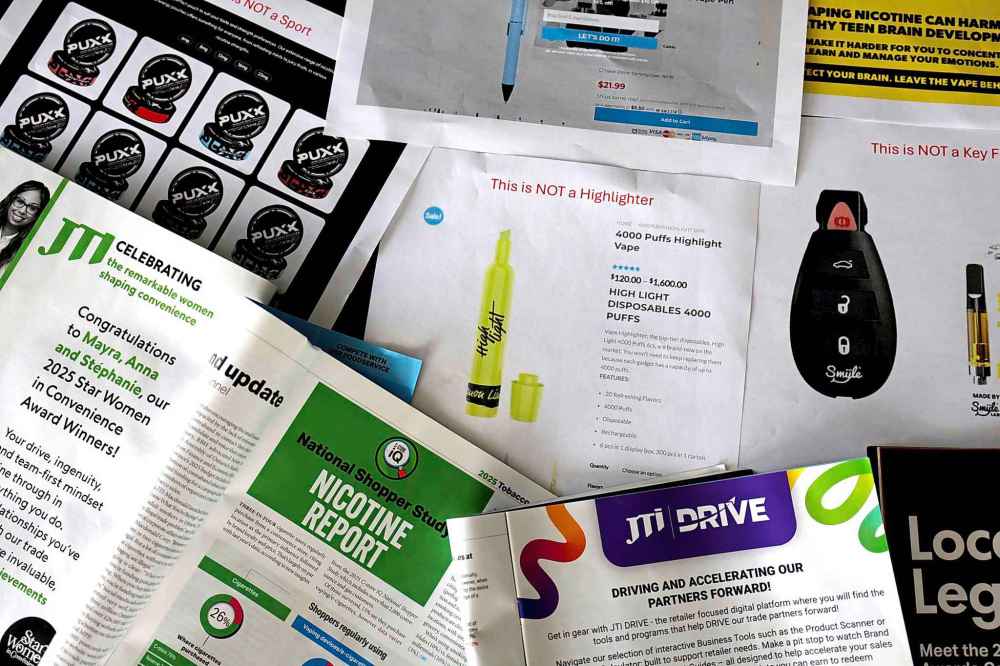
Strawberry, cotton candy, mango ice. Nicotine consumption has come a long way from the taste of tobacco.
“We know that the majority of young people who vape prefer flavoured products, and that actually the flavouring of the vape is a key aspect that draws them into vaping,” Hadland said.
Flavouring is not simply a marketing tool, said Dr. Ahmad Besaratinia of the University of Southern California, whose research focuses on the molecular causes and mechanistic underpinnings of human disease.
A recent study conducted by Besaratinia looked at gene-expression changes in people who vape, smoke or abstain. Vapers showed altered activity in 3,124 genes compared with non-users, 28.8 per cent of gene-activity changes were linked to how much/how often people vape and 66.6 per cent of gene-activity changes were linked to vape flavours and device types.
“In principle, all functions in our body and in our cells are controlled by genes, so as long as these genes are expressed and act properly, our health is going to be guaranteed,” Besaratinia said.
“Any disruption in the activity and expression of these genes can lead to disease initiation and progression.”
He said vapes, in addition to the nicotine, contain a large variety of toxic and carcinogenic compounds that can interfere with normal gene activity.
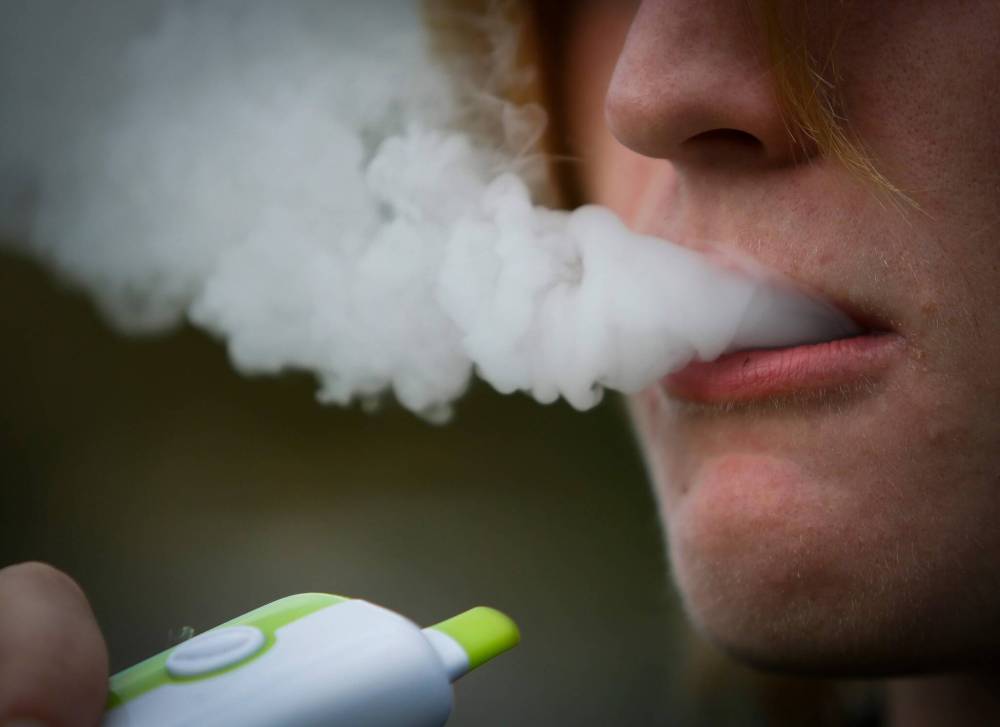
When flavouring chemicals are heated, they can break down into harmful substances such as formaldehyde and other volatile compounds that may damage DNA and airway cells.
Besaratinia noted that while long-term health outcomes are still being studied, early gene-expression changes linked to diseases such as cancer, cardiovascular conditions and neurological disorders have already been observed in users.
“The effect of exposure to these chemicals over the long term could be very substantial,” he said.
Unlike the impact of cigarette smoking, which has been studied for decades, scientists do not yet have volumes of data showing what long-term vaping use may mean for today’s teenagers.
Currently, University of Manitoba researchers are examining whether vaping may cause early changes in lung health among youths and young adults long before disease becomes clinically visible.
“The effect of exposure to these chemicals over the long term could be very substantial.”
“I think a lot of us would love to know whether long-term use of these e-cigarettes is going to lead to disease, much like cigarettes do, before we get to the stage of disease,” researcher Chris Pascoe said.
One of the challenges is the pace of change in the industry, he said. Vaping and related products evolve quickly — such as the more recent development of oral pouches, which are filled with nicotine powder and flavours, are placed between the upper lip and gum and don’t require spitting, as chewing tobacco and moist snuff do — while research takes time to catch up.
The River East Transcona School Division has three full-time substance-use counsellors dedicated to prevention and intervention, with vaping now identified as the leading substance-use concern among students in grades 6 to 8, said Jón Olafson, assistant superintendent of student services.
“If anything kind of feels above and beyond that ‘teacher conversation’ capacity, we would involve our school counsellors, psychologists or social workers,” Olafson said.
Responses vary depending on the situation, ranging from in-school programming and counselling to disciplinary measures in more serious cases.
Education is central to the approach in the Pembina Trails School Division. Students learn about nicotine use, decision-making and peer pressure in physical and health education classes.
Schools also access prevention programs such as Lungs are for Life! from the Manitoba Lung Association, and Physical and Health Education Canada’s Students Together Moving to Prevent Substance Use (STOMP), which emphasize student leadership and harm reduction.
Other divisions, including St. James-Assiniboia, say they rely on a combination of curriculum-based education, enforcement of smoke-free policies, counselling and ongoing conversations with students. Each case is handled individually.
To address the ongoing problem with vaping in school washrooms, staff monitor the spaces regularly, and students are encouraged to report unusual smells, discarded material or incidents to administrators, the St. James-Assiniboia division said in a statement.
Many experts say the most effective strategy is to focus on preventive measures to stop nicotine use from starting in the first place.
Lungs are for Life! is currently the province’s only prevention program developed specifically for students. The free resource includes age-appropriate lessons on vaping, nicotine addiction, sacred tobacco, lung health and how to talk about vaping with friends and family.
Although the material has been available since 2020 and is used by many schools, it is not formally part of Manitoba’s provincial curriculum.
Mucha said prevention is critical, given the scale of harm linked to nicotine use. It’s estimated tobacco-related illnesses cost the health-care system more than $360 million annually in Manitoba.
“The goal is steering youth to other methods to help control their anxiety, stress, mental health.”
“The goal is steering youth to other methods to help control their anxiety, stress, mental health — through breathing, through activities, through education,” she said. “We want to help support and bring kids those tools so they can make an informed decision when they’re presented with the opportunity to vape.”
She said prevention efforts are especially important, because nicotine-replacement therapies such as patches and gum are not available to those under 18.
She also pointed to broader public funding opportunities, noting Canada’s recent $32.5-billion tobacco settlement with manufacturers could be directed toward prevention initiatives. Manitoba is set to receive about $1 billion from that agreement.
Colleen Tower, the tobacco reduction co-ordinator with Manitoba’s Northern Health Region, which is based in Flin Flon, delivers the Lungs Are For Life program in schools across the North.
“Almost exclusively in every classroom, the students seem to be concerned,” Tower said. “They know somebody who’s vaping, and now they’re asking, ‘What should we do? What should we tell them?’”
Responses, she said, should focus on reassurance rather than judgment. “We tell them it doesn’t make them a bad person, and that there’s help for them.”
zoe.pierce@freepress.mb.ca