

Proposed flavoured vape ban unfairly targets struggling stores, industry association argues

Advertisement
Read this article for free:
or
Already have an account? Log in here »
To continue reading, please subscribe:

Digital Subscription
One year of digital access for only $205*
- Enjoy unlimited reading on winnipegfreepress.com
- Read the E-Edition, our digital replica newspaper
- Access News Break, our award-winning app
- Play interactive puzzles
*First annual payment billed as $205.00 + GST for one year. This annual subscription will automatically renew at $233.00 + GST every 52 weeks (10% off the regular annual price of $259.35). Offer available to new and qualified returning subscribers only. Cancel any time.
To continue reading, please subscribe:
Add Free Press access to your Brandon Sun subscription for only an additional
$1 for the first 4 weeks*
- Enjoy unlimited reading on winnipegfreepress.com
- Read the E-Edition, our digital replica newspaper
- Access News Break, our award-winning app
- Play interactive puzzles
*Your next Brandon Sun subscription payment will increase by $1.00 and you will be charged $17.95 plus GST for four weeks. After four weeks, your payment will increase to $24.95 plus GST every four weeks.
Read unlimited articles for free today:
or
Already have an account? Log in here »
A possible ban on flavoured vape sales in some Manitoba stores would be another blow to an industry already struggling under out-of-control contraband tobacco crime, business groups say.
Proposed legislation brought forward Tuesday would ban urban businesses with no age restrictions from selling flavoured vapes, while rural convenience stores and other businesses would be allowed to sell them as long as they were kept out of view.
Age-restricted stores, including vape shops, would still be allowed to sell the flavoured variety. Health Minister Uzoma Asagwara said Tuesday the vapes are marketed to kids and a gateway to tobacco use.
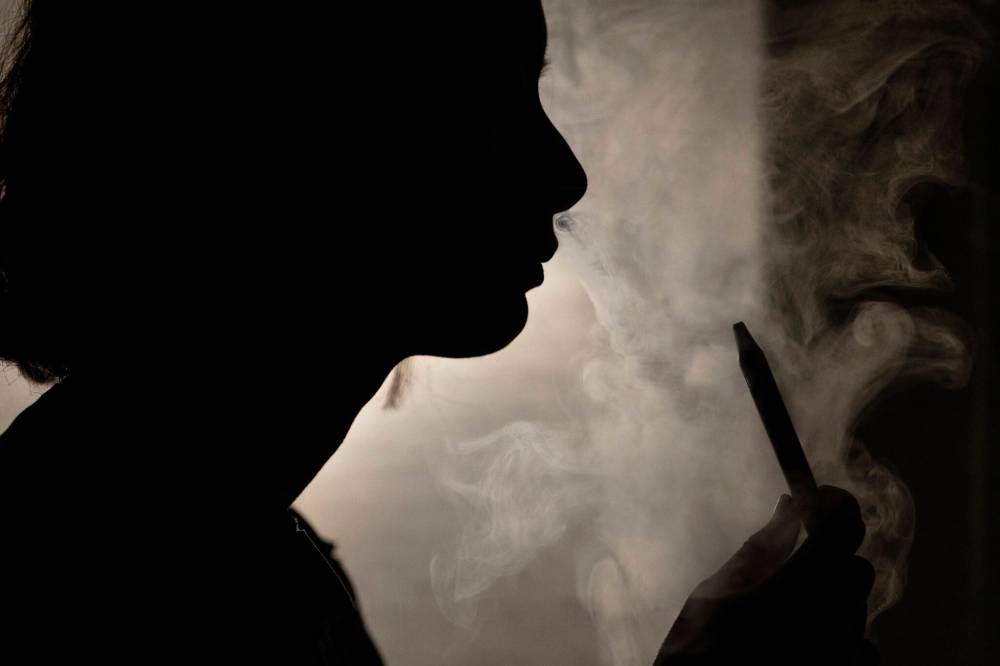
DIEGO FEDELE/THE ASSOCIATED PRESS FILES
Nearly 20 per cent of Grade 7 to 12 students in Manitoba said they had used a vape within a month of being surveyed by Health Canada in 2023-24.
Banning a revenue stream for corner and convenience stores would unfairly target struggling businesses while ignoring the worst offenders, said Sara MacIntyre, the Western Canada vice-president for the Convenience Industry Council of Canada.
She pointed to a report from Health Canada published earlier this year that inspected vape retailers across the country and found that while 43 per cent of specialty vaping establishments were found breaking federal guidelines for selling vapes, less than one per cent of inspected gas and convenience stores were found to be non-compliant. Meanwhile, she said, a number of sites sell vapes online with lax age-verification measures.
“I think our government’s focus on the source of the problem is wrong… unfortunately, there’s just a plethora of sites that are available online that just deliver directly to people’s homes, and oftentimes they’re available at vape shops,” she said.
“I think we need to really look at if we want to make an impact on access, or do we want to just demonstrate that we’re doing something for a news release.”
Manitoba lost 14 per cent of its convenience stores between 2020 and 2024, according to the council — from 947 stores to 814 — the worst numbers in the country, MacIntyre said.
A large part of those closures was due to Manitoba’s ongoing battle with contraband tobacco products, which have reduced foot traffic in local corner stores, MacIntyre said. Locking out credible sellers would have a “downstream impact” on the community at large.
“We’d have less people coming into our stores, but it also means that there’s not a safe and reliable, credible partner in the community that’s actually selling the products according to how the government has regulated them…. It’s not going to necessarily change the problem, it’ll just change where it’s sourced from,” she said.
Last week, Winnipeg police announced 30 arrests had been made in the largest drug bust in the province’s history. Among the products seized were 1.35 million untaxed cigarettes.
Contraband vapes are already in Winnipeg, said Food Fare owner Munther Zeid, and Winnipeggers are buying them. He said selling tobacco products has become a “convenience” product for him — there’s little money to earn off of the product, but stores will stock it in hopes that people buy other, more profitable items.
“We’ve tried it,” he said. “They brought it in, they guaranteed the sale for us, we didn’t sell any. It’s taking up space for nothing.”
Nearly 20 per cent of Grade 7 to 12 students in Manitoba said they had used a vape within a month of being surveyed by Health Canada in 2023-24. The national average was 15.5 per cent.

Opposition Leader Obby Khan said he supported the idea but criticized the NDP for bringing the idea forward just days before the legislature is set to break for the summer.
Any changes to what small retailers are able to sell should come with “reasonable” implementation guidelines, said Brianna Solberg, the Canadian Federation of Independent Businesses’ director for the Prairies and northern Canada.
“Retailers alone, especially those in that small convenience market, who are already struggling with labour shortages and low consumer demand, they shouldn’t be expected to shoulder this policy change alone,” she said.
“If government’s going to introduce new rules, it also needs to provide education, adequate transition time and a consideration of the operational realities facing small retailers.”
malak.abas@freepress.mb.ca
Malak Abas is a city reporter at the Free Press. Born and raised in Winnipeg’s North End, she led the campus paper at the University of Manitoba before joining the Free Press in 2020. Read more about Malak.
Every piece of reporting Malak produces is reviewed by an editing team before it is posted online or published in print — part of the Free Press‘s tradition, since 1872, of producing reliable independent journalism. Read more about Free Press’s history and mandate, and learn how our newsroom operates.
Our newsroom depends on a growing audience of readers to power our journalism. If you are not a paid reader, please consider becoming a subscriber.
Our newsroom depends on its audience of readers to power our journalism. Thank you for your support.
Malak Abas is a city reporter at the Free Press. Born and raised in Winnipeg’s North End, she led the campus paper at the University of Manitoba before joining the Free Press in 2020. Read more about Malak.
Every piece of reporting Malak produces is reviewed by an editing team before it is posted online or published in print — part of the Free Press‘s tradition, since 1872, of producing reliable independent journalism. Read more about Free Press’s history and mandate, and learn how our newsroom operates.
Our newsroom depends on a growing audience of readers to power our journalism. If you are not a paid reader, please consider becoming a subscriber.
Our newsroom depends on its audience of readers to power our journalism. Thank you for your support.
Related Articles
Long list of new legislation set to receive royal assent before MLAs break for summer

Advertisement Advertise With Us
Advertisement Advertise With Us